Reviewed · HANOI TOURS
Hanoi: Master the Art of 4-6 Signature Vietnameses Coffees
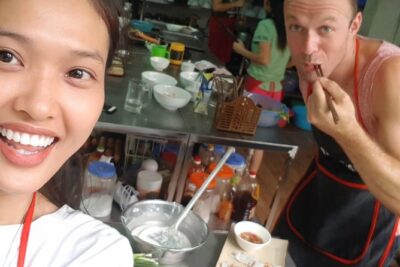
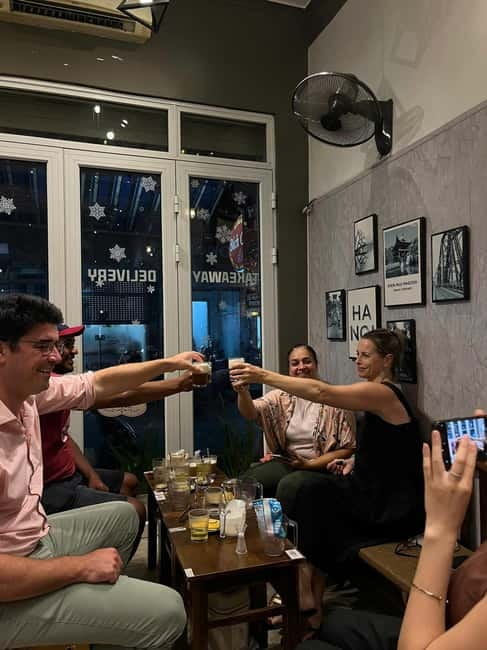
Hanoi’s coffee culture makes more sense once you stop treating coffee as a drink and start treating it as a small ritual. This hands-on workshop brings you into a lived-in local home, where you make four to six Vietnamese styles using ceramic tools, fresh eggs, milk, coconut, and Central Highlands beans.
I like the small groups, limited to 10, and the way instructors such as Jade, Eddie, Daisy, and Tyler explain both technique and daily Hanoi life. I also like the practical recipes and home-friendly substitutions. The one caution is simple: six coffees can deliver a serious caffeine jolt, so a morning booking is wiser than an evening one.
In This Review
- Key points at a glance
- Entering a Hanoi home through the Old Quarter
- The first cup: black coffee and the phin filter
- Brown coffee and the sweet side of Hanoi
- Egg coffee and the careful whisking lesson
- White, coconut, and salted coffee
- What you actually learn, beyond making drinks
- The people, stories, and local advice
- How much caffeine and how much value?
- Who should book this class?
- Booking advice and final verdict
- FAQ
- Where does the coffee workshop meet?
- How long does the activity last?
- How many people can join?
- Which Vietnamese coffees can I make?
- Is the activity hands-on?
- Are coffee recipes included?
- Which languages are available?
- Is the activity wheelchair accessible?
- Can I cancel or pay later?
Key points at a glance
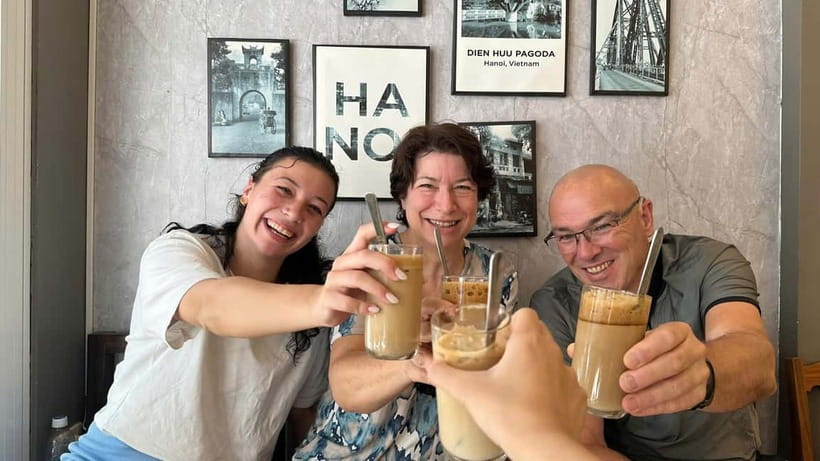
- Six coffee styles in one sitting: Make black, brown, egg, white or silver, coconut, and salted coffee, depending on the session.
- Real hands-on brewing: You grind, use the phin filter, whisk, taste, and adjust every cup.
- Small-group teaching: With no more than 10 people, the instructor can answer questions and correct your technique.
- A local home setting: Ceramic tools, everyday sounds, a garden space, and warm local hosts give the class a personal feel.
- Useful take-home skills: You receive full recipes and learn ways to balance bitterness and strength without costly equipment.
- Good value at $22: You get several drinks, instruction, coffee culture, recipes, and local food and café suggestions in roughly one to two hours.
Entering a Hanoi home through the Old Quarter
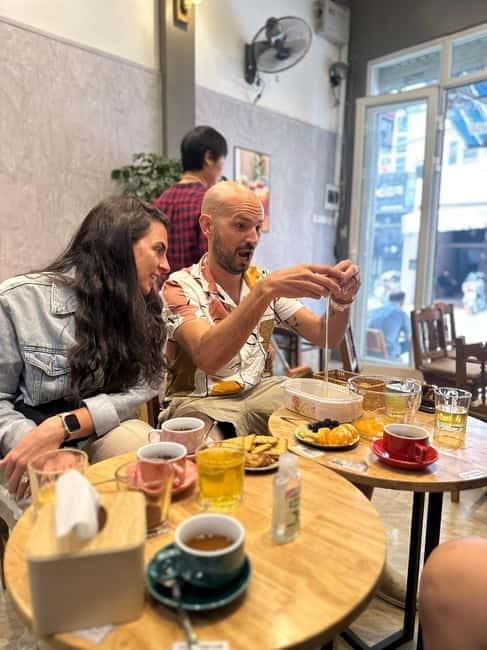
You meet at a cozy café in a quiet corner of Hanoi’s Old Quarter. The location is near the French Quarter and Hanoi Opera House, and it is also within reach of Hoàn Kiếm Lake for many people staying in the center.
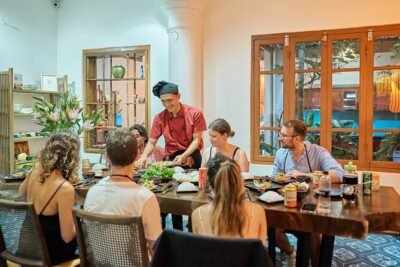
From there, the experience shifts from ordinary café stop to local workshop. The setting is a home where people actually live. You may hear voices from outside, see daily activity continue around you, and notice the unpolished details that a purpose-built cooking school often lacks.
I like that distinction. You are not simply sitting at a counter while someone prepares a tasting flight. You handle the coffee grounds, work with ceramic equipment from local pottery villages, and watch foam change as you whisk it. The room has air conditioning, clean restrooms, sterilized utensils, and a dishwasher, so the informal setting does not mean careless preparation.
The group limit is 10, though some time slots may be smaller. Several people have ended up with nearly private instruction when only one or two places were booked. You should not count on that, but the limit gives the class enough room for questions and individual help.
The hosts were born and raised in Hanoi’s Old Quarter. Their coffee knowledge comes from family habits, grandparents, chefs, street cafés, and plenty of tasting. That background matters because the class is not only a set of recipes. You learn why Vietnamese coffee is often strong and sweet, and how changing ingredients or brewing time shifts the result.
A few more Hanoi departures worth weighing up
- Hanoi Jeep Tour: Food, Culture and Fun by Vietnam Army Jeep
★ 5.0 · 15,222 reviews - Full-Day Ninh Binh Highlights Tour from Hanoi
★ 5.0 · 7,761 reviews - Hanoi: Ha Long Bay Day Cruise – Swimming, Meal, Kayaking
★ 4.7 · 7,415 reviews
The first cup: black coffee and the phin filter
The workshop begins with the foundation of Vietnamese coffee: black coffee brewed through a phin. This small metal filter sits on top of the cup and lets the coffee drip slowly.
You grind the beans, prepare the filter, and watch the coffee collect. The pace is slower than a quick espresso shot, which gives the instructor time to discuss strength, bitterness, and the role of the grind. You also learn how locals taste coffee and decide what needs changing.
That tasting step is one of the most useful parts. Many coffee classes show you a fixed recipe and tell you to repeat it. Here, you can make the drink sweeter, stronger, or bolder while keeping its basic character. The lesson is less about chasing one perfect measurement and more about understanding how to adjust the cup.
The beans come from Vietnam’s Central Highlands. They are specialty Vietnamese beans selected after tastings in different parts of the country, and the coffee can change with the seasonal harvest. That gives you a better sense of Vietnamese coffee than a generic bag labeled simply robusta or dark roast.
If you normally avoid black coffee, do not assume this first cup will be too harsh. The brewing method, bean choice, and guidance on balance can make it more approachable. Still, it is a concentrated drink, and the flavor is more forceful than the lighter coffee many people drink at home.
Brown coffee and the sweet side of Hanoi
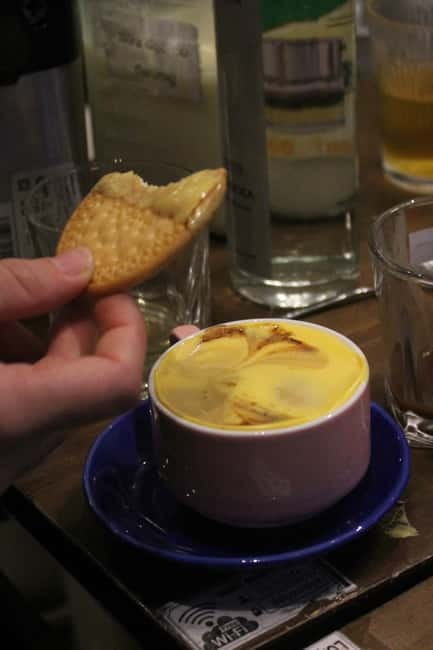
Brown coffee combines strong brewed coffee with sweetened condensed milk. It is one of the easiest styles to recognize in Vietnam, and it is also the most straightforward to repeat in your own kitchen.
You prepare the coffee and add the milk yourself, learning how the ratio affects the final drink. Use less milk and the coffee remains bold. Add more and it becomes rounder, sweeter, and closer to a dessert.
This is where the workshop connects technique with everyday taste. Vietnamese coffee often works with sweetness rather than trying to hide it. The condensed milk offsets the intensity of the coffee and creates a drink that suits hot weather, busy mornings, and long café conversations.
The instructor also explains possible substitutes for ingredients that may be hard to find outside Vietnam. That is a practical touch. A recipe is only useful if you can make it after returning home, and the class aims to keep the method realistic rather than dependent on specialist gear.
Egg coffee and the careful whisking lesson
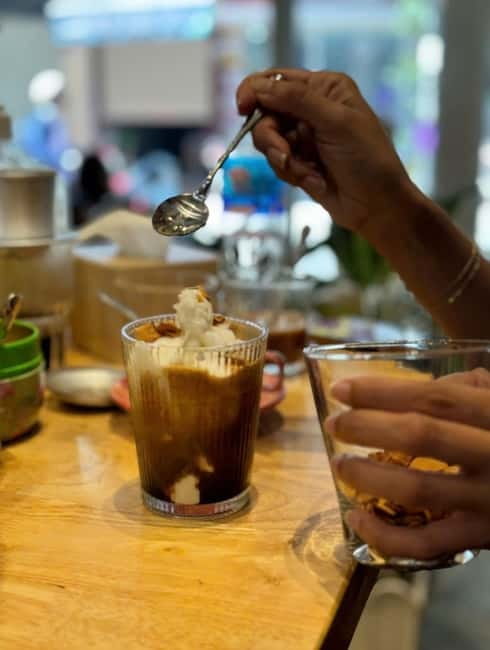
Egg coffee is the most famous Hanoi creation in the class, and it also demands the most visible preparation. You work with fresh eggs and create a light, creamy topping before placing it over the coffee.
The appeal is partly the contrast. Under the foam sits strong coffee, while the top layer brings sweetness and a soft texture. You taste the two together, then adjust according to your preference.
The instructor explains the background of egg coffee and how it became part of Hanoi café culture. The story is useful because the drink can look like a novelty to someone seeing it for the first time. Understanding its place in the city makes it feel less like a gimmick and more like a local answer to a particular coffee tradition.
Your whisking technique matters. Too little effort and the topping may not reach the right texture. Too much or too fast can make the process uneven. The instructor guides your hands and explains what to look for rather than leaving you with a bowl of ingredients and a vague instruction to mix.
If you dislike eggs, this may be the least appealing cup. For many people, though, it is the workshop’s most memorable drink. It also gives you a useful lesson in turning a few ordinary ingredients into something with a very different texture.
Same part of the north, a completely different day out:
- Hanoi: Water Puppet Show Tickets
★ 4.6 · 7,029 reviews - Hanoi Motorbike Tour: Food, Culture and Fun by Vintage Motorbike
★ 5.0 · 6,699 reviews - Hanoi: Guided Food Tour with Train Street Visit
★ 4.9 · 6,239 reviews - Hanoi Cooking Class: Culture, Local Market & Meaning CSR Impact
★ 5.0 · 5,147 reviews
White, coconut, and salted coffee
The remaining styles show how flexible Vietnamese coffee can be. White or silver coffee brings another milk-based variation, while coconut coffee adds a smooth, sweet element with a tropical flavor.
Coconut was a favorite for several people who took the class, and I can see why. It softens the coffee’s sharp edge without erasing it. The result is rich and lightly sweet, but it still tastes like coffee rather than a fruit drink.
You also make salted coffee, a style associated especially with central Vietnam but now found more widely. Salt may sound strange in a coffee class, yet a small amount can reduce the sense of bitterness and make sweetness seem clearer.
These cups are valuable because they teach you to think in terms of balance. Coffee is not only coffee, milk, and sugar. Salt, coconut, egg, and different milk ratios each change how you experience the same strong base.
The exact selection can be four to six coffees, so the number may depend on the session. The full set includes black, brown, egg, white or silver, coconut, and salted coffee. If you want to try all six, check the available session details before booking.
What you actually learn, beyond making drinks
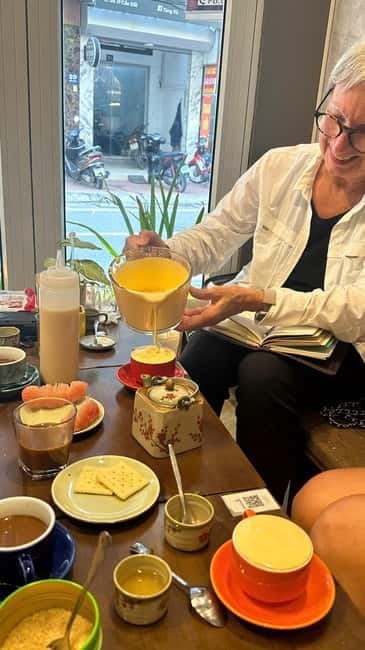
The most useful promise here is not that you will drink six coffees. It is that you will learn how to make them again.
You practice controlling strength, managing bitterness, and changing sweetness. You also learn how to improve a cup without buying an expensive espresso machine or a shelf full of specialist tools. The phin filter is simple, compact, and suited to home use.
The recipes are provided afterward, giving you a reference once the details blur together. That matters because several drinks use similar ingredients but different preparation steps. A recipe sheet lets you repeat the method when you are no longer watching an instructor.
Some people have also bought a phin filter after the workshop. If you want to bring Vietnamese brewing into your daily routine, this is more useful than buying a decorative souvenir. The instructors can show you what the filter does and how to use it before you spend money on one.
The class also covers easy substitutions. You may not find the exact Vietnamese ingredients in your own country, but the instructor explains workable alternatives. I prefer this sort of practical teaching to strict rules that make a recipe impossible outside its place of origin.
The people, stories, and local advice
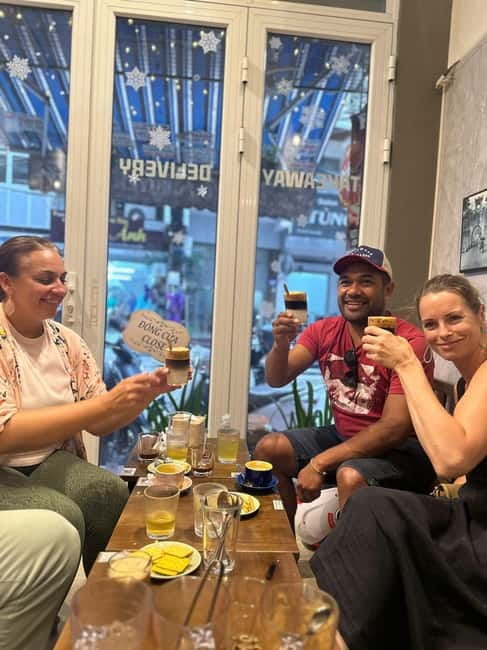
Each instructor brings a slightly different personality. Jade is often praised for patient explanations, coffee history, and useful suggestions for restaurants, markets, bars, and cafés. Eddie is described as clear and attentive, particularly when showing all six preparation methods.
Daisy has led sessions centered on phin brewing, egg coffee, coconut coffee, and salted coffee. Tyler has taught the cultural side of coffee in a warm, friendly way, while Mint has helped participants feel confident enough to make the drinks at home. Other instructors include Zoey, Ngoc, and Jessica.
You may not receive a particular guide, so book this for the format and subject rather than one named person. The repeated pattern is a Vietnamese and English-speaking instructor who explains each stage and answers questions.
The local recommendations are a welcome extra. Several instructors give maps or suggestions for cafés and restaurants that are less obvious to first-time visitors. This can help you use the rest of your Hanoi stay well, especially if you schedule the class near the start of your trip.
The stories cover morning routines, old cafés, changing tastes, and the way coffee developed in Vietnam. They are not a formal lecture. They flow around the brewing, which keeps the class relaxed and gives the drinks a social setting.
How much caffeine and how much value?
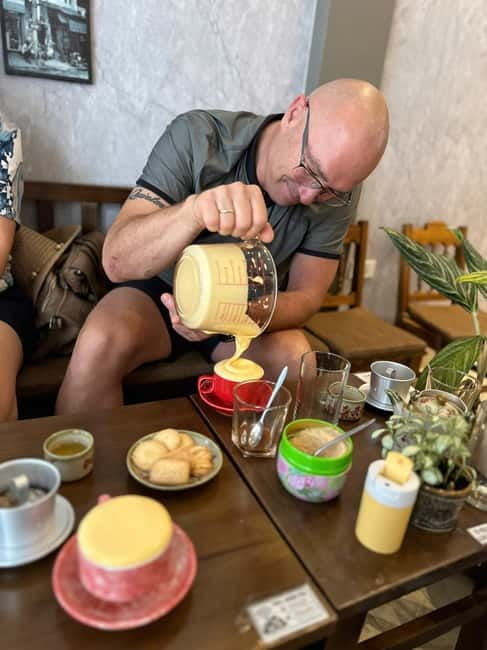
At $22 per person, this is good value if you enjoy coffee and want more than a tasting. You receive four to six drinks, fresh ingredients, instruction, recipes, cultural context, and local suggestions in a one to two-hour session.
A single café visit costs less, of course. But a café visit does not usually teach you six recipes or let you prepare every cup yourself. A standard sightseeing stop may show you Hanoi, while this class explains one of the city’s daily rituals from inside a local space.
The main cost is not money but caffeine. You may drink a large amount in a short time, especially during a six-coffee session. I would book it in the morning, eat something beforehand, and avoid pairing it with another strong coffee tasting later that day.
The timing also works well as a first-day activity. It is short enough to fit before lunch or an afternoon walk, and the local food and café suggestions can help shape the rest of your visit. If you are traveling with children, childcare is available, and the space includes a pet-friendly garden, but babies under one year are not suitable for the activity.
Who should book this class?
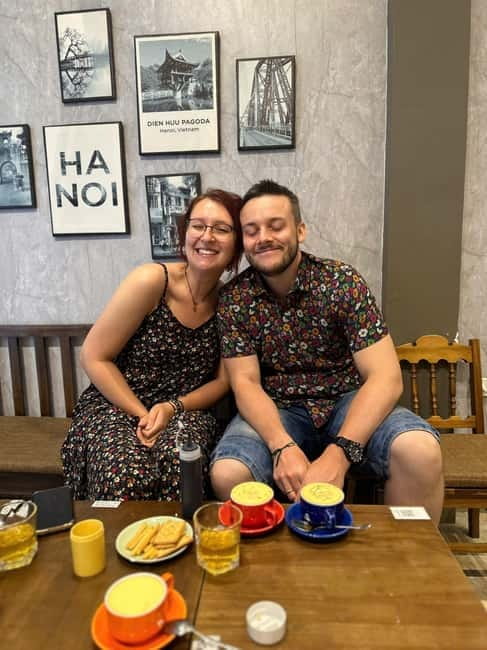
This suits coffee drinkers who want a practical cultural activity. It is also a good choice if you have already been ordering egg, coconut, or condensed milk coffee around Vietnam and want to understand what goes into the cup.
Solo visitors can fit in comfortably, since the small group creates an easy chance to talk with other participants. Couples and families can take part together, and the personal setting gives the class a more relaxed feel than a large demonstration.
You do not need to be a coffee expert. In fact, the class may be especially useful if you are unsure how to use a phin or usually find black coffee too strong. You can taste, adjust, and learn at your own pace.
I would be more cautious if you are very sensitive to caffeine, dislike sweet drinks, or want a formal culinary school lesson with precise professional measurements. This is a friendly, cultural workshop built around tasting and conversation. It values flexibility and local context over technical coffee certification.
Wheelchair access is available. Vietnamese and English are spoken, and the age restrictions exclude babies under one and people over 95.
Booking advice and final verdict
You can cancel up to 24 hours before the start for a full refund, and a reserve-now, pay-later option helps if your Hanoi plans are still shifting. Since sessions last about one to two hours and group size is capped at 10, choose a time that leaves room for a slow walk afterward rather than squeezing it between major sights.
I recommend booking this if you want to take home a skill, not just a souvenir. The strongest parts are the hands-on brewing, the range of coffee styles, the clear instruction, and the chance to see coffee as part of Hanoi life.
Skip it if you want to avoid caffeine or if you would rather spend the same hour simply sitting in a café. For most coffee fans, though, $22 buys a useful, friendly introduction to Vietnam’s coffee habits, with recipes that can keep the experience going after you leave Hanoi.
FAQ
Where does the coffee workshop meet?
You meet at a cozy local café in a peaceful corner of Hanoi’s Old Quarter, near the Hanoi Opera House and French Quarter.
How long does the activity last?
The workshop lasts about one to two hours. Starting times vary, so check availability when choosing a session.
How many people can join?
The group is limited to 10 participants.
Which Vietnamese coffees can I make?
The workshop can include black, brown, egg, white or silver, coconut, and salted coffee. The session format may cover four to six styles.
Is the activity hands-on?
Yes. You grind, brew, whisk, taste, and adjust the coffees yourself with guidance from the instructor.
Are coffee recipes included?
Yes. You receive full recipes and practical advice for making the drinks at home.
Which languages are available?
The instructors speak Vietnamese and English.
Is the activity wheelchair accessible?
Yes, the activity is listed as wheelchair accessible.
Can I cancel or pay later?
You can cancel up to 24 hours in advance for a full refund. A reserve-now, pay-later option is also available.
Just added around Hanoi
- Cat Ba National Park, Lan Ha Bay 2 Days 1 Night Adventure★ 4.8 · 9 reviews
- Full day Boat Tour Lan Ha Bay – Ha Long Bay: Kayak, Beach Hopping★ 5.0 · 9 reviews
- Ha Giang Loop 2 Days High quality Small Group +Private Room★ 5.0 · 9 reviews
- Half Day Sapa Cat Cat Explore Waterfall, Workshop, H’mong Local★ 5.0 · 9 reviews
- Sapa 1 Day Trekking★ 5.0 · 9 reviews
- Fansipan Mount Trekking 1 Day★ 5.0 · 9 reviews
- Sapa Open Air Jeep Half Days Off the Beaten Track, Backroad★ 4.9 · 9 reviews
- Halong 2 days 1 night with Cozy Classic Cruise from Hanoi★ 4.5 · 9 reviews
Hanoi Tours, compared.

Hanoi Jeep Tour: Food, Culture and Fun by Vietnam Army Jeep
Read our review →
Full-Day Ninh Binh Highlights Tour from Hanoi
Read our review →
Ha Long Bay Day Cruise – Swimming, Meal, Kayaking
Read our review →
Hanoi Motorbike Tour: Food, Culture and Fun by Vintage Motorbike
Read our review →
Hanoi Cooking Class: Culture, Local Market & Meaning CSR Impact
Read our review →