
Reviewed · HANOI STREET FOOD TOURS
Hanoi Private Halfday Street Food Exploring
Hanoi’s best introduction may come on a tiny plastic stool, with a sizzling grill inches away and a bowl of pho balanced in your hands. This private Old Quarter walk strings together 8 to 9 local dishes, from bun cha and banh xeo to egg coffee and fresh spring rolls, while your guide explains what you are eating and why it matters.
I like the private format, since your guide can adjust the pace and explain unfamiliar foods without a large group getting in the way. I also like the range of tastes: smoky pork, fragrant broth, crisp pastry, fresh herbs, sweet coffee, and soft noodles all appear in one outing.
The main catch is that the exact food stops can change with opening hours, and the price does not cover every drink or side dish. You should also be ready to walk through crowded streets and eat at simple sidewalk stalls rather than sit down to a long restaurant meal.
In This Review
- Key points to know before you book
- Why Hanoi’s Old Quarter works so well for a food walk
- A 3.5-hour route built around eating and walking
- Stop one: pho, Hanoi’s essential bowl
- Stop two: bun cha and the smoky side of Hanoi
- Stop three: banh mi and the French influence
- Stop four: banh goi, banh xeo, and crisp textures
- Stop five: spring rolls and fresh herbs
- The finale: egg coffee and a sweet surprise
- What the guide adds to the food
- Timing, comfort, and practical limits
- Who will get the most from this tour
- Is $35 good value?
- Should you book it?
- FAQ
- Where does the Hanoi street food tour take place?
- How long does the experience last?
- What start times are available?
- Is hotel pickup available?
- What food is included?
- Is a drink included?
- Is this a private activity?
- Can I request a specific dish?
Key points to know before you book
- Eight to nine classic dishes: Expect foods such as pho, bun cha, banh mi, banh xeo, banh goi, and spring rolls.
- Two useful start times: Choose 7:00 am or 5:30 pm, making this easy to fit around sightseeing.
- Private guide and pickup: Only your group takes part, and pickup is offered depending on your location.
- English-speaking local guide: Guides named for this experience include Doris and Minh, with food stories and local context part of the walk.
- Vietnamese coffee included: Egg coffee may be the most unusual tasting of the day, while extra drinks cost more.
- Strong value at $35: The fee covers the guide, listed food samples, and a Vietnamese coffee or drink, but not tips, side dishes, or every beverage.
Why Hanoi’s Old Quarter works so well for a food walk
The Old Quarter gives you the right setting for this kind of outing. Food is not separated from daily life here. It appears at street corners, in narrow lanes, beside shopfronts, and around low stools where people stop for a quick bowl or plate.
That setting matters. A food tour in a standard restaurant can explain recipes, but it cannot show you how Hanoi eats during an ordinary day. On this walk, you see cooking happen close by. Pork grills over heat, broth arrives steaming, herbs sit ready to be added, and baguettes are filled to order.
The streets can feel confusing at first. Names, lanes, scooters, signs, and food stalls blend together quickly. That is where a local guide earns the fee. Instead of spending half your time guessing which place is worth trying, you can focus on the food and the people around you.
Your guide also provides the link between one dish and the next. You are not simply handed a list of samples. You hear about ingredients, Northern Vietnamese cooking customs, and the way the Old Quarter developed into the food center it is today.
More Private Tours in Hanoi
- Doris Cruise 5 star cruise 2 days visiting Halong Bay Lan Ha Bay private balcony
★ 5.0 · 2,338 reviews - Private Walking Tour of Hanoi City
★ 5.0 · 1,251 reviews - Private Hanoi Street Food Walking Tour With Real Foodie
★ 5.0 · 1,042 reviews
A 3.5-hour route built around eating and walking
The experience lasts about three hours and 30 minutes, although the main itinerary describes roughly three hours of food exploration. That difference is small, but it is worth keeping in mind when planning the rest of your day.
You can begin at 7:00 am or 5:30 pm. The morning option gives you an early look at Hanoi’s food routine and leaves most of the day open. The evening option is likely the easier choice for many people, since the Old Quarter takes on a livelier feel as the day cools and dinner stalls get to work.
Pickup is offered, but the route can vary based on where you are staying. The guide then leads you on foot through the Old Quarter. The exact order of stops is flexible because food businesses do not all open at the same time.
That flexibility is practical rather than a warning sign. It means the guide can use places that are serving food at the time of your visit. Still, do not book this expecting a fixed list of named restaurants or a rigid route. The experience is built around local conditions.
Stop one: pho, Hanoi’s essential bowl
Pho is one of the clearest introductions to Northern Vietnamese cooking. You can expect a fragrant bowl of noodles, broth, herbs, and meat, served hot enough to reset your palate after walking in the humid city air.
The value here is not just the dish itself. Your guide can point out how the ingredients work together and explain why pho has become one of Vietnam’s best-known foods. For a first visit to Hanoi, this is the sort of meal that helps set the flavor of the city.
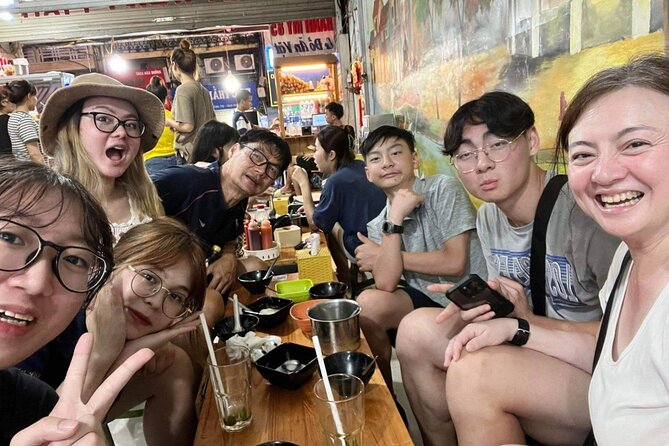
Keep your expectations realistic. A street-food bowl is usually about speed, freshness, and habit, not formal service. You may sit on a small stool, share space with local diners, and eat close to the cooking area. That is part of the experience, but it may not suit anyone who needs a quiet, polished meal.
Stop two: bun cha and the smoky side of Hanoi
Bun cha gives the tour a different character. Instead of broth as the main event, you get grilled pork with noodles, herbs, and dipping sauce. The smoky meat adds weight, while the herbs and noodles keep the dish fresh rather than heavy.
This is one of the foods I would pay close attention to. Grilling happens in front of you, so the smell and sound become part of the meal. Your guide can show you how the components are eaten together, which is useful if the arrangement looks unfamiliar.
Bun cha is also a good reminder that Hanoi food is not built around one dominant flavor. Sweet, salty, sour, smoky, and fresh notes can appear in the same bite. A guide who explains those contrasts makes the dish easier to appreciate.
More Hanoi street-food crawls:
- Hanoi: Guided Food Tour with Train Street Visit
★ 4.9 · 6,239 reviews - Small Group Hanoi Street Food Tour with a Real Foodie
★ 5.0 · 4,682 reviews - Hanoi: Street Food Tour with Train Street & Hidden Alleyways
★ 5.0 · 2,831 reviews - Hanoi: Guided Street Food Tour with Train Street Experience
★ 4.9 · 2,479 reviews
Stop three: banh mi and the French influence
A crisp baguette filled with pâté gives you a taste of Vietnam’s colonial-era food influence, but the result is distinctly Vietnamese. The bread is only the frame. Fillings, herbs, seasoning, and texture make it a street meal of its own.
Banh mi is a smart stop on a walking route because it is familiar enough for cautious eaters and different enough to be interesting. If you have eaten Vietnamese food before, you may still encounter a filling or combination you have not tried.
The tour includes food samples as listed, but portion sizes and the final selection can vary. Think of the experience as a progressive tasting rather than eight full meals. You will want to arrive hungry, but not so hungry that you rush through the explanations.
Stop four: banh goi, banh xeo, and crisp textures
Banh goi and banh xeo bring fried texture into the mix. Banh goi is a pastry-style snack, while banh xeo is a savory Vietnamese pancake with a crisp edge. These dishes help break up the softer textures of noodles and broth.
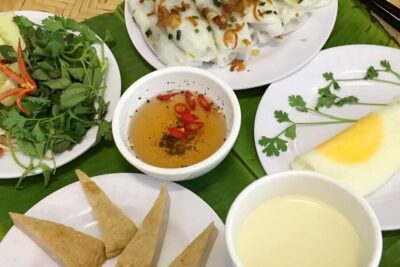
Banh xeo is especially enjoyable as part of a varied route. The crisp shell, fillings, herbs, and dipping sauce give you something to assemble and taste in different ways. Your guide can help you understand how to handle the dish, since some Vietnamese foods are meant to be wrapped or combined rather than eaten one piece at a time.
Fried food can become filling by the middle of a long tasting. The route’s walking sections help, but you should still pace yourself. Small bites, shared samples, and a willingness to leave a little room for later stops will make the final hour more enjoyable.
Stop five: spring rolls and fresh herbs
Freshly rolled spring rolls offer a lighter pause. Their texture comes from soft wrappers, herbs, and fillings rather than hot oil or grilled meat. They also show how Vietnamese food uses raw greens and herbs as an important part of the meal.
This is a useful stop for anyone who wants balance. Hanoi street food is not all noodles and meat. Fresh herbs, dipping sauces, and crisp vegetables can change the taste of a dish from one bite to the next.
Dietary requests are not clearly defined in the tour details, so you should raise any needs when booking. The experience says you may request a specific food for an extra cost, but it does not promise a vegetarian, vegan, allergy-free, or other tailored menu.
The finale: egg coffee and a sweet surprise
Egg coffee is likely to be the most memorable drink on the route. It combines coffee with a thick, sweet egg-based topping, producing something closer to a dessert than a standard cup of black coffee.
You may have tried pho or banh mi before, but egg coffee can still feel new. It is creamy, sweet, and unlike the coffee most visitors know. I would save room for it, even if you normally avoid dessert after a meal.
A Vietnamese coffee or drink is included, but extra coffee, beer, smoothies, mixed fruit, and other beverages are not necessarily covered. The inclusion wording also separates listed drinks from additional food and drinks, so ask the guide before ordering anything beyond the planned samples.
What the guide adds to the food
The food is the reason to book, but the guide determines how much you get from it. The experience is designed around an English-speaking local who explains ingredients, cooking customs, and Northern Vietnamese food traditions as you go.
Guides named for this experience include Doris, described as lively and warm, and Minh, described as energetic and entertaining. You cannot assume which guide you will receive, but the supplied names suggest that the tone may be friendly and personal rather than formal.
I value the cultural explanations as much as the tasting list. You learn about the Old Quarter’s development, daily routines, and the stories behind familiar dishes. That context turns a series of snacks into a better way to understand Hanoi.
The private setup helps here. Your group can ask questions, request a particular dish if available, or spend more time on a food that interests you. A large group would make that harder. The tradeoff is that the experience costs more per person than a shared walk might, though $35 remains a reasonable fee for a three-and-a-half-hour private outing with food included.
Timing, comfort, and practical limits
The route involves walking through narrow, busy streets and eating at casual stalls. Comfortable shoes are more useful than dress shoes, and a small appetite strategy is wise. Do not treat the first bowl as the whole meal.
The schedule can change when a food business is closed or operating at different hours. That means the exact lineup is not guaranteed. If you are attached to one particular dish, request it early, remembering that a special request may cost extra and may not be possible.
Most people can participate, according to the tour information. Still, the experience is not presented as a seated or accessible food program. The details do not specify step-free routes, vehicle transfers between stops, or accommodations for mobility limitations, so ask before booking if those points matter to you.
Weather also affects the outing. If poor weather forces cancellation, you are offered another date or a full refund. The same applies if the minimum number of participants is not met, though this is a private activity once it operates.
The standard cancellation rule is strict: the booking is non-refundable and cannot be changed for personal reasons. Only weather or failure to meet the required minimum brings the stated date-change or refund option.
Who will get the most from this tour
I would choose this for a first visit to Hanoi, especially if you want a quick orientation to the Old Quarter without spending time researching every stall. It is also a strong pick for food-focused couples, families, and small groups who want a guide’s attention.
People who already know Vietnamese food can still enjoy it. One account of the experience describes trying dishes that were new even after plenty of cooking and eating. That is a useful sign that the route is not limited to the most obvious international favorites.
Families may like the private format and the ability to adjust the pace. The food selection also gives cautious eaters several entry points, including baguettes, noodles, grilled meat, and sweet coffee. Young children may find the street setting exciting, but the tour details do not promise child-specific portions or seating.
This is less suitable if you dislike walking, cannot eat common Vietnamese ingredients, or want a carefully fixed restaurant itinerary. It is also not the right choice if your priority is a long, relaxed dinner with full portions and table service.
Is $35 good value?
At $35 per person, the tour offers a solid package: an English-speaking guide, the planned food samples, a Vietnamese coffee or drink, and a private experience lasting roughly half a day. You are paying for access and explanation as much as for the food itself.
The price becomes more attractive if you are new to Hanoi. A local guide saves you from guessing which stalls to trust, helps you order, and gives you the confidence to try dishes you might otherwise pass by.
Budget for extras. Side dishes, beer, smoothies, mixed fruit, additional coffee, and other drinks are not included, and tips are also outside the price. The tour is good value when you treat the included items as a tasting route, not an all-you-can-eat meal.
Should you book it?
Book this Hanoi street food walk if you want a private, food-first introduction to the Old Quarter with a local guide at your side. The mix of pho, bun cha, banh mi, fried snacks, spring rolls, and egg coffee gives you a broad taste of Northern Vietnamese cooking in a short time.
Skip it if you need a guaranteed menu, a quiet restaurant setting, or a flexible cancellation policy. For everyone else, the $35 cost is fair, especially if you choose the evening start, arrive hungry, and treat the changing route as part of eating in a real city rather than a flaw in the plan.
FAQ
Where does the Hanoi street food tour take place?
The tour takes place in Hanoi’s Old Quarter, using streets, alleyways, and local food stalls. The exact route may vary depending on the guide’s location and food businesses’ opening hours.
How long does the experience last?
The tour lasts approximately three hours and 30 minutes. The main food walk itself is described as about three hours.
What start times are available?
You can choose a morning start at 7:00 am or an evening start at 5:30 pm.
Is hotel pickup available?
Pickup is offered. The route and pickup details may vary depending on your location.
What food is included?
The planned tasting includes 8 to 9 dishes. Possible foods include bun cha, pho, banh goi, banh xeo, banh mi, and spring rolls.
Is a drink included?
A Vietnamese coffee or drink is included. Additional drinks such as beer, smoothies, mixed fruit, or extra coffee are not included.
Is this a private activity?
Yes. Only your group participates in the private tour.
Can I request a specific dish?
You can request a specific food, but an extra cost applies and availability is not guaranteed because the route depends on local opening hours.
Just added around Hanoi
- Cat Ba National Park, Lan Ha Bay 2 Days 1 Night Adventure★ 4.8 · 9 reviews
- Full day Boat Tour Lan Ha Bay – Ha Long Bay: Kayak, Beach Hopping★ 5.0 · 9 reviews
- Ha Giang Loop 2 Days High quality Small Group +Private Room★ 5.0 · 9 reviews
- Half Day Sapa Cat Cat Explore Waterfall, Workshop, H’mong Local★ 5.0 · 9 reviews
- Sapa 1 Day Trekking★ 5.0 · 9 reviews
- Halong 2 days 1 night with Cozy Classic Cruise from Hanoi★ 4.5 · 9 reviews
- Fansipan Mount Trekking 1 Day★ 5.0 · 9 reviews
- Sapa Open Air Jeep Half Days Off the Beaten Track, Backroad★ 4.9 · 9 reviews
Hanoi Street Food Tours, compared.
Small Group Hanoi Street Food Tour with a Real Foodie
Read our review →
Street Food Tour with Train Street & Hidden Alleyways
Read our review →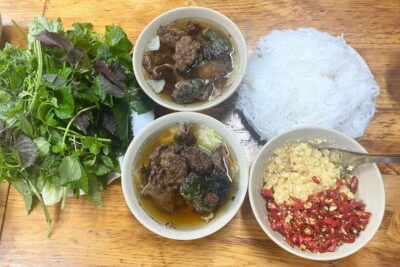
Guided Street Food Tour with Train Street Experience
Read our review →![[HOT] Hanoi Old Quarter Walking Street Food – Small Group Tour](https://9.thehanoitraveler.com/wp-content/uploads/hot-hanoi-old-quarter-walking-street-food-small-group-tour-400x267.jpg)
[HOT] Hanoi Old Quarter Walking Street Food – Small Group Tour
Read our review →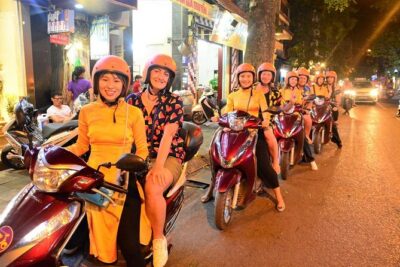
Hanoi Motorbike Tours Led By Women: Hanoi By Night Foodie Motorbike Tours
Read our review →
Browse the lists this tour appears in