
Reviewed · TRAIN STREET EXPERIENCES
Hanoi Train Street +Best Street Food eating in old quarter
The best part of this Hanoi outing is the way it links small local food stops with the city’s famous Train Street. You eat your way through the Old Quarter, then finish beside a narrow rail line where a train passes close to homes and cafés. I like the steamed banh cuon and the chance to try lesser-known foods such as cha ruoi. I also like that food, drinks, guiding, and the Train Street visit are included in the $27 price. The main caution is reliability: one booking had a no-show, and another began an hour late after a guide failed to arrive.
I especially like the tour’s range. You move from a delicate rice roll to crisp ban ran, savory bun cha, unusual vermicelli, egg coffee, chè, and a Hanoi beer. Apple has received warm praise as a guide, particularly for knowing the food shops and looking after her group, but guide assignments can vary.
In This Review
- Five details that shape the experience
- Why this food walk works well in Hanoi
- Starting with happy water at 78A Tran Nhat Duat
- Banh cuon, a soft start with savory filling
- Ban ran and the less familiar cha ruoi
- Fried vermicelli with fish, eel, crab, or chicken
- Bun cha and the Obama connection
- Egg coffee in a narrow Old Quarter café
- Chè, a sweet finish before the railway
- Reaching the actual Train Street
- Timing, price, and who gets the most from it
- Guide quality and the small reliability question
- Should you book this Hanoi food and Train Street tour?
- FAQ
- Where does the tour meet?
- How early should I arrive?
- How long does the experience last?
- What food is included?
- Is a guide included?
- Is Train Street part of the tour?
- What is the cancellation policy?
Five details that shape the experience
- The meeting point is 78A Tran Nhat Duat, in Hanoi’s Old Quarter, where you should arrive 10 minutes early.
- Banh cuon comes first among the food highlights, with steamed rice rolls, minced pork, mushrooms, fried shallots, and fish sauce.
- Cha ruoi is a seasonal Hanoi specialty, made into ragworm patties, so this is a chance to try something far outside the usual tourist menu.
- Bun cha is linked with Barack Obama’s Hanoi meal, giving a familiar dish some local context.
- The final stop is the actual Train Street, followed by a local Hanoi beer while you wait for the train.
- The tour lasts three hours and costs $27, including food, drinks, and an English-speaking guide.
Why this food walk works well in Hanoi
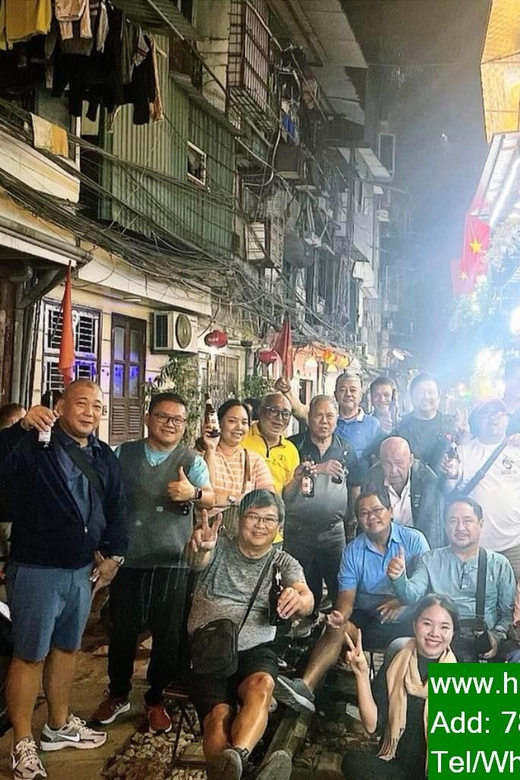
Hanoi’s Old Quarter is easiest to understand one bite at a time. Its narrow streets can feel confusing at first, with food stalls, cafés, shopfronts, scooters, and homes all sharing the same tight space. This tour gives you a guide and a route, so you can focus on the food instead of trying to work out where to eat next.
The experience is not built around one grand restaurant. You stop at several small local places, eating inside and outside as you go. That matters because Hanoi street food is often about a particular dish prepared by a particular vendor, not a large menu designed for visitors.
For $27, I find the arrangement good value if you want to sample many foods in one evening or afternoon. Food and drinks are included, along with the Train Street visit and an English-speaking guide. You are paying for access and direction as much as for the dishes themselves.
The three-hour format also keeps the outing manageable. About an hour and a half is set aside for food in Hoàn Kiếm, followed by about an hour at Train Street. The remaining time covers walking and the transition between stops. You should still expect a fair amount of standing and strolling on foot.
More Train Street visits:
- Hanoi: Guided Food Tour with Train Street Visit
★ 4.9 · 6,239 reviews - Hanoi: Street Food Tour with Train Street & Hidden Alleyways
★ 5.0 · 2,831 reviews - Hanoi: Guided Street Food Tour with Train Street Experience
★ 4.9 · 2,479 reviews
Starting with happy water at 78A Tran Nhat Duat
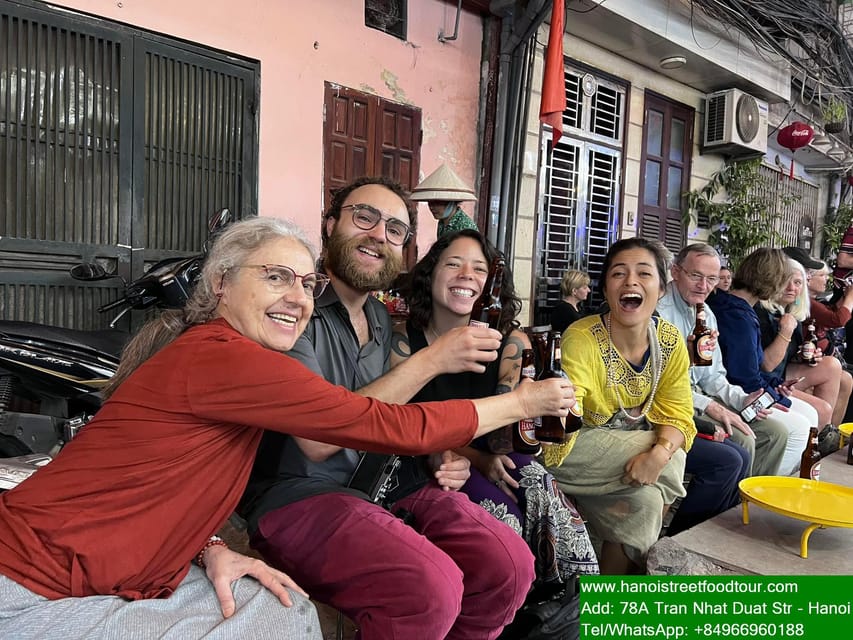
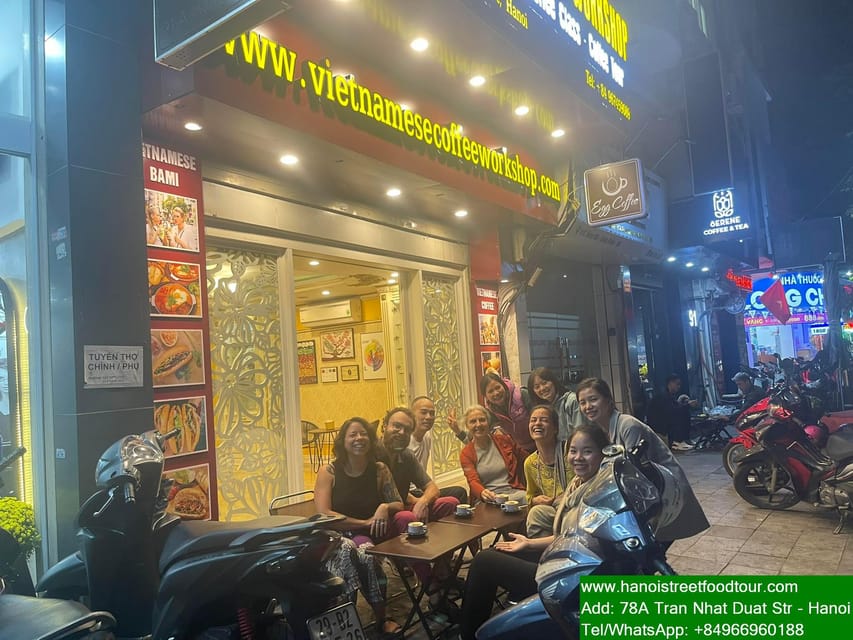
Meet at 78A Tran Nhat Duat Street in the Old Quarter 10 minutes before departure. The guide welcomes the group with happy water, a Vietnamese rice wine, before setting off.
This is a lively way to begin, but it is worth remembering that rice wine is alcoholic. If you do not drink, you should make your preference clear to the guide. The important practical point is to arrive early. The tour depends on a shared meeting point, and one poor experience involved no guide appearing at all. Another departure started an hour late because a different guide did not arrive.
Those incidents do not define every departure, but they are a real reason to build in patience. If the guide is not present at the meeting point, the supplied booking information does not give a separate local emergency number, so keep your booking details available and allow a little flexibility in your schedule.
The walk begins from the eastern side of the Old Quarter and heads toward food stops around Hoàn Kiếm. You are not being taken between attractions by vehicle. The walking is part of the point, since the food is spread through the streets rather than gathered in one dining room.
Banh cuon, a soft start with savory filling
One of the strongest food stops is banh cuon. These are thin, steamed rice rolls filled with minced pork and mushrooms, then finished with fried shallots and served with fish sauce.
The dish gives you a gentle introduction to Hanoi food. The rice wrapper is soft, while the pork, mushrooms, shallots, and fish sauce add savory depth. It is also a useful contrast to the fried and grilled foods that come later.
Banh cuon can be easy to overlook if you are choosing dishes from a menu by name alone. Having it presented as part of a guided tasting makes the stop more useful. You get a specific Hanoi specialty rather than simply another generic noodle bowl.
I would pay attention to portion size here. The tour includes several tastings, so these stops are intended to build into a meal rather than replace one dish with a full serving. If you arrive very hungry, the variety will help, but do not expect every stop to be a large plate.
Ban ran and the less familiar cha ruoi
At a local vendor, you try ban ran, a crisp fried rice ball filled with mung beans. Its texture is the main attraction: crunchy on the outside, with a sweet, dense filling inside.
Then comes cha ruoi, a seasonal specialty made from ragworm patties. This is one of the most distinctive parts of the tour. It takes you beyond the familiar list of pho, spring rolls, and banh mi and gives you a taste of a dish tied to local food habits and seasonality.
Cha ruoi will not suit every palate. The ingredient may be a hurdle if you prefer very familiar food, and the dish is not the kind of standard item you can count on finding everywhere. I see that as a useful choice for adventurous eaters, but you should not book this tour expecting only mild, widely known dishes.
The tour’s value here is not just the act of eating. A guide can explain what is on the plate and help you approach food that you might otherwise pass by. That personal direction is one reason this works better than wandering into random shops without a plan.
More Old Quarter walks:
- [HOT] Hanoi Old Quarter Walking Street Food – Small Group Tour
★ 5.0 · 2,163 reviews - Private transfer between Hanoi Airport (HAN) and Hanoi Old Quarter
★ 5.0 · 850 reviews - Hanoi Food Tours in Hanoi Old Quarter (Small Group/Private)
★ 5.0 · 657 reviews - Hanoi Old Quarter Private Walking Tour with Student Guide
★ 5.0 · 590 reviews
Fried vermicelli with fish, eel, crab, or chicken
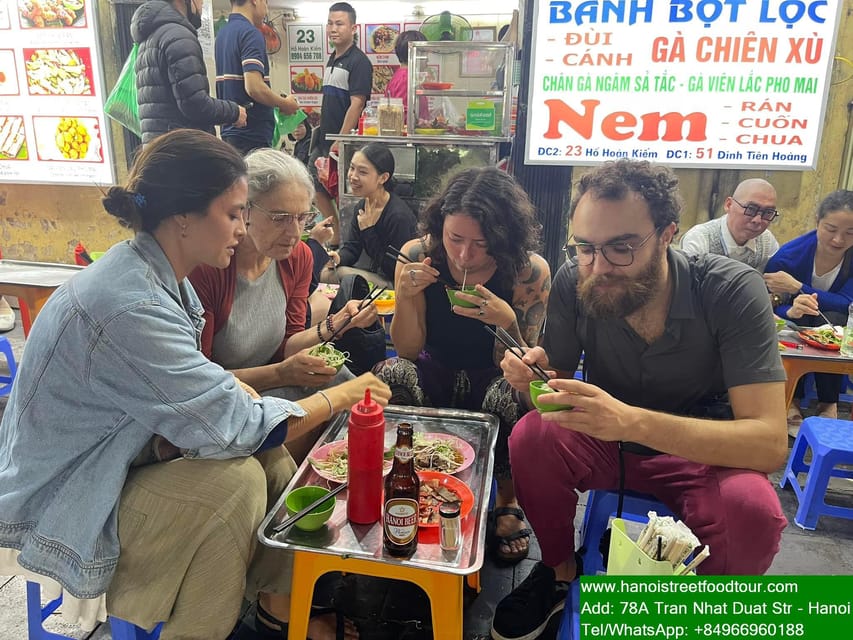
Mien tron brings another change in texture. This fried vermicelli dish can feature fish, eel, crab, or chicken, giving the tasting a different set of flavors from the rice rolls and fried rice balls.
The choice of topping may depend on what is being served at the stop. The description lists several versions rather than promising one fixed ingredient, so guests with strong food preferences should ask the guide what is available.
I like this part of the route because vermicelli is often associated with soup, while this preparation offers a drier, fried style. It helps show how broad Hanoi’s noodle cooking can be without turning the experience into a formal cooking lesson.
As with cha ruoi, ask about ingredients if you have allergies or avoid particular meats or seafood. The tour includes all food, but the available information does not promise substitutions or a customized menu.
Bun cha and the Obama connection
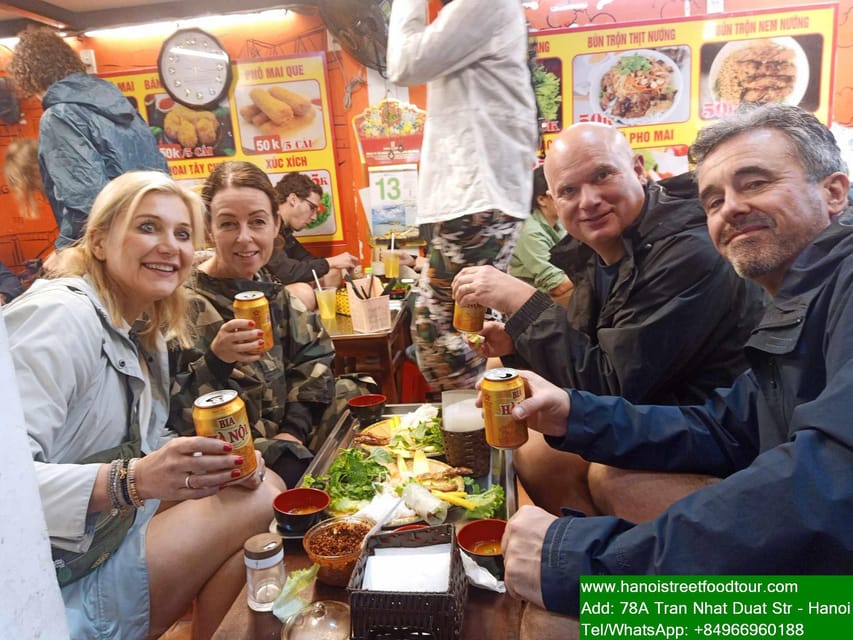
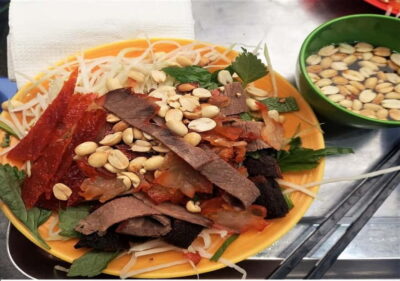
The Old Quarter walk includes bun cha, one of Hanoi’s best-known dishes. It combines grilled pork, rice noodles, herbs, and dipping sauce in a meal that is both filling and fresh.
Bun cha gained extra international attention after Barack Obama ate it in Hanoi during his presidency. The reference adds a fun talking point, but the dish deserves attention on its own. Its appeal comes from the contrast between smoky pork, cool herbs, noodles, and the salty-sweet sauce.
This is likely to be one of the more approachable dishes on the route. If you are new to Vietnamese food, bun cha provides a recognizable anchor after the more unusual cha ruoi and the fried vermicelli options.
Because this is one of the better-known Hanoi dishes, you could easily order it independently. The advantage of having it on the tour is that it forms part of a wider meal, letting you compare it with local specialties instead of spending your entire food budget on one familiar plate.
Egg coffee in a narrow Old Quarter café
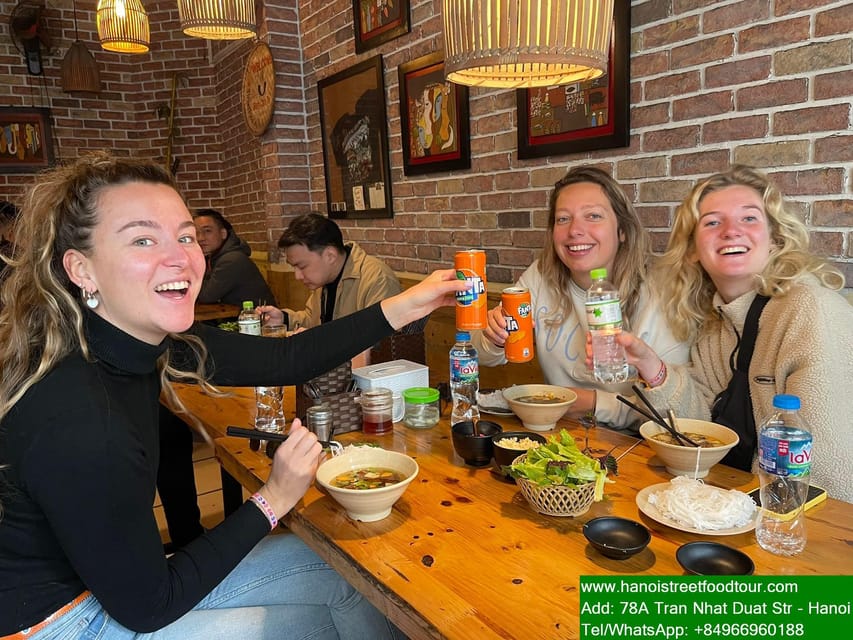
The coffee stop takes you to a hard-to-find café on a narrow Old Quarter street. Egg coffee is a Hanoi classic, made with a creamy egg topping over coffee.
This stop adds a change of pace after the savory dishes. The drink is sweet and rich, so it feels closer to a small dessert than a plain cup of coffee. It also suits the character of the Old Quarter, where cafés can be tucked into tight spaces and easy to miss if you are walking alone.
The café is described as one of the few left in the narrow street, so the stop has a sense of place that a visit to a large modern coffee shop would lack. Still, coffee is not compulsory. Another drink is available if egg coffee is not your style.
That flexibility is useful because the food route already contains several strong flavors. You can enjoy the café setting without forcing yourself to drink something you do not want.
Chè, a sweet finish before the railway
The tour also includes chè, a traditional Vietnamese dessert. Chè covers a broad family of sweet dessert preparations, and the stop gives you a final taste after the savory food.
Its inclusion makes the meal feel complete. You have rice, noodles, meat or seafood, fried snacks, coffee, and then dessert, all within one guided route. Portions are presented as tastings, so the progression should be easier to manage than ordering every item as a full meal.
I would treat this as a cultural food sample rather than a dedicated dessert experience. The supplied details do not specify the exact chè variety, so you may want to ask the guide what is being served that day.
Reaching the actual Train Street
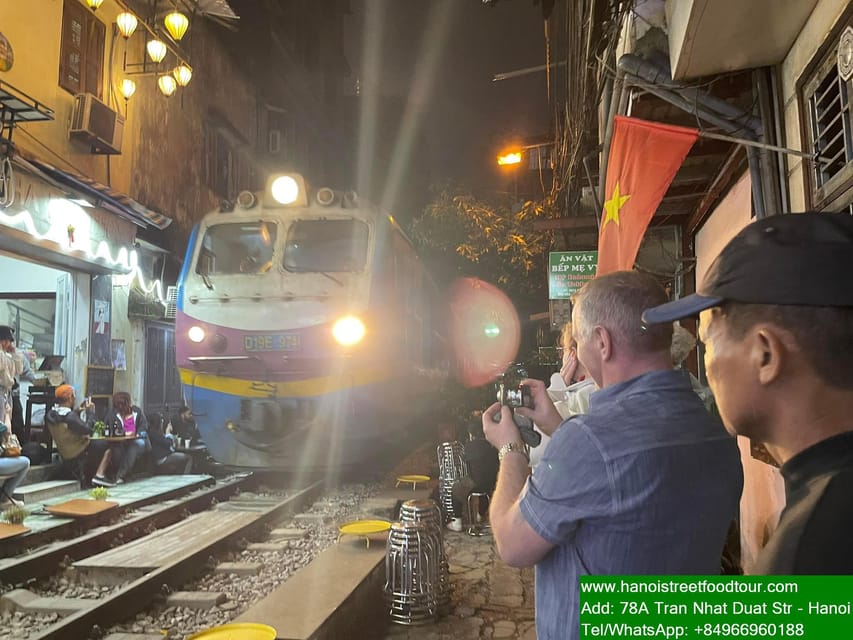
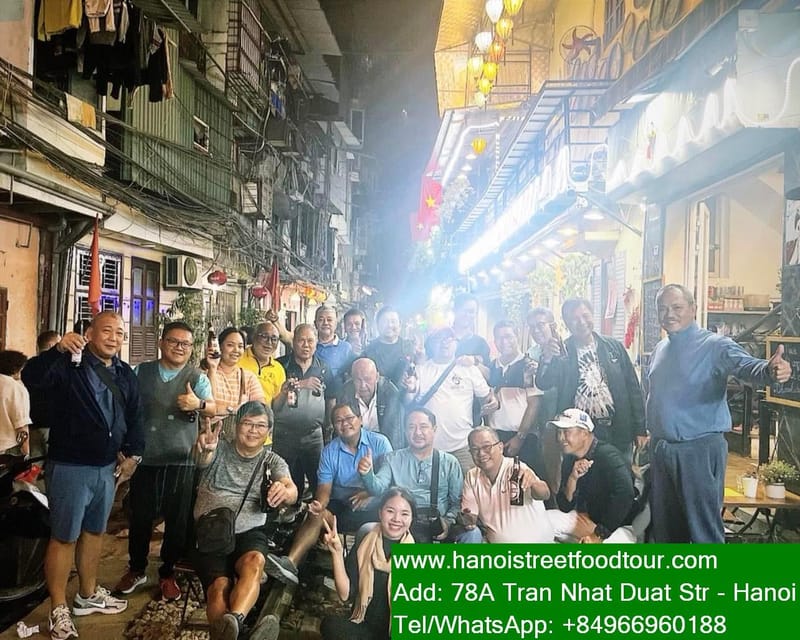
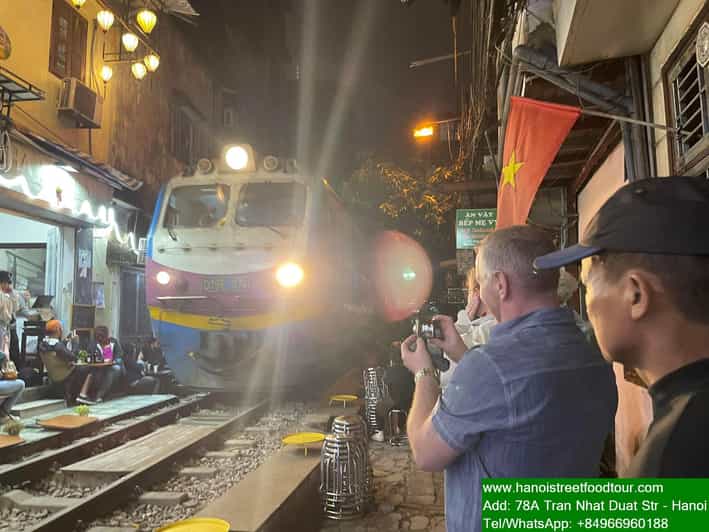
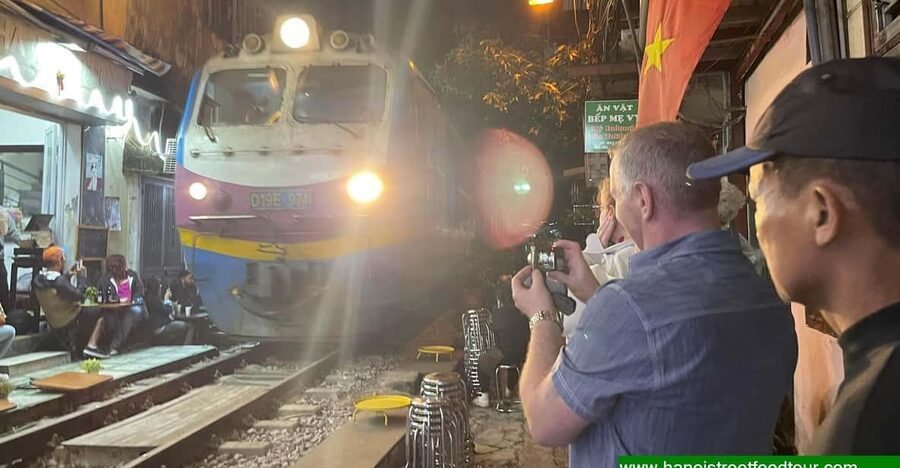
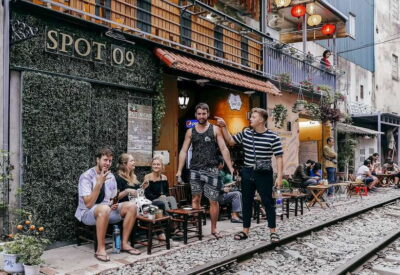
After the food walk, the group visits Hanoi Train Street. Here, railway tracks run through a narrow alley lined with houses and cafés. The train passing through is the main event, and you wait at a nearby café with a local Hanoi beer.
The timing matters. The tour aims to arrive in time for the train, but no exact train schedule is provided. The stop is therefore best understood as a guided attempt to catch the passing train, not a guarantee of a precise departure time stated in the tour details.
One useful point is that this is described as the real Train Street rather than a substitute location. That makes the final stop more meaningful for people specifically seeking the famous railway passage through the Old Quarter.
At the same time, the setting is tight, and the train passes through an alley close to buildings and cafés. Follow the guide’s instructions and remain in the permitted café area while waiting. The supplied information does not promise a private viewing platform or reserved table, so expect a simple local café stop rather than a polished attraction.
The included Hanoi beer is a pleasant way to end the route. If you do not drink alcohol, you should ask what alternative is available, since the tour description specifically names beer at this final stop but does not list a replacement.
Timing, price, and who gets the most from it
Three hours is enough time to sample a wide range of food without taking over your whole day. I would schedule it when you are free to walk slowly and remain flexible, especially because one recorded departure began an hour late.
The $27 cost is sensible for visitors who would otherwise pay separately for several snacks, a meal, coffee, dessert, and a drink. The English guide is the other major part of the value. You are getting help finding small food vendors and a planned route through streets that can be hard to navigate.
It is less useful if you already know Hanoi’s food scene well or want a long, leisurely meal at one restaurant. This is a tasting walk, with several stops and a final attraction, not a restaurant crawl built around large portions.
I would choose it for first-time visitors, solo travelers who want company, couples who like trying many dishes, and anyone nervous about ordering unfamiliar Vietnamese food. It also suits people who want to combine two popular Hanoi activities in one booking.
You should think twice if you need a guaranteed start time, dislike alcohol, have serious food allergies, or want complete control over every ingredient. The available details do not confirm dietary substitutions, group size, or an exact train time.
Guide quality and the small reliability question
The guide can make or break this kind of tour. Apple is the guide name most closely associated with the strongest experiences, and she has been praised for knowing both the city and the shop owners. That local familiarity is important when the route depends on small food vendors rather than famous restaurants.
Other departures have not been as smooth. A no-show left one person waiting, while another group began an hour late after a guide failed to appear. Those are serious service concerns, even though the overall experience has also produced very positive outings.
I would book with the understanding that the food concept is strong, but the operation deserves a little patience. Arrive 10 minutes early, keep the meeting address handy, and avoid placing an important same-day appointment immediately afterward.
Free cancellation up to 24 hours before departure and the option to reserve now and pay later reduce some booking risk. The tour runs at set starting times, so check the available time before committing.
Should you book this Hanoi food and Train Street tour?
I would book it if you want a compact introduction to Hanoi eating with a memorable final stop. The route covers far more than the usual pho recommendation, including banh cuon, ban ran, cha ruoi, fried vermicelli, bun cha, egg coffee, chè, and beer.
The best reason to choose it is the combination of local food direction and the actual Train Street setting. The best reason to hesitate is operational reliability, along with the lack of confirmed information about dietary substitutions and the train schedule.
If you are comfortable trying unfamiliar foods and can keep your schedule loose, $27 is a fair price for three hours of tastings and guiding. I would especially try to join a departure led by Apple if that option is clearly shown when booking, but I would not assume she will lead every group.
FAQ
Where does the tour meet?
The meeting point is Hanoi Street Food Tour at 78A Tran Nhat Duat Street in Hanoi’s Old Quarter.
How early should I arrive?
You should arrive 10 minutes before the departure time to meet the guide and group, receive the welcome rice wine, and get ready to leave.
How long does the experience last?
The tour lasts three hours. About one and a half hours are spent walking and tasting food around Hoàn Kiếm, followed by about one hour at Hanoi Train Street.
What food is included?
The tastings include banh cuon, ban ran, cha ruoi, fried vermicelli with fish, eel, crab, or chicken, bun cha, egg coffee or another drink, chè, and a local Hanoi beer at Train Street.
Is a guide included?
Yes. An English-speaking live guide is included.
Is Train Street part of the tour?
Yes. The group visits Hanoi Train Street and waits at a nearby café to watch a train pass through the narrow alley.
What is the cancellation policy?
You can cancel up to 24 hours before the experience for a full refund. You can also reserve now and pay later.
More Street-Food Crawls
- Small Group Hanoi Street Food Tour with a Real Foodie
★ 5.0 · 4,682 reviews - Hanoi Motorbike Tours Led By Women: Hanoi By Night Foodie Motorbike Tours
★ 5.0 · 1,734 reviews - Hanoi Street Food Tour with local delicacies
★ 5.0 · 1,506 reviews - Hanoi: Small-Group Street Food Walking Tour
★ 4.8 · 1,165 reviews
Just added around Hanoi
- Cat Ba National Park, Lan Ha Bay 2 Days 1 Night Adventure★ 4.8 · 9 reviews
- Full day Boat Tour Lan Ha Bay – Ha Long Bay: Kayak, Beach Hopping★ 5.0 · 9 reviews
- Ha Giang Loop 2 Days High quality Small Group +Private Room★ 5.0 · 9 reviews
- Half Day Sapa Cat Cat Explore Waterfall, Workshop, H’mong Local★ 5.0 · 9 reviews
- Sapa 1 Day Trekking★ 5.0 · 9 reviews
- Fansipan Mount Trekking 1 Day★ 5.0 · 9 reviews
- Sapa Open Air Jeep Half Days Off the Beaten Track, Backroad★ 4.9 · 9 reviews
- Halong 2 days 1 night with Cozy Classic Cruise from Hanoi★ 4.5 · 9 reviews
Train Street Experiences, compared.
Street Food Tour with Train Street & Hidden Alleyways
Read our review →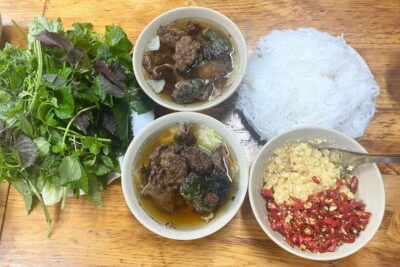
Guided Street Food Tour with Train Street Experience
Read our review →
Hanoi City Tour Highlight, Train Street Combine visit Countryside
Read our review →
Hanoi Jeep City Highlight, Backstreet, Train Street, Countryside
Read our review →
Guided Hanoi Food Tour With Train Street 8 Different Food Tasting
Read our review →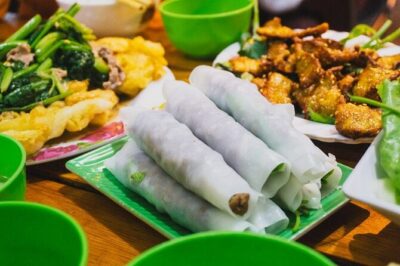
Walking Street Food Tour in Hanoi and Train Street
Read our review →Browse the lists this tour appears in