
Reviewed · PERFUME PAGODA TOURS
Perfume Pagoda Day Tour from Hanoi
Perfume Pagoda is less a single temple than a pilgrimage area spread across limestone hills, reached by river, cable car, and footpath. That layered journey is the main attraction. You leave Hanoi’s traffic behind, glide along the Yen Vi River, then reach Huong Tich Grotto, where Buddhist altars sit inside a natural cave.
I like the boat ride through rural scenery and the cable car, which saves you from a steep uphill climb. I also like the cultural focus: guides such as Lee, Long, Sean, and Ling have been praised for clear explanations and friendly service. The drawback is pace. This is an eight-hour outing with an early start, multiple transfers, stairs, and a lunch that may feel basic.
In This Review
- Key points to know before booking
- Why Perfume Pagoda makes a worthwhile day away from Hanoi
- Leaving Hanoi at 7:30 in the morning
- The Yen Vi River boat ride
- Temples, shrines, and the meaning of the site
- Riding the cable car to Huong Tich Grotto
- Inside the limestone grotto
- Lunch and the tour’s hurried rhythm
- How the guides affect the day
- What to pack and how to judge the physical effort
- Should you book the Perfume Pagoda tour?
- FAQ
- How long does the Perfume Pagoda tour take?
- What time does the tour start?
- Is hotel pickup included?
- How far is Perfume Pagoda from Hanoi?
- Is lunch included?
- Is the boat ride included?
- Is the cable car included?
- Do I need to climb stairs?
- What is the cancellation policy?
Key points to know before booking
- The Yen Vi River ride lasts about an hour, passing rice fields, hills, and limestone peaks.
- The cable car is included both ways, giving you easier access to Huong Tich Grotto than the steep walking route.
- Huong Tich Grotto requires stairs, including a descent of roughly 100 steps into the cave.
- The tour covers about 70 kilometers from Hanoi, so road time takes a meaningful part of the day.
- Lunch, entrance fees, bus transport, boat travel, and an English-speaking guide are included.
- The group may be as large as 35 people, though some departures use a smaller minibus.
Why Perfume Pagoda makes a worthwhile day away from Hanoi
Perfume Pagoda offers a very different day from Hanoi’s old streets, museums, and food stalls. The route moves through villages and paddy fields before reaching a quiet river corridor framed by green hills and limestone formations.
The site matters especially to Northern Vietnamese Buddhists. It is a major pilgrimage center, with temples and shrines spread around the Huong Son mountain area. For you, the appeal is not only the architecture. It is the way the sacred sites fit into the natural setting.
The trip also gives you several forms of transport in one day. You ride an air-conditioned bus from Hanoi, take a boat from Yen Vi Wharf to Duc Wharf, ride a cable car toward the mountain shrine, and walk the final stretch to the grotto. That variety keeps the outing interesting, but it also makes the day feel tightly scheduled.
The published price is $62 per person. That is fair value if you want a guided day with transport and admission arranged for you. Paying separately for a long-distance transfer, boat ride, cable car, entrance tickets, and lunch would require more planning, and you would lose the benefit of a guide explaining the religious sites.
Still, this is not a low-cost outing with a relaxed private schedule. The group limit is 35, and the day includes considerable transport time. I would judge the price as good for convenience and coverage, rather than for comfort or personal freedom.
More Perfume Pagoda runs:
- Full-Day Perfume Pagoda Private or Small-Group Tour
★ 4.1 · 174 reviews - From Hanoi: Full-Day Perfume Pagoda Group Tour with Lunch
★ 4.7 · 141 reviews - Full Day Tour to Perfume Pagoda with Traditional Boat Ride
★ 5.0 · 101 reviews
Leaving Hanoi at 7:30 in the morning
The stated start time is 7:30 am, with the meeting point at Hanoi Opera House on Trang Tien Street. Hotel pickup is also offered, but confirm the exact pickup arrangement when booking. The details describe round-trip hotel transport, while the meeting information names the Opera House as the start and end point.
The bus ride covers about 45 miles, or 70 kilometers. As Hanoi traffic thins, you pass villages, paddy fields, and rural communities. This is a useful change of scene, though the road section can take close to two hours depending on traffic and stops.
The vehicle is air-conditioned, which matters in Vietnam’s heat. Group size can affect the feel of the ride. One departure used a 12-person minibus, making it easier to interact with the guide. The maximum listed group size is 35, so do not assume every departure will be intimate.
The schedule may include a food stop before the main lunch. Some people find an early breakfast followed by a later meal awkward, so bring water and keep your expectations flexible. Drinks are not included, and personal expenses are your responsibility.
The Yen Vi River boat ride
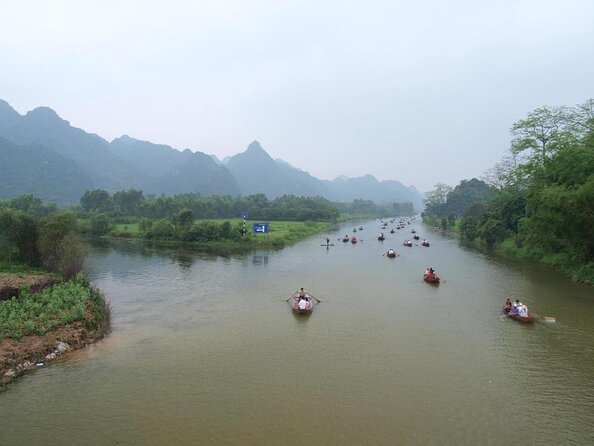
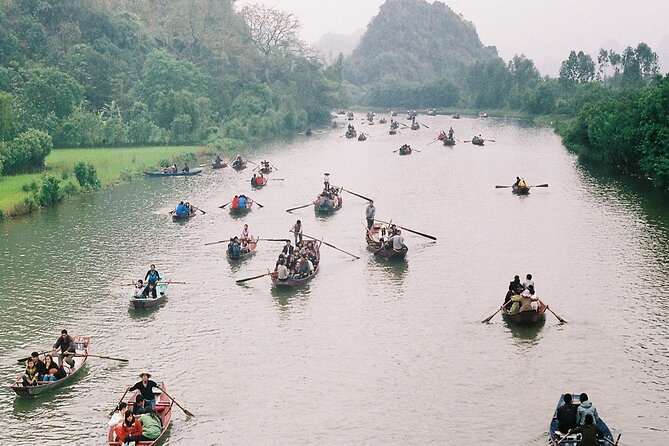
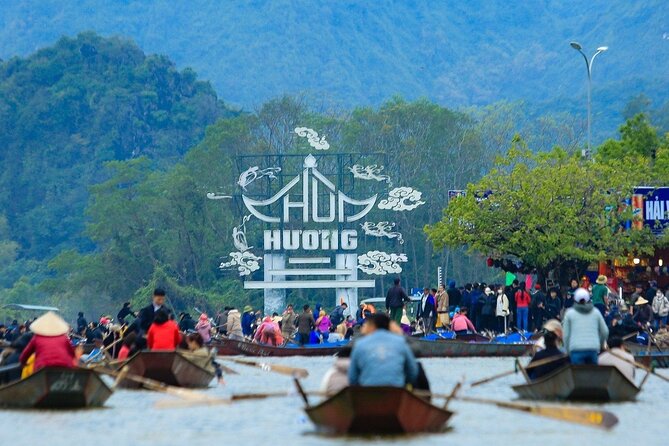
At Yen Vi Wharf, you board a boat and travel downstream toward Duc Wharf. The ride takes about an hour, making it one of the most enjoyable parts of the outing for anyone who likes quiet scenery.
From the water, you see low green hills, limestone mountains, fields, and rural shorelines. The river gives you a slower view of the countryside than the bus. It is also a good time to take photographs, though boat arrangements may vary.
A practical detail matters here. At least one departure divided people between covered and open boats, and the choice was not handled smoothly. If you care about an open view, ask your guide clearly before boarding. An open boat may offer better photographs, while a covered boat gives more shelter from sun and rain.
The ride is calm, but the seats may not be especially comfortable for a full hour. One account described the journey as hard on the legs and back. That is not a reason to skip it, but it is a reason to bring water, wear practical clothing, and avoid expecting a luxury cruise.
Temples, shrines, and the meaning of the site
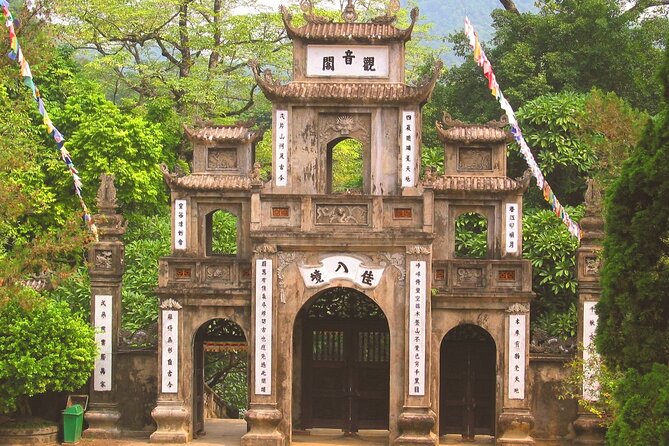
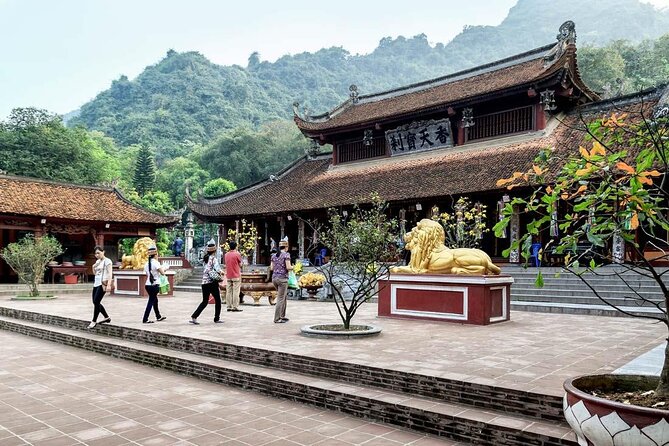
After reaching Duc Wharf, you begin the visit to the Perfume Pagoda area. The name refers to a group of Buddhist pilgrimage sites rather than one isolated building. Your guide should help connect the shrines, mountain setting, and local religious customs.
The first temple visit gives you an introduction to the area before the cable car section. Guide quality makes a real difference here. Lee has been praised for a strong, helpful presentation, while Long has been described as friendly, accommodating, and easy to understand in English. Sean and Ling have also received positive comments for creating a pleasant atmosphere and explaining Buddhism and the temple layout.
The experience is strongest when the guide explains what you are seeing instead of simply leading you from one stop to the next. Ask questions about the shrine decorations, offerings, and the importance of the pilgrimage route. Without that context, some of the buildings can blur together during a fast visit.
The pace is the main concern. The tour has to fit transport, lunch, the cable car, the cave, and the return journey into eight hours. You may get enough time to see the major places, but not enough time to linger at every altar or photograph every view.
A few more Hanoi departures worth weighing up
- Hanoi Jeep Tour: Food, Culture and Fun by Vietnam Army Jeep
★ 5.0 · 15,222 reviews - Full-Day Ninh Binh Highlights Tour from Hanoi
★ 5.0 · 7,761 reviews - Hanoi: Ha Long Bay Day Cruise – Swimming, Meal, Kayaking
★ 4.7 · 7,415 reviews - Hanoi: Water Puppet Show Tickets
★ 4.6 · 7,029 reviews
Riding the cable car to Huong Tich Grotto
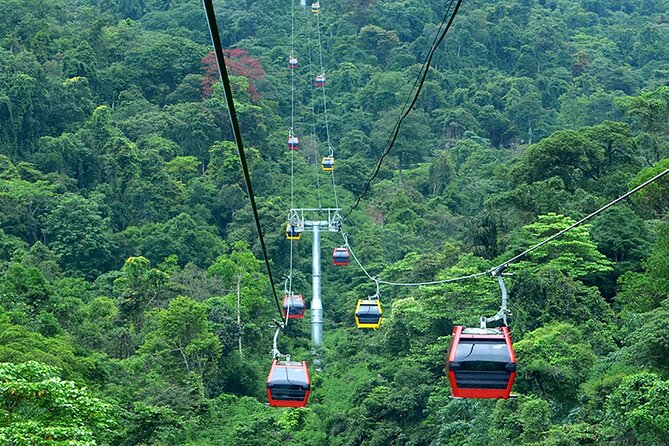
The included cable car is one of the clearest practical advantages of this tour. The alternative is a steep, slippery footpath that takes about 45 minutes according to one detailed account. The cable car gets you high above the river and saves energy for the shrine itself.
The ride is also a scenic part of the day. As the car climbs, you see the hills and river from above. If you dislike steep walking or are visiting during hot weather, this inclusion may be worth a large part of the tour price.
The cable car does not remove all walking. Once you reach the upper station, you continue on foot toward Huong Tich Grotto. The route includes stairs, and the grotto entrance involves descending roughly 100 fairly high steps. You then climb back out and return by cable car.
This is a light hike only by comparison with the full uphill route. Anyone with difficulty climbing or descending stairs should take the description seriously. Wear shoes with a firm grip, and do not count on the cable car to make the entire visit step-free.
Inside the limestone grotto
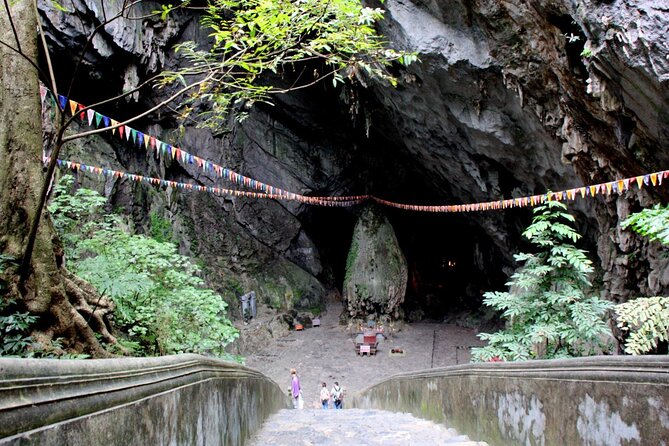
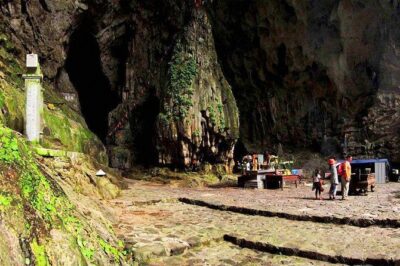
Huong Tich Grotto is the emotional center of the excursion. Buddhist shrines and offerings occupy the space inside the limestone cave, giving the visit a darker, more enclosed feeling than the open-air temples.
The cave is sacred, so treat it as a place of worship rather than only a photo stop. Listen to your guide’s explanation, keep your movements respectful, and allow people who are praying enough room.
The stairs into the grotto can be demanding. You may need to move carefully, especially if the steps are wet or crowded. The return climb is short but noticeable after the earlier walking and cable car ride.
The cave itself is not a long visit, yet it gives the day its special character. You are not simply looking at another pagoda building. You are entering a natural mountain space used for Buddhist worship, reached by a route that has involved road, river, cable car, and stairs.
Lunch and the tour’s hurried rhythm
Lunch is included at a local restaurant. That helps keep the day simple, and you do not need to search for a meal in an unfamiliar area. The food, however, should be viewed as functional rather than a major culinary stop.
The quality can be uneven, and some people find the meal only average. Meal timing can also feel strange if an early food stop is followed by lunch not long afterward. If you are particular about food, carry a small snack and buy drinks separately.
The schedule has a practical logic. Eating on the route lets the group continue without a long restaurant search. The tradeoff is less choice and less time to eat slowly.
I would not book this excursion mainly for lunch. Book it for the river, mountain setting, cave shrine, and cultural explanation. The meal is a useful inclusion that improves the value, but it is not the highlight.
How the guides affect the day
An English-speaking guide is included, but the quality of communication can vary. Good guides make the religious sites understandable and keep the group moving without making the day feel like a race.
Lee has been singled out for a strong guiding style. Long has been praised for his English, friendly manner, and willingness to help. Sean and Ling have also been noted for clear explanations and a good group atmosphere.
There has also been an account of an administrative staff member replacing an English-speaking guide. That is a serious concern because the cultural explanation is an important reason to choose a guided tour. Confirm the guide arrangement if this matters greatly to you, and contact the operator promptly if your pickup details do not match the booking.
The maximum of 35 people means you may not always hear every explanation clearly. A smaller minibus group, such as a 12-person departure, will usually make questions and conversation easier.
What to pack and how to judge the physical effort
Wear shoes that handle stairs and uneven paths. The cave route includes a substantial descent and ascent, and the walking surface may be slippery. Light clothing is sensible, but bring something that protects you from sun during the boat and outdoor sections.
Carry water because drinks are not included. A small snack is also useful if you dislike early meal stops or find the lunch schedule too close to breakfast.
You do not need to walk the full steep mountain path because the cable car is included. That makes the tour possible for many people who would not want a long climb. It does not make the outing suitable for everyone, since the grotto still requires stairs.
Most people can participate, according to the activity information, but the detailed practical picture is more useful than that broad statement. If you have trouble with high steps, ask about the route before booking. If you can manage ordinary stairs but prefer not to climb a mountain, the cable car offers a sensible compromise.
Should you book the Perfume Pagoda tour?
I would book this tour if you want to see rural scenery and an important Buddhist pilgrimage area without arranging several separate transfers. The combination of bus, river boat, cable car, temple, cave, lunch, admission, and return transport makes the $62 price reasonable.
You should also accept a busy day. This is not a slow countryside escape. You may be hurried between stops, the lunch may be plain, and the group could be larger than expected. The tour works best when you value seeing the main sites and learning their meaning more than setting your own pace.
Book it if you are comfortable with stairs, want a guided cultural outing, and have only one day for Perfume Pagoda. Skip it if you need a flexible schedule, dislike group transport, or want a food-focused excursion. Before paying, confirm the pickup point, ask about hotel transfer, and check that the cable car is included in both directions.
FAQ
How long does the Perfume Pagoda tour take?
The tour lasts approximately eight hours, including transport from Hanoi, the river boat ride, the mountain visit, lunch, and the return journey.
What time does the tour start?
The stated start time is 7:30 am. The meeting point is Hanoi Opera House at 1 Trang Tien, Phan Chu Trinh, Hoan Kiem, Hanoi.
Is hotel pickup included?
Round-trip hotel transfer is included in the tour details, but the meeting information also lists Hanoi Opera House as the start and end point. Confirm the exact pickup arrangement when booking.
How far is Perfume Pagoda from Hanoi?
The route covers approximately 70 kilometers, or 45 miles, from Hanoi to the Perfume Pagoda area.
Is lunch included?
Yes. Lunch at a local restaurant is included. Drinks are not included.
Is the boat ride included?
Yes. The tour includes a boat trip on the Yen Vi River from Yen Vi Wharf toward Duc Wharf.
Is the cable car included?
Yes. Cable car transport is included for the mountain route, including the return journey according to the tour details.
Do I need to climb stairs?
Yes. The route to Huong Tich Grotto includes a walk and stairs, including a descent of about 100 steps into the cave. The cable car avoids the longer steep mountain footpath but does not remove all walking.
What is the cancellation policy?
You can cancel up to 24 hours before the experience start time for a full refund. Changes or cancellations made less than 24 hours before the start time are not accepted for a refund.
Just added around Hanoi
- Full day Boat Tour Lan Ha Bay – Ha Long Bay: Kayak, Beach Hopping★ 5.0 · 9 reviews
- Cat Ba National Park, Lan Ha Bay 2 Days 1 Night Adventure★ 4.8 · 9 reviews
- Ha Giang Loop 2 Days High quality Small Group +Private Room★ 5.0 · 9 reviews
- Half Day Sapa Cat Cat Explore Waterfall, Workshop, H’mong Local★ 5.0 · 9 reviews
- Sapa 1 Day Trekking★ 5.0 · 9 reviews
- Sapa Open Air Jeep Half Days Off the Beaten Track, Backroad★ 4.9 · 9 reviews
- Halong 2 days 1 night with Cozy Classic Cruise from Hanoi★ 4.5 · 9 reviews
- Fansipan Mount Trekking 1 Day★ 5.0 · 9 reviews
Perfume Pagoda Tours, compared.
Full-Day Perfume Pagoda Private or Small-Group Tour
Read our review →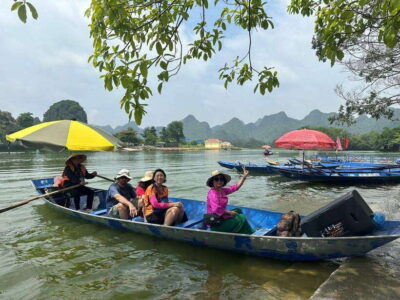

Full Day Tour to Perfume Pagoda with Traditional Boat Ride
Read our review →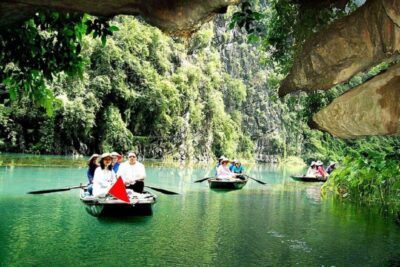
Perfume Pagoda – Yen Stream Boat Ride, Lunch & Cave
Read our review →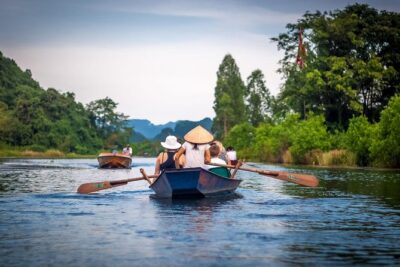
Perfume Pagoda Full-Day Guided Tour from Hanoi – All Inclusive
Read our review →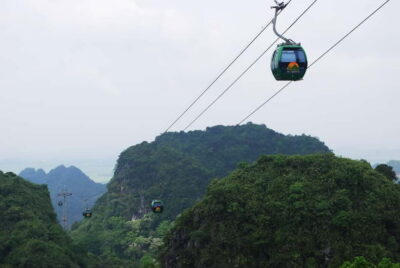
Perfume Pagoda Day Tour with Boat Ride & Cave Visit
Read our review →
Browse the lists this tour appears in