Reviewed · HANOI TOURS
Vietnam War: Uncovering Hanoi’s Untold Stories
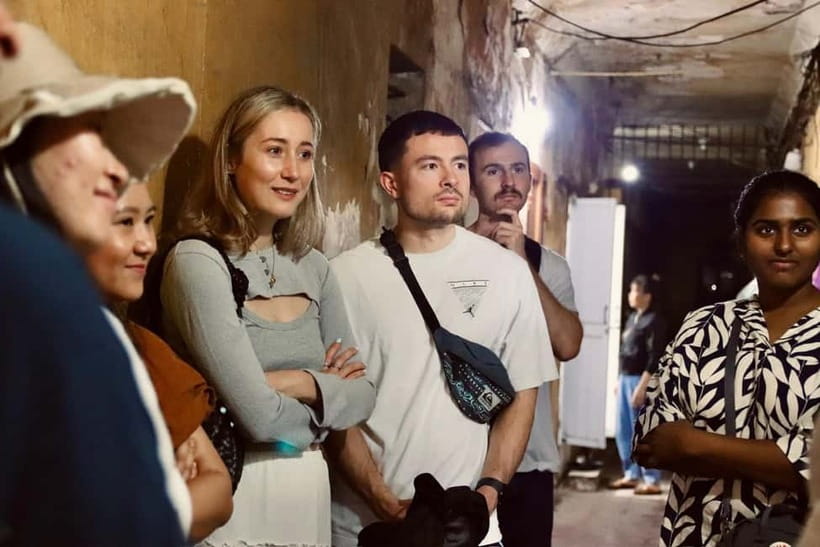
Hanoi’s wartime story is not confined to museums and grand monuments. This three-hour walk takes you into the Cho Gioi black-market area, a communal housing project, and the Kham Thien B52 memorial, then finishes with coffee or tea near Train Street. Kien, Dung, Cong, and Quang have guided this experience, bringing local knowledge and personal family connections to the conversation.
I like the way the walk connects national events with ordinary life, especially the effects of the planned economy and the division between North and South Vietnam. I also like the small-scale setting: a market, a housing block, and a neighborhood memorial can tell you things a formal museum may leave out. The main consideration is that this is more a history conversation with neighborhood stops than a parade of major war sites, so set your expectations accordingly.
In This Review
- Key points to know before booking
- A different way to understand Hanoi’s war years
- Starting at Chua Vua Street
- Cho Gioi and the black-market side of Hanoi
- Communal housing and the planned economy
- The Kham Thien B52 memorial
- The taxi ride that links two sides of the city
- Finishing at a quieter section of Train Street
- What the guides add to the experience
- Is $28 a fair price?
- Who should book this Hanoi walk?
- Should you book it?
- FAQ
- Where does the tour begin?
- Where does the tour end?
- How long does the experience last?
- Which places are visited?
- Is food or drink included?
- What languages are available?
- What should I bring?
Key points to know before booking
- Cho Gioi reveals everyday Hanoi: Walk through a local market area where the atmosphere feels far removed from the Old Quarter’s tourist lanes.
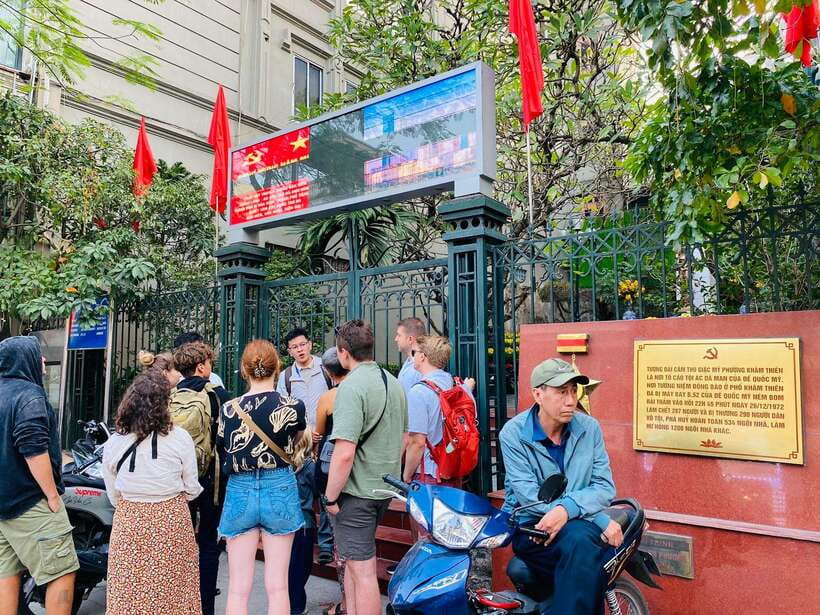
- The Kham Thien memorial marks the Christmas Bombings: This stop gives the war a specific Hanoi address and a place for quiet reflection.
- Communal housing adds social context: You learn how people lived under the planned economy, not just how armies fought.
- Train Street is the relaxed finale: Finish with coffee, tea, snacks, or another drink while waiting for a train in a quieter section.
- The three-hour format stays focused: A short taxi ride breaks up the walking and helps the route reach different parts of the city.
- Your guide matters: Kien, Dung, Cong, and Quang have all led this walk, with English-language storytelling and time for questions.
A different way to understand Hanoi’s war years
Many Hanoi tours begin with well-known landmarks. This one begins with a question: what did the war and its aftermath mean for people who were buying food, sharing housing, raising children, and trying to get through the week?
That approach makes the experience useful even if you already know the broad outline of the Vietnam War. You hear about Vietnam as a divided country, the Cold War politics around it, the conflict between communist and anti-communist forces, and the eventual reunification. But the walk keeps bringing those large events back to daily life in Hanoi.
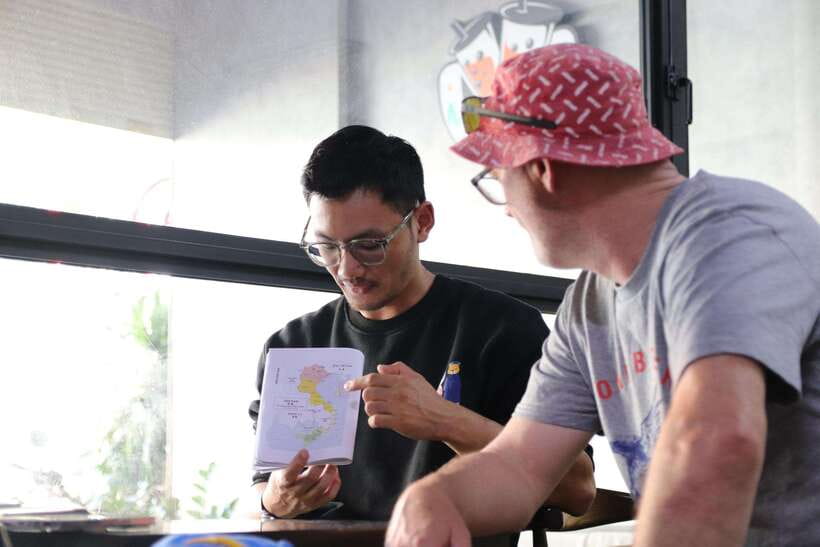
I particularly like the conversational format. The guide explains the background, then leaves room for questions and discussion. It is not designed as a nonstop lecture, and that matters when the subject includes political conflict, family division, bombing, displacement, and the long aftermath of war.
The walk is conducted in English and lasts about three hours. You spend part of that time on foot, with a short taxi ride roughly halfway through. Coffee or tea is included, and the final stop gives you time to sit, talk, and watch the railway setting rather than simply ticking off another sight.
A few more Hanoi departures worth weighing up
- Hanoi Jeep Tour: Food, Culture and Fun by Vietnam Army Jeep
★ 5.0 · 15,222 reviews - Full-Day Ninh Binh Highlights Tour from Hanoi
★ 5.0 · 7,761 reviews - Hanoi: Ha Long Bay Day Cruise – Swimming, Meal, Kayaking
★ 4.7 · 7,415 reviews
Starting at Chua Vua Street
The meeting point is at 24B Chua Vua Street, about 2.5 kilometers from Hoan Kiem Lake and around 3.5 kilometers from Hanoi’s Old Quarter. Look for the secondary school named Trường Trung học cơ sở Đoàn Kết. A coffee shop and several second-hand bicycle shops are nearby.
This is not a dramatic monument or polished visitor center. That is part of the point. You begin in a normal Hanoi neighborhood, away from the usual sightseeing circuit, and the setting helps prepare you for a walk centered on local life.
Give yourself enough time to reach the starting point. The distance is manageable by taxi from the lake or Old Quarter, but Hanoi traffic can make a short journey take longer than expected. The experience ends back at this same meeting point, so you do not need to plan a complicated pickup at the finish.
Cho Gioi and the black-market side of Hanoi
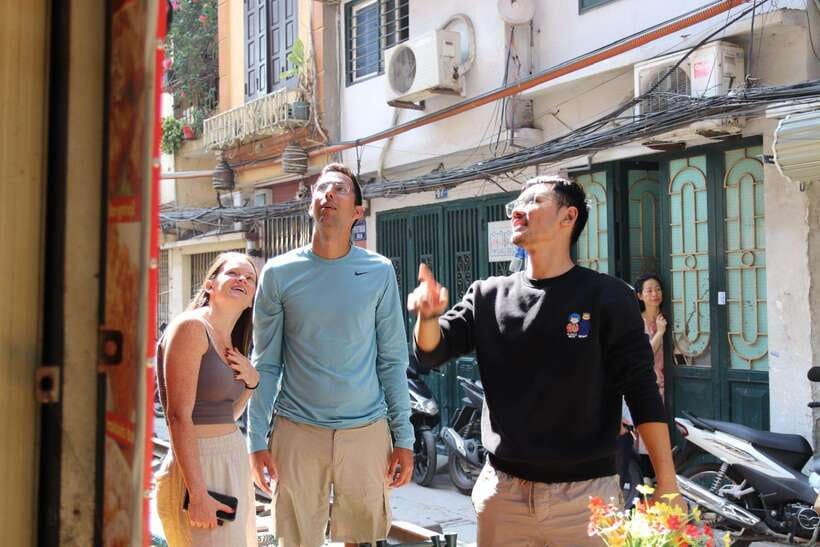
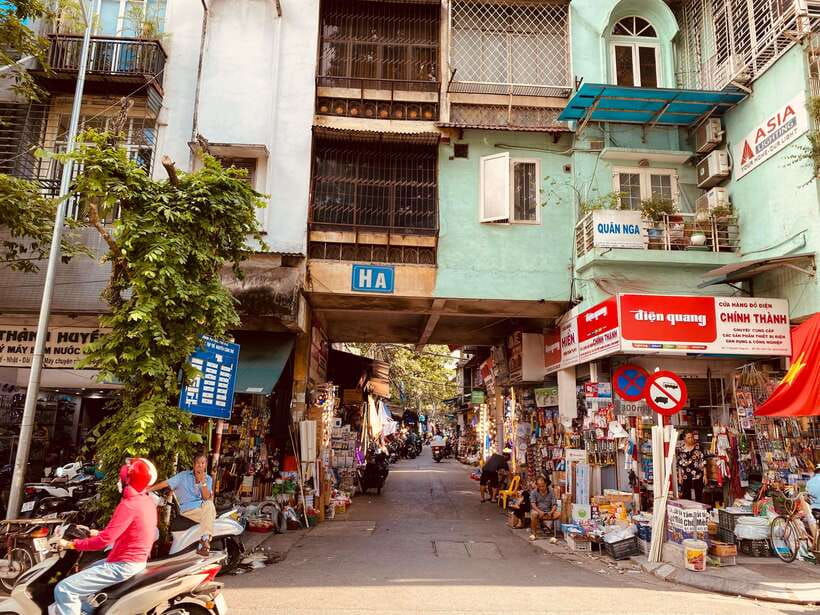
The Cho Gioi area is one of the most interesting parts of the route because it shows how commerce and survival shaped the city. The area is associated with a black market and, in some descriptions, a sky market atmosphere. You walk through a place that feels active and local rather than arranged for sightseeing.
Here the guide explains how people lived under Vietnam’s planned economy and how goods, work, and daily needs were handled during difficult periods. The value is not in seeing a single preserved object. It is in understanding the systems behind ordinary life and how people managed when official supply channels did not meet every need.
You may also hear about the different fates of people from North and South Vietnam. That wider perspective is important. A tour that discusses only military strategy can make the conflict seem like a contest between governments and armies. This walk gives more attention to families, communities, and the social changes that followed division and reunification.
The market stop also helps you see present-day Hanoi with more context. The streets are not simply colorful scenery for photographs. They are part of a city shaped by shortages, adaptation, state planning, reform, and changing economic life.
Keep your eyes open and stay close to the guide here. Market lanes can be crowded, and the point is to listen while noticing how the area works. You are not visiting a staged historical set, so the experience may feel less tidy than a museum visit. That is also what makes it more revealing.
Communal housing and the planned economy
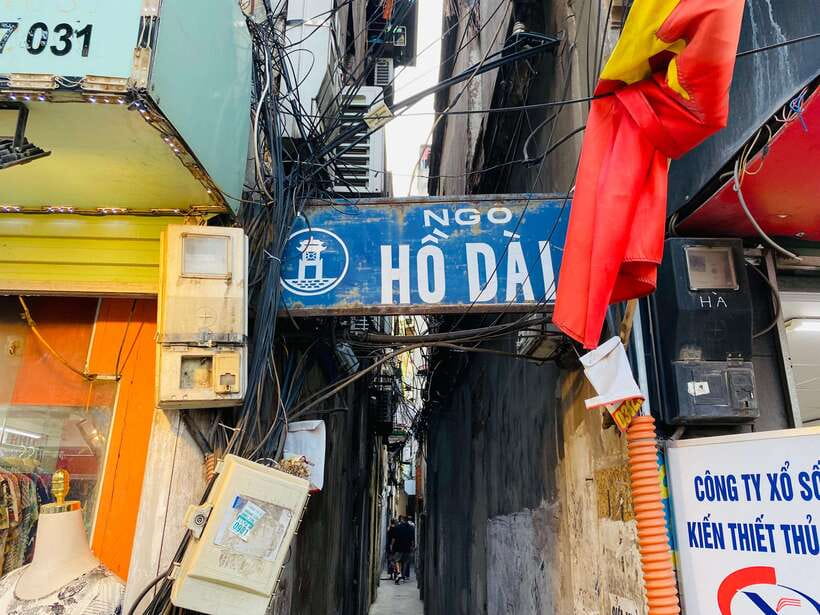
One of the strongest parts of the route is the chance to look inside, or at least around, a communal housing project. Access can depend on local conditions, but the walk includes a visit to one of these buildings and an explanation of how residents lived.
These housing blocks help explain the planned economy in human terms. Instead of treating the period as a dry chapter of political history, the guide connects it to rooms, shared spaces, neighbors, and household routines. You begin to understand how housing policies affected ordinary Hanoi residents.
This is also where the guide’s personal connection can add weight. Kien has been praised for explaining both national events and everyday Vietnamese life, while other guides, including Dung, Cong, and Quang, bring their own local perspectives. The exact guide may vary, but the format allows you to ask how past events still shape family memories and present-day attitudes.
You should approach this stop respectfully. It is a living neighborhood, not an attraction built for visitors. Follow the guide’s instructions, avoid treating private spaces as photo props, and listen carefully when the conversation turns to how families experienced the war and its aftermath.
For me, this is the kind of stop that can change the way you see the rest of Hanoi. Afterward, apartment blocks and narrow neighborhood lanes are not just urban background. They become part of the story of how the city rebuilt and adapted.
Same part of the north, a completely different day out:
- Hanoi: Water Puppet Show Tickets
★ 4.6 · 7,029 reviews - Hanoi Motorbike Tour: Food, Culture and Fun by Vintage Motorbike
★ 5.0 · 6,699 reviews - Hanoi: Guided Food Tour with Train Street Visit
★ 4.9 · 6,239 reviews - Hanoi Cooking Class: Culture, Local Market & Meaning CSR Impact
★ 5.0 · 5,147 reviews
The Kham Thien B52 memorial
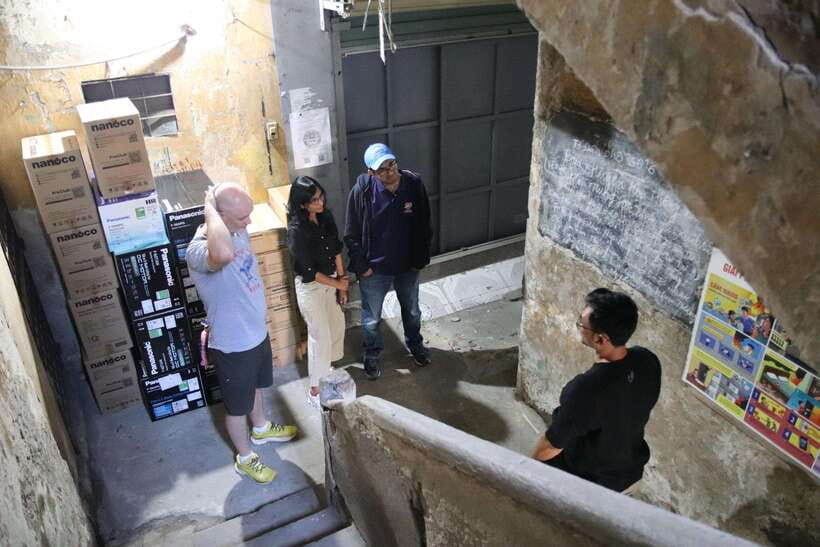
The Kham Thien War memorial is the route’s clearest wartime site. It recalls the Christmas Bombings, when Hanoi was attacked during the December 1972 bombing campaign. The memorial gives the history a precise location and a human scale.
Rather than simply naming dates and military operations, the guide explains what the bombing meant for local residents. This makes the stop especially useful for understanding the North Vietnamese experience of the war, which can be underrepresented in accounts shaped mainly by American or Western perspectives.
The site is not presented as a grand monument with a long visitor circuit. It is a focused memorial stop, so the guide’s explanation carries much of the meaning. You will likely spend time listening, asking questions, and considering how a neighborhood remembers loss.
The subject is serious. The overall walk is friendly and informal, but this stop asks for a quieter mood. That change of tone is appropriate, and it keeps the experience from turning the war into a collection of dramatic stories without human cost.
If you are mainly seeking military hardware, large museums, or a long list of battle sites, this tour may feel limited. The Kham Thien memorial is important, but it is one stop within a broader story about society and memory.
The taxi ride that links two sides of the city
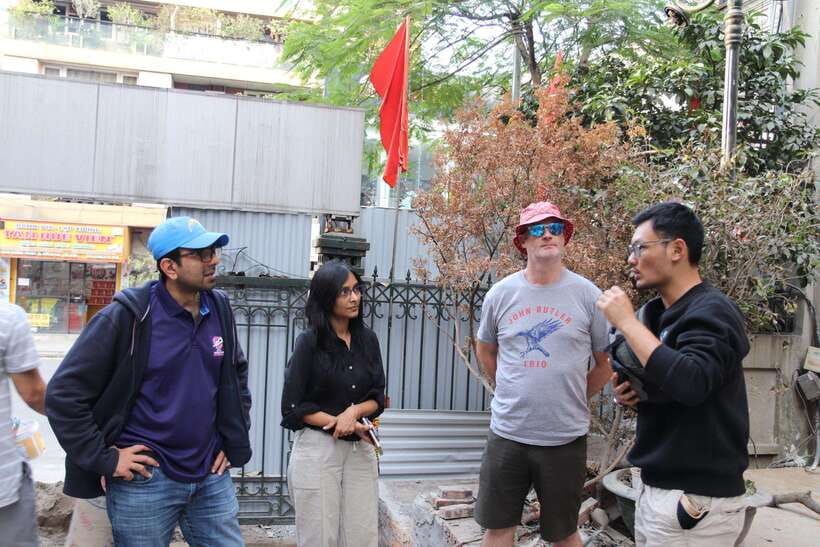
A short taxi ride comes around the middle of the walk. It is a practical detail, but it improves the route. Instead of keeping the entire experience within one small neighborhood, the taxi allows the guide to connect areas with different roles in Hanoi’s story.
The ride is included, so you do not need to arrange or pay for that part yourself. As with any city excursion, traffic can affect the timing, but the transport keeps the three-hour walk from becoming an exhausting all-day trek.
You will still spend substantial time on foot. Wear comfortable shoes and breathable clothing. Hanoi can be hot and humid, and the tour operates in rain or shine. Check the forecast the day before and bring an umbrella or raincoat if needed.
The experience is not suitable for people with vertigo or epilepsy. Those restrictions should be taken seriously when deciding if the route is right for you.
Finishing at a quieter section of Train Street
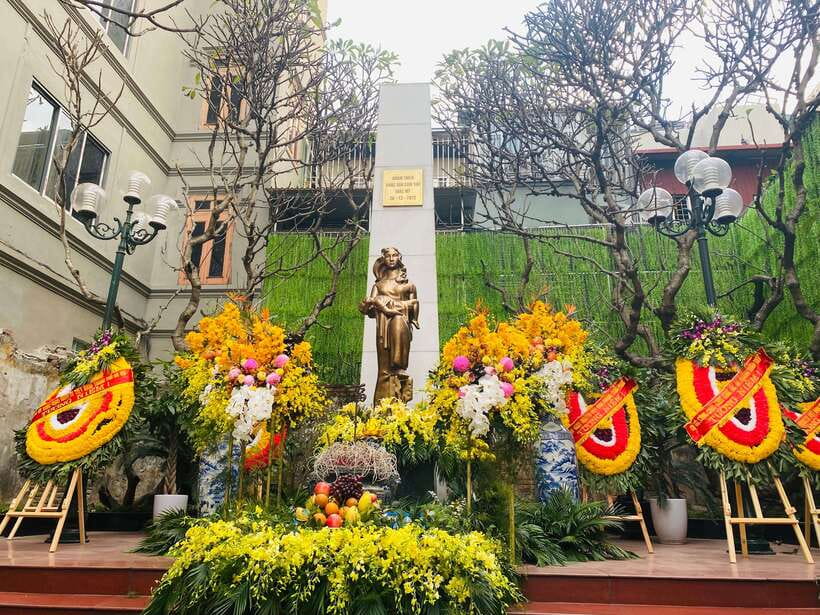
Train Street is the most familiar name on this route, but the experience approaches it differently from a quick photo stop. The walk finishes at a quieter part of the railway corridor, where you can sit at a train-side café and have coffee, tea, snacks, or another refreshment.
A train may pass during your visit, but the timing is not guaranteed by the information provided. The train setting is best treated as a relaxed final stop, not as a promise of a specific railway spectacle.
This ending works well because the earlier sections are information-heavy. You have been discussing war, politics, markets, housing, and family experience. Sitting down with a cold drink gives you time to ask follow-up questions and connect the past to the Hanoi you are seeing today.
Some walks end at a major sight and leave you to find your own way back. Here, you return to the original meeting point after Train Street. That makes the route easier to manage, especially if you are still learning your way around Hanoi.
Do not expect the same crowded photo atmosphere associated with the most famous Train Street images. The quieter location is an advantage if you want to hear your guide and enjoy the setting without spending the final minutes jostling for space.
What the guides add to the experience
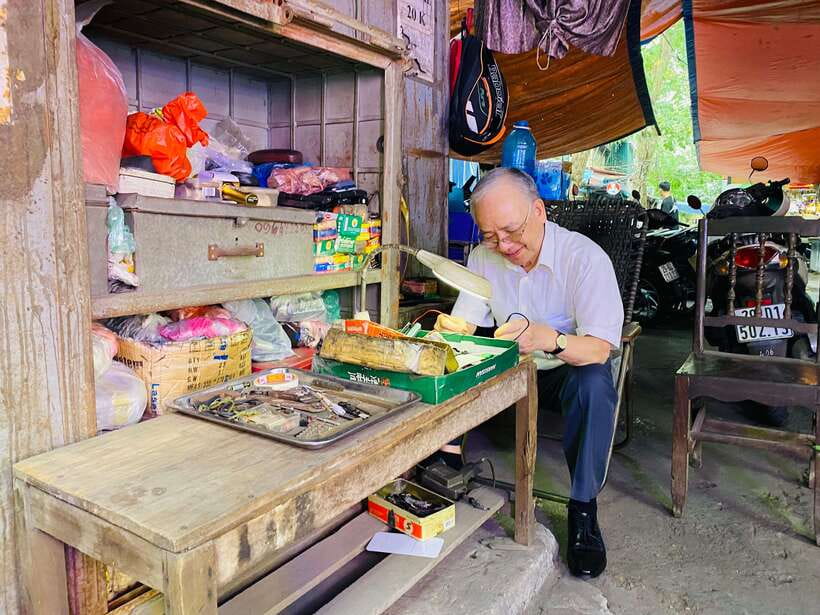
The guide is the heart of this walk. Kien has led many sessions and is described as friendly, articulate, relaxed, and highly informed about both Vietnamese history and current life. His English is strong, and he has lived in the United States and Ireland, which may help him explain complex subjects to an international audience.
Dung has also been praised for passion and local knowledge. Cong and Quang have guided the experience as well, offering a personal connection to Hanoi and its past. You cannot assume which guide you will receive unless the booking system lets you select one, but the repeated strength of the guiding is a good reason to place this tour near the beginning of your Hanoi stay.
That timing is more than a scheduling tip. If you take the walk early, you gain a framework for the rest of your visit. The city’s housing, markets, memorials, and political symbols become easier to read. You also have the chance to ask better questions during later visits to places such as the Maison Centrale prison, which is a short walk from the tour’s ending point.
The best way to get value from the guide is to participate. Ask about family experience, the division between North and South, the planned economy, reunification, or how younger Vietnamese people view the past. The format is built for conversation, not passive listening.
Is $28 a fair price?
At $28 per person, this is good value if you want interpretation rather than simple sightseeing. The price includes the guide, local stories, coffee or tea, and the short taxi ride. You are also paying for access to areas and conversations that are not obvious from a standard Old Quarter walk.
A cheaper self-guided outing could take you through Hanoi’s streets, but it would not easily explain the links between Cho Gioi, communal housing, Kham Thien, and Train Street. The cost makes sense for someone who wants the city’s past explained in place, with time for questions.
The price is less compelling if your main aim is to visit a large number of formal war attractions. This route has only one clearly identified war memorial, and much of the experience focuses on social history and ordinary life. That is not a weakness, but it is a choice of emphasis.
Twenty percent of the profit is donated to the Vietnam Association for Victims of Agent Orange/Dioxin and the Blue Dragon Children’s Foundation in Hanoi. If supporting a tour with a charitable contribution matters to you, that gives the purchase an additional purpose.
Who should book this Hanoi walk?
I would choose this tour if you enjoy local neighborhoods, political history, and the stories behind ordinary buildings. It suits solo visitors, couples, families with older children, and anyone who wants more than a standard landmark checklist.
It can work for families with teenagers, and one account notes that a child in a stroller joined successfully. Still, the walk includes market lanes, outdoor conditions, and a serious memorial, so parents should decide if the pace and subject are suitable for their child.
History fans will get the most from it, but you do not need a specialist background. The guide explains the broad sequence of events and then adds detail through personal stories and local examples. Strong English communication and an informal style help keep the subject accessible.
I would not make this your first choice if you dislike walking, need a fully climate-controlled activity, or want only famous monuments. You should also reconsider if the stated restrictions related to vertigo or epilepsy apply to you.
Should you book it?
Book this walk if you want to understand Hanoi through the lives of its residents. The best parts are not grand displays. They are the market lanes, the communal housing, the memorial to the Christmas Bombings, and the conversations that connect them.
I would schedule it early in your stay, wear light clothing and sturdy shoes, and arrive ready to ask questions. Choose it for context, local access, and a clear explanation of how war, division, planned-economy life, and reunification affected Hanoi. Skip it only if you are seeking a conventional military history tour with many formal museum stops.
FAQ
Where does the tour begin?
The meeting point is at 24B Chua Vua Street, in front of Trường Trung học cơ sở Đoàn Kết. A coffee shop and second-hand bicycle shops are nearby.
Where does the tour end?
The experience ends back at the same meeting point where it begins.
How long does the experience last?
The walk lasts about three hours and includes a short taxi ride around the middle of the route.
Which places are visited?
The route includes the Cho Gioi area, the Kham Thien B52 memorial, and Hanoi Train Street. It also includes a visit to or around a communal housing project.
Is food or drink included?
Coffee or tea is included. The final stop at Train Street may also include snacks or other drinks, depending on what you choose.
What languages are available?
The experience is conducted in English.
What should I bring?
Wear comfortable shoes and breathable clothing. Since the walk operates rain or shine, check the forecast before going and bring an umbrella or raincoat if rain is expected.
Just added around Hanoi
- Full day Boat Tour Lan Ha Bay – Ha Long Bay: Kayak, Beach Hopping★ 5.0 · 9 reviews
- Cat Ba National Park, Lan Ha Bay 2 Days 1 Night Adventure★ 4.8 · 9 reviews
- Ha Giang Loop 2 Days High quality Small Group +Private Room★ 5.0 · 9 reviews
- Half Day Sapa Cat Cat Explore Waterfall, Workshop, H’mong Local★ 5.0 · 9 reviews
- Sapa 1 Day Trekking★ 5.0 · 9 reviews
- Sapa Open Air Jeep Half Days Off the Beaten Track, Backroad★ 4.9 · 9 reviews
- Halong 2 days 1 night with Cozy Classic Cruise from Hanoi★ 4.5 · 9 reviews
- Fansipan Mount Trekking 1 Day★ 5.0 · 9 reviews
Hanoi Tours, compared.
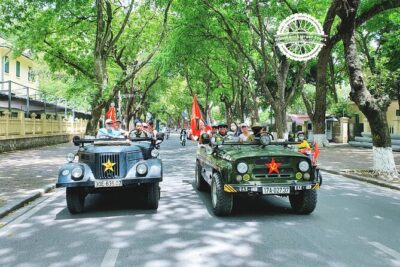
Hanoi Jeep Tour: Food, Culture and Fun by Vietnam Army Jeep
Read our review →
Full-Day Ninh Binh Highlights Tour from Hanoi
Read our review →
Ha Long Bay Day Cruise – Swimming, Meal, Kayaking
Read our review →
Hanoi Motorbike Tour: Food, Culture and Fun by Vintage Motorbike
Read our review →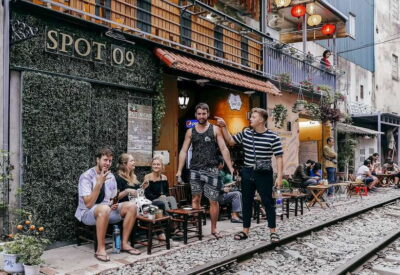

Hanoi Cooking Class: Culture, Local Market & Meaning CSR Impact
Read our review →