
Reviewed · COFFEE EXPERIENCES
Coffee, History, and Architecture of the French Quarter
Hanoi’s French Quarter is best understood on foot, with a cup of egg coffee in hand and a guide who can explain both the grand buildings and the hard years behind them. This 2.5-hour walk links French colonial architecture with Vietnam’s modern history, from St. Joseph’s Cathedral to the Opera House, Metropole Hotel, and Hoan Kiem Lake.
I like the relaxed, question-friendly format, especially with guides such as Mina and Dung, who explain complex subjects in clear English and use old photographs to make events easier to grasp. I also like the coffee in an old French villa and the stop for Trang Tien ice cream, two local tastes that keep the history from feeling dry.
The main thing to consider is the walking pace and weather. Hanoi can be hot, wet, and busy, and this tour operates rain or shine. Also, the supplied meeting details differ slightly on the finish point, so confirm whether your group ends at Hanoi University of Pharmacy or returns to the starting area.
In This Review
- Key things to know before you book
- Why Hanoi’s French Quarter works so well on foot
- Starting beside St. Joseph’s Cathedral
- Vietnamese coffee inside an old French villa
- Reading the French Quarter beyond its façades
- The Opera House and the city’s public face
- Hoan Kiem Lake and Trang Tien Street
- The Metropole Hotel and the story of war
- Trang Tien ice cream is more than a sweet finish
- The final stop and one detail to confirm
- What the $31 price gets you
- Who should book this Hanoi walking tour
- Weather, clothing, and walking advice
- Should you book Coffee, History, and Architecture of the French Quarter?
- FAQ
- Where does the tour start?
- Where does the tour finish?
- How long does the walking experience last?
- What language is the tour offered in?
- Are coffee and ice cream included?
- What landmarks are included?
- What should I bring?
Key things to know before you book
- Coffee begins the history lesson: Start with Vietnamese coffee or tea in a local café inside an old French villa.
- More than pretty buildings: Learn how French rule changed Vietnamese society, including both its benefits and its damage.
- Fifteen-plus sights: The route covers major landmarks and smaller architectural details across the French Quarter.
- Guides keep it conversational: Mina is frequently named, and Dung also leads the walk, with plenty of room for questions.
- Two local treats are included: Vietnamese coffee and the famous ice cream at Trang Tien are part of the price.
- A good first look at central Hanoi: The tour gives you useful context before you visit places such as Hoa Lo Prison on your own.
Why Hanoi’s French Quarter works so well on foot
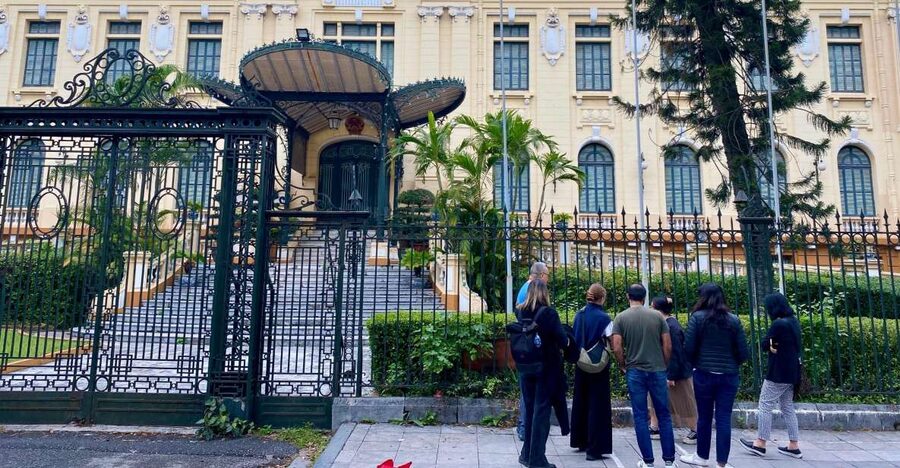
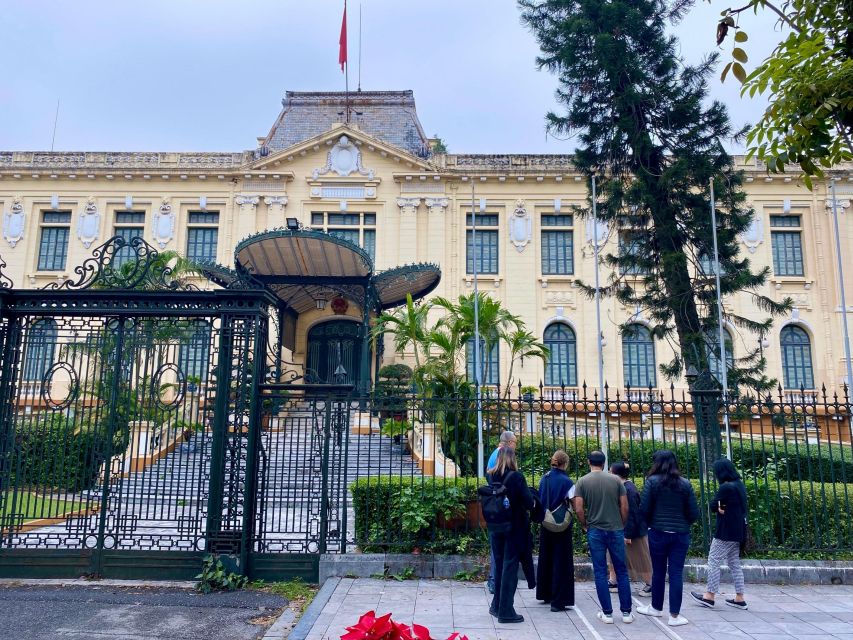
The southern part of central Hanoi feels different from the narrow lanes of the Old Quarter. Streets are broader, buildings are more formal, and French-era institutions sit beside Vietnamese businesses, motorbikes, cafés, and daily city life.
That contrast is the point. You are not simply looking at imported European façades. You are seeing how a foreign power reshaped the city, how Vietnamese people adapted to that system, and how the city later made those streets its own.
I find this setting far more useful with a guide than on a solo architecture walk. A building may look elegant, but its meaning is not always obvious. A good explanation can connect a church, hotel, school, post office, and government structure to the changing society around them.
The tour is designed as a conversation rather than a formal lecture. That matters if you have questions about French rule, the Vietnam War, Vietnamese coffee, architecture, or modern Hanoi. Mina is repeatedly singled out for her clear English, humor, and willingness to adjust explanations to the group. Dung is also described as warm and enthusiastic.
A few more Hanoi departures worth weighing up
- Hanoi Coffee Experience: 6 Brews, 9 Recipes & 3 Liquor Tastings
★ 5.0 · 2,945 reviews - Hanoi Coffee Workshop: Taste Salt, Coconut and Egg Coffee
★ 5.0 · 1,286 reviews - Hanoi: Salt Coffee Workshop Awake Your Senses With 6 Brews
★ 5.0 · 792 reviews
Starting beside St. Joseph’s Cathedral
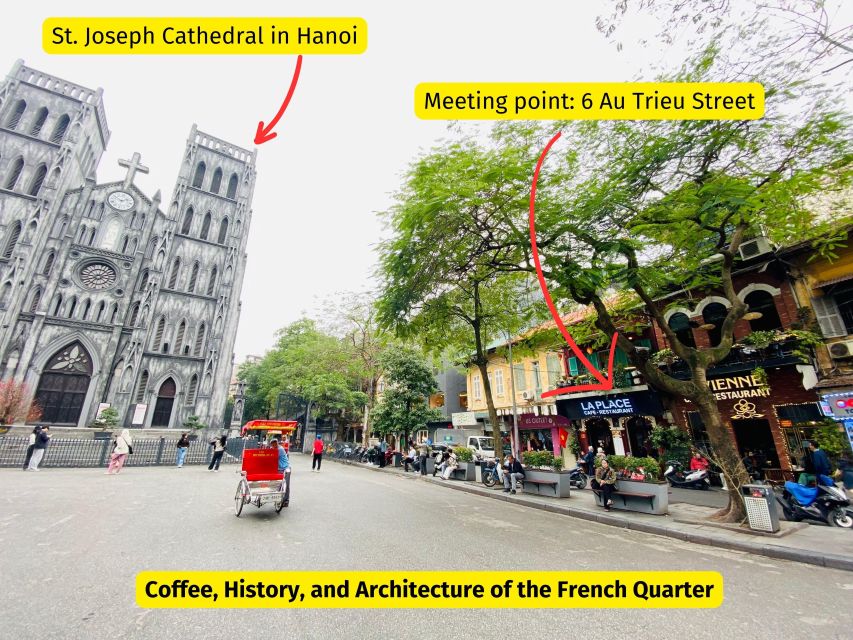
The meeting point is 6 Au Trieu Street, directly beside St. Joseph’s Cathedral. This is a practical place to begin because the cathedral gives the guide an immediate way to explain French influence in Hanoi.
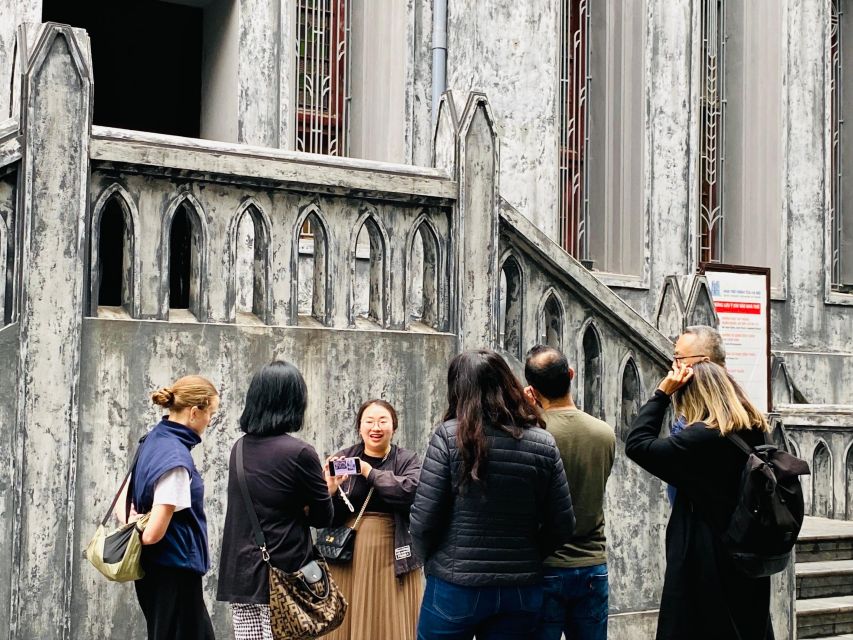
The cathedral is one of the route’s key visual landmarks. Its Gothic form makes the European connection obvious, but the wider discussion is more useful than the façade alone. You can ask how a French religious building fitted into a Vietnamese city, and how colonial power operated through institutions as well as architecture.
The scheduled cathedral stop lasts about 15 minutes, including a guided walk and a coffee-related break. Do not expect a long interior visit or a full religious tour based on the information provided. The focus is the building’s place in the city and the story around it.
Arrive ready to walk. The start is in a central area where it is easy to meet your guide, but you should allow enough time to find 6 Au Trieu Street without rushing.
Vietnamese coffee inside an old French villa
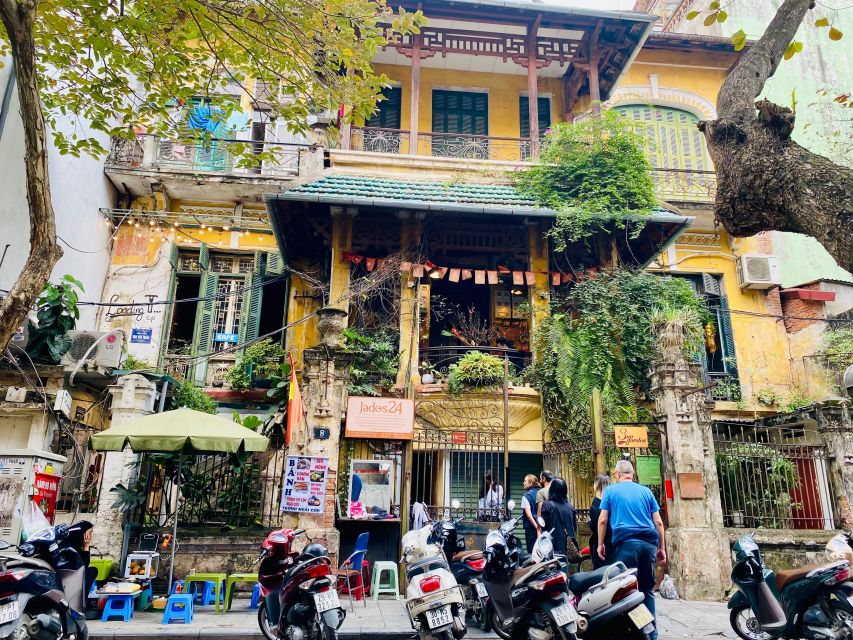
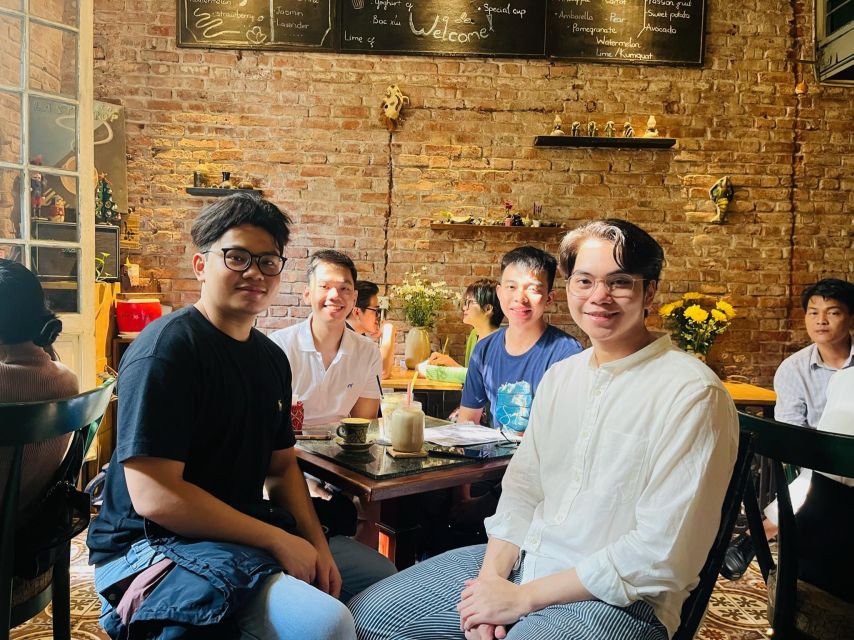
The café stop is one of the most appealing parts of the morning. You receive a cup of Vietnamese coffee or tea at a local café in an old French villa, with roughly 30 minutes set aside for the stop.
This is where the tour’s themes come together. You are sitting in a French-built setting, drinking a beverage that became part of Vietnamese life in its own distinctive way. Several guides have served egg coffee, and coconut coffee is also mentioned. If you have never tried egg coffee, this is a handy, low-risk introduction because it is included rather than an extra purchase.
The coffee break also sets the tone for the guide’s broader explanation of Vietnamese history. Mina is praised for breaking large subjects into clear points and using photographs on her phone to show people and events. That approach is especially helpful if you know little about Vietnam before arriving.
The café is called a secret French villa in the tour description, but you should treat that as a charming local setting rather than expect a grand museum or restored palace. Its value is the atmosphere and the chance to talk. Use this time to ask about French influence, the coffee trade, language, food, or places to visit later.
Reading the French Quarter beyond its façades
After coffee, the walk moves through the French Quarter with a guided section of about 15 minutes before continuing to the major landmarks. The route is said to include more than 15 sights, even though the main schedule lists the best-known stops.
The guide’s role is to help you notice details you might pass without a second look. This may include street layout, building styles, institutional architecture, and the way older structures now function in a modern Vietnamese capital.
The historical discussion is not one-sided. You will hear about how Vietnamese society changed under French rule, including the advantages claimed by colonial administrators and the costs imposed on local people. That balance is important. Hanoi’s French buildings can be attractive, but beauty does not erase the unequal system that produced them.
This section suits people who want context rather than a quick photo circuit. It also works well for first-time visitors who want to understand why Hanoi feels both Southeast Asian and visibly shaped by Europe.
Same part of the north, a completely different day out:
- Hanoi Jeep Tour: Food, Culture and Fun by Vietnam Army Jeep
★ 5.0 · 15,222 reviews - Full-Day Ninh Binh Highlights Tour from Hanoi
★ 5.0 · 7,761 reviews - Hanoi: Ha Long Bay Day Cruise – Swimming, Meal, Kayaking
★ 4.7 · 7,415 reviews - Hanoi: Water Puppet Show Tickets
★ 4.6 · 7,029 reviews
The Opera House and the city’s public face
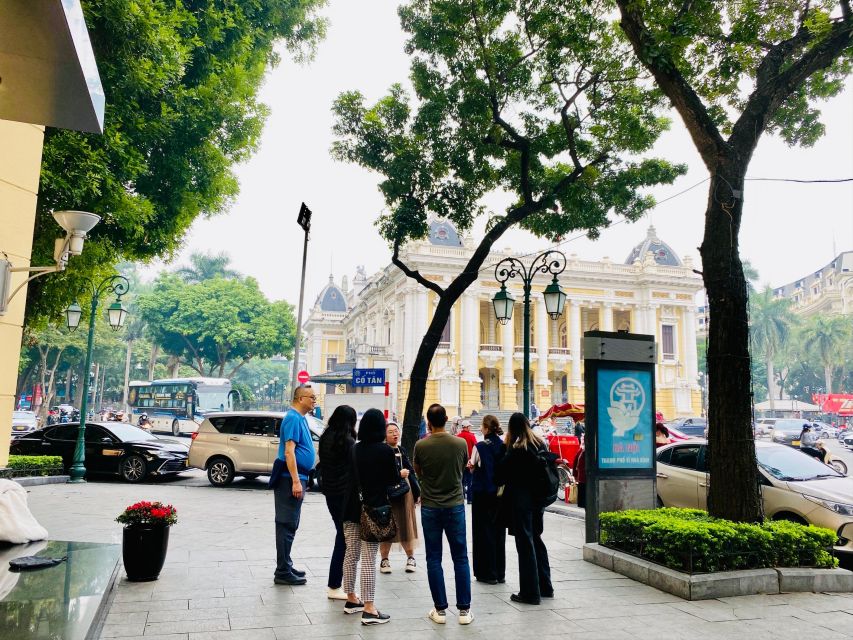
The Hanoi Opera House receives its own guided stop of about 15 minutes. It is one of the French Quarter’s grandest landmarks and a clear example of architecture built to project authority and status.
You will have time to examine the exterior and hear how such buildings fit into the colonial city. The guide can also help you connect the Opera House to the broader story of public life, administration, and cultural power.
Do not book this walk expecting admission to a performance or a backstage visit. The supplied details describe a guided exterior stop, not a ticketed entry. That is still worthwhile if your main interest is the city’s architecture and historical setting.
The route is stronger because it does not treat the Opera House as an isolated monument. Its meaning becomes clearer when viewed alongside the cathedral, post office, hotel, streets, and former educational institutions.
Hoan Kiem Lake and Trang Tien Street
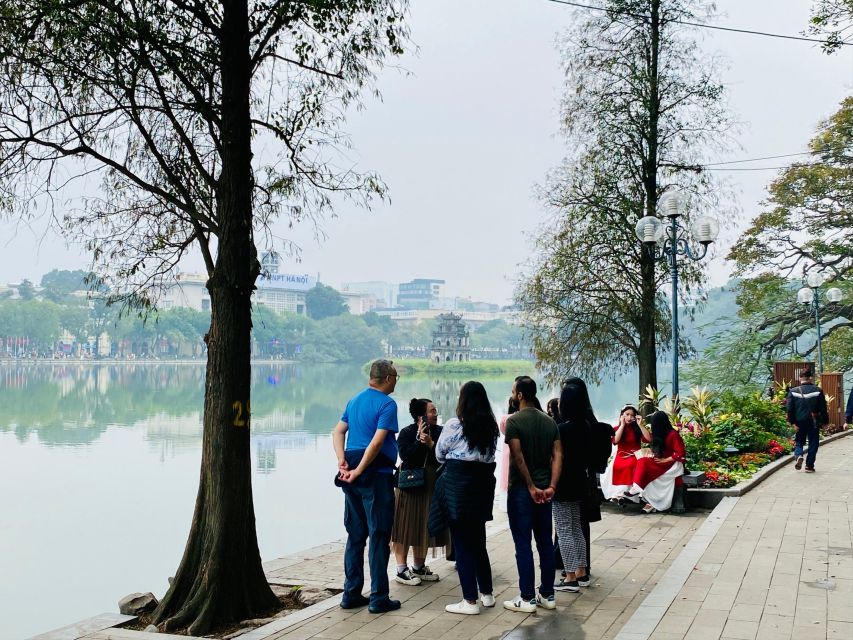
The walk continues to Hoan Kiem Lake, with another 15-minute guided stop. The lake gives the group a break from looking only at buildings and offers a chance to discuss Hanoi as a living city.
The route also includes Trang Tien Street, a major French Quarter thoroughfare. The street is useful for seeing how colonial planning and present-day commerce overlap. You are still walking through a historic district, but it is not preserved as a silent open-air museum.
This is one reason I would avoid treating the tour as a pure architecture lesson. The best moments connect buildings to ordinary city life. You may hear about food, language, local habits, and the changes Hanoi has gone through since the colonial period.
The guide’s conversational style is valuable here. You can ask about places you pass, pronunciation, restaurants, or other sights. Previous guests have received suggestions for banh mi, hotpot, and Hoa Lo Prison, though those recommendations are an added benefit rather than formal stops on the route.
The Metropole Hotel and the story of war
The Sofitel Legend Metropole Hanoi is another planned 15-minute stop. The hotel is a strong example of French-era prestige, and its continued place in Hanoi makes it a useful link between colonial history and the present.
The tour also covers the Vietnam War and the wider contemporary history of Hanoi. The information supplied does not promise entry into the hotel or a special underground visit, so expect an exterior explanation and historical context rather than a hotel tour.
This part may appeal most to history buffs. Guides use photographs to help explain important events, which can make a difficult period less abstract. You can ask questions and slow down the discussion, within the limits of the group’s schedule.
If the war period interests you, note the guide’s suggestion to visit Hoa Lo Prison separately. It is not listed as a stop on this walking route, but the tour can give you background that makes a later visit more meaningful.
Trang Tien ice cream is more than a sweet finish
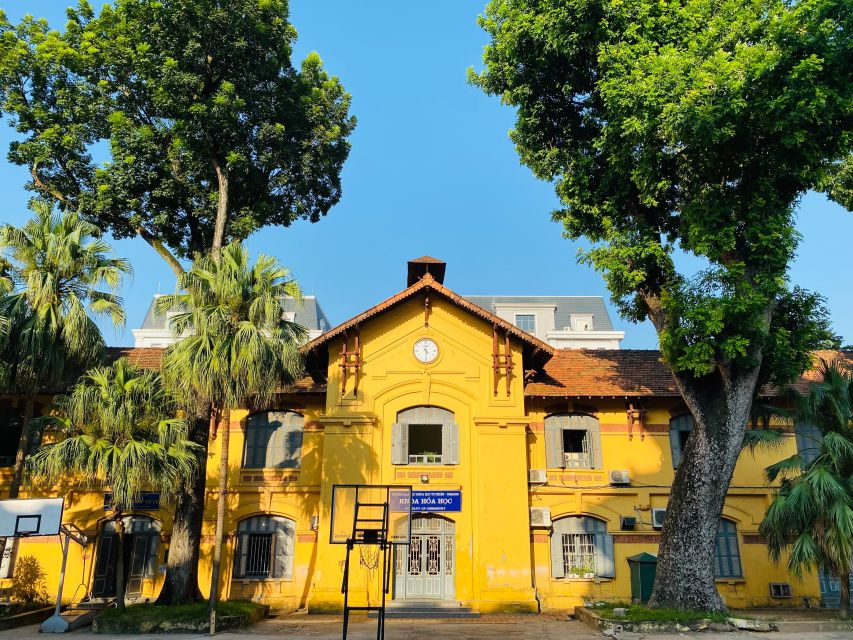
The tour includes ice cream at the famous Trang Tien ice cream parlor. Seating and a restroom are available, so this stop gives you a practical pause as well as a local snack.
I like the choice. After a morning of churches, hotels, war history, and colonial policy, ice cream keeps the mood human and easygoing. It is also a small way to sample a Hanoi institution rather than ending at a large monument and immediately dispersing.
The stop is especially useful in warm weather, though you should still bring sunscreen, a hat, and breathable clothing. Comfortable shoes matter more than stylish ones. Hanoi’s streets can be tiring even when the route itself is not described as strenuous.
The final stop and one detail to confirm
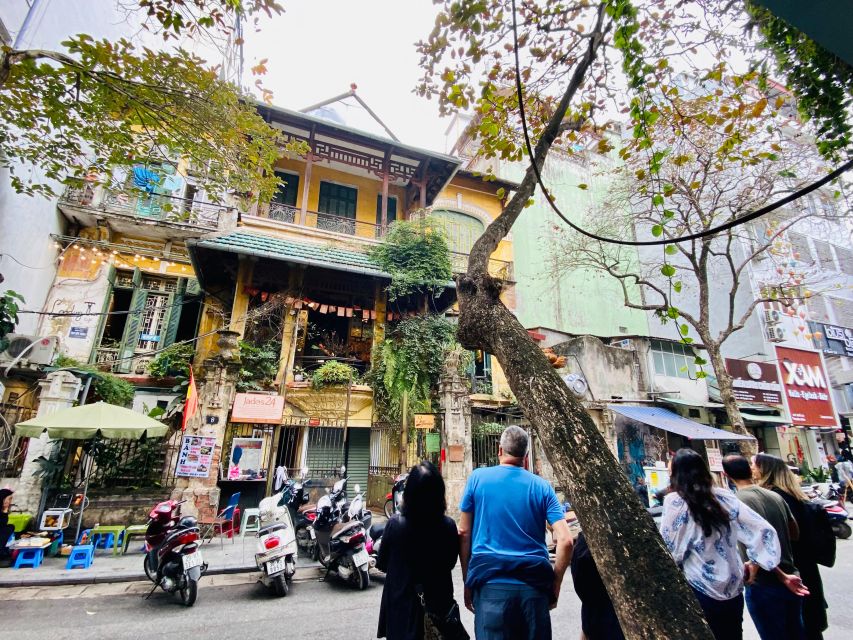
The listed final stop is Hanoi University of Pharmacy. It is described as the first university in French Indochina, adding another important piece to the story of education and colonial administration.
The university gives the walk a thoughtful ending. You have moved from religion and coffee to public culture, urban planning, elite hotels, local food, and education. Together, those stops show how colonial influence touched many parts of life.
There is one practical inconsistency in the supplied details. The route says the tour finishes at Hanoi University of Pharmacy, while the meeting information says the activity ends back at the meeting point. Confirm the exact end location when you book, particularly if you have a train, meal reservation, or another tour afterward.
What the $31 price gets you
At $31 per person, this is not the cheapest way to walk around central Hanoi. You can see many of these buildings from the street without paying anything.
The value comes from the interpretation. You receive an English-speaking guide for about 2.5 hours, a Vietnamese coffee or tea in an old French villa, and Trang Tien ice cream. You also get a connected explanation of architecture, colonial rule, the Vietnam War, and present-day Hanoi rather than a string of disconnected facts.
That makes the price reasonable for visitors who would otherwise spend hours reading signs or missing the meaning of the buildings. It is less compelling if you mainly want photographs and do not enjoy stopping for historical discussion.
The reported score is 4.9 from 71 ratings, with Mina receiving especially strong praise for her humor, clear English, historical detail, and ability to tailor the walk to interests, dietary needs, and energy levels. Those qualities matter more than a long list of sights. A flexible guide can make the same route work for a curious couple, a family with teenagers, or someone who has already visited Hanoi.
Who should book this Hanoi walking tour
I would choose this tour if you want a short introduction to Hanoi before exploring on your own. It is particularly suitable for:
- First-time visitors who want the city’s French Quarter explained in plain English
- People interested in colonial architecture and modern Vietnamese history
- Coffee lovers curious about egg or coconut coffee
- Families and older visitors who prefer a relaxed, question-friendly walk
- Anyone who wants local food suggestions along with sightseeing
- History buffs who plan to visit Hoa Lo Prison afterward
It may not suit you if you want a silent photography walk, a formal museum tour, or access inside every landmark. The schedule is built around outdoor viewing, conversation, and a few food stops.
The tour is offered in English only. Free cancellation is available up to 24 hours ahead, and you can reserve now and pay later. Those terms help if your Hanoi plans are still shifting.
Weather, clothing, and walking advice
The walk runs rain or shine. Check the forecast the day before and bring an umbrella or raincoat if needed.
Wear comfortable shoes, breathable clothing, sunscreen, and a hat. Coffee and ice cream are included, but you should not assume every personal drink or meal is covered. The route lasts 2.5 hours, so plan around the heat and your own energy.
Because the format is conversational, bring questions. Ask about the French period, the Vietnam War, coffee, architecture, or places to eat later. You will get more from the walk if you treat the guide as a local source of context rather than simply following from one photo stop to the next.
Should you book Coffee, History, and Architecture of the French Quarter?
Book it if you want Hanoi’s French Quarter to make sense, not just look attractive. The combination of coffee, old buildings, difficult history, local ice cream, and an approachable English-speaking guide gives the walk a clear personality.
The strongest reason to go is the explanation. Mina and Dung are described as warm, funny, and open to questions, with Mina receiving particular praise for her history and architecture talks. The main drawbacks are weather exposure, walking, and the fact that the major landmarks are viewed as part of a street tour rather than visited inside.
For $31, I see good value if you care about context and local conversation. Wear sensible shoes, bring rain protection, and confirm the final meeting point. Then use the tour as a starting map for the rest of Hanoi.
FAQ
Where does the tour start?
The tour starts at 6 Au Trieu Street, right next to St. Joseph’s Cathedral of Hanoi.
Where does the tour finish?
The route lists Hanoi University of Pharmacy as the final stop. The meeting information also says the activity ends back at the meeting point, so confirm the exact finish location when booking.
How long does the walking experience last?
The activity lasts 2.5 hours. Starting times depend on availability.
What language is the tour offered in?
The live tour guide speaks English, and English is the stated tour language.
Are coffee and ice cream included?
Yes. The experience includes Vietnamese coffee or tea at a local café in an old French villa and ice cream at Trang Tien ice cream parlor.
What landmarks are included?
The route includes St. Joseph’s Cathedral, the French Quarter, Hanoi Opera House, Hoan Kiem Lake, Sofitel Legend Metropole Hanoi, Trang Tien Street, Hanoi Post Office, and other sights. More than 15 top sights are covered overall.
What should I bring?
Bring sunscreen, breathable clothing, a hat, and comfortable shoes. The tour runs in all weather, so take an umbrella or raincoat if the forecast calls for rain.
Just added around Hanoi
- Cat Ba National Park, Lan Ha Bay 2 Days 1 Night Adventure★ 4.8 · 9 reviews
- Full day Boat Tour Lan Ha Bay – Ha Long Bay: Kayak, Beach Hopping★ 5.0 · 9 reviews
- Ha Giang Loop 2 Days High quality Small Group +Private Room★ 5.0 · 9 reviews
- Half Day Sapa Cat Cat Explore Waterfall, Workshop, H’mong Local★ 5.0 · 9 reviews
- Sapa 1 Day Trekking★ 5.0 · 9 reviews
- Sapa Open Air Jeep Half Days Off the Beaten Track, Backroad★ 4.9 · 9 reviews
- Halong 2 days 1 night with Cozy Classic Cruise from Hanoi★ 4.5 · 9 reviews
- Fansipan Mount Trekking 1 Day★ 5.0 · 9 reviews
Coffee Experiences, compared.
Hanoi Coffee Experience: 6 Brews, 9 Recipes & 3 Liquor Tastings
Read our review →
Hanoi Coffee Workshop: Taste Salt, Coconut and Egg Coffee
Read our review →
Salt Coffee Workshop Awake Your Senses With 6 Brews
Read our review →
Hanoi Cooking Class: Pho/Bun Cha/Banh Xeo…+Free Egg/Salt Coffee
Read our review →

Hanoi Coffee Workshop: Master 6 Signature Vietnamese Coffee
Read our review →
Browse the lists this tour appears in