
Reviewed · INCENSE VILLAGE AND CRAFT TOURS
Hanoi: Conical Hat Village & Incense Village SMALL GROUP
The best part of this outing is seeing two everyday Vietnamese crafts made by hand, not just displayed behind glass. In Chuong Village, you watch palm leaves become non la conical hats, then make and decorate one of your own. At Quang Phu Cau, you see incense sticks being dyed, prepared, and bundled for sale.
I like the personal connection with artisan Thao, who has made hats for 40 years, and I like that the tour includes a hat for painting plus incense you help make. The main drawback is the long road time from Hanoi and the fact that the most photogenic incense displays can feel arranged for visitors rather than part of an untouched village scene.
In This Review
- Key points at a glance
- Why these two villages make a good Hanoi side trip
- Chuong Village and the making of non la
- Meeting Thao opposite Chuong Pagoda
- Painting a hat you can take home
- Quang Phu Cau and the work behind incense
- Trying the incense-making process
- Transport, timing, and the half-day choice
- The guide makes a real difference
- Who should book this experience
- Should you book the hat and incense villages?
- FAQ
- How long does the tour take?
- Does the tour include lunch?
- Can I make my own conical hat?
- Do I receive incense as a souvenir?
- Will I visit the Chuong Village market or festival?
- Where does hotel pickup and drop-off operate?
Key points at a glance
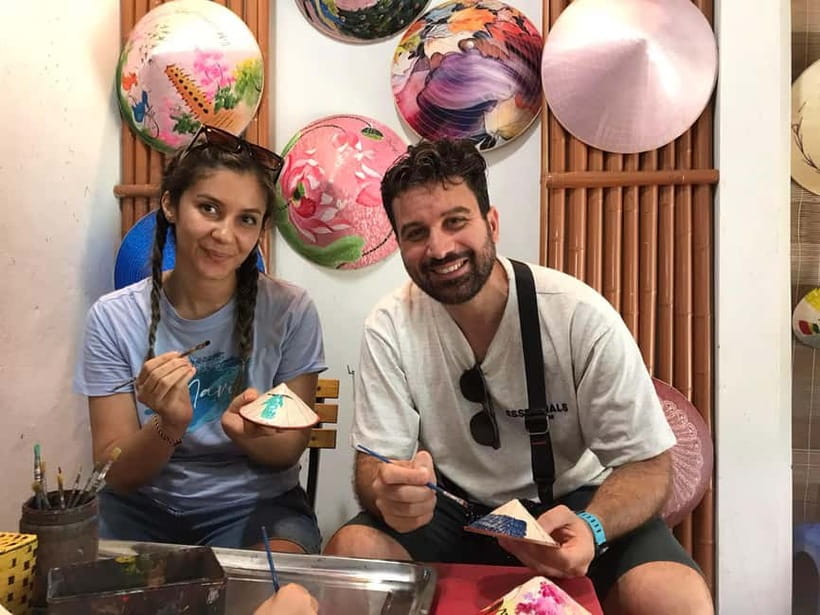
- Make your own conical hat: You receive one free hat to paint and take home as a personal souvenir.
- Meet artisan Thao: Her home opposite Chuong Pagoda provides a direct look at a family craft passed down for generations.
- See the real materials: Learn how bamboo frames and lá lụi palm leaves are prepared before they become hats.
- Try incense making: At Quang Phu Cau, you can take part in some steps and receive incense sticks made at the source.
- Check the lunar calendar: Chuong Village market and its special festival operate only on particular lunar dates.
- Plan for the road: The half-day version lasts about six hours, includes no lunch, and may involve a long drive without a toilet stop.
Why these two villages make a good Hanoi side trip
Hanoi gives you temples, cafés, old streets, and plenty of city noise. This trip takes you into the countryside south of the city, where two old trades still support family workshops and manual workers.
The crafts are especially useful for understanding the meaning of objects you will see all over Vietnam. The conical hat is not simply a souvenir. It has long protected people from sun and rain, and it remains a familiar part of Vietnamese dress, particularly for women.
Incense also has a daily role. The sticks made at Quang Phu Cau are prepared for burning in homes, temples, and other places of worship. You are not just taking photographs of colored bundles. You are seeing the work behind an item that carries religious and cultural meaning.
At about $15 per person, the tour offers good value if the schedule operates as described. That price covers transport from hotels in Hanoi’s Old Quarter, a local guide, entrance fees, water, the hat-painting activity, and incense souvenirs. The full-day option includes a home-cooked Vietnamese lunch, with vegetarian and non-vegetarian food served. The half-day option does not include lunch, so eat before leaving or bring snacks.
The cost is low enough that I would not choose this trip only for a quiet, polished sightseeing experience. I would choose it for access to local workshops, a hands-on activity, and a chance to see how traditional products are made.
More craft village visits from Hanoi:
- Incense Village, Hat Making & Lacquer Artisan Small Group Hanoi
★ 5.0 · 1,266 reviews - Incense Village, Conical Hat, Lacquer Art, SMALL GROUP From Hanoi
★ 5.0 · 1,170 reviews - Hanoi: Incense Village, Hat, and Lacquer Artisanal Tour
★ 4.6 · 1,005 reviews
Chuong Village and the making of non la
Your first major stop is Chuong Village, known for its conical hats. The village market is part of the cultural appeal, but it does not run every day in the same way. It takes place on specific lunar dates, and the special festival is held on the 10th day of the third lunar month.
That detail matters. If the market or festival is central to your plans, check the lunar calendar before booking. On an ordinary day, you can still see hat-making and visit local artisans, but you should not expect a festival atmosphere outside the listed dates.
The hat begins with two basic parts: a frame and leaves. The frame uses bamboo, which is split into long, thin strips, soaked in water, and dried in the sun. The process sounds simple until you see how much care is needed to create a light structure that keeps its shape.
The leaves come from a palm tree called lá lụi. They are sourced from forests in Quang Binh and Thanh Hoa. Choosing the right leaf is important because damaged, uneven, or poorly prepared leaves affect the finished hat.
The leaves are processed and dried during the dry season. Artisans then attach them to the bamboo frame. Some hats include red or pink silk, while others carry embroidered flowers, birds, or other designs. These details give the hats a decorative role as well as their practical purpose.
I like this section because it makes the hat look less like a simple cone and more like a careful piece of work. You get a better sense of why patience matters. The craft depends on repeated small actions, and a careless cut or weak stitch can spoil the result.
Meeting Thao opposite Chuong Pagoda
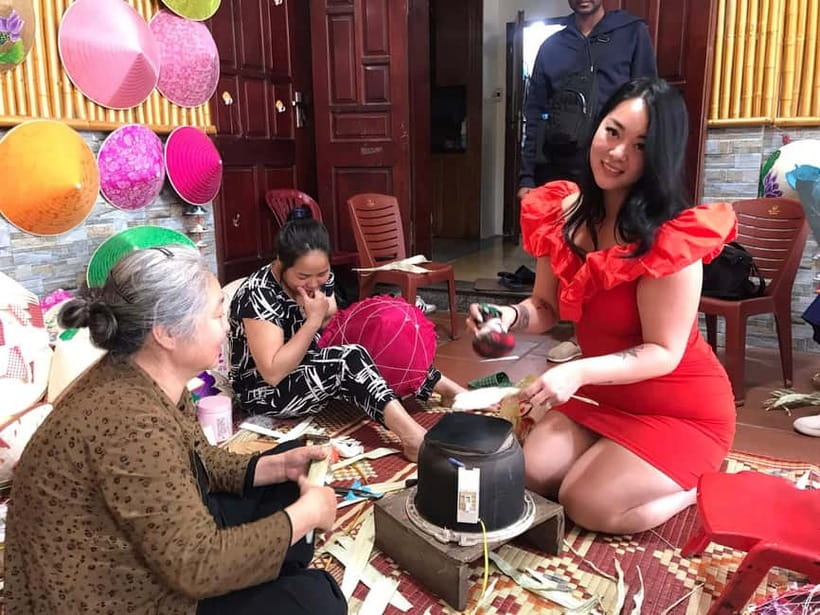
A particularly personal part of the visit is meeting Thao at her home opposite Chuong Pagoda. She has been making conical hats for 40 years, and her family has practiced the craft for several generations.
Her story connects the village to the work in a direct way. She began as a child, as many people in Chuong grow up around hat-making. You are not just seeing a workshop chosen for display. You are meeting someone whose household and village life are tied to the trade.
The guide helps explain the stages and the cultural background, while Thao brings the craft to life through her own experience. Guides have received strong praise for their language skills and friendly manner. Henry has been singled out for his help on the hat-making visit, and other guides have led the tour in French, Italian, Polish, and additional languages listed by the operator.
The multilingual choice is useful if you are not comfortable with English. Available languages include English, Vietnamese, Chinese, French, Italian, Japanese, Portuguese, and Spanish. Ask for your preferred language when checking availability, since the guide assigned to your departure may vary.
Painting a hat you can take home
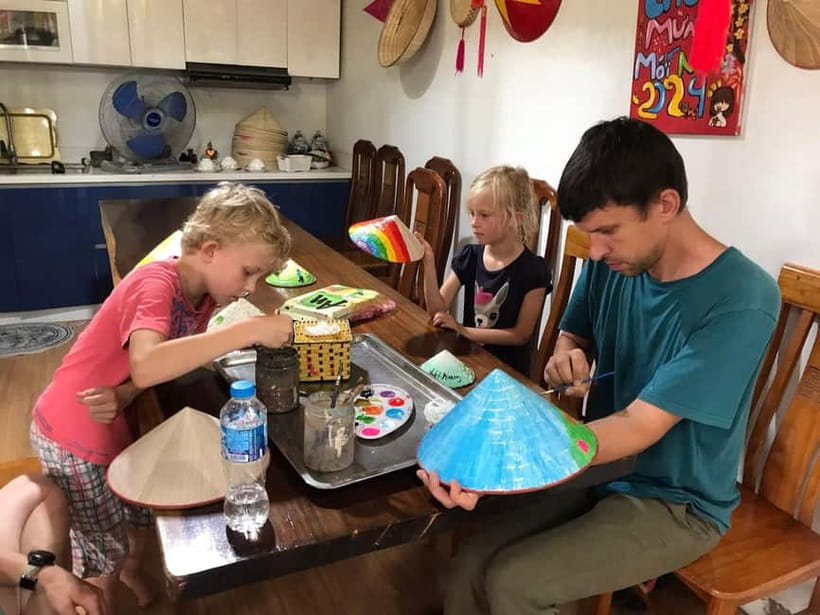
The free conical hat is more than a small extra. It gives you a reason to pay attention to the construction before you start painting. You can personalize it and take it home, which makes the stop more engaging than simply buying a finished item in a market.
The activity should suit families, couples, and anyone who likes a simple creative task. It also gives you a souvenir with a story attached to it. Instead of choosing a hat from a pile, you know where it came from and have added your own design.
Do not expect a professional art class or a long workshop. The key value is the chance to handle the object and understand its materials. If you want a pristine, traditionally decorated hat, you may prefer to buy one rather than paint your free hat.
Chuong Village is also a good place to ask about the difference between everyday hats and more decorative versions. The description includes silk details and embroidery, but the exact stock available for purchase can vary. Bring small notes or ask your guide about prices if you want to shop.
A few more Hanoi departures worth weighing up
- Hanoi Jeep Tour: Food, Culture and Fun by Vietnam Army Jeep
★ 5.0 · 15,222 reviews - Full-Day Ninh Binh Highlights Tour from Hanoi
★ 5.0 · 7,761 reviews - Hanoi: Ha Long Bay Day Cruise – Swimming, Meal, Kayaking
★ 4.7 · 7,415 reviews - Hanoi: Water Puppet Show Tickets
★ 4.6 · 7,029 reviews
Quang Phu Cau and the work behind incense
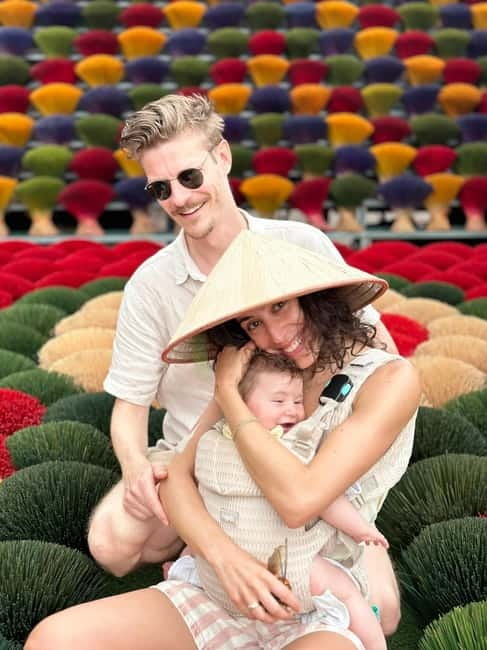
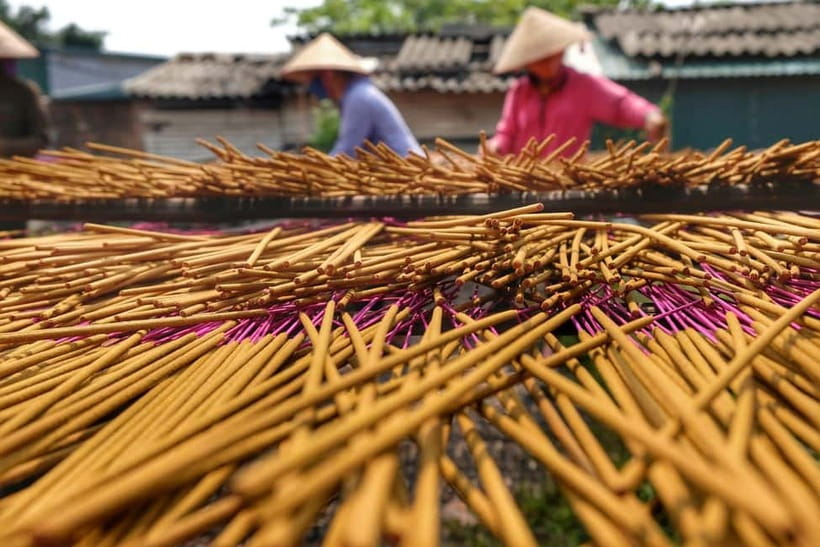
The second stop is Quang Phu Cau, a village that has produced incense for more than 100 years. You walk toward the village center and see family-scale production, including a household that specializes in dyeing the incense sticks.
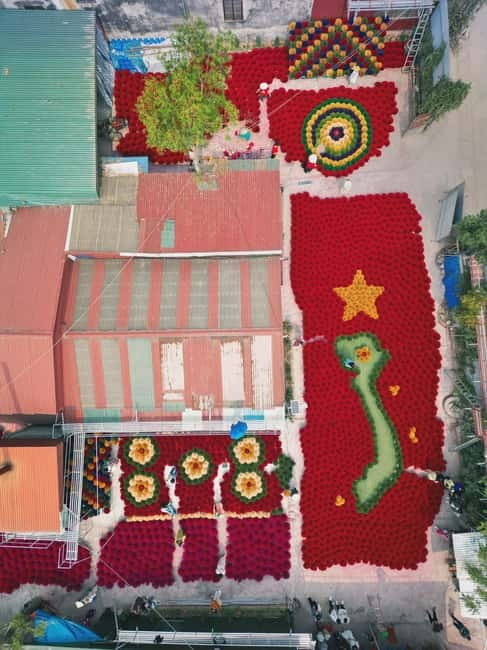
The dyed sticks are arranged in colorful bundles for drying and display. This is the part most likely to fill your camera quickly. The colors are strong, and the bundles create clear photographs even on a short visit.
Still, keep your expectations sensible. The most carefully arranged bundles may be set out in a small area between concrete walls, rather than spread through a completely untouched rural village. One account of the visit found the setup more artificial and photo-focused than expected.
That does not make the stop worthless. The photographs are only one part of it. The better reason to go is to watch the process and see the manual work involved. If you arrive expecting a large open village covered in incense, you may be disappointed. If you arrive ready to learn how the sticks are prepared, dyed, and bundled, the stop has more substance.
Trying the incense-making process

The tour includes the chance to try several parts of incense production yourself. You also receive some free incense sticks after making them.
The exact hands-on steps can depend on the workshop and the day, but the activity is intended to show the work rather than turn you into an expert maker in a few minutes. You may handle materials and repeat parts of the process under local guidance.
A nearby factory visit adds another layer. There you can learn how incense is made from the beginning and hear more about the lives of manual workers. The factory portion is important because it moves the experience beyond the colorful display bundles and toward the labor that produces them.
Access can vary. Some people may mainly observe the factory and production spaces, while others may get more direct instruction. I would treat this as a working production visit, not as a museum with a fixed exhibit route.
You can also buy incense as a small souvenir. It is light, inexpensive to pack, and tied directly to the place you visited. Check your own airline and customs rules before bringing large quantities home, but the included free sticks are an easy keepsake.
Transport, timing, and the half-day choice

The half-day option lasts about six hours, though the full offering may run from six hours to a full day depending on the selected schedule. Hotel pickup and drop-off are provided for hotels in Hanoi’s Old Quarter.
The road time is the main practical issue. One booking experience involved a two-hour drive without a toilet stop, and the driver spoke little English, making it hard to request a break directly. I would use the restroom before departure and keep the guide’s contact details handy.
This is also a reason to choose a small group or private departure if you want more control. A private option may suit families, older visitors, or anyone who needs flexible stops. Small groups keep the price low while still giving you access to a guide.
The half-day version does not include lunch. Eat before setting out or pack something simple. The full-day option includes a home-cooked Vietnamese meal at a local artisan’s home, with vegetarian and non-vegetarian choices. If food is important to you, the longer version may offer better value despite taking more of your day.
The first drop-off in the city is Hanoi Train Street. If you want to visit it, you can leave there and arrange your own taxi or Grab back to the hotel. If not, remain on the bus for your hotel-area drop-off. Confirm this plan with the guide so you do not end up carrying luggage farther than expected.
The guide makes a real difference

The craft stops are easier to appreciate with a good explanation. You need context for why the leaves are selected, where the palm leaves come from, and how a family craft fits into village life.
The guide also helps with small practical matters. At a workshop, you may need help asking questions, understanding prices, or requesting a toilet stop. A friendly guide can make the production spaces feel open rather than confusing.
Henry has been praised for being especially helpful during the hat-making visit. Hue has also been noted for taking many photographs during the incense activity, a useful touch if you want pictures of yourself trying the work rather than only pictures of the finished bundles.
The driver and guide may not have the same language ability. One reported difficulty involved a driver who spoke almost no English. Treat the guide as your main contact for questions and requests during the road journey.
Who should book this experience
I would recommend this trip if you want a low-cost excursion from Hanoi with a clear cultural focus. It suits you if you enjoy meeting artisans, learning how objects are made, and taking part in short activities rather than spending the day at major monuments.
Families may like the painting and incense-making tasks. Photographers will find plenty to work with at Quang Phu Cau, especially in the dyed bundles. Visitors who want a handmade souvenir will get more from the included hat than from another mass-produced city purchase.
The tour is less suitable if you want a completely quiet village visit or dislike long road transfers. The incense stop can feel arranged for photographs, and the half-day schedule does not include lunch. You should also avoid assuming that the market or festival will be operating unless your date matches the lunar schedule.
The wheelchair-accessible listing is useful, but village workshops and production areas can have different surfaces or layouts. Confirm the exact needs of your group before departure.
Free cancellation up to 24 hours ahead and reserve-now, pay-later booking make this easy to fit around changing Hanoi plans. A Lunar New Year surcharge of 250,000 Vietnamese dong per person applies from February 16 to 19, 2026.
Should you book the hat and incense villages?
Book it if you want a practical, inexpensive look at two Vietnamese crafts and you are happy to trade city time for a long ride into the countryside. The free painted hat, hands-on incense work, local artisan contact, and capable multilingual guides give the day more value than a simple photo stop.
Choose the full-day version if you want the home-cooked lunch and a slower schedule. Choose the half-day option if your Hanoi itinerary is tight, but eat first and prepare for the road.
I would not book this solely for the famous incense photographs. The display area may feel partly arranged. I would book it for the combination of craft instruction, village contact, and souvenirs you help create yourself.
FAQ
How long does the tour take?
The half-day option lasts about six hours. The overall activity is listed as lasting from six hours to one day, depending on the option and schedule selected.
Does the tour include lunch?
The half-day option does not include lunch. The full-day trip includes home-cooked Vietnamese food at a local artisan’s home, with vegetarian and non-vegetarian choices.
Can I make my own conical hat?
Yes. The experience includes one free conical hat for painting, which you can personalize and take home.
Do I receive incense as a souvenir?
Yes. After making incense sticks yourself, you receive some free incense sticks from the production village.
Will I visit the Chuong Village market or festival?
The market takes place only on specific lunar dates. The special festival occurs on the 10th day of the third lunar month, so check your travel date before booking if either event is important to you.
Where does hotel pickup and drop-off operate?
Pickup and drop-off are provided at hotels in Hanoi’s Old Quarter area. The first city drop-off is Hanoi Train Street, where you can leave and take a taxi or Grab, or remain on the bus for your hotel-area drop-off.
Just added around Hanoi
- Cat Ba National Park, Lan Ha Bay 2 Days 1 Night Adventure★ 4.8 · 9 reviews
- Full day Boat Tour Lan Ha Bay – Ha Long Bay: Kayak, Beach Hopping★ 5.0 · 9 reviews
- Half Day Sapa Cat Cat Explore Waterfall, Workshop, H’mong Local★ 5.0 · 9 reviews
- Sapa 1 Day Trekking★ 5.0 · 9 reviews
- Ha Giang Loop 2 Days High quality Small Group +Private Room★ 5.0 · 9 reviews
- Sapa Open Air Jeep Half Days Off the Beaten Track, Backroad★ 4.9 · 9 reviews
- Halong 2 days 1 night with Cozy Classic Cruise from Hanoi★ 4.5 · 9 reviews
- Fansipan Mount Trekking 1 Day★ 5.0 · 9 reviews
Incense Village and Craft Tours, compared.
Incense Village, Hat Making & Lacquer Artisan Small Group Hanoi
Read our review →
Incense Village, Hat, and Lacquer Artisanal Tour
Read our review →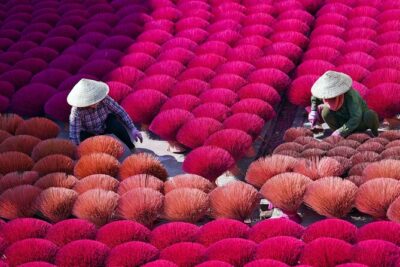
Incense Village Small Group of 9 Tour From Hanoi to Ninh Binh
Read our review →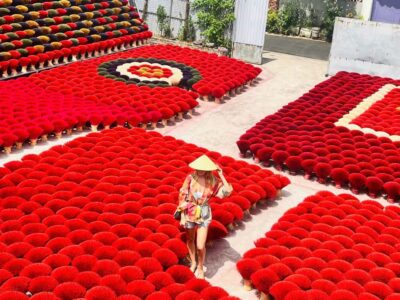
Incense Village, Hat, Lacquer Tour & City Highlights
Read our review →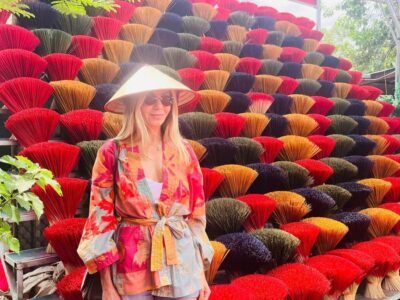
Incense Village, Hat, Lacquer, & City Highlights Tour
Read our review →
Instagram Incense Quang Phu Cau Village Tour with Train Street
Read our review →
INCENSE Villages & Ha Noi City Full Day guided Tour with Lunch
Read our review →
Bat trang Pottery Class in Hanoi Old Quarter/Handmade experience
Read our review →Browse the lists this tour appears in