
Reviewed · INCENSE VILLAGE AND CRAFT TOURS
Hanoi: Incense Village, Hat, and Lacquer Artisanal Tour
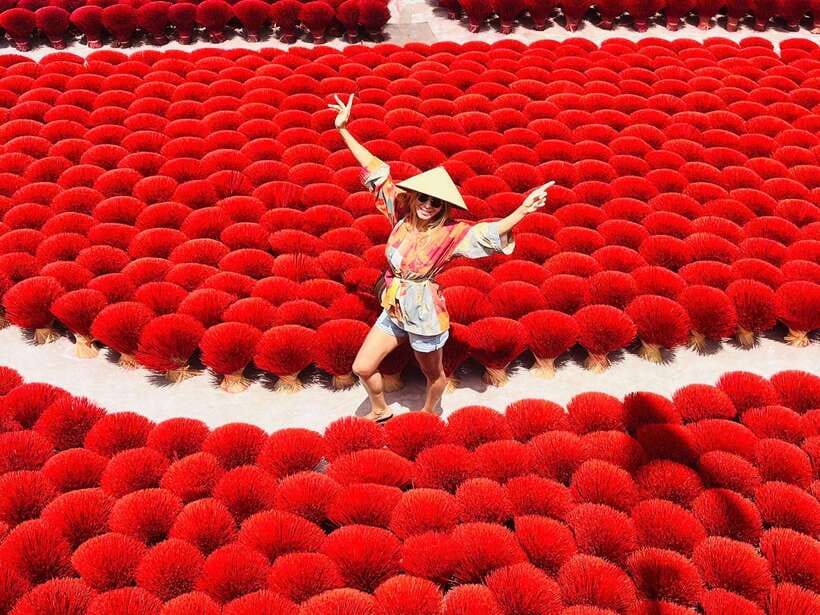
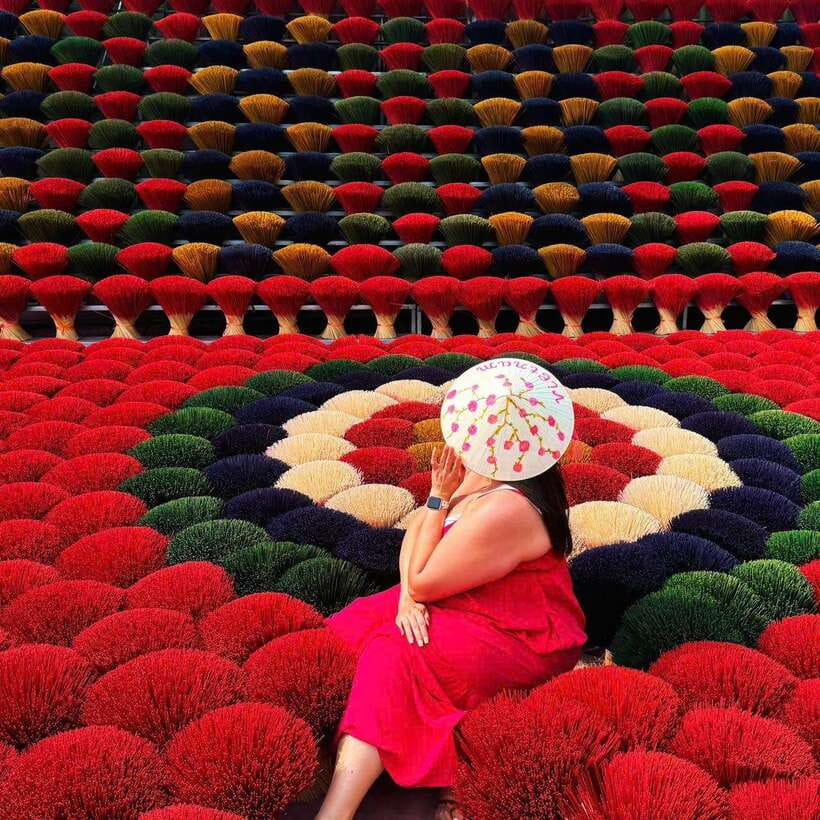
Quang Phu Cau is the star here: bundles of red, pink, yellow, and purple incense sticks are spread out to dry, turning ordinary village work into one of Hanoi’s best photo scenes. You also see the people and machinery behind the pictures, which gives the visit more meaning than a quick roadside stop.
I like the hands-on hat painting and the chance to meet working artisans rather than only browse finished souvenirs. I also like the half-day format, which lets you return to Hanoi with time left for lunch, museums, or the Old Quarter.
The main drawback is that the half-day trip does not include lunch, and the incense and lacquer work can involve strong paint or chemical smells. Some factory areas are noisy, so it may be hard to hear every word from the guide.
In This Review
- Key points at a glance
- Why these craft villages are worth your morning
- Chuong village and the making of a conical hat
- Quang Phu Cau and the incense drying yards
- The full-day lacquer village option
- Lunch, transport, and the rhythm of the day
- The optional Hanoi Train Street finish
- What the guides add to the experience
- Smells, noise, walking, and other practical limits
- Who should book this village tour
- Should you book it?
- FAQ
- How long does the tour last?
- Which villages are included in the half-day tour?
- What does the full-day tour add?
- Is lunch included?
- Can I paint my own conical hat?
- Is lacquer painting included?
- Where does hotel pickup operate?
- Can I be dropped at Hanoi Train Street?
- Is the tour suitable for wheelchair users?
Key points at a glance
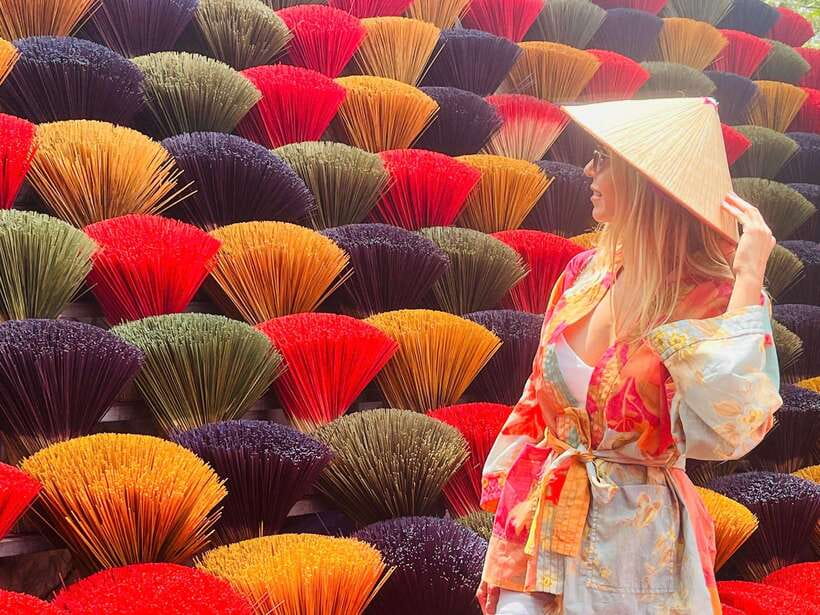
- Quang Phu Cau’s colorful incense yards: Walk through a working village and photograph carefully arranged incense bundles.
- A 300-year-old conical hat tradition: See how Chuong artisans shape Vietnam’s iconic non la.
- Your own painted hat: Decorate one hat and take it home at no extra charge.
- A real production setting: Visit a family workshop and a nearby factory to see both small-scale and larger-scale work.
- The full-day craft option: Add lacquer art, your own lacquer painting, and a home-cooked lunch.
- Flexible Hanoi finish: Choose hotel drop-off or finish near Hanoi Train Street, then arrange your own ride back.
Why these craft villages are worth your morning
Hanoi is full of food tours, temples, and city walks. This trip gives you a different view of northern Vietnam: the practical skill behind objects you may otherwise see only in a shop.
The villages are not museum sets. People still make incense, hats, and lacquer goods as part of daily work. You see drying yards, family businesses, manual labor, tools, and finished products. That makes the day useful for anyone who wants to understand how local crafts move from raw materials to something you can wear, burn, or display.
The tour costs about $15 per person, depending on the option and booking details. That is a low price for transport from the Old Quarter, an English-speaking guide, entrance fees, water, and a painted conical hat. The full-day version adds lunch and a third village, so it offers better value if you want a full schedule rather than a short outing.
Do not expect a quiet art retreat. These are working places. You may walk on uneven village streets, share space with other groups, and hear machinery at the larger factory. The appeal is the access to real production, not polished gallery presentation.
More craft village visits from Hanoi:
- Incense Village, Hat Making & Lacquer Artisan Small Group Hanoi
★ 5.0 · 1,266 reviews - Incense Village, Conical Hat, Lacquer Art, SMALL GROUP From Hanoi
★ 5.0 · 1,170 reviews - Incense Village Small Group of 9 Tour From Hanoi to Ninh Binh
★ 5.0 · 626 reviews
Chuong village and the making of a conical hat
The first craft stop is Chuong, a village known for conical hat making for more than 300 years. The traditional hat, called a non la, is one of Vietnam’s most recognizable objects. It is light, practical, and closely linked with the country’s rural image, but making one takes far more care than its simple shape suggests.
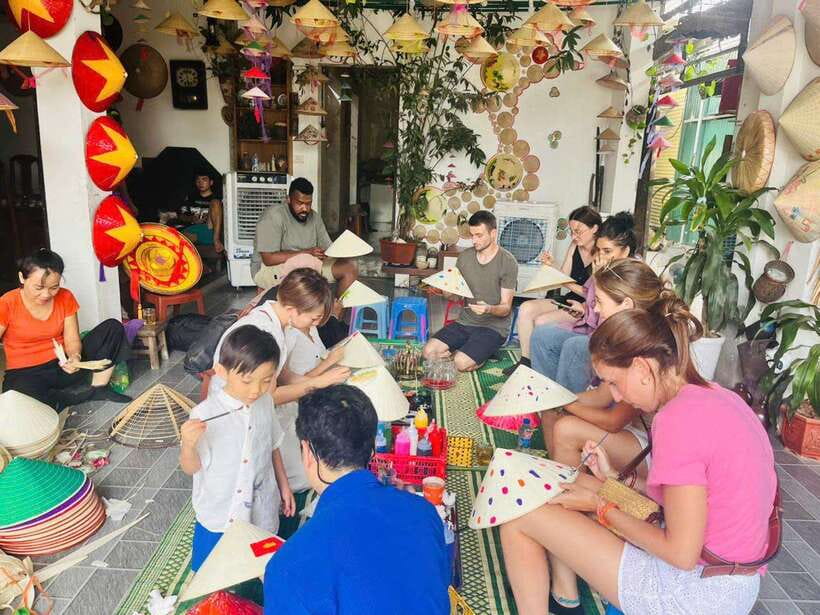
You watch artisans work through the process and learn how the hat is assembled. The visit is not limited to looking. You can take part in decorating your own hat with paint, then bring it home as a souvenir.
That activity is one of the strongest parts of the tour because it gives you something personal to do. You are not trying to match a professional artisan. You are simply adding your own design to a traditional object. It is a relaxed task for adults, families, and anyone who likes a creative break from sightseeing.
The hat village is also a good place to ask questions. Guides including Anna, Flow, Lana, Sophia, Danny, and Ha have been praised for explaining the process clearly, keeping the group involved, and helping with photographs. Guide assignments can change, but the experience clearly depends a lot on who leads your group.
Allow yourself time to look beyond the painting table. The village setting, local homes, small lanes, and nearby market areas give you a sense of how craft work fits into ordinary life. The tour does not turn this into a long historical lecture, but the age of the tradition helps you understand why the hat remains important.
A practical point: your included hat is a souvenir, but it may not be perfectly finished in a professional sense once you paint it. That is part of the fun. You are taking home a memory you made yourself, not buying a museum-quality object.
Quang Phu Cau and the incense drying yards
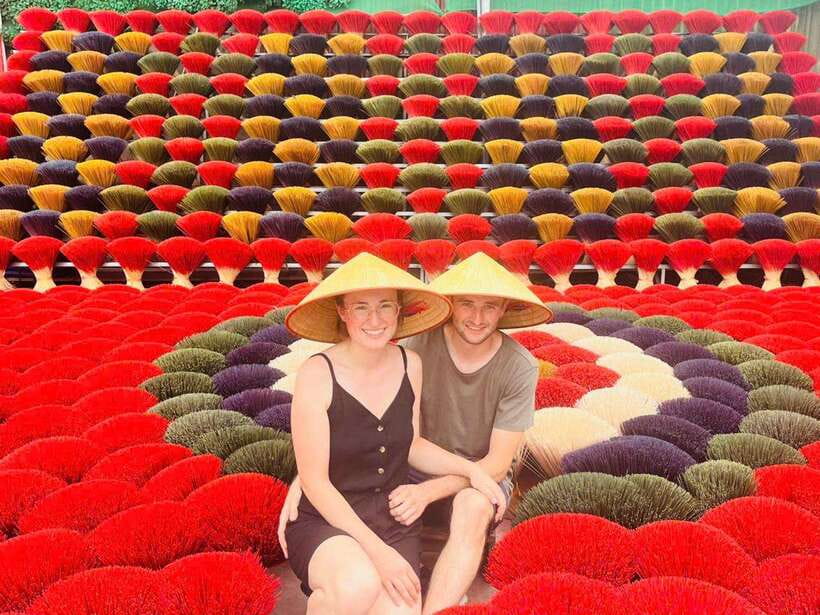
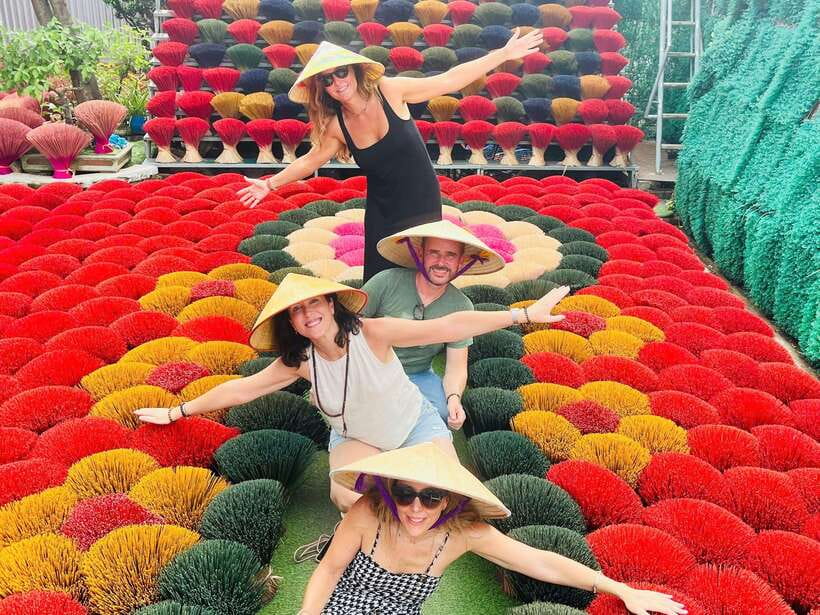
Quang Phu Cau has produced incense for more than 100 years. This is the stop most likely to fill your camera. Incense sticks are gathered into large bundles and arranged in striking patterns, with the colored ends creating strong blocks of red and other bright shades against the village setting.
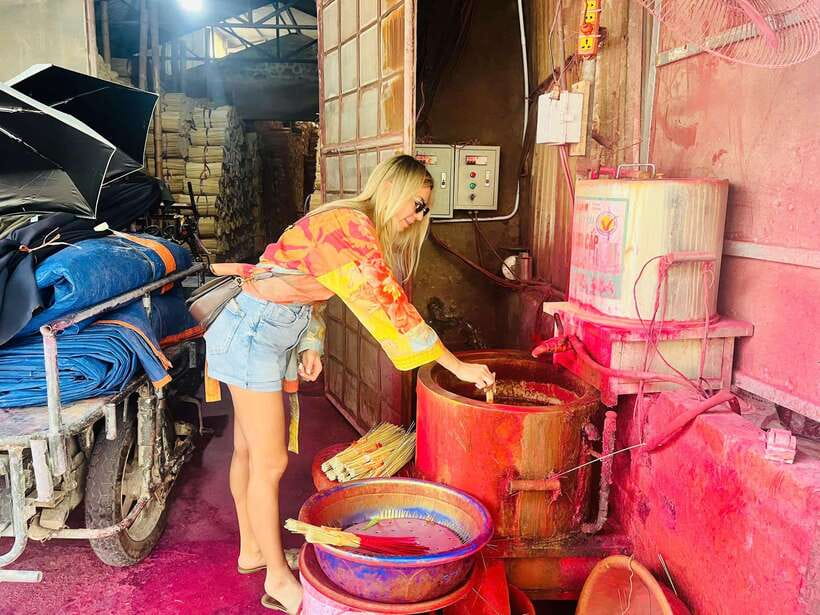
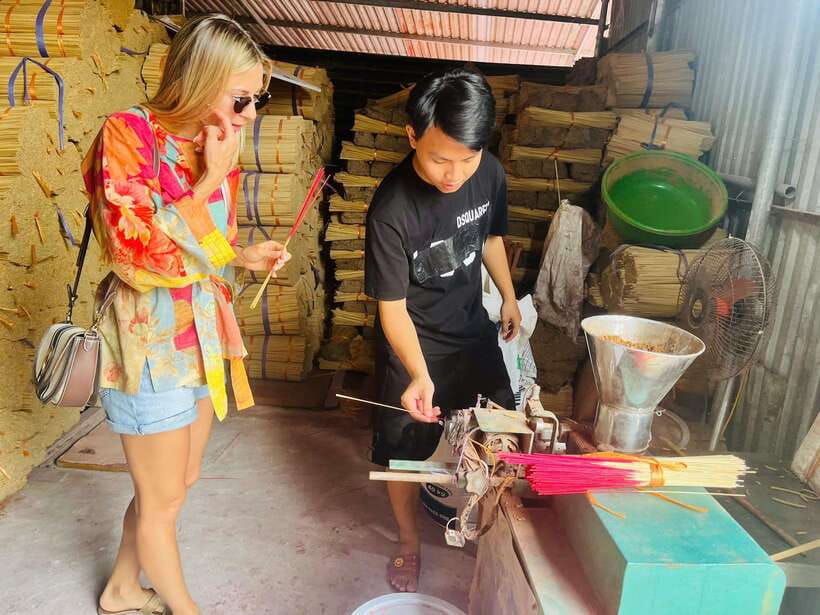
Your guide takes you toward the center of the village, where you see incense being made on a family scale. You also meet a family that specializes in dyeing the sticks. This is important because it moves the visit beyond the classic photograph. You learn that the color and arrangement are part of a working process, not simply decoration prepared for tourists.
The tour then visits a nearby factory for another view of incense production. Here you learn how incense is made from the beginning and see more of the manual work involved. The contrast between a family workshop and a larger factory gives the stop useful depth. One shows the personal side of the trade; the other shows the physical effort and organization required to produce incense in greater quantity.
You can also try making incense yourself. It is a small activity, but it helps you appreciate the repeated hand movements involved. What looks simple from a distance can require long hours of careful work.
Photography is a major reason people choose this excursion, and the guides often help you get better pictures. Solo visitors can ask for assistance, and guides such as Flow and Lana have been especially attentive about taking photos. Still, remember that you are walking through a working village. Keep out of the way of workers, avoid touching materials without permission, and listen when the guide explains where you can stand.
The incense stop may include souvenirs, and some people purchase items for friends. The purchase is not presented as compulsory, which is helpful if you are mainly interested in the process. If buying incense is important to you, ask your guide what is available on the day. Availability and sales arrangements can vary.
The full-day lacquer village option
The full-day version adds a lacquer-art village after the hat stop, with lunch between the craft visits. This makes the day more varied, but it also creates a longer and busier schedule.
Lacquer work is a very different craft from hat making and incense production. Instead of a quick, practical object, you see artwork built through careful surface treatment, painting, and finishing. At a large family-run factory, artisans explain the production process and show completed lacquer goods.
You may also visit a local artist’s home and paint a lacquer piece. The lacquer activity is not included in the same way as the hat souvenir. The material for painting is listed as an extra expense, so check the cost before you begin if you want to take part.
I would choose the full-day option if you have a strong interest in traditional artwork or want a proper day outside Hanoi. It gives you three distinct craft settings and includes a home-cooked lunch at a local artisan’s house or a riverside restaurant.
The half-day version is better if you want the strongest two stops without giving up most of your day. It focuses on the hat and incense villages, which are also the most visual and hands-on parts of the experience.
A few more Hanoi departures worth weighing up
- Hanoi Jeep Tour: Food, Culture and Fun by Vietnam Army Jeep
★ 5.0 · 15,222 reviews - Full-Day Ninh Binh Highlights Tour from Hanoi
★ 5.0 · 7,761 reviews - Hanoi: Ha Long Bay Day Cruise – Swimming, Meal, Kayaking
★ 4.7 · 7,415 reviews - Hanoi: Water Puppet Show Tickets
★ 4.6 · 7,029 reviews
Lunch, transport, and the rhythm of the day
The morning half-day departure is roughly 7:45 to 13:30. The afternoon option runs about 11:45 to 17:30. Those times make the tour easy to fit into a short Hanoi stay.
The half-day option does not include lunch. Eat before leaving or bring snacks, especially if you choose the afternoon departure. You return around the city center at the end, but you should not count on a full meal being provided.
The full-day tour generally begins with pickup between 7:45 and 8:15 and includes lunch. Hotel pickup and drop-off are available in Hanoi’s Old Quarter, also called Hoan Kiem District. If your hotel is outside that area, contact the operator through WhatsApp or Zalo for advice on the nearest meeting point.
Traffic can affect the schedule. A delay in Hanoi may mean meeting the guide at an office or another agreed point rather than receiving a direct hotel pickup. Communication through WhatsApp has been useful for some visitors, and one guide, Hoang Zoo, was particularly good about sharing live location details and clear meeting instructions.
The bus is described as comfortable, but conditions can vary. One recent departure was delayed by holiday traffic, and the bus felt too warm. Bring water, wear comfortable shoes, and keep your schedule slightly flexible. The included water bottle is helpful, but it is not a substitute for snacks on the half-day trip.
The optional Hanoi Train Street finish
At the end of the tour, you can be dropped near Hanoi Train Street instead of returning directly to your hotel. This can be a smart choice if you want to see the famous railway passage and have enough time left in your day.
The arrangement is not a guided Train Street visit. You are dropped off so you can explore on your own, then take a taxi or Grab back to your hotel. If you do not want this stop, remain on the bus for the regular return.
This option adds flexibility, but it also adds responsibility. You need to arrange your own transport afterward, and the tour does not include drinks or other personal expenses at Train Street. Treat it as a useful drop-off point, not as an included second activity.
What the guides add to the experience
The guide is a major part of this tour. The best guides do more than translate the craft process. They explain the local setting, answer questions, help you approach artisans politely, and keep the group moving between stops.
Guides named Anna, Flow, Lana, Sophia, Danny, Ha, Hanh, and Hoang Zoo have been singled out for friendly energy, clear English, patience, and practical help. Anna is often described as lively and informative. Flow has helped solo visitors with photographs and has been praised for her patience. Lana has been good at communication before pickup, while Sophia has made sure people were comfortable and understood each activity.
You may also find that your guide takes photos for you. That is useful at the incense village, where the best pictures often require someone else to frame the colorful bundles. It is a small service, but it matters if you are traveling alone or want a picture of your whole group.
Group size can affect the feel of the day. Private groups are available, and that option lets you move at your own pace, ask more questions, and avoid feeling rushed. A shared group costs less, but the factory may feel crowded and noisy. One useful tip is to stand close to the guide during explanations, especially inside the factory.
Smells, noise, walking, and other practical limits
The tour involves real craft materials. Acrylic paint and lacquer paint are used at many of the places visited, and the smells may be strong. If you are sensitive to paint or chemical odors, take this seriously before booking.
The factory can be noisy, which makes it hard to hear a spoken explanation from across the room. Stay near the guide and ask for a repeat if needed. You are there to learn, so there is no prize for pretending you heard everything.
Comfortable shoes are the only specific item required, but they are important. You walk through village lanes and production areas rather than remaining on the bus. The activity is not suitable for wheelchair users, and pets are not allowed.
The day is generally active without being strenuous. You can expect walking, standing, craft demonstrations, and time for photographs. The tour is not designed as a quiet rest day, though painting the hat provides a calm pause in the middle of the schedule.
Who should book this village tour
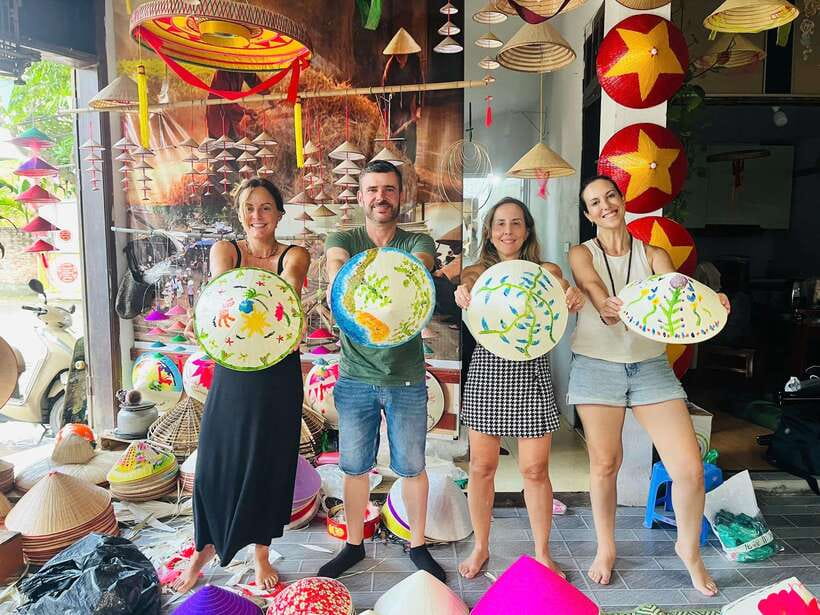
I would recommend the half-day option to first-time Hanoi visitors who want something beyond the Old Quarter, especially if you have only a few days in the city. It is also a good fit for photographers, families, solo visitors, and anyone who enjoys making a small souvenir.
Choose the full-day option if you want more craft variety, prefer a slower day outside the city, or like the idea of a local lunch and lacquer painting. A private group is worth considering for families or friends who want time for questions and photographs.
I would be more cautious if you dislike factory settings, strong paint smells, warm buses, or busy schedules. The sites are working places, not quiet cultural centers. You should also avoid booking the half-day afternoon departure without arranging food first.
At $15 per person, the half-day tour offers unusually good value. Transport, a guide, entrance fees, water, and a painted hat are included. The full-day version is the better value for a complete outing because lunch and the lacquer stop add more time and content, but confirm the exact price for your chosen option.
Free cancellation up to 24 hours before departure and reserve-now, pay-later booking make it easier to fit the trip around changing Hanoi plans. Those details are useful, but the real decision is simple: do you want to see how everyday Vietnamese crafts are made, or do you prefer a polished sightseeing attraction?
Should you book it?
Book this tour if colorful photographs, local craft, and hands-on activities appeal to you. The hat painting and incense village are the best reasons to go, and the guides add warmth and useful context.
Pick the half-day trip when your Hanoi schedule is tight. Pick the full-day version when lacquer art and a home-cooked lunch sound as appealing as the famous incense yards. Skip it if paint smells, factory noise, or village walking would spoil the day for you.
FAQ
How long does the tour last?
The half-day option lasts about six hours. The morning schedule runs roughly from 7:45 to 13:30, while the afternoon schedule runs from about 11:45 to 17:30. The full-day option lasts one day.
Which villages are included in the half-day tour?
The half-day tour visits Chuong Conical Hat Crafting Village and Quang Phu Cau Incense Village. The optional finish is drop-off near Hanoi Train Street.
What does the full-day tour add?
The full-day option adds a lacquer-art village, lacquer painting, and a home-cooked lunch. It also visits the conical hat and incense villages.
Is lunch included?
Lunch is included with the full-day option. The half-day tour does not include lunch, so eat beforehand or bring snacks.
Can I paint my own conical hat?
Yes. One conical hat per person is included, and you can decorate it with paint and take it home.
Is lacquer painting included?
The full-day tour includes the lacquer-art visit and the opportunity to paint a lacquer piece. The lacquer piece and painting materials are listed as an additional expense.
Where does hotel pickup operate?
Pickup is included from hotels in Hanoi’s Old Quarter area, within Hoan Kiem District. If your hotel is outside that area, contact the operator for the nearest meeting point.
Can I be dropped at Hanoi Train Street?
Yes. Train Street is an optional drop-off point. You can spend time there and then take a taxi or Grab back to your hotel yourself.
Is the tour suitable for wheelchair users?
No. The tour is not suitable for wheelchair users. Comfortable shoes are recommended, pets are not allowed, and paint or lacquer smells may be strong at some stops.
Just added around Hanoi
- Cat Ba National Park, Lan Ha Bay 2 Days 1 Night Adventure★ 4.8 · 9 reviews
- Full day Boat Tour Lan Ha Bay – Ha Long Bay: Kayak, Beach Hopping★ 5.0 · 9 reviews
- Ha Giang Loop 2 Days High quality Small Group +Private Room★ 5.0 · 9 reviews
- Half Day Sapa Cat Cat Explore Waterfall, Workshop, H’mong Local★ 5.0 · 9 reviews
- Sapa 1 Day Trekking★ 5.0 · 9 reviews
- Sapa Open Air Jeep Half Days Off the Beaten Track, Backroad★ 4.9 · 9 reviews
- Halong 2 days 1 night with Cozy Classic Cruise from Hanoi★ 4.5 · 9 reviews
- Fansipan Mount Trekking 1 Day★ 5.0 · 9 reviews
Incense Village and Craft Tours, compared.
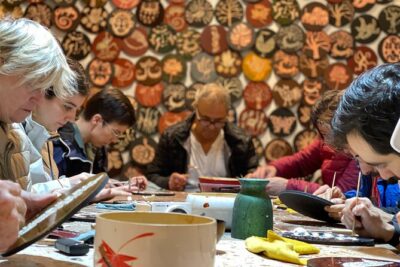
Incense Village, Hat Making & Lacquer Artisan Small Group Hanoi
Read our review →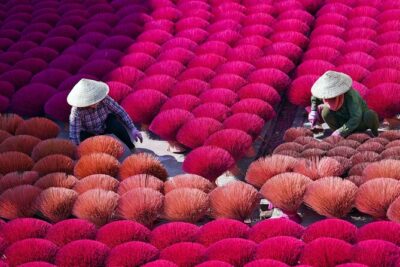
Incense Village Small Group of 9 Tour From Hanoi to Ninh Binh
Read our review →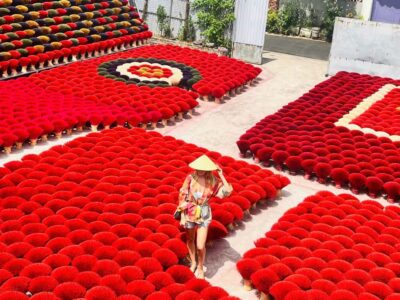
Incense Village, Hat, Lacquer Tour & City Highlights
Read our review →
Incense Village, Hat, Lacquer, & City Highlights Tour
Read our review →
Instagram Incense Quang Phu Cau Village Tour with Train Street
Read our review →
INCENSE Villages & Ha Noi City Full Day guided Tour with Lunch
Read our review →
Bat trang Pottery Class in Hanoi Old Quarter/Handmade experience
Read our review →
Bat trang Pottery Ceramics Class in Hanoi’s Old Quarter | VN
Read our review →Browse the lists this tour appears in