
Reviewed · EGG COFFEE EXPERIENCES
Hanoi Egg Coffee Class
Hanoi’s famous egg coffee is part dessert, part caffeine hit, and completely unlike the usual cup of coffee. This class shows you how to make it, then adds other Vietnamese favorites such as salt coffee, coconut coffee, and condensed-milk coffee, depending on the option and instructor.
I like the central Old Quarter setting, since you can fit the class around sightseeing and end the session a few steps from Ta Hien Beer Street. I also like the practical format: you do not just taste the drinks, you learn recipes you can repeat at home. The main caution is the caffeine load. Four small coffees can leave your heart racing, and some students found that a few steps were more demonstration than hands-on work.
In This Review
- Key things to know before booking
- Making egg coffee in Hanoi’s Old Quarter
- What you actually make during the lesson
- Phin brewing and the parts that take patience
- Why the coffee culture talk adds value
- A one-hour lesson or a longer coffee session
- What is included, and what costs extra
- The caffeine question is real
- A few practical limitations
- Who will enjoy this Hanoi coffee class
- Should you book the Hanoi Egg Coffee Class?
- FAQ
- Where is the Hanoi Egg Coffee Class held?
- How much does the class cost?
- How long does the class last?
- Which coffees can I learn to make?
- Is the class taught in English?
- Are ingredients and equipment included?
- Can I book a private class?
- Can I cancel the booking?
Key things to know before booking
- Egg coffee is only part of the lesson: Depending on the class, you may also prepare salt, coconut, black, white, or brown coffee.
- Cafe Minh is near Ta Hien Beer Street: The meeting point is 53 Lương Ngọc Quyến Street, though it can vary with the option booked.
- The class can become private: Small groups are offered, and several booked time slots have ended up as one-to-one lessons.
- You learn the story behind the cup: The instructor covers Vietnamese coffee culture, brewing methods, local customs, and useful Vietnamese words.
- You receive the tools for a repeat performance: Ingredients and equipment are supplied, and a small gift is included. Coffee-making materials can also be bought afterward.
- Plan for one to four hours: Check the selected time and class option carefully, since the length can vary.
Making egg coffee in Hanoi’s Old Quarter
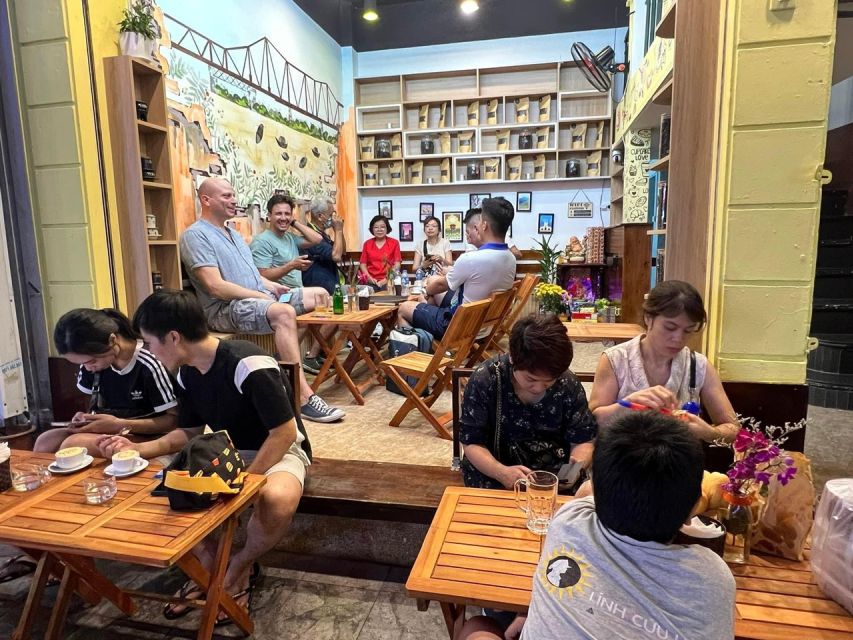
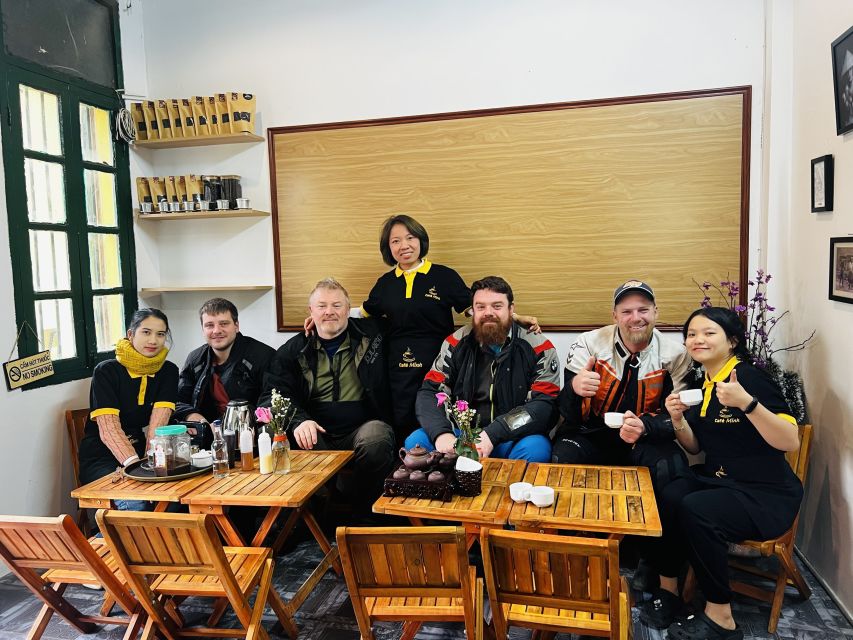
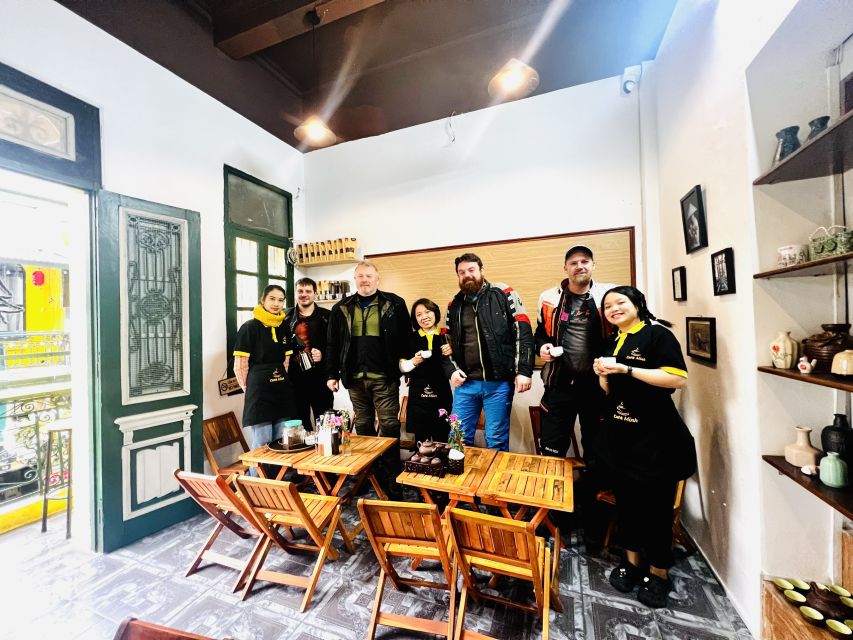
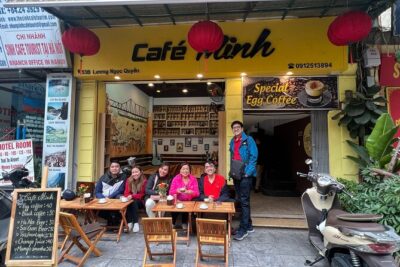
The class begins at Cafe Minh, at 53 Lương Ngọc Quyến Street, just a few meters from Ta Hien Beer Street. That puts you in the middle of Hanoi’s Old Quarter, but the cafe itself is described as being away from the worst traffic, with a balcony and an open-front sidewalk area for sitting afterward.
This location works well for a short activity. You can schedule the class between a morning walk around the Old Quarter and an evening meal, or use it as a rainy-day plan. It is not a countryside coffee farm or a formal culinary school. It is a compact cafe workshop, which makes it easy to add to a Hanoi itinerary.
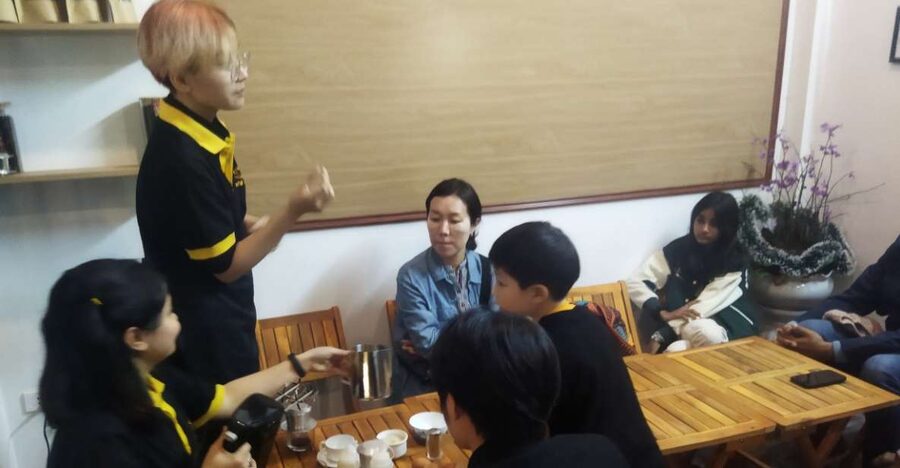
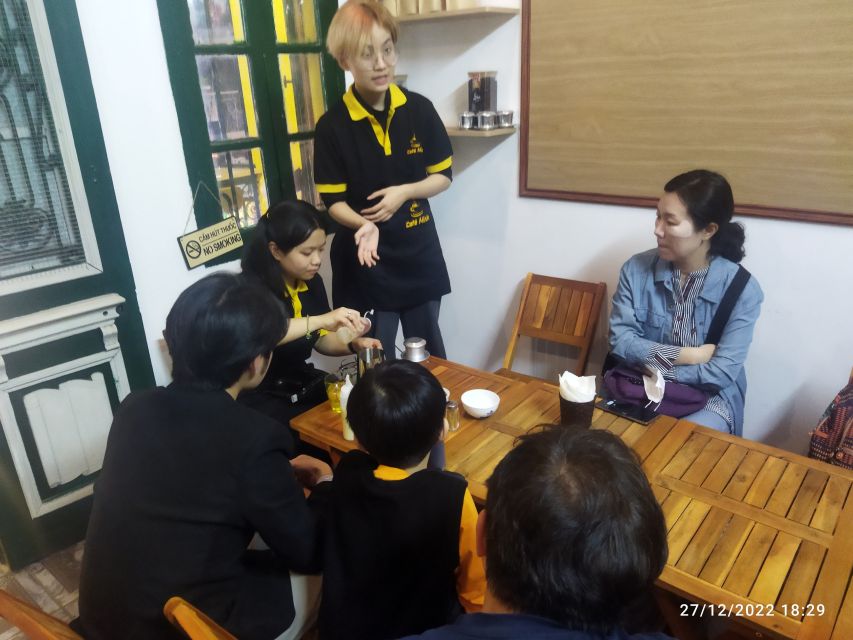
Your English-speaking instructor introduces the class with the background of coffee in Vietnam. Instructors named in past sessions include Ha, Hai, Lena, Ashley, Ruby, Chloe, Paul, Bo, Lucy, Lilith, and Gene. The exact teacher depends on your time and booking, but the pattern is clear: expect a conversational lesson rather than a silent demonstration.
The instructor explains how coffee became part of Vietnamese life and how Hanoi and Saigon developed different preferences. That regional comparison gives the lesson more purpose than simply learning a sweet drink. You begin to understand why the same basic ingredients can produce noticeably different cups.
More egg coffee and cafe stops:
- Hanoi Coffee Workshop: Taste Salt, Coconut and Egg Coffee
★ 5.0 · 1,286 reviews - Hanoi: Salt Coffee Workshop Awake Your Senses With 6 Brews
★ 5.0 · 792 reviews - Hanoi: Vietnamese Street Food Tour with Egg Coffee
★ 4.9 · 315 reviews
What you actually make during the lesson
The core recipe is Vietnamese egg coffee. You prepare the ingredients, follow the mixing and brewing steps, and learn how the creamy egg topping is made. The process takes more care than pouring coffee into a cup, which is the point. A good egg coffee depends on texture as much as taste.
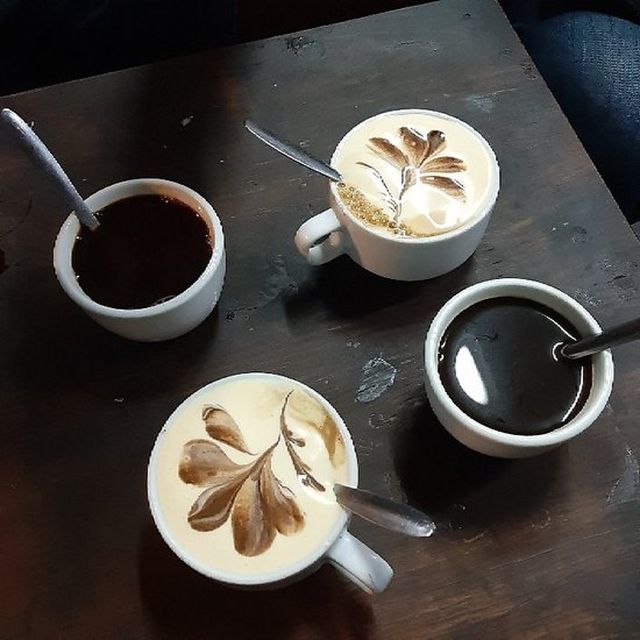
The coffee underneath is strong, while the egg mixture supplies a thick, sweet layer. It can feel like drinking a liquid custard with a serious espresso-like base. If you are unsure about egg in coffee, this is a useful way to try it because the drink is prepared fresh and explained step by step.
The exact menu varies. Some sessions cover three drinks, while others cover four. Across the available classes, you might make:
- Egg coffee, the Hanoi specialty and the main reason to book
- Hanoi-style milk coffee, made with strong coffee and condensed milk
- Saigon-style milk coffee, described as sweeter than the Hanoi version
- Black coffee
- White coffee
- Brown coffee
- Salt coffee
- Coconut coffee
The listed core recipes include egg coffee, Hanoi-style condensed-milk coffee, and Saigon-style milk coffee. Recent class experiences also included salt and coconut coffee, and several sessions taught four different drinks. Check the option you select if a particular recipe matters to you.
Salt coffee is the surprise favorite for many people. The salt does not turn the drink into soup. Used in a small amount, it changes the sweetness and gives the coffee a smooth, rounded taste. Coconut coffee moves in another direction, pairing coffee with coconut for a sweeter, softer drink.
The milk coffees help you compare regional styles. Hanoi’s version is described as espresso-strength, while the Saigon style is a little sweeter and includes three secret drops. The class does not treat these as interchangeable recipes. Small changes in sweetness and preparation are used to explain local taste.
Phin brewing and the parts that take patience
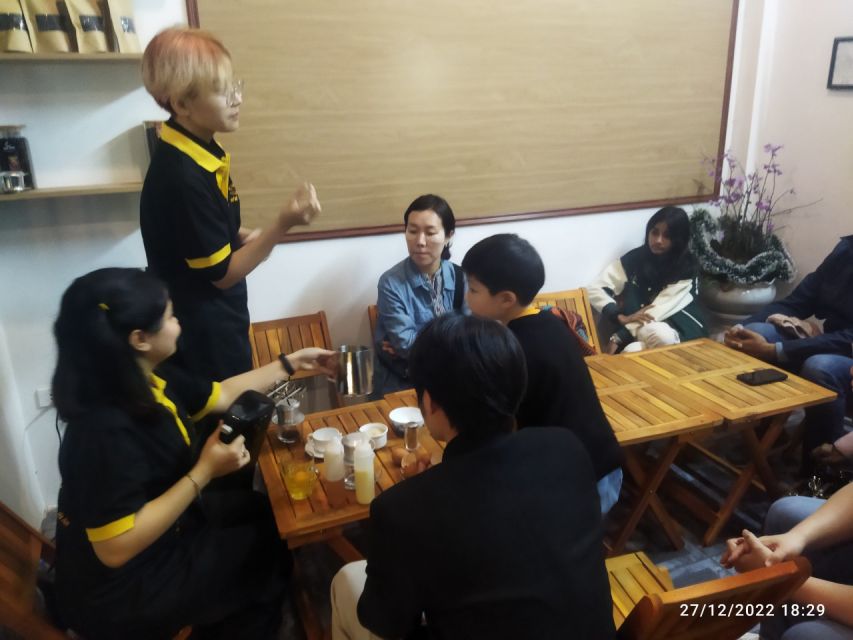
Vietnamese coffee is traditionally brewed with a phin, a small metal filter that sits on top of the cup. The water passes slowly through the coffee, producing a concentrated brew. This is a simple tool, but it rewards patience and correct preparation.
The class supplies the equipment and ingredients, so you do not need to bring anything. You roll up your sleeves and work through the recipe with the instructor. The practical value is easy to see: after the class, you have more than a memory of a Hanoi drink. You have a method you can try in your own kitchen.
The lessons are not identical in how much work you do yourself. One student felt that the instructor handled some steps, including whipping the egg and coffee, while another described the class as fully useful and easy to repeat at home. If you want maximum hands-on practice, ask at the start which parts you will prepare yourself.
That small question can improve the class. In a private session, you can request more time with the whipping, brewing, and mixing. In a group, the instructor may need to move between several people and demonstrate certain stages for everyone.
Why the coffee culture talk adds value
I like that the class connects preparation with Vietnam’s long relationship with coffee. You learn about the drink’s place in daily life, not just the ingredient list. Instructors also use the session to explain Hanoi, local food, nearby sights, and sometimes useful Vietnamese words.
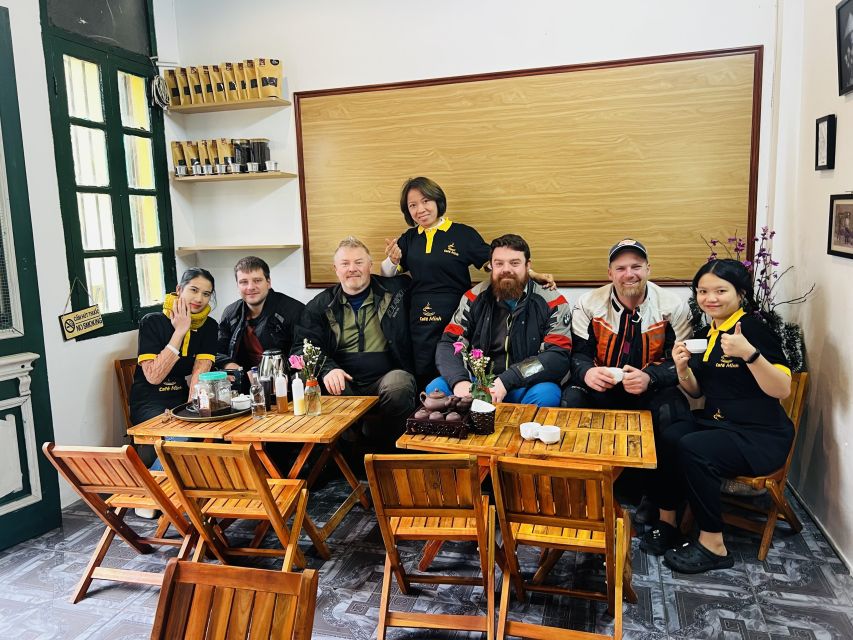
This informal conversation is one of the best parts of the experience. Ha, Hai, Lena, Ashley, and Paul were repeatedly described as clear, friendly teachers, while Bo stayed afterward for a longer conversation about Vietnamese culture. That tells you what the atmosphere is intended to be: relaxed, social, and open to questions.
The lesson can also help you order coffee with more confidence during the rest of your trip. You will have tasted several styles and learned how Hanoi coffee differs from drinks associated with Saigon. If you are planning to visit local cafes afterward, ask your instructor for recommendations. Several classes have included suggestions for food, attractions, and cafes.
Do not expect a formal lecture with a fixed academic structure. The value comes from the exchange around the recipes. Ask why a drink is sweet, how the phin works, or what makes one regional style different from another. You will get more from the class if you treat it as a conversation with a coffee-loving local.
More Cat Ba island time:
- Lan Ha – Ha Long Bay – Dau Be island 2D/1N from Cat Ba in less touristy areas.
★ 5.0 · 3,460 reviews - Full day trip to Lan Ha-Ha Long Bay from Cat Ba, avoid the crowds
★ 5.0 · 3,317 reviews - From Hanoi: 2-Day Halong Sapphire Cruise with Balcony Cabin
★ 4.8 · 1,447 reviews - Mon Chéri Cruises 5 star: Amazing 3 days exploring Halong & Cat Ba island
★ 5.0 · 1,280 reviews
A one-hour lesson or a longer coffee session
The stated duration is one to four hours, which is a wide range. In practice, the class can be as short as about an hour, while another session lasted roughly two and a half hours. The number of recipes and the pace of the group appear to shape the length.
A one-hour booking can be a good fit if you want a quick activity between major sights. You can still learn several coffee types, hear some background, and drink your creations. It is also a sensible choice if you are traveling with children or teenagers who may not want a long workshop.
A longer session gives you more time to compare drinks and talk with the instructor. It may suit coffee fans who want to ask questions about brewing or practice each stage more carefully. Before booking, check the available starting times and the duration attached to your chosen option rather than assuming every class follows the same schedule.
The class can be private or arranged for a small group. This matters more than it may seem. A small group makes it easier to see the demonstration and ask questions, while a private lesson lets the instructor slow down or adapt the focus.
Several sessions have turned into private classes simply because only one person booked that time slot. That is a nice possibility, but it is not something to count on. Book a small-group option if personal attention is important to you.
What is included, and what costs extra
At $12 per person, this is inexpensive for a central Hanoi activity. The price includes an English-speaking instructor, all class ingredients, and the equipment needed to prepare the drinks. A small gift is also included in the stated package.
The value comes from the combination of tasting and instruction. A cafe visit gives you one finished drink. Here, you can try several styles and take home the knowledge needed to make them again. One past class included a free phin filter, and a digital recipe book has also been supplied in at least one session.
Do not assume every specific gift is guaranteed unless it appears in your selected option. The package promises a small gift, but the exact item can vary. The cafe also carries coffee beans and coffee-making materials, so you can buy supplies after the class if you want to continue at home.
Food and extra drinks are not included. The coffee made during the class is part of the experience, but anything else you order at the cafe is a personal expense. Since several recipes may be served, you probably will not leave thirsty, but you should not treat the $12 as a full meal.
The caffeine question is real
This class may involve three or four coffees in a short period. Vietnamese coffee is often strong, and the drinks can be sweet as well. One student joked about a racing heart after trying egg, salt, and coconut coffee, so you should take the warning seriously if caffeine affects you.
Eat something beforehand if strong coffee on an empty stomach bothers you. You can also ask the instructor about portion sizes and pace yourself instead of finishing every sample quickly. The class is built around tasting your creations, but you do not need to prove anything by drinking faster than you want.
People who dislike sweet drinks should also set expectations. Egg coffee, condensed-milk coffee, coconut coffee, and some salt coffee recipes lean toward a dessert-like profile. Black coffee gives you a less sweet comparison, but this is not a workshop aimed at light, delicate coffee.
The good news is that the variety lets you find your own favorite. You may prefer the creamy egg topping, the salty edge, the sweeter Saigon preparation, or the simpler black version. Comparing them side by side is more useful than ordering one drink and trying to guess what makes it different.
A few practical limitations
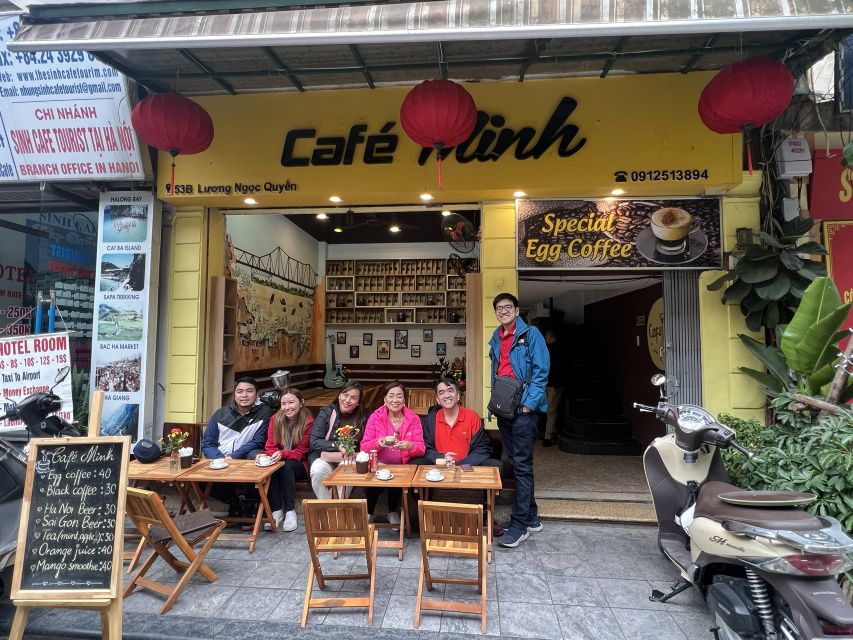
The cafe is in the Old Quarter, close to a busy nightlife street. That is convenient, but the surrounding area can be crowded and noisy. The class location itself is described as being away from traffic, with seating on a balcony or open sidewalk area, but do not expect a quiet retreat far from city activity.
The meeting point may vary depending on the option booked. Confirm the address on your booking, especially if you are navigating from another part of Hanoi. Cafe Minh is listed at 53 Lương Ngọc Quyến Street, near Ta Hien Beer Street, but the general meeting information allows for variation.
The activity is not suitable for people with mobility impairments, and pets are not allowed. The lesson involves preparing ingredients and using cafe equipment, so tell the provider about any needs before booking rather than assuming the setup will work for you.
One minor concern raised during a class was that a few utensils were not as clean as expected. That was an isolated criticism among otherwise strong feedback, but it is fair to keep in mind. If anything looks questionable, ask for a clean replacement before you begin.
Who will enjoy this Hanoi coffee class
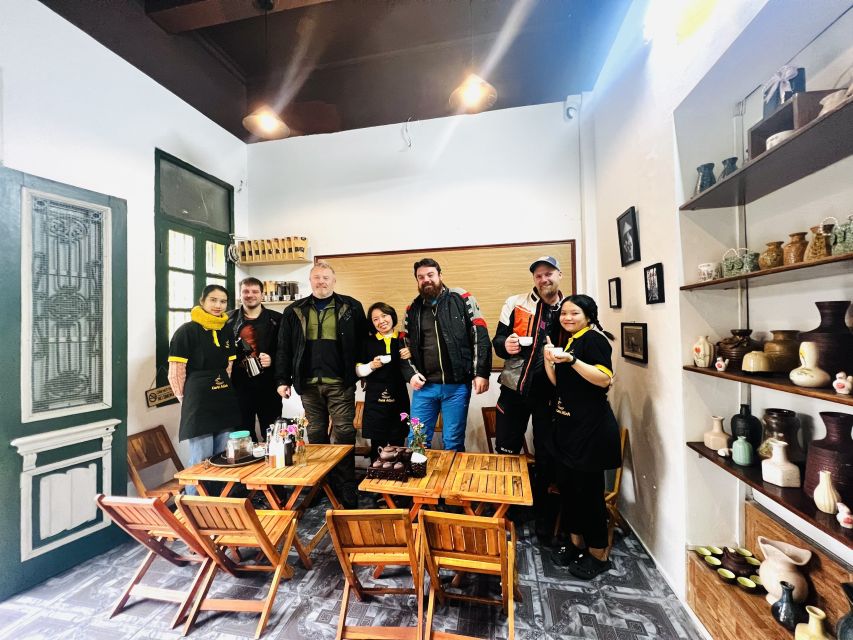
I would recommend it most strongly to coffee drinkers who want to understand what they are ordering in Vietnam. It also suits first-time Hanoi visitors because the Old Quarter location and local conversation can help you plan the rest of your stay.
It works well for couples, solo visitors, and families with older children or teenagers. One parent noted that teenagers enjoyed the session, and the short format makes it easier to fit into a family day. Private or small-group arrangements are useful if your party wants a slower pace.
This is also a good rainy-day activity. You stay at the cafe, learn a practical skill, and leave with recipes instead of losing half a day to bad weather. It is not a major sightseeing attraction, but it gives you a close look at an everyday part of Vietnamese food culture.
You may want to skip it if you do not drink caffeine, dislike sweet coffee, or want a broad cooking class with several Vietnamese dishes. The focus is coffee, and the strongest part of the experience is comparing coffee styles while talking with the instructor.
Should you book the Hanoi Egg Coffee Class?
At $12, I think this is a strong-value Hanoi activity, especially if your class includes three or four drinks. You get the ingredients, equipment, instruction, cultural context, and a recipe you can use after returning home. The central location makes it easy to fit into a busy Old Quarter schedule.
Book it if you want more than a quick photo of egg coffee. Choose a longer or private option if you care about practicing every step, and ask which recipes are included if salt or coconut coffee is a priority. Bring a sensible caffeine plan, confirm the meeting point, and leave room afterward to sit with your creations on the balcony or sidewalk.
Skip it only if coffee is not your thing or if you need a fully accessible activity. For most curious coffee drinkers, this is a friendly, useful way to spend an hour or two in Hanoi.
FAQ
Where is the Hanoi Egg Coffee Class held?
The main location is Cafe Minh at 53 Lương Ngọc Quyến Street in Hanoi’s Old Quarter, a few meters from Ta Hien Beer Street. The meeting point may vary depending on the option booked.
How much does the class cost?
The listed price is $12 per person.
How long does the class last?
The stated duration is one to four hours. Available times and the exact length depend on the option you choose.
Which coffees can I learn to make?
The class can include egg coffee, Hanoi-style milk coffee, Saigon-style milk coffee, black coffee, white coffee, brown coffee, salt coffee, and coconut coffee. The exact selection varies by class option.
Is the class taught in English?
Yes. English and Vietnamese are available, and an English-speaking instructor leads the class.
Are ingredients and equipment included?
Yes. The ingredients and equipment needed for the class are included. A small gift is also listed as part of the experience.
Can I book a private class?
Yes. Private and small-group options are available. Some time slots may also become one-to-one sessions when only one person books.
Can I cancel the booking?
You can cancel up to 24 hours in advance for a full refund. A reserve-now-and-pay-later option is also available, depending on the booking conditions.
More Workshops in Cat Ba
- CatBa: Authentic Vietnam Cooking Class and local market tour
★ 5.0 · 13 reviews - Ninh Binh to Cat Ba Luxury Transportation with D-Class Limousine
★ 4.5 · 11 reviews - Hanoi Cooking Class: Culture, Local Market & Meaning CSR Impact
★ 5.0 · 5,147 reviews - 5 Traditional Dishes Hanoi Cooking Class with Market Trip
★ 5.0 · 4,890 reviews
More Coffee Experiences in Cat Ba
- Hanoi Coffee Experience: 6 Brews, 9 Recipes & 3 Liquor Tastings
★ 5.0 · 2,945 reviews - Hanoi Cooking Class: Pho/Bun Cha/Banh Xeo…+Free Egg/Salt Coffee
★ 5.0 · 267 reviews - Ha Noi Egg Coffee Class
★ 5.0 · 227 reviews - Hanoi Coffee Workshop: Master 6 Signature Vietnamese Coffee
★ 5.0 · 171 reviews
Just added around Cat Ba
- Full day Boat Tour Lan Ha Bay – Ha Long Bay: Kayak, Beach Hopping★ 5.0 · 9 reviews
- Cat Ba National Park, Lan Ha Bay 2 Days 1 Night Adventure★ 4.8 · 9 reviews
- Sunset and Bioluminescent Plankton by Kayaking in Lan Ha Bay★ 5.0 · 9 reviews
- VIP VAN : Hanoi to cat ba or Return by Luxury van★ 4.5 · 9 reviews
- Cat Ba: Full- day trip with biking, kayaking, meal, tickets★ 4.5 · 9 reviews
- Full Day Sea Star Cruise to Lan Ha-Ha Long Bay Viet Hai village★ 4.5 · 9 reviews
- Sunset on Lan Ha Bay – Half Day Cruise From Cat Ba Island★ 5.0 · 9 reviews
- Hanoi: Ha Long Bay & CatBa Island 3-Day with Boutique Cruise★ 3.2 · 10 reviews
Egg Coffee Experiences, compared.
Hanoi Coffee Workshop: Taste Salt, Coconut and Egg Coffee
Read our review →
Salt Coffee Workshop Awake Your Senses With 6 Brews
Read our review →

Hanoi Coffee Workshop: Master 6 Signature Vietnamese Coffee
Read our review →
Hanoi Coffee Class learning 5 famous coffee in Hanoi
Read our review →
Mini Hanoi Coffee Workshop: Pick Any Signature Coffee You Like
Read our review →
Browse the lists this tour appears in