
Reviewed · INCENSE VILLAGE AND CRAFT TOURS
Incense, Hat Villages Tour/Traditional Crafts with Options
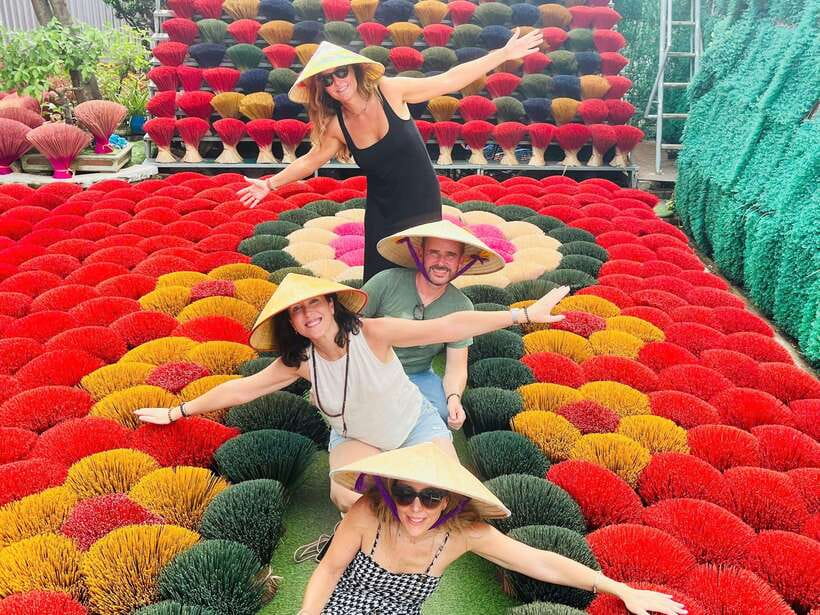
Quang Phu Cau is the star of this outing. Thousands of red incense sticks spread across village courtyards make an unforgettable sight, but the real value comes from seeing how bamboo is cut, scented, bundled, and prepared by hand. You also get to make or decorate a Vietnamese conical hat, rather than simply pose beside one.
I especially like the hands-on work at Chuong and Bat Trang, plus the chance to meet craftspeople in family-run workshops. Guides such as Louisa, often called Lulu, Eric, Lana, and Mr. QA have been praised for clear explanations, good humor, and easy communication. The main drawback is time: the full route covers several villages, so some visits can feel brisk and the drives take a fair slice of the day.
In This Review
- Key points to know before booking
- Why the craft villages are worth your time
- Quang Phu Cau and the red incense fields
- Chuong Village and your own Non La
- Ha Thai and the slow work of lacquer
- Bat Trang, Vietnam’s famous pottery village
- Van Phuc and traditional silk weaving
- How the half-day and full-day options differ
- Guides, group size, and transport
- What the price includes, and what it does not
- Who should book this experience?
- FAQ
- Where does the tour pick up?
- Is lunch included?
- What crafts will I see?
- Do I get to make anything?
- Is an English-speaking guide included?
- Can I book a private group?
- What should I bring?
- Should you book it?
Key points to know before booking
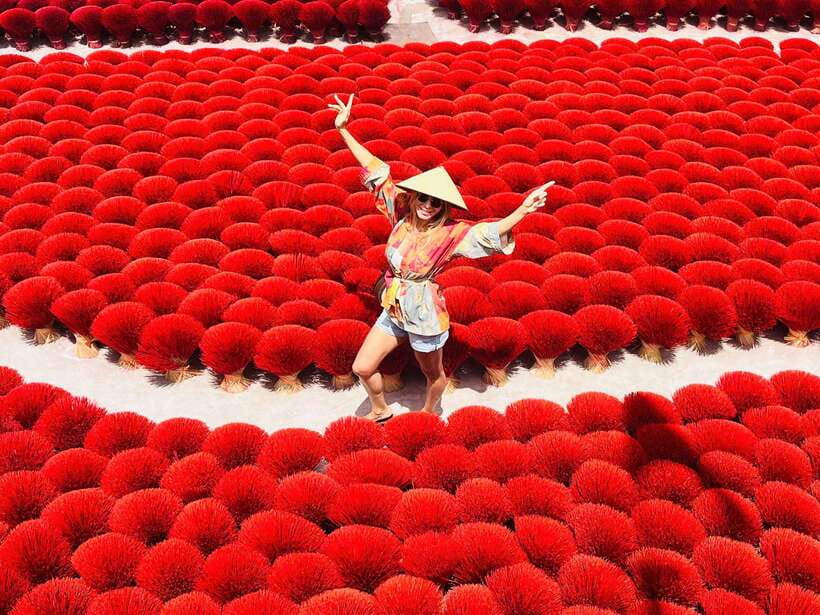
- Quang Phu Cau is the best photo stop: Red incense bundles create bold patterns while you learn how the sticks are produced.
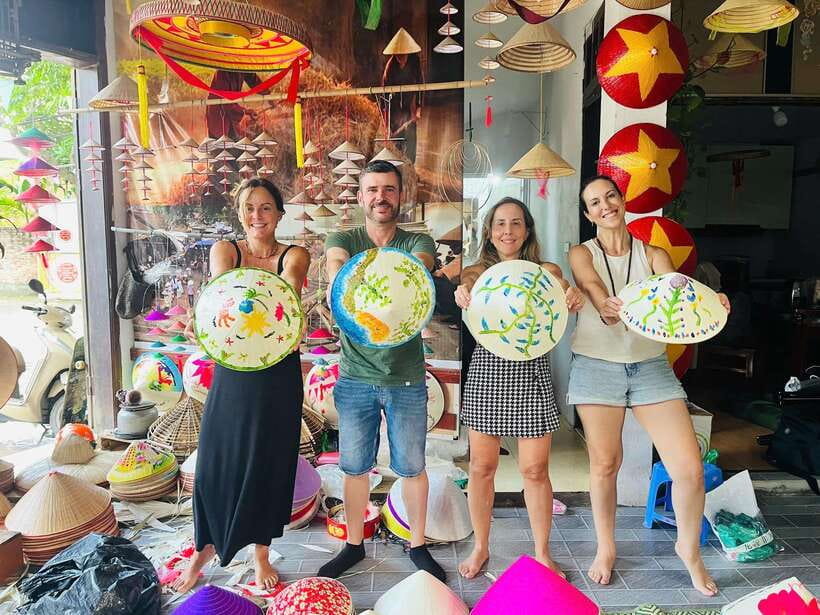
- You take home a conical hat: One hat per person is included, and the workshop may let you make or paint your own.
- Bat Trang adds real hands-on fun: Shape a ceramic item and explore a market full of bowls, vases, and home décor.
- The full-day route covers five craft villages: Silk, hats, lacquer, pottery, and incense give you a broad look at northern Vietnamese handiwork.
- The half-day option is more focused: It suits you if you mainly want incense, hat-making, and a lighter schedule.
- Hotel pickup is limited to Hanoi’s Old Quarter area: Bring comfortable shoes, water is supplied, and lunch comes only with the full-day option.
Why the craft villages are worth your time
Hanoi is full of temples, cafés, and grand colonial buildings, but these villages show you another side of northern Vietnam. Here, craft is not presented as a museum display. You see work happening in workshops and homes, with tools, materials, drying racks, kilns, and finished goods all part of daily village life.
At $12 per person, the tour offers a lot for the money. The fee covers Old Quarter pickup and drop-off, an English-speaking guide, entrance fees, a bottle of water, and one conical hat. The full-day version also includes a home-cooked lunch. That is strong value, especially if you want transport between several villages without arranging separate taxis.
The tradeoff is the schedule. The listed stops add up to a long day when driving time is included, and five villages can feel like a sampler rather than a slow study of one craft. If you want to spend an hour chatting with one artisan or browsing every shop, this may not be your ideal outing. If you want a broad, practical introduction to local crafts, it works well.
More craft village visits from Ninh Binh:
- Incense Village Small Group of 9 Tour From Hanoi to Ninh Binh
★ 5.0 · 626 reviews - Incense Village Private Tour from Hanoi to Ninh Binh Old Capital
★ 5.0 · 102 reviews - Hanoi: Incense Village, Hat-Making & Ninh Binh, Tam Coc Tour
★ 4.6 · 70 reviews
Quang Phu Cau and the red incense fields
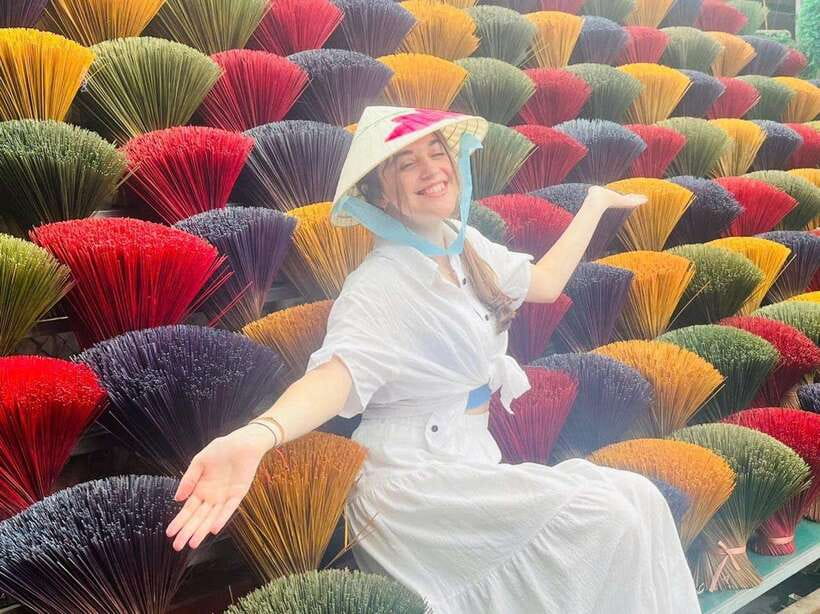
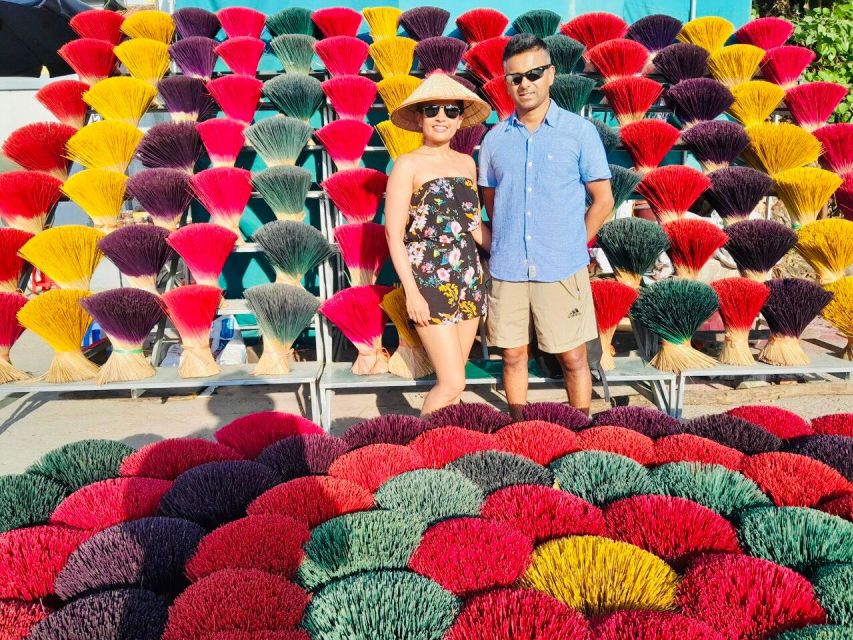
The day begins with a drive of about 70 minutes from Hoàn Kiếm to the countryside. The first major stop is Quang Phu Cau, also known as the Incense Stick Village, where the color and arrangement of the materials make photography a central part of the visit.
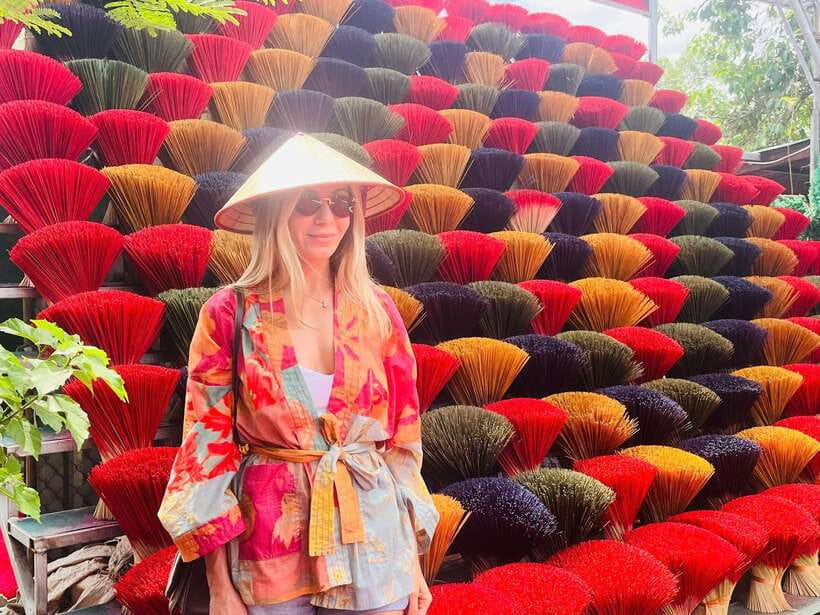
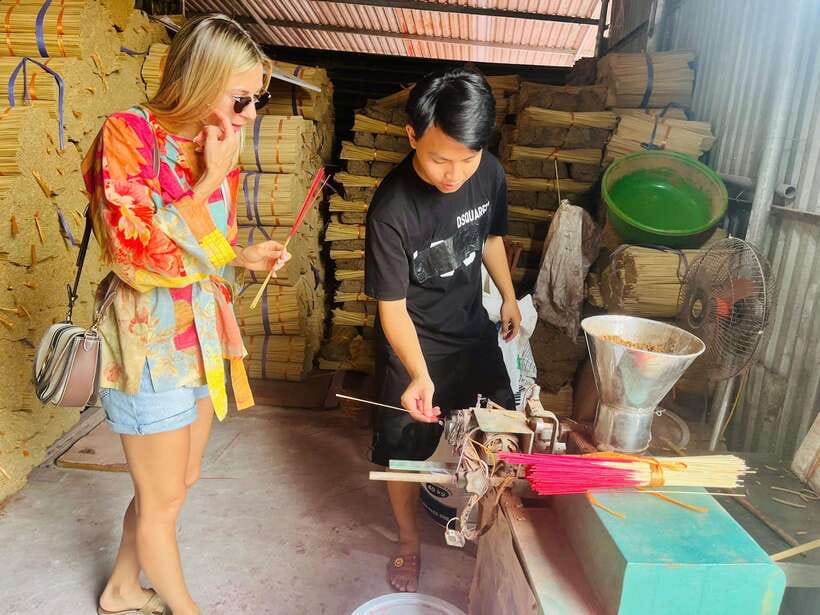
Bundles of incense sticks are spread out to dry, often arranged in fan-like shapes or dense circles. The red-dyed bamboo shafts create strong patterns against the village surroundings. You will have time for a photo stop and sightseeing, but the guide also explains the work behind the picture.
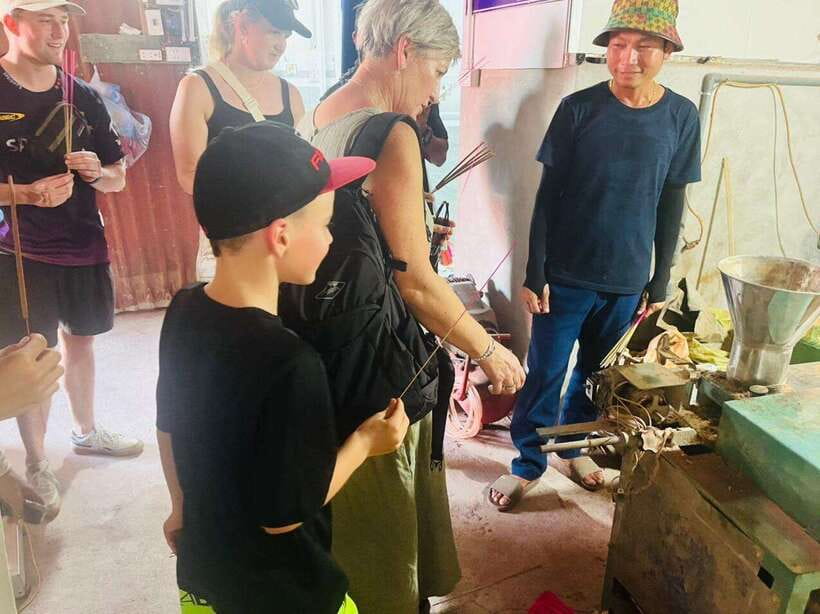
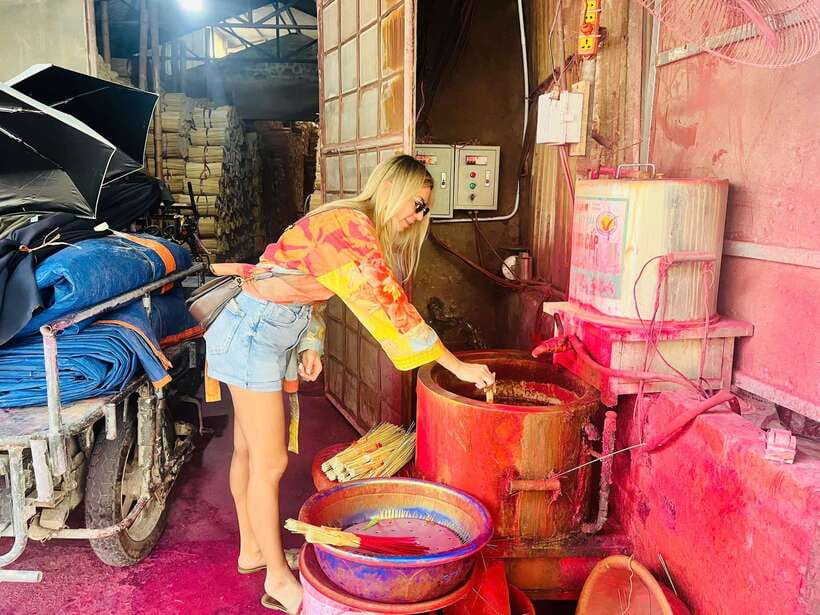
The process starts with bamboo cutting and preparation. The sticks are then colored, scented, and bundled. The village visit gives you a chance to see that incense is not just a religious object picked up at a shop. It passes through several stages of handwork before it is ready for use.
Bring a camera, but do not reduce the stop to a quick photo session. Ask the guide about the different stages and look for workers handling the sticks. The visit is most useful when you connect the beautiful drying patterns with the labor that produces them.
This stop is particularly good for photographers and anyone who enjoys seeing ordinary materials arranged with care. The colors can be strong in bright sun, so comfortable clothing and a willingness to walk around outdoor work areas will help.
Chuong Village and your own Non La
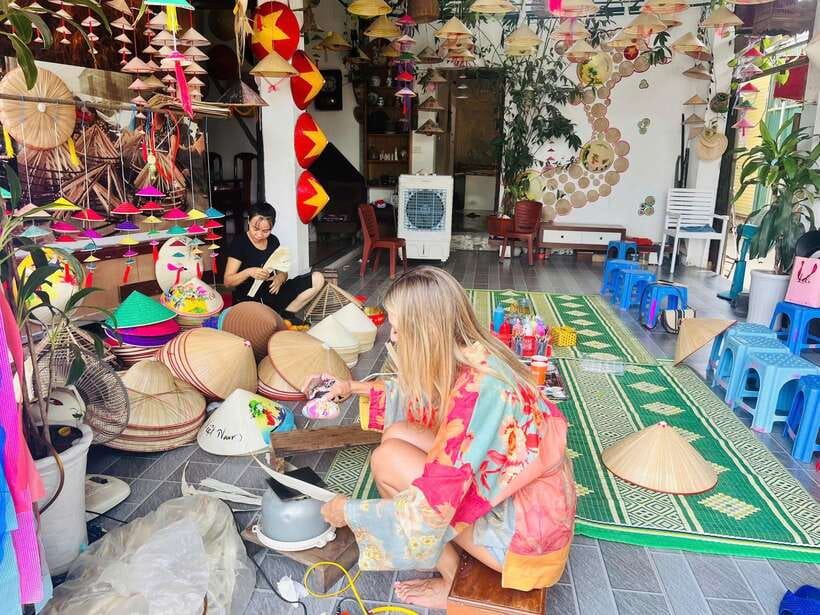
Chuong Village introduces you to the Vietnamese conical hat, or Non La. Artisans use bamboo and palm leaves to make a lightweight hat that is both practical and closely linked with Vietnamese daily life.
You do not merely watch a demonstration. The workshop may let you make or decorate your own hat, and one conical hat per person is included in the tour price. This is one of the most appealing parts of the experience because you leave with something useful and personal, not just a photograph.
The guide explains the cultural role of the Non La and the steps involved in making it. You can expect to see the materials and the careful handwork that turn them into a finished hat. Previous participants particularly enjoyed painting their hats, and tea was offered during one workshop.
The activity is simple enough for a casual visitor, but it still shows why handmade objects take time. The hat looks plain from a distance. Up close, the shape, stitching, and balance depend on careful construction. Your own decorated version may not be perfect, which is part of the charm.
The full-day itinerary allows about two hours here, including a break, lunch, a guided visit, and workshop time. The half-day option does not include lunch, so eat before departure or bring a snack. This is also a good place to buy additional local products if you want more than the included hat.
Ha Thai and the slow work of lacquer
Ha Thai Lacquer Art Village adds a different kind of craft. Instead of woven fibers, bamboo, or clay, you see decorative objects built through layers of lacquer, polishing, and hand-painted detail.
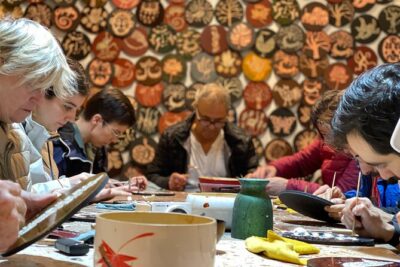
Family-run workshops produce items such as paintings, trays, and decorative pieces. The guide introduces the process from layering and polishing to the final painted designs. This gives you a useful sense of why lacquer work can look smooth and deep, even when the finished piece appears simple.
The schedule allows about two hours and 45 minutes, making Ha Thai one of the longer visits. You can look around workshops, see demonstrations, and take part in a class or activity. A lacquer piece for painting is not included, however, so check the cost before choosing that extra activity.
That detail matters if you are counting every dollar. The basic tour is inexpensive, but personal purchases and optional craft materials can raise the final cost. I would treat the lacquer stop as a chance to understand the process first, then decide if you want to buy or paint something.
This village may appeal most to you if you enjoy decorative arts and patient handwork. It is less instantly dramatic than the incense stop, but it gives the full-day route more variety.
More Ninh Binh days out:
- Full-Day Ninh Binh Highlights Tour from Hanoi
★ 5.0 · 7,761 reviews - Ninh Binh Full-Day Tour from Hanoi to Hoa Lu, Tam Coc & Mua Cave Via Boat & Bike
★ 5.0 · 4,384 reviews - Hanoi: Ninh Binh, Bai Dinh/Hoa Lu, Trang An, & Mua Cave Tour
★ 4.7 · 4,279 reviews - Ninh Binh HIGHTLIGHT & HIDDEN GEM Tour From Hanoi: Skip-The-Line
★ 5.0 · 4,212 reviews
Bat Trang, Vietnam’s famous pottery village
Bat Trang is the oldest-established stop in the itinerary, with pottery production dating back to the 14th century. It is also one of the most active shopping stops, with a market filled with vases, bowls, artistic home décor, and other ceramic goods.
The guided visit follows pottery from clay shaping to kiln firing. You can also join a workshop and create your own ceramic item to take home. That hands-on session makes Bat Trang more than a market visit. You get a basic feel for the clay and the decisions involved in shaping an object.
The stop lasts about an hour and a half, so expect an introduction rather than a full course in ceramics. Your finished item may be simple, but it gives you a better appreciation for the precision of the pieces in the market.
Shopping here requires a little restraint. The selection can be tempting, and fragile ceramics are not always easy to carry through a longer trip. Still, the market is useful if you want a practical souvenir, especially bowls, small decorative objects, or a piece of Vietnamese tableware.
The pottery workshop is a strong choice for families and anyone who likes making things. It also breaks up the sightseeing with an activity that does not depend on taking photographs or listening to a long explanation.
Van Phuc and traditional silk weaving
Van Phuc is presented as Vietnam’s oldest silk village, with more than 1,000 years of weaving tradition. The visit gives you a look at silk production on wooden looms, along with explanations of weaving, dyeing, and finishing.
This stop is a good reminder that a silk scarf is the final stage of a long process. At local workshops, you can see how thread becomes cloth and how the fabric is prepared for clothing and accessories. The village also has silk scarves, garments, and other products for sale.
Van Phuc comes near the end of the full route, after pottery. The listed visit lasts about an hour and a half, including walking and sightseeing. If you are already tired, the shopping portion may feel easier than a detailed workshop, but it remains a worthwhile stop for anyone interested in textiles.
Look closely at the products and ask about what you are buying. The point of visiting a craft village is not simply to collect souvenirs. It is to understand the work behind them and make more informed choices.
How the half-day and full-day options differ
The half-day tour is the simpler choice. It focuses on Quang Phu Cau and Chuong Village, with incense production and conical-hat making as the main events. You get the most visual stop and the most hands-on activity without spending the entire day moving between villages.
Lunch is not included on the half-day option. Eat beforehand or bring snacks, and remember that the supplied water bottle is only one bottle per person. The route still involves walking, so comfortable shoes matter.
The full-day option adds Ha Thai, Bat Trang, and Van Phuc. You see lacquer, pottery, and silk as well as incense and hats, and a home-cooked lunch is included. Choose it if you want a broad look at northern Vietnamese crafts and do not mind a longer schedule.
The full route is not a restful day. Driving between villages takes time, and the number of stops means you should expect a steady pace. One useful way to think about it is this: the half-day gives you two strong experiences in more manageable form, while the full day gives you range.
Guides, group size, and transport
Pickup and drop-off are available from hotels in Hanoi’s Old Quarter. The company asks for a WhatsApp number when available so the team can confirm your pickup time in advance. If you are staying outside the Old Quarter, confirm arrangements before booking rather than assuming hotel pickup is included.
The tour operates with an English-speaking guide, and private groups are available. A group of about 15 people has been reported as manageable, with activities organized at a comfortable pace. Private service may suit you if you want more control over timing or are traveling with family and friends.
The guides are a major part of the experience. Louisa, also known as Lulu, has been praised for humor, clear explanations, helpful communication, and practical restaurant suggestions. Eric has received similar praise for his friendly approach and explanations of hat and incense production. Lana and Mr. QA have also been singled out for being kind and attentive.
That said, the exact guide depends on the date. You should expect an English-speaking guide, but not a particular person unless the operator confirms it.
What the price includes, and what it does not
At $12 per person, this is an unusually low-cost way to reach several villages outside Hanoi. Included items cover the main costs that can catch you off guard on an independent day out: transport, entrance fees, guiding, water, and the included hat. Full-day visitors also receive lunch.
Budget separately for drinks, personal shopping, and any lacquer item used for painting. Tips are not included, and a $5 per-person surcharge applies on certain holidays, including Lunar New Year, Christmas, New Year, and national holidays.
The value is strongest if you take part in the workshops and use the guide to understand the production process. If you only want to shop, you could find the pace and transport less important. If you want a low-cost cultural outing with several activities, the price is easy to justify.
Who should book this experience?
I would recommend it to you if you enjoy handmade goods, short workshops, local photography, and seeing how everyday products are made. It is also a good choice for a first visit to Hanoi when you want time outside the city but do not want to plan several rural excursions yourself.
Families may like the hat painting and pottery session, though the tour is not suitable for wheelchair users or pregnant women. Pets are not allowed, and the walking makes comfortable shoes essential.
You should think twice if you want a slow, quiet village visit with lots of free time. The full-day schedule covers a lot, and one participant found the drive long and some visits rushed, even though there was enough time for the planned activities.
FAQ
Where does the tour pick up?
Pickup and drop-off are available at hotels in Hanoi’s Old Quarter area. You should provide a WhatsApp number if possible so the team can confirm the pickup time.
Is lunch included?
Lunch is included with the full-day option. The half-day option does not include lunch, so eat beforehand or bring snacks.
What crafts will I see?
The route can include silk weaving at Van Phuc, conical-hat making at Chuong, lacquer work at Ha Thai, pottery at Bat Trang, and incense production at Quang Phu Cau.
Do I get to make anything?
Yes. You can make or decorate a conical hat, and the tour includes one hat per person. The full-day route also includes a pottery workshop where you create a ceramic item to take home.
Is an English-speaking guide included?
Yes. An English-speaking live tour guide is included. Guides who have led this experience include Louisa, also called Lulu, Eric, Lana, and Mr. QA, depending on the date.
Can I book a private group?
Yes. A private group option is available. Confirm the group arrangements and price when booking.
What should I bring?
Wear comfortable shoes because the tour includes walking. Bring a camera for the incense village and other craft stops. The tour provides one bottle of water per person.
Should you book it?
Book the half-day option if you want the strongest combination of photography and hands-on fun: Quang Phu Cau for the red incense displays, followed by Chuong for your own conical hat. It is the better fit for a short Hanoi stay and avoids the longer full-day schedule.
Choose the full-day route if you want to compare several traditional crafts and value the included lunch and transport. You will see more, but you will also spend more time on the road and move at a brisker pace.
For $12, this is a practical, activity-filled introduction to the craft villages around Hanoi. It is not a leisurely private exploration, but it gives you real contact with local production, useful souvenirs, and plenty to talk about afterward.
Just added around Ninh Binh
- Hoa Lu Tam Coc Full Day Tour: Small Group Tour & Buffet Lunch★ 4.0 · 9 reviews
- Hanoi: 3-Day Ninh Binh Highlights – Lan Ha Bay 5-Star Cruise★ 4.7 · 9 reviews
- Full Day Hoa Lu – Tam Coc – Mua Cave Group Tour – Limousine Bus★ 5.0 · 9 reviews
- Daily Limousine Bus Halong – Ninh Binh – Halong★ 4.5 · 9 reviews
- From Hanoi: Bai Dinh, Trang An Mua Cave – A Scenic Day Tour★ 4.2 · 9 reviews
- From Hanoi: 3D2N Ninh Binh & Ha Long – Lan Ha Bay Cruise★ 4.9 · 9 reviews
- 8-Day Discover Northern Vietnam Highlight: Hanoi – Ninh Binh – Sapa – Halong Bay★ 5.0 · 9 reviews
- Full day Hoa Lu, Tam Coc and Mua Cave by Limousine from Hanoi★ 5.0 · 9 reviews
Incense Village and Craft Tours, compared.
Incense Village, Hat Making & Lacquer Artisan Small Group Hanoi
Read our review →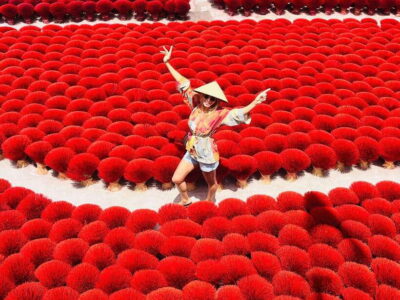
Incense Village, Hat, and Lacquer Artisanal Tour
Read our review →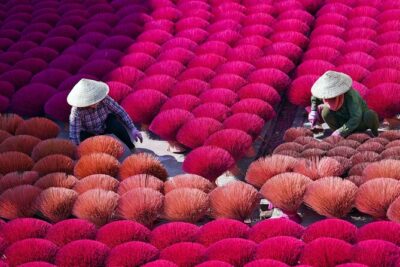
Incense Village Small Group of 9 Tour From Hanoi to Ninh Binh
Read our review →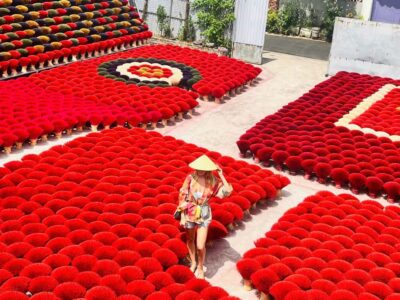
Incense Village, Hat, Lacquer Tour & City Highlights
Read our review →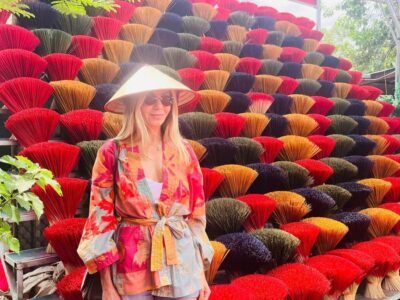
Incense Village, Hat, Lacquer, & City Highlights Tour
Read our review →
Instagram Incense Quang Phu Cau Village Tour with Train Street
Read our review →
INCENSE Villages & Ha Noi City Full Day guided Tour with Lunch
Read our review →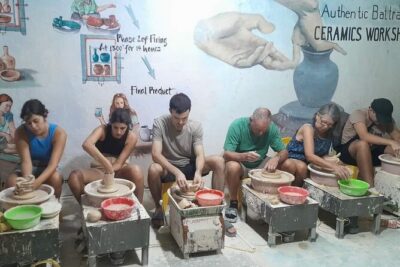
Bat trang Pottery Class in Hanoi Old Quarter/Handmade experience
Read our review →Browse the lists this tour appears in