
Reviewed · INCENSE VILLAGE AND CRAFT TOURS
Incense Village & Bamboo Fish Trap Village & Soy Sauce From Hanoi
Quang Phu Cau is not simply a place to buy incense. It is a working village where bundles of red incense sticks are dried, sorted, and arranged into striking displays. I like the chance to see the production process up close, and I like that the day continues to Thu Sy’s fading fish-trap craft and Ban Yen Nhan’s traditional soy sauce.
The main drawback is the long road time. The excursion lasts about six to eight hours, and the three stops are spread across rural areas outside Hanoi. The low listed price is attractive, but confirm the final cost and pickup details before booking, especially if you want a private vehicle or a particular guide.
In This Review
- Key points to know before booking
- What this Hanoi day trip is really about
- Quang Phu Cau, where incense becomes a visual art
- Thu Sy, a quieter look at fish-trap weaving
- Ban Yen Nhan and the making of soy sauce
- The guide can make or break the village visits
- Transport, timing, and what is included
- Is the $1.40 price good value?
- Who should book this experience?
- Should you book it?
- FAQ
- Where does this experience begin?
- How long does the experience last?
- How many people can join the tour?
- Is transport included?
- Is bottled water included?
- Is the entrance fee included?
- Which languages are available?
- Can I make incense during the visit?
- Is the tour suitable for most people?
- Can I cancel for a full refund?
Key points to know before booking
- Quang Phu Cau gives you the strongest photo stop: Incense bundles create bold patterns and colors, with time to make some sticks yourself.
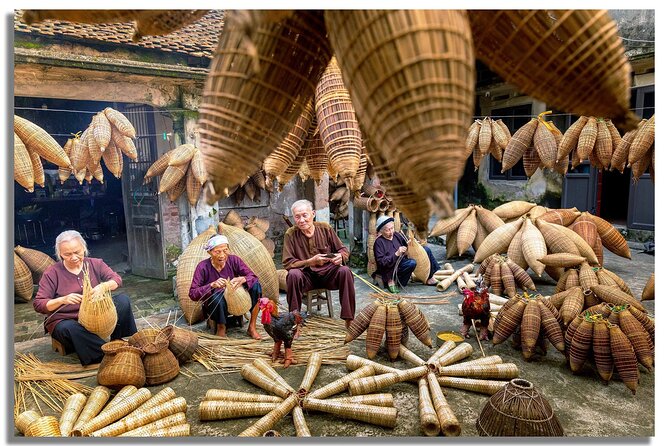
- Thu Sy offers a rarer rural craft: Local makers preserve an old method of weaving fish traps from natural materials.
- Ban Yen Nhan focuses on food, not scenery: You learn how a local soy sauce specialty is produced.
- Huy has guided some visits: He is described as clear in English, helpful with cameras, and well informed about incense production.
- The group is capped at nine people: That can make the village visits easier than joining a large coach excursion.
- Pickup is limited to Hanoi’s Old Quarter hotels: Bottled water, transport, entrance fees, and a local guide are included.
What this Hanoi day trip is really about
This is a good choice if you want to see work, not just monuments. The villages near Hanoi are places where ordinary products still pass through hands, yards, workshops, and family businesses. Incense, fish traps, and soy sauce may sound like a loose combination, but together they show three very different sides of local craft life.
I like the range. Quang Phu Cau gives you a visually striking introduction, Thu Sy slows the pace and focuses on handwork, and Ban Yen Nhan connects village production with the food on Vietnamese tables. You are not spending the whole day at one attraction, so the experience keeps changing.
The trade-off is that this is a road-based outing. You spend part of the day in an air-conditioned vehicle, and the exact order of the stops may affect the rhythm. If you want a relaxed city walk or a single detailed workshop, choose something more focused. If you want several rural experiences in one day, this format makes sense.
The tour lasts roughly six to eight hours and accepts no more than nine people. That size is useful at working sites, where a huge group can block paths, crowd photo areas, or make it hard to hear an explanation. The published price is only $1.40 per person, which is unusually low for transport, a guide, entrance fees, and bottled water. Treat that figure as a starting point and check the current booking total carefully.
More craft village visits from Hanoi:
- Incense Village, Hat Making & Lacquer Artisan Small Group Hanoi
★ 5.0 · 1,266 reviews - Incense Village, Conical Hat, Lacquer Art, SMALL GROUP From Hanoi
★ 5.0 · 1,170 reviews - Hanoi: Incense Village, Hat, and Lacquer Artisanal Tour
★ 4.6 · 1,005 reviews
Quang Phu Cau, where incense becomes a visual art
The first stop lasts about two hours, with admission included. Quang Phu Cau is known for traditional incense production, and the visit gives you more than a quick photograph beside finished bundles.
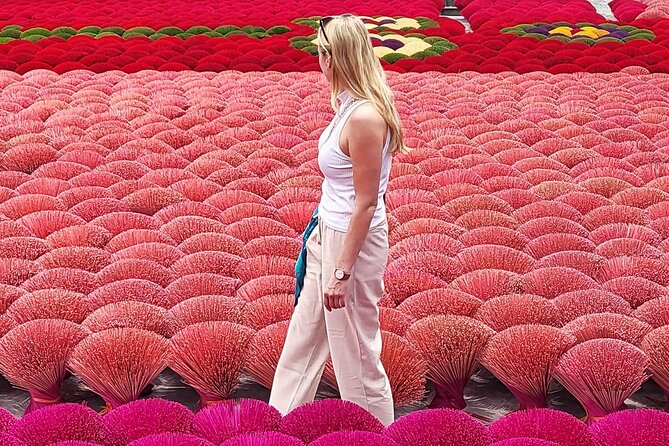
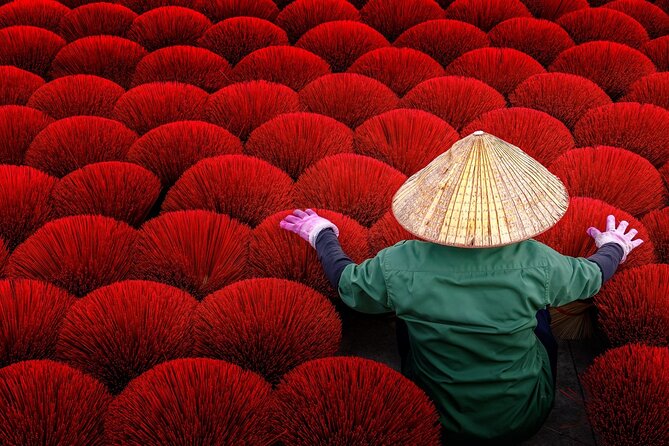
You can expect to see the stages of the craft and the way prepared incense is gathered for drying. The sticks are arranged in large, colorful groups, creating the familiar fan-like displays that make this village popular with photographers. The color is part of the appeal, but the process matters more. You get a clearer sense of the labor behind an object used in homes, temples, and ceremonies.
Some visits include a chance to make incense sticks yourself. That small hands-on element is worth noting because it changes the stop from a photo call into a short craft lesson. You also receive some incense sticks after taking part, according to the inclusions.
If you are carrying a serious camera, tell the guide what you want to photograph. Huy, who has led some visits, is specifically praised for helping with camera use and suggesting poses among the finished displays. You should not assume Huy will lead every departure, but the experience gives you a useful standard for what a good guide can add.
The village is a working place, not a staged museum. That means conditions may be practical rather than polished. You might find drying areas, production spaces, and displays arranged for work as much as for visitors. I see that as a plus, but anyone expecting a neat, formal attraction should adjust expectations.
Two hours is enough to understand the craft without making the entire day about incense. If photography is your main reason for booking, this will probably be the highlight. If you prefer food or rural architecture, the later stops provide a better balance.
Thu Sy, a quieter look at fish-trap weaving
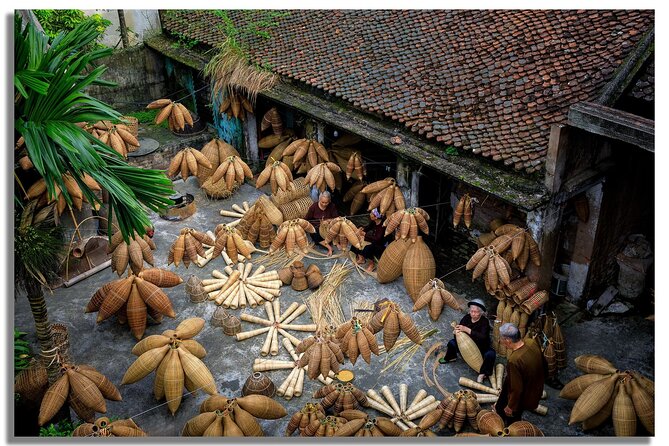
The second stop takes about two hours and has no separate admission charge. Thu Sy is in Hung Yen Province, about seven kilometers from Hung Yen city center, and is known for traditional fish-trap crafting.
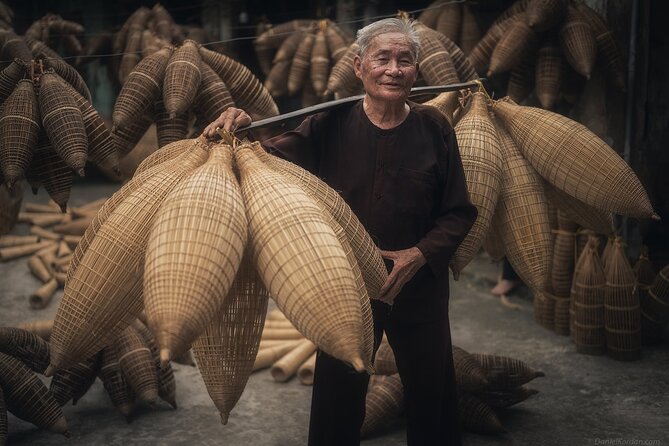
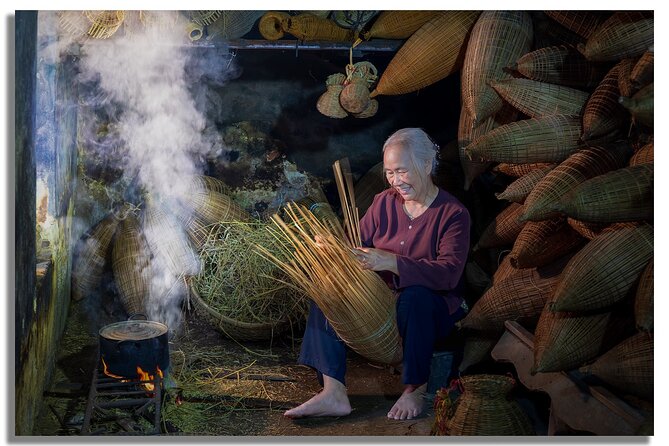
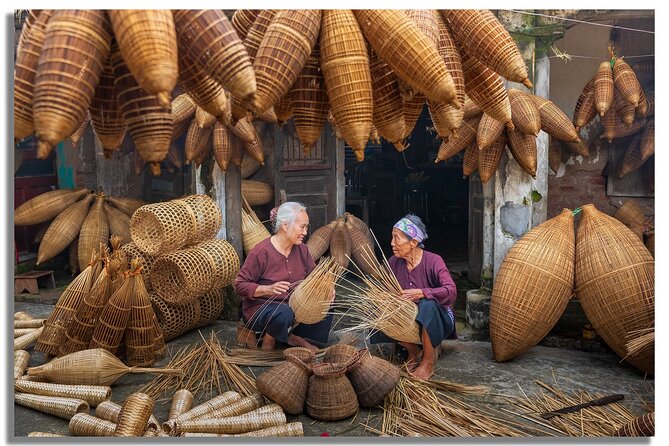
This is the most unusual stop on the route. Incense villages are increasingly familiar to visitors from Hanoi, but the fish-trap village presents a less common craft. Local makers weave traps using techniques passed down through generations, and the activity is described as an almost dying art. That phrase matters: you are seeing a skill that may not have a large future if modern fishing equipment replaces handmade traps.
The value here comes from watching hands at work. The craft is functional, not decorative. A fish trap has a purpose, and its shape, weave, and materials reflect that purpose. You may find the visit less immediately dramatic than Quang Phu Cau, but it rewards attention. Look closely at the repeated pattern and the patience needed to keep the structure even.
The two-hour stop gives the guide room to explain the process rather than rush you through a few finished objects. It also adds a rural pause after the strong colors and photo activity of the incense village. I like that contrast. You get to see a craft associated with fishing life rather than another workshop making goods for tourists.
The available information does not specify a hands-on fish-trap lesson, so do not book this expecting to weave one yourself. The experience centers on visiting the village and seeing its traditional work. If you have a strong interest in craft techniques, ask the operator what the current visit includes before paying.
Because this stop is outside central Hanoi, the road journey is part of the experience. You will not be moving from one city attraction to the next. The route takes you into a different setting, and that change is one reason to choose this trip instead of a standard Hanoi sightseeing day.
Ban Yen Nhan and the making of soy sauce

The final stop lasts about one hour and visits Ban Yen Nhan, a village associated with traditional soy sauce production. The village is described as being about 25 kilometers from Hanoi and as a source of a well-known local specialty.
This stop brings the day back to something familiar: the flavor used in Vietnamese cooking. You learn about the production of soy sauce and the local methods behind it. The visit is shorter than the incense and fish-trap stops, so think of it as a focused introduction rather than a full culinary class.
I find this part valuable because food traditions can be easy to overlook when you concentrate on temples and old buildings. A soy sauce village shows how local identity can be tied to a product made and sold over time. It also gives context to a condiment you may already have encountered at meals in Hanoi.
The information provided does not promise a tasting, a cooking lesson, or a bottle to take home. Personal expenses and other drinks are not included, so bring a little extra money if you want to make a purchase and the opportunity is available. The guide can explain what you are seeing, but the exact production areas open on the day may vary.
One hour is a sensible length. After two craft stops, you get a final food-related visit without turning the excursion into a late return. If you want a tour built around Vietnamese cuisine, this is too brief. If you want one food tradition added to a broader craft route, it fits well.
A few more Hanoi departures worth weighing up
- Hanoi Jeep Tour: Food, Culture and Fun by Vietnam Army Jeep
★ 5.0 · 15,222 reviews - Full-Day Ninh Binh Highlights Tour from Hanoi
★ 5.0 · 7,761 reviews - Hanoi: Ha Long Bay Day Cruise – Swimming, Meal, Kayaking
★ 4.7 · 7,415 reviews - Hanoi: Water Puppet Show Tickets
★ 4.6 · 7,029 reviews
The guide can make or break the village visits
The tour includes an English and Vietnamese-speaking local guide. Private departures can also be arranged with an English, French, Spanish, or Chinese-speaking guide. Huy is one guide connected with this experience, and his English, explanations of the incense industry, and help with photography have been singled out as useful strengths.
A good guide matters here because the work is easy to see but harder to interpret. Without context, incense bundles can look like colorful props, fish traps can look like baskets, and soy sauce production can seem like a quick stop. With clear explanations, you understand why each craft exists and what pressures it faces.
I would ask the guide to explain how the craft fits into daily life, not just how an item is made. At Quang Phu Cau, ask about the stages from raw sticks to drying and sorting. At Thu Sy, ask why handmade fish traps remain important and how the craft is changing. At Ban Yen Nhan, ask what makes the local soy sauce distinctive.
The small maximum group of nine should help. You have a better chance of hearing the guide and asking questions, and the group is less likely to overwhelm a family workshop. The trade-off is that a small-group departure may have less flexibility than a private tour. If photography or language support is central to your plans, a private option with the right language may be worth considering.
Transport, timing, and what is included
Pickup and drop-off are offered at hotels in Hanoi’s Old Quarter. That is convenient if you are staying there, but you should not assume door-to-door service outside that area. Confirm the pickup point before the morning of the trip.
Transport is by air-conditioned vehicle, and bottled water is included. Entrance fees are also covered, along with the guide and some incense sticks after the making activity. Extra drinks, personal spending, and tips for the guide and driver are not included.
The six to eight-hour duration leaves room for traffic and time at the craft sites. Hanoi roads can affect any road outing, so avoid scheduling a tight connection immediately after the return. The tour is long enough to fill most of a day, but it still leaves the evening available if the return runs close to the longer estimate.
Mobile tickets make the booking simple, and confirmation is provided at booking. Service animals are allowed, public transportation is nearby, and most people can take part. Those details suggest broad access, but the information does not describe the walking surface, seating at workshops, or restroom arrangements. Ask the operator if you have specific mobility needs.
Is the $1.40 price good value?
At the stated $1.40 per person, this looks like exceptional value if the price remains accurate at checkout. You would be getting a six to eight-hour outing, air-conditioned transport, Old Quarter pickup and drop-off, a guide, bottled water, entrance fees, and three village visits.
Still, an unusually low headline price deserves a careful check. Pricing can depend on group size, date, private or shared arrangements, and booking conditions. I would verify the final amount, pickup area, language, and whether all three stops are included in your selected option.
Even at a higher final price, the basic value is strong for someone who wants rural craft sites without arranging several separate rides. The trip combines places that are not all easy to connect on your own. You are also paying for interpretation and transport, not only entry to a village.
The value is weaker if you care about only one stop. A dedicated Quang Phu Cau visit may give a photographer more time at the incense site, while a food-focused activity would offer more depth at Ban Yen Nhan. This tour earns its keep through variety.
The experience has a 4.9 rating from 12 reviews, with 100 percent recommendation shown in the supplied information. That is encouraging, though the sample is small. I would use the strong feedback as a positive sign, not as a promise that every departure will feel identical.
Who should book this experience?
I would choose this day trip if you want:
- Traditional village crafts rather than only Hanoi landmarks
- A small group capped at nine people
- A guide who can explain the work in English
- Strong photo opportunities at an incense-producing village
- A rural outing that combines craft, fishing, and food traditions
- A convenient pickup from a Hanoi Old Quarter hotel
Families may enjoy the mix of colors and hands-on incense making. Photographers should like Quang Phu Cau, especially if the guide can help with positioning and camera work. Curious first-time visitors get a broad introduction to village production without needing to plan several trips.
I would hesitate if you dislike road journeys, want a slow single-site visit, or need a detailed accessibility plan. The itinerary covers three subjects, so the time at each place is limited. You also need to be comfortable with a working village setting rather than a polished attraction.
Free cancellation is available if you cancel at least 24 hours before the start time. Cancellations within 24 hours are not refunded, and changes made in that period are not accepted. That is a reasonable policy, but keep the cutoff in mind when planning around weather, illness, or a changing Hanoi schedule.
Should you book it?
Book this experience if you want to see how everyday Vietnamese products are made and you value variety over depth. Quang Phu Cau is the star for photography, while Thu Sy gives the day its rarest subject and Ban Yen Nhan adds a useful food connection.
I would confirm the final price, pickup location, guide language, and exact activities before booking. If those details suit you, this is an efficient way to leave Hanoi’s center and meet three working craft traditions in one day. If your main goal is one perfect incense photo session, choose a shorter dedicated visit instead.
FAQ
Where does this experience begin?
Pickup and drop-off are offered at hotels in Hanoi’s Old Quarter.
How long does the experience last?
The day trip lasts approximately six to eight hours.
How many people can join the tour?
The maximum group size is nine people.
Is transport included?
Yes. Transport is provided in an air-conditioned vehicle.
Is bottled water included?
Yes, bottled water is included.
Is the entrance fee included?
Yes, entrance fees are included.
Which languages are available?
The standard tour includes an English and Vietnamese-speaking local guide. Private tours can offer English, French, Spanish, or Chinese-speaking guides.
Can I make incense during the visit?
The experience includes some free incense sticks after you make incense sticks yourself.
Is the tour suitable for most people?
Most people can participate. Service animals are allowed, and the experience is near public transportation.
Can I cancel for a full refund?
Yes, if you cancel at least 24 hours before the experience starts. Cancellations or changes made less than 24 hours before the start time are not accepted, and the amount paid is not refunded.
Just added around Hanoi
- Full day Boat Tour Lan Ha Bay – Ha Long Bay: Kayak, Beach Hopping★ 5.0 · 9 reviews
- Cat Ba National Park, Lan Ha Bay 2 Days 1 Night Adventure★ 4.8 · 9 reviews
- Ha Giang Loop 2 Days High quality Small Group +Private Room★ 5.0 · 9 reviews
- Half Day Sapa Cat Cat Explore Waterfall, Workshop, H’mong Local★ 5.0 · 9 reviews
- Sapa 1 Day Trekking★ 5.0 · 9 reviews
- Sapa Open Air Jeep Half Days Off the Beaten Track, Backroad★ 4.9 · 9 reviews
- Halong 2 days 1 night with Cozy Classic Cruise from Hanoi★ 4.5 · 9 reviews
- Fansipan Mount Trekking 1 Day★ 5.0 · 9 reviews
Incense Village and Craft Tours, compared.
Incense Village, Hat Making & Lacquer Artisan Small Group Hanoi
Read our review →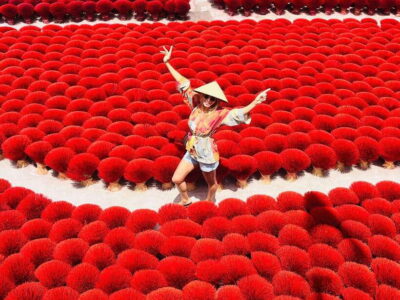
Incense Village, Hat, and Lacquer Artisanal Tour
Read our review →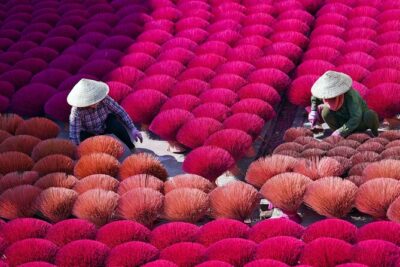
Incense Village Small Group of 9 Tour From Hanoi to Ninh Binh
Read our review →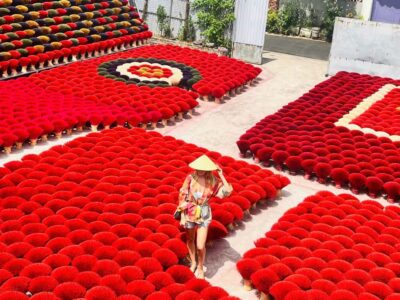
Incense Village, Hat, Lacquer Tour & City Highlights
Read our review →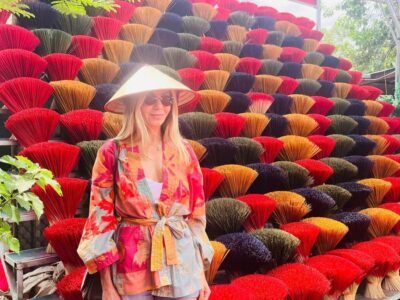
Incense Village, Hat, Lacquer, & City Highlights Tour
Read our review →
Instagram Incense Quang Phu Cau Village Tour with Train Street
Read our review →
INCENSE Villages & Ha Noi City Full Day guided Tour with Lunch
Read our review →
Bat trang Pottery Class in Hanoi Old Quarter/Handmade experience
Read our review →Browse the lists this tour appears in