
Reviewed · INCENSE VILLAGE AND CRAFT TOURS
Hanoi Knife-Making Class:Join the Legacy in Blacksmith’s Workshop
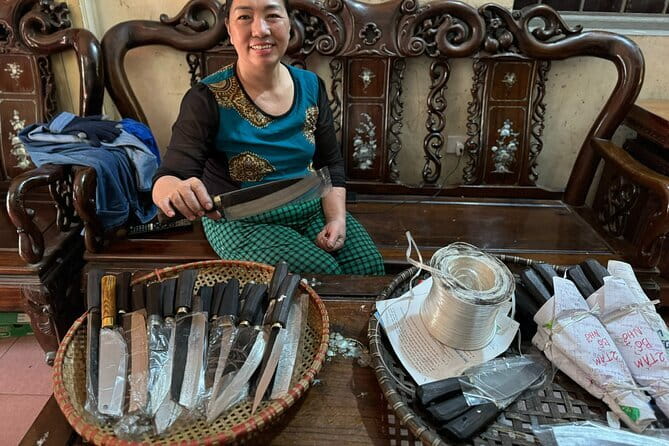
Da Sy is not a staged craft stop. It is a working blacksmithing village with centuries of blade-making behind it, and this class puts you at the anvil with the tools in your hands. Artisan Tuyen, the only officially recognized woman in this trade, brings 44 years of experience to the forge. The process covers design, hammering, grinding, sharpening, and even handle work.
I like two things right away: you make a useful object instead of a shelf ornament, and the class gives you a close look at a family craft that helped supply blades and weapons during Vietnam’s wars. Guides including Mint, Nick, and Tulip have helped visitors follow the work through interpretation and practical advice.
The main caution is that this is physical, hot, noisy work, not a quiet craft lesson. Two and a half hours can pass quickly, and the finished knife may be modest in size, so check your home country’s rules before trying to carry it onto a flight.
In This Review
- Key points about the Hanoi knife-making class
- Da Sy gives the class its real character
- Your first job is to design the blade
- Cutting metal makes the craft feel real
- Hammering at the anvil is the heart of the experience
- Grinding and sharpening finish the blade
- Handle work adds a second kind of craft
- The guides make a difference
- What the $45.51 price really buys you
- Who will enjoy the work, and who may not
- Think about flying home with a knife
- Booking and cancellation details to keep in mind
- Should you book the Da Sy knife class?
- FAQ
- Where does the knife-making class take place?
- How long does the experience last?
- How many people can join the class?
- What is included in the price?
- Will I take home the knife I make?
- Can I cancel for a full refund?
Key points about the Hanoi knife-making class
- Da Sy is the setting: Work in a centuries-old blacksmithing village in Hà Đông, rather than in a hotel classroom.
- Tuyen leads the forge: She has spent 44 years preserving the craft and is officially recognized as the trade’s only female artisan.
- You handle the full process: Design the blade, cut the metal, forge it, shape it, grind it, and sharpen it.
- The tar-based wash is unusual: Sharpening includes an old family technique rarely seen outside this workshop.
- You leave with a working knife: The finished piece is personal, practical, and made by your own hands.
- The small group keeps it focused: The class accepts a maximum of 10 people and lasts about 2 hours and 30 minutes.
Da Sy gives the class its real character
The first reason to book this experience is the location. Da Sy, in Hà Đông, is a centuries-old blacksmithing village known for its blades. Its connection with wartime weapon production gives the class more weight than a standard souvenir workshop, but the appeal is not only historical. You are working in the place where this trade has continued across generations.
The meeting point is at Đa Sỹ, Kiến Hưng, Hà Đông, Hanoi. It is outside the central old quarter, so allow time to reach it. The activity ends at the same point, and the maximum group size is 10. That limit matters because the work needs close supervision, especially around heat, cutting tools, grinding wheels, and heavy hammers.
The setting may feel more practical than polished. That is part of the point. You are not being shown a finished product behind glass. You are seeing a working forge, using traditional tools, and learning how much effort sits inside an ordinary kitchen knife.
More craft village visits from Hanoi:
- Incense Village, Hat Making & Lacquer Artisan Small Group Hanoi
★ 5.0 · 1,266 reviews - Incense Village, Conical Hat, Lacquer Art, SMALL GROUP From Hanoi
★ 5.0 · 1,170 reviews - Hanoi: Incense Village, Hat, and Lacquer Artisanal Tour
★ 4.6 · 1,005 reviews
Your first job is to design the blade
The class begins with a sketch. You choose the shape of your knife and draw it onto a selected piece of durable metal. This small step gives the finished object a personal mark before the furnace, hammer, and grinder take over.
You also work with the tang, the section of metal that fits into the handle. It is an easy detail to overlook when buying a knife, but here you see how blade and handle depend on one another. The design stage helps you understand that a knife is not simply a sharpened strip of steel.
Do not expect unlimited freedom to create any shape imaginable. The metal, tools, safety needs, and time limit set practical boundaries. Still, the chance to choose the outline and later work on the handle makes this far more personal than picking a ready-made blade from a market stall.
Cutting metal makes the craft feel real
After the design, you cut out the blade and tang with traditional tools, including cutters, hammers, and an anvil. This is where the class shifts from drawing to labor. You begin to see why blacksmithing depends on timing, strength, and repeated small corrections.
The workshop provides all tools and necessary safety equipment. Skilled artisans guide you through each stage, so you are not left to guess how to position the metal or use the equipment. Even so, you should expect active participation rather than a demonstration where you simply watch an expert work.
The forge prepares the metal for shaping. Heat makes the steel workable, but it also makes safety important. Follow the artisan’s instructions closely and keep your attention on the task. This is a good activity for people who enjoy making things with their hands, but a poor fit if you want a slow, tidy, hands-off class.
Hammering at the anvil is the heart of the experience
The most memorable section is the shaping stage. You take turns hammering heated metal while working beside the artisan. The aim is to bring the rough cut piece toward the blade shape you chose at the beginning.
This is not a matter of a few theatrical taps. Hammering takes effort, and the metal may need several adjustments. The artisan’s role is central here. Tuyen’s 44 years in the trade mean she can correct the work, show you where to strike, and keep the process moving when your first attempts are uneven.
A hydraulic machine helps refine rough edges after the heavier shaping. That combination of old and newer equipment is useful. Traditional hammering gives you the direct connection with the craft, while the machine helps produce a smoother and more workable result within a short class.
You should not measure success by whether your blade looks exactly like a factory-made knife. The value is in seeing how the shape develops under heat and pressure, then taking home something that still carries your decisions.
A few more Hanoi departures worth weighing up
- Hanoi Cooking Class: Culture, Local Market & Meaning CSR Impact
★ 5.0 · 5,147 reviews - 5 Traditional Dishes Hanoi Cooking Class with Market Trip
★ 5.0 · 4,890 reviews - Hanoi Coffee Workshop: Taste Salt, Coconut and Egg Coffee
★ 5.0 · 1,286 reviews - Hanoi: Salt Coffee Workshop Awake Your Senses With 6 Brews
★ 5.0 · 792 reviews
Grinding and sharpening finish the blade
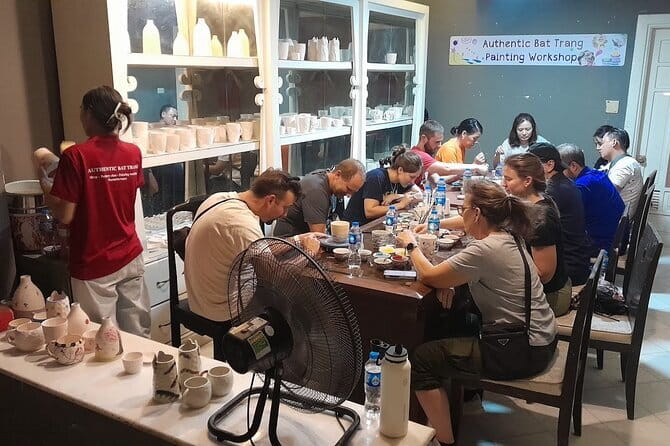
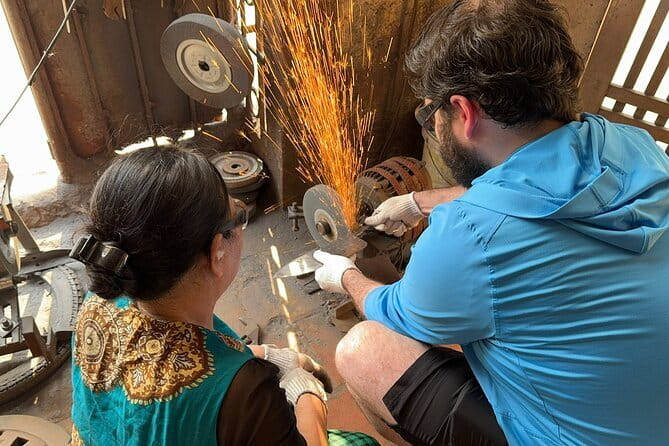
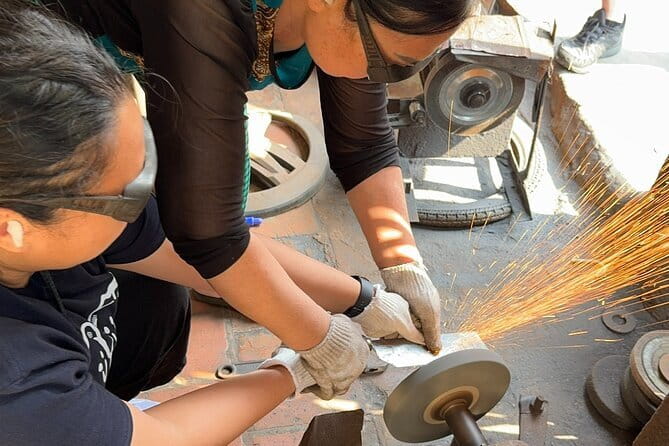
Once the basic form is ready, you move to the grindstone. Grinding removes roughness and begins to create the cutting edge. It also requires care, since the angle and pressure affect how the blade performs.
The final sharpening stage includes several steps. One especially unusual part is a tar-based wash, described as an old family technique passed down through generations. That detail gives the class a distinctive local character. It is not simply a generic metalworking lesson that could take place anywhere.
You will need patience at this point. A knife that looks finished may still need careful honing and sharpening before it is useful. The artisan guides the work so beginners can take part without being expected to arrive with specialist skills.
The result is intended to be functional. You can use the knife for cooking and remember the work behind it every time you pick it up. At the same time, do not expect a high-end professional chef’s knife for the price of the class. The greater value is the making process and the personal connection to the object.
Handle work adds a second kind of craft
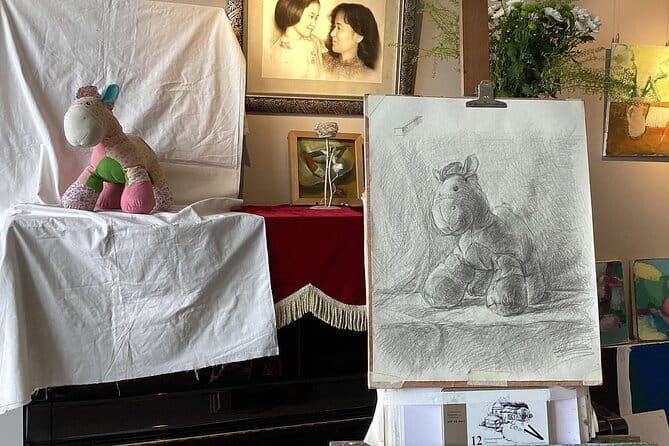
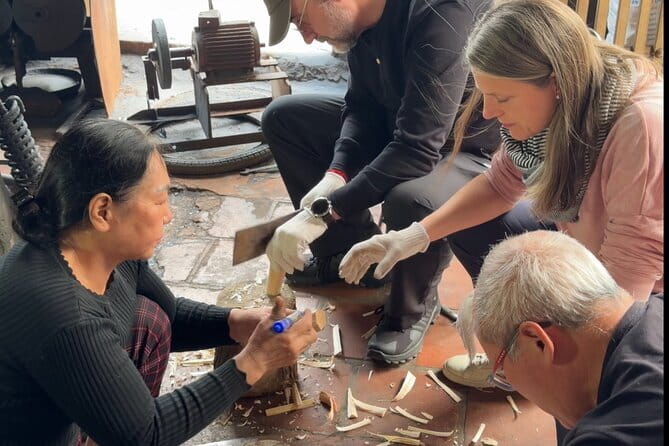
The supplied experience details and class feedback describe handle work as part of the process. In one account, the handle began as a block of wood with bark before being shaped into the finished piece. That gives you another chance to make the knife your own after the hot metalwork is complete.
Handle carving also changes the feel of the class. You are not only forging a blade. You are joining separate materials and shaping the part that your hand will hold. The handle determines much of the knife’s character, so customization here can matter as much as the blade outline.
The exact handle options may depend on the material and the time available. The class lasts around 2 hours and 30 minutes, so some stages will move briskly. If personal design choices matter most to you, ask at booking what can be customized before you arrive.
The guides make a difference
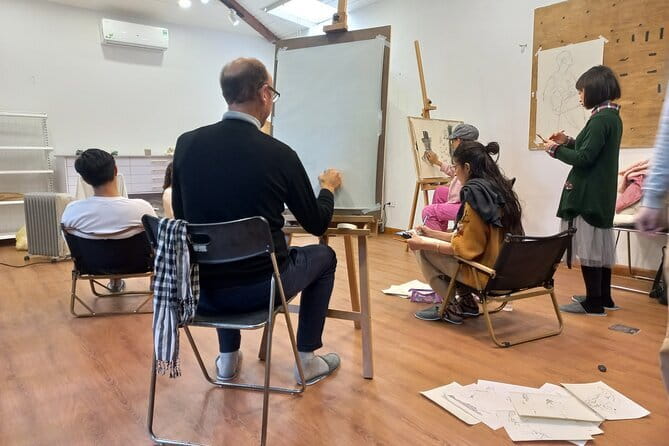
Because the workshop is based around skilled artisans, interpretation helps you follow the explanations and safety instructions. Guides named in class feedback include Mint, Nick, and Tulip. Mint is described as personable and charming, while Nick also offered Hanoi food suggestions during the visit. Tulip helped explain the process clearly.
Guide assignments can vary, so do not assume one particular person will lead your session. What matters is that the guide bridges the workshop and the visitor, explaining what the artisan is doing and helping you keep pace.
That support is especially useful when the artisan is focused on the forge. You can watch the hand movements, then receive help understanding the next step. It also gives you a chance to ask about the village and the tradition behind the tools.
Communication with the provider has been described as fast and helpful, including a last-minute request to arrange a pickup point for a private class with a car. Pickup is not listed as a standard inclusion, so treat transport as something to confirm rather than something automatically provided.
What the $45.51 price really buys you
At $45.51 per person, this is not the cheapest craft activity in Hanoi. You are paying for more than a short demonstration, though. The fee covers access to the artisan’s workshop, tools, safety equipment, instruction, metalwork, and the knife you create.
The class also gives you a cultural experience that is difficult to reproduce by simply visiting a shop. You learn how a village craft works from the inside, meet an artisan with 44 years of experience, and take part in a process that includes local sharpening knowledge.
Value depends on what you want from a souvenir. If you want the lowest-cost kitchen knife, buying one will be cheaper and easier. If you want a story attached to the object, the price is more convincing. The knife is the physical souvenir, but the memory is built through the heat, hammering, grinding, and handle work.
A private class with a car may be available in some arrangements, as one booking indicates, but confirm the details and any added cost before paying. The listed experience itself has a maximum of 10 people, which should help keep the instruction more direct than in a large group.
Who will enjoy the work, and who may not
I would recommend this class to you if you like practical cultural activities, local crafts, and souvenirs that show signs of human work. It suits couples, friends, and solo visitors who are happy to share a workshop and take turns using the tools.
It is also a strong choice for repeat visitors to Hanoi. If you have already seen temples, markets, and food streets, a trip to Da Sy gives you a different view of the city and its surrounding communities.
Families may need to judge suitability carefully. The information says most people can participate, but it does not give a minimum age. Since the class involves heat, sharp metal, hammers, and grinding equipment, ask the provider before booking for children.
You should reconsider it if you need a relaxed activity, dislike noise or physical effort, or want a polished result with no rough edges. The process is hands-on by design. Your role is not decorative, and the work may leave you tired.
Service animals are allowed, and the site is near public transportation. Confirmation arrives at booking, and the activity accepts a mobile ticket. Those details make the logistics fairly simple, but the location in Hà Đông still deserves planning.
Think about flying home with a knife
The finished knife is a major part of the appeal, but it also creates a travel problem. One visitor specifically noted the need to check home-country airport rules, even with a knife measuring only 14 centimeters.
Do not assume that a small blade will be accepted in carry-on luggage. Check the rules for your departure airport, connecting airports, and destination country before the class. If you are unsure, ask the provider whether shipping the finished knife is available, but do not assume that option is included because it is not stated in the tour details.
The safest approach is to plan for checked baggage or another approved method only after confirming the rules. A handmade knife makes a memorable souvenir, but it is not worth losing at airport security.
Booking and cancellation details to keep in mind
The experience offers free cancellation if you cancel at least 24 hours before the start time. Cancellations made within 24 hours are not refunded, and changes inside that period are not accepted.
The class lasts approximately 2 hours and 30 minutes. Gratuities are optional and are not included. Since the meeting point and end point are both at Đa Sỹ in Hà Đông, plan your onward schedule around returning there rather than assuming the class finishes in central Hanoi.
A mobile ticket is accepted, and booking confirmation is provided at the time of booking. With only 10 places available, confirm the date and transport plan before you set out.
Should you book the Da Sy knife class?
Book it if you want a hands-on Hanoi experience with a useful souvenir and a strong connection to local craft. Tuyen’s long career, the village setting, the tar-based sharpening method, and the chance to work through nearly every stage give this class more substance than a quick demonstration.
Skip it if you want a gentle, polished workshop or if carrying a knife home will create a serious travel problem. For everyone else, $45.51 is a fair price for two and a half hours of instruction, materials, safety equipment, and a blade made partly by you. Just arrive ready to work, wear practical clothing, and check your airport rules before you book.
FAQ
Where does the knife-making class take place?
The class begins and ends at Đa Sỹ, Kiến Hưng, Hà Đông, Hanoi, Vietnam. The village is known for its centuries-old blacksmithing tradition.
How long does the experience last?
The activity lasts approximately 2 hours and 30 minutes.
How many people can join the class?
The maximum group size is 10 travelers.
What is included in the price?
All tools and necessary safety equipment for knife making are provided at the artisan’s house. Gratuities are optional and are not included.
Will I take home the knife I make?
Yes. The experience includes making your own handmade knife, which you can take home after completing the process.
Can I cancel for a full refund?
Yes, if you cancel at least 24 hours before the experience start time. Cancellations or changes made less than 24 hours before the start time are not refunded or accepted.
Just added around Hanoi
- Cat Ba National Park, Lan Ha Bay 2 Days 1 Night Adventure★ 4.8 · 9 reviews
- Full day Boat Tour Lan Ha Bay – Ha Long Bay: Kayak, Beach Hopping★ 5.0 · 9 reviews
- Half Day Sapa Cat Cat Explore Waterfall, Workshop, H’mong Local★ 5.0 · 9 reviews
- Sapa 1 Day Trekking★ 5.0 · 9 reviews
- Ha Giang Loop 2 Days High quality Small Group +Private Room★ 5.0 · 9 reviews
- Sapa Open Air Jeep Half Days Off the Beaten Track, Backroad★ 4.9 · 9 reviews
- Halong 2 days 1 night with Cozy Classic Cruise from Hanoi★ 4.5 · 9 reviews
- Fansipan Mount Trekking 1 Day★ 5.0 · 9 reviews
Incense Village and Craft Tours, compared.
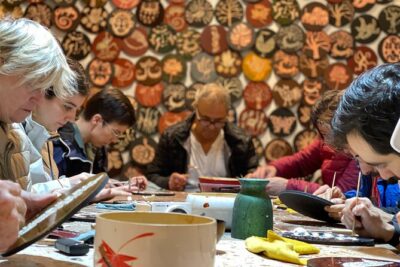
Incense Village, Hat Making & Lacquer Artisan Small Group Hanoi
Read our review →
Incense Village, Hat, and Lacquer Artisanal Tour
Read our review →
Incense Village Small Group of 9 Tour From Hanoi to Ninh Binh
Read our review →
Incense Village, Hat, Lacquer Tour & City Highlights
Read our review →
Incense Village, Hat, Lacquer, & City Highlights Tour
Read our review →
Instagram Incense Quang Phu Cau Village Tour with Train Street
Read our review →
INCENSE Villages & Ha Noi City Full Day guided Tour with Lunch
Read our review →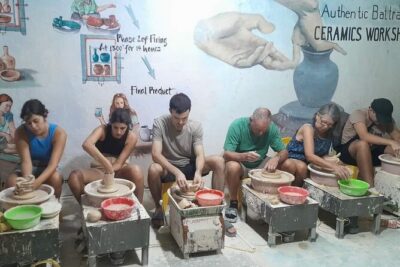
Bat trang Pottery Class in Hanoi Old Quarter/Handmade experience
Read our review →Browse the lists this tour appears in