
Reviewed · INCENSE VILLAGE AND CRAFT TOURS
Hanoi Knife Making Traditional Workshop
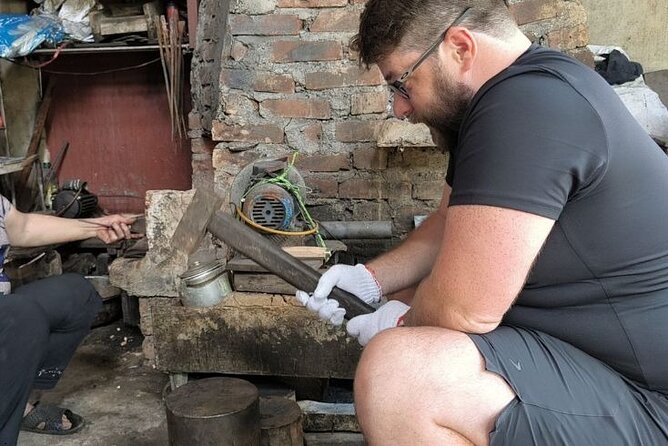
Hanoi’s knife-making class puts you beside a hot forge, hammer in hand, working with a family that has practiced the trade for generations. You sketch a blade, cut and heat the metal, take turns hammering it on an anvil, then grind and sharpen the finished shape. I like the hands-on work and the chance to meet local makers rather than simply watch a demonstration.
I also like the small-group setup, with no more than 10 people, and the help of an English-speaking guide. Guides such as Nathan have been praised for being patient, engaging, and good company during the journey. You leave with a knife made through your own effort, not a standard souvenir from a shop. The $50 price feels fair if you value a rare, practical activity and included transport.
The main drawback is that this is physical, hot, and work-focused. You need a moderate fitness level, lunch is not included, and the final knife will reflect your skill and the maker’s help rather than look like a perfect factory product.
In This Review
- Key points before you book
- Why this Hanoi workshop feels different
- From Hanoi to a working forging village
- Sketching the blade and choosing the metal
- Cutting, heating, and the first hammer blows
- Shaping the blade beside the maker
- Grinding, sharpening, and the family recipe
- A close look at the family trade
- Is $50 a fair price for three and a half hours?
- Who should book this class?
- Timing, food, and cancellation details
- Should you book the Hanoi knife-making workshop?
- FAQ
- How long does the knife-making experience last?
- Where does the workshop take place?
- Is transportation included?
- Is an English-speaking guide provided?
- How many people can join the activity?
- Is lunch included in the price?
- What is the cancellation policy?
Key points before you book
- You make a simple knife from iron material, starting with the blade design and ending with sharpening.
- The work takes place in a traditional forging village outside central Hanoi, where forging has continued for several hundred years.
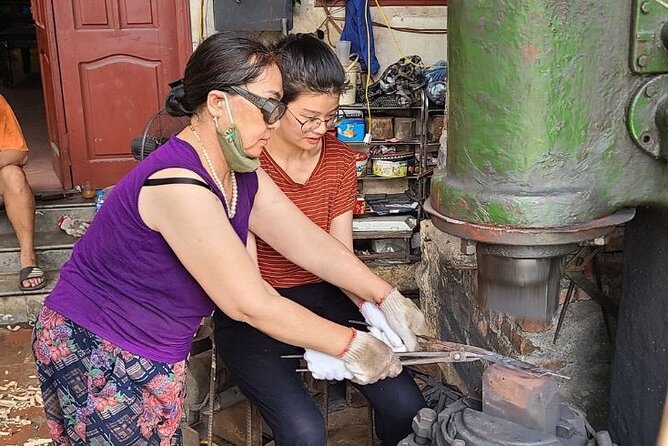
- You work beside experienced family makers, taking turns with them at the anvil and learning by doing.
- Nathan may lead the journey, offering English guidance and keeping the trip moving in an easy, friendly way.
- Groups are limited to 10 people, which matters when you need help with hammering, shaping, and grinding.
- The experience lasts about three and a half hours, with air-conditioned transport offered and lunch left to you.
Why this Hanoi workshop feels different
Many Hanoi activities ask you to look, taste, or take photographs. This one asks you to make something. That simple change gives the outing a clear purpose from the first minute: you are not just visiting a craft village, you are learning the basic stages of a working trade.
The village has been associated with forging for several hundred years. During the Vietnam wars, it was an important source of weapons. Today, the work has shifted toward agricultural tools and other practical metal goods, while the old forging skills continue.
That background gives the class some weight, but you do not need to be a craft expert to enjoy it. The project is a simple knife, and the makers guide you through each stage. You will still need to pay attention, use your arms, and accept that handmade work has small flaws. That is part of the point.
I especially like the contact with the local family. You are not placed in a polished tourist studio with a finished object waiting at the end. You see the work as a family trade, including the patience and repeated effort needed to turn a plain piece of metal into a useful blade.
More craft village visits from Hanoi:
- Incense Village, Hat Making & Lacquer Artisan Small Group Hanoi
★ 5.0 · 1,266 reviews - Incense Village, Conical Hat, Lacquer Art, SMALL GROUP From Hanoi
★ 5.0 · 1,170 reviews - Hanoi: Incense Village, Hat, and Lacquer Artisanal Tour
★ 4.6 · 1,005 reviews
From Hanoi to a working forging village
The trip begins in Hanoi and includes an air-conditioned vehicle. Pickup is offered, though the supplied details do not specify the pickup area, so check the exact arrangement when you book. The drive takes you toward the traditional craft villages on Hanoi’s outskirts.
The vehicle matters more than it may seem. A three-and-a-half-hour activity is easier to manage when the transfer is handled for you, particularly after time spent hammering and grinding. Air conditioning also gives you a cooler break between the city and the workshop.
Your English-speaking guide helps connect the transport with the hands-on session. Nathan is one guide associated with the experience, and his role includes keeping you entertained and helping the day feel more like an outing than a technical lesson. Since guides can vary, do not assume Nathan will lead every departure.
The village visit is the setting, not a separate sightseeing stop with a long list of monuments. Its appeal lies in seeing a place where forging remains part of daily work. If you expect a major museum or a long historical tour, this may feel narrow. If you want a close look at a living craft, the setting does the job.
Sketching the blade and choosing the metal
The class begins with design. You sketch the shape of your blade on a sheet of metal chosen for durability. This first step gives you some control over the finished knife, although the final result will also depend on what the makers can safely cut and shape.
This is a useful moment to think about function. A simple cooking knife is more than a souvenir, and the shape you choose affects how it will look and feel in the hand. The information provided does not promise a choice of handle style or a particular blade size, though one person who took the class was allowed to choose the size of the knife.
Do not worry if your drawing skills are modest. The point is not to produce an engineering plan. It is to understand that a blade begins as an idea on a flat piece of metal. The guide and makers then turn that outline into something that can survive heat, cutting, hammering, and sharpening.
This design stage also helps you notice the difference between making and buying. In a shop, the knife is already finished. Here, you see the early decisions that shape the object you take home.
Cutting, heating, and the first hammer blows
Once the shape is marked, you use a hammer, cutter, and anvil to separate the blade and tang from the metal. The tang is the part that extends into the handle. It may sound like a small technical detail, but it shows that you are making a complete knife form, not just a sharpened strip of iron.
The cut pieces go into crackling embers. This is where the workshop becomes a real sensory experience. You watch the metal heat, then work with the maker to shape it while it is ready for the hammer.
You alternate blows with the experienced craftsperson. That shared rhythm is one of the best parts of the activity. You supply effort, but you are not left to guess what to do. The maker’s long practice gives the metal direction and keeps the work on track.
The class description does not provide specific safety instructions, so follow the guide and family makers closely around the forge, cutters, hydraulic machine, and grinding equipment. Wear suitable clothing and shoes for a hands-on metalworking session. The moderate fitness requirement is worth taking seriously, since repeated hammering can be tiring.
You should also expect a little unevenness in your work. A first attempt rarely looks exact. That is why the makers remain involved throughout the process.
A few more Hanoi departures worth weighing up
- Hanoi Cooking Class: Culture, Local Market & Meaning CSR Impact
★ 5.0 · 5,147 reviews - 5 Traditional Dishes Hanoi Cooking Class with Market Trip
★ 5.0 · 4,890 reviews - Hanoi Coffee Workshop: Taste Salt, Coconut and Egg Coffee
★ 5.0 · 1,286 reviews - Hanoi: Salt Coffee Workshop Awake Your Senses With 6 Brews
★ 5.0 · 792 reviews
Shaping the blade beside the maker
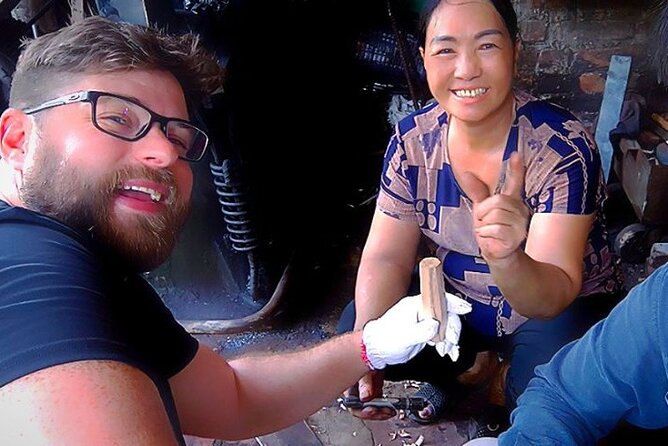
The shaping stage gives you the clearest sense of learning a trade. You do not simply strike the metal once and hand it over. You alternate blows with the maker, gradually bringing the blade toward its intended form.
Small mistakes can be trimmed with a hydraulic cutting machine. This is practical help, not a shortcut that removes your role. The maker handles the tool that corrects imperfections, while you take part in the main shaping work.
I like this balance. You get genuine participation without being expected to perform a highly skilled job after a single lesson. The family’s experience fills the gap between your first hammer blows and a usable knife.
A person who has worked in the trade explained that family members can begin at about age 12. That detail helps explain the calm, efficient movements you will see in the workshop. The skill is built through years of repetition, not a quick course.
The class is therefore best understood as guided craft work. You will make important choices and do real physical tasks, but the finished blade is a shared result. That is not a weakness. It is what makes the project possible within a half-day visit.
Grinding, sharpening, and the family recipe
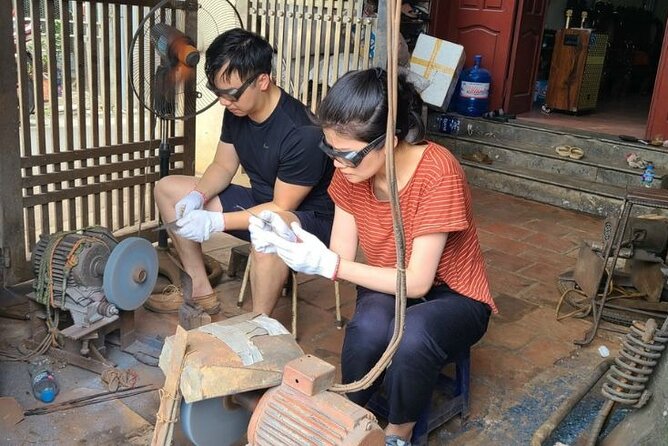
After forging and trimming, the blade moves to the grindstone. Sharpening happens in several phases, so the knife is not finished as soon as the rough shape appears.
One stage includes soaking the blade in a special tar-based chemical wash made from a secret family recipe. You are given a rare glimpse into a method kept within the family, although the details of the formula are not provided. It is one of the most unusual parts of the process and helps show how traditional workshops often rely on practical knowledge passed from one generation to the next.
The final grinding work affects how the knife looks and cuts. Again, do not compare your handmade result with a factory blade. The value is in seeing the sequence from raw metal to finished edge, and in knowing that you helped with the major steps.
The provided details do not specify the exact handle material, final dimensions, or kitchen testing session. Avoid booking with the expectation of a particular knife model. You are promised a simple knife and the chance to take it home, but not a custom professional chef’s knife.
A close look at the family trade
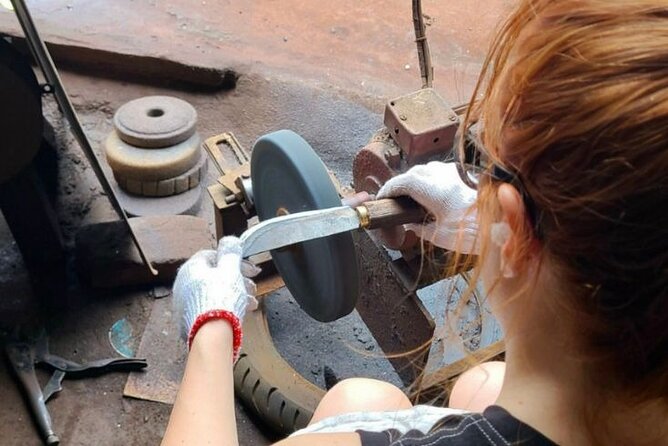
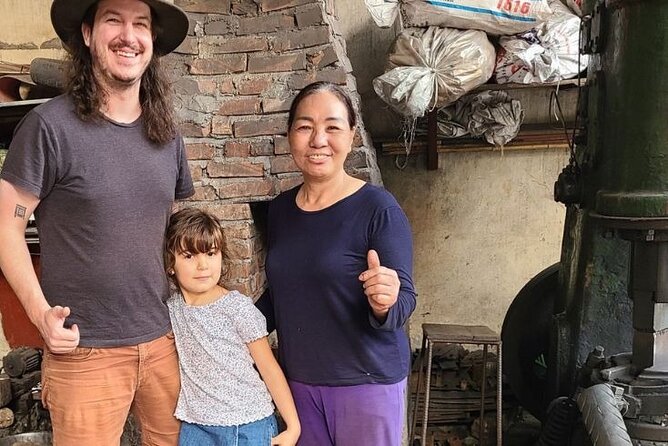
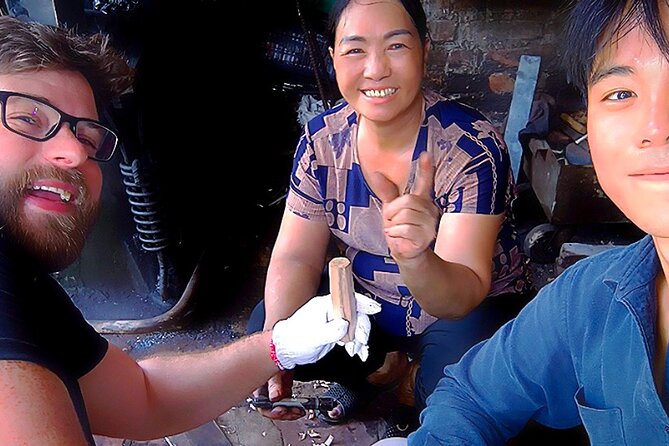
The family setting is a strong reason to choose this experience. You meet people who have practiced forging across generations, and you can chat with local makers while working. That personal contact gives the village visit more meaning than a quick stop to buy a tool.
The trade has changed with time. The village once supplied weapons, while its current work centers on agricultural implements. That shift lets you see tradition as something practical and adaptable, not a frozen display from the past.
The makers’ patience matters, too. A first-time participant needs repeated guidance with the hammer, the blade angle, and the order of the work. The available feedback points to a family team that is willing to help rather than rush you through the process.
At the same time, this is not a quiet craft demonstration. Forging involves heat, metal, tools, and noise. Conversation may happen around the work rather than in a formal talk. If you prefer a calm cultural visit, a cooking class or museum may suit you better.
Is $50 a fair price for three and a half hours?
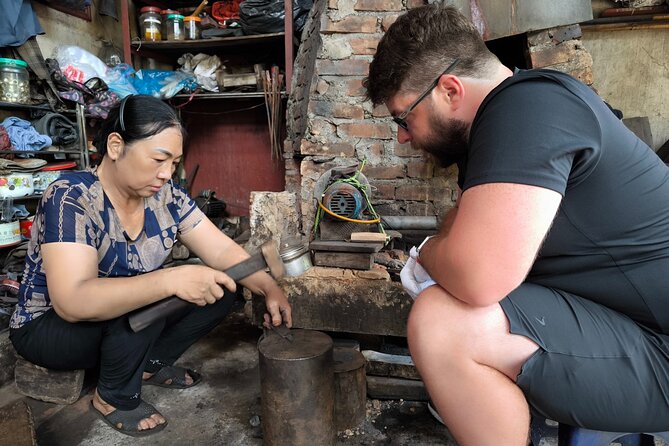
At $50 per person, the cost covers the air-conditioned vehicle, iron material, and English-speaking guide. Group discounts are available, and the group size is capped at 10 people.
I would judge the price by comparing it with the kind of souvenir and memory you want. A standard knife bought in Hanoi will cost less and take no effort. This class gives you instruction, transport, contact with a local family, and a finished object connected to your own work.
The value is strongest if you enjoy practical activities. You are paying for time at the forge, not just for the metal in the knife. The guide’s support and the makers’ labor also matter, especially because shaping and sharpening require skill you cannot reasonably develop in one short session.
The price is less attractive if you mainly want sightseeing or a polished luxury product. Lunch is not included, and the class is only one stop in a half-day schedule. Group discounts may improve the deal if you are booking with family or friends.
The experience has a maximum of 10 people, which is a useful limit for a tool-based class. A smaller group should make it easier to get help, though the exact number on your date can vary.
Who should book this class?
I would recommend it to you if you like making things, enjoy local trades, or want a souvenir with a clear story behind it. It also suits repeat visitors to Hanoi who have already seen the usual city sights and want a different kind of half-day outing.
It can work for a range of ages, but the moderate fitness requirement is important. Hammering, standing, handling metal, and spending time near a forge demand more effort than a normal walking tour.
You should also be comfortable with an imperfect result. The makers will help shape and sharpen the blade, but your own knife may show the marks of a first attempt. That handmade quality is a benefit for some people and a drawback for others.
I would not choose this for someone who wants a relaxed schedule, a full meal, or a detailed architectural tour. The activity has a clear focus and stays with it: making a knife from metal.
Timing, food, and cancellation details
Allow about three hours and 30 minutes for the full experience. Pickup is offered, but confirm the meeting or pickup details before the day of departure.
Lunch is not included. Plan your meal separately, since the supplied details do not state where or when a food stop takes place.
You receive confirmation at booking, and mobile tickets are supported. Free cancellation is available if you cancel at least 24 hours before the local start time. Inside that 24-hour window, the payment is not refunded and changes are not accepted.
The activity depends on good weather and a minimum number of people. If poor weather or low enrollment causes cancellation, you can choose another date or experience, or receive a full refund.
Should you book the Hanoi knife-making workshop?
Book it if you want a hands-on Hanoi experience with a strong local connection and a useful souvenir at the end. The family forging tradition, patient instruction, and full process from design to sharpening give the $50 fee solid value for people who enjoy making things.
Skip it if heat, physical work, or rough workshop conditions are not appealing. You will not get a passive sightseeing trip or a guaranteed factory-perfect blade.
For the right person, this is a memorable way to spend half a day outside central Hanoi. You return with a knife, but the better souvenir is understanding how much work sits behind an ordinary tool.
FAQ
How long does the knife-making experience last?
The experience lasts approximately three hours and 30 minutes.
Where does the workshop take place?
It takes place in a traditional craft village on the outskirts of Hanoi, in a village known for its forging profession.
Is transportation included?
Yes. An air-conditioned vehicle is included, and pickup is offered.
Is an English-speaking guide provided?
Yes. An English-speaking tour guide is included. Nathan is one guide associated with the experience.
How many people can join the activity?
The activity has a maximum of 10 people.
Is lunch included in the price?
No. Lunch is not included. Tips are also not included.
What is the cancellation policy?
You can cancel at least 24 hours before the local start time for a full refund. Cancellations or changes made within 24 hours are not refunded or accepted. If poor weather or failure to meet the minimum number of people causes cancellation, you are offered another date or experience, or a full refund.
Just added around Hanoi
- Cat Ba National Park, Lan Ha Bay 2 Days 1 Night Adventure★ 4.8 · 9 reviews
- Full day Boat Tour Lan Ha Bay – Ha Long Bay: Kayak, Beach Hopping★ 5.0 · 9 reviews
- Ha Giang Loop 2 Days High quality Small Group +Private Room★ 5.0 · 9 reviews
- Half Day Sapa Cat Cat Explore Waterfall, Workshop, H’mong Local★ 5.0 · 9 reviews
- Sapa 1 Day Trekking★ 5.0 · 9 reviews
- Sapa Open Air Jeep Half Days Off the Beaten Track, Backroad★ 4.9 · 9 reviews
- Halong 2 days 1 night with Cozy Classic Cruise from Hanoi★ 4.5 · 9 reviews
- Fansipan Mount Trekking 1 Day★ 5.0 · 9 reviews
Incense Village and Craft Tours, compared.
Incense Village, Hat Making & Lacquer Artisan Small Group Hanoi
Read our review →
Incense Village, Hat, and Lacquer Artisanal Tour
Read our review →
Incense Village Small Group of 9 Tour From Hanoi to Ninh Binh
Read our review →
Incense Village, Hat, Lacquer Tour & City Highlights
Read our review →
Incense Village, Hat, Lacquer, & City Highlights Tour
Read our review →
Instagram Incense Quang Phu Cau Village Tour with Train Street
Read our review →
INCENSE Villages & Ha Noi City Full Day guided Tour with Lunch
Read our review →
Bat trang Pottery Class in Hanoi Old Quarter/Handmade experience
Read our review →Browse the lists this tour appears in