
Reviewed · INCENSE VILLAGE AND CRAFT TOURS
Hanoi Knife Making Traditional Workshop
A sheet of steel, a glowing forge, a hammer, and a village workshop on Hanoi’s edge: this is not a sightseeing stop where you only watch someone else work. In Da Sy village, you help turn raw metal into a usable knife, with the craft family guiding your hands at each stage.
I like two things right away. You take home a knife you helped make, not a generic souvenir, and you meet a working family in a traditional craft village rather than spending the whole morning in a city attraction. Guides such as Tee, Nathan, Khoi, and Minh also help translate the technical instructions and explain the village’s forging tradition.
The main consideration is that this is a beginner-friendly activity, not a full blacksmith apprenticeship. You can do much of the work, but the master will handle or correct the most dangerous parts, especially around heavy equipment and hot metal. If you expect to spend three hours doing every step alone, you may find the supervision limiting.
In This Review
- Key points to know before you book
- From Hanoi streets to a working forge
- Why Da Sy’s forging tradition matters
- Choosing a blade before the fire starts
- Cutting and heating the steel
- Shaping a blade with a master’s help
- Sharpening, tempering, and the family recipe
- Making a handle that fits your hand
- What the guides add to the visit
- Price, time, and what you receive
- Safety, comfort, and practical advice
- Who will enjoy this Hanoi craft class?
- Should you book the Da Sy knife-making workshop?
- FAQ
- Where does the knife-making class take place?
- How long does the activity last?
- Is hotel pickup included?
- Is the class taught in English?
- What does the $50 price include?
- What should I bring?
- Can I cancel or pay later?
Key points to know before you book
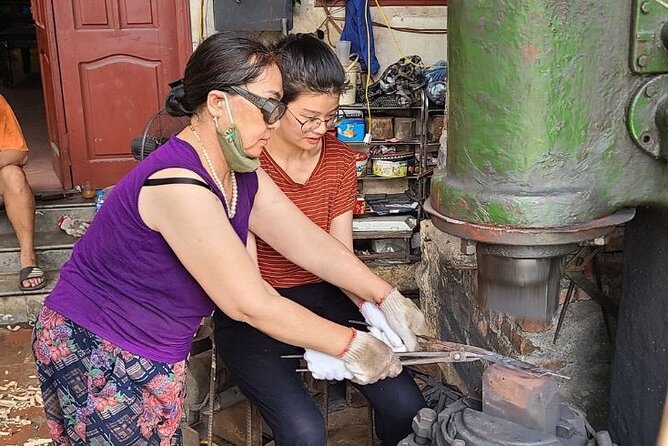
- Forge a practical knife in Da Sy village: Sketch, cut, heat, hammer, shape, sharpen, and finish a blade with help from an experienced maker.
- Choose your knife design: Pick from available styles, or show a photo and discuss a preferred shape.
- Meet a family of village craftspeople: The workshop continues a forging tradition that reaches back several hundred years.
- Hotel pickup is included: A driver takes you from your Hanoi hotel to the village and returns you after the class.
- English translation matters: Guides including Tee, Nathan, Khoi, and Minh help bridge the language gap with the workshop family.
- Plan for heat, noise, and sharp tools: Wear comfortable shoes, use the supplied safety equipment, and follow instructions closely.
From Hanoi streets to a working forge
The experience begins with pickup from your hotel. You are asked to wait five minutes in the lobby, then travel by car to Dong Bac, home to historic Da Sy village and its forging trade.
The drive is useful because it shifts the day from central Hanoi to the outskirts, where craft work remains part of local life. Your English-speaking guide can also explain Vietnamese history and daily life along the way. Nathan, for example, has been praised for keeping the journey friendly and informative, while Tee is often described as a clear translator who stays involved throughout the class.
Exact pickup times depend on availability, so check the schedule before booking. The listed duration is three hours, though one session described by a participant lasted around two hours. I would still reserve the full three-hour window, especially if you want time to choose a design, make the handle, and finish the blade without rushing.
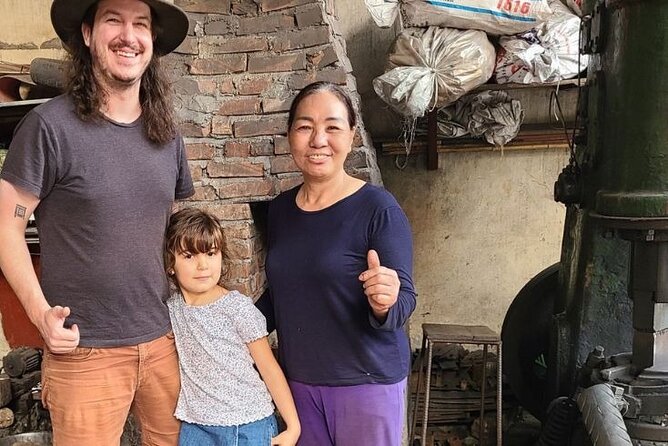
At the village, the family welcomes you into the workshop. You may receive water, tea, fruit, or a small snack during the visit, depending on the session. These simple touches help the activity feel like a visit to a working home and business, rather than a staged demonstration.
More craft village visits from Hanoi:
- Incense Village, Hat Making & Lacquer Artisan Small Group Hanoi
★ 5.0 · 1,266 reviews - Incense Village, Conical Hat, Lacquer Art, SMALL GROUP From Hanoi
★ 5.0 · 1,170 reviews - Hanoi: Incense Village, Hat, and Lacquer Artisanal Tour
★ 4.6 · 1,005 reviews
Why Da Sy’s forging tradition matters
Da Sy is known for metal forging, a trade practiced there for several hundred years. The village once supplied weapons during the Vietnam wars, while modern makers now produce agricultural tools, kitchen knives, and other useful metal goods.
That change gives the visit a practical focus. You are not looking at an old craft frozen in time. You are seeing a skill that has adapted to present needs while keeping its basic methods: heat, force, patience, and careful finishing.
The village setting also gives the knife more meaning. You can buy a blade in many places in Vietnam, but making one beside local artisans helps you understand why a simple kitchen tool can require so much control. The finished object becomes both a souvenir and a reminder of the work behind it.
Choosing a blade before the fire starts
The class begins with design. You choose the type of knife you want to make from a selection of examples, or you may use a photo as a guide. Past participants have chosen kitchen knives, different blade shapes, and even a design combining a local style with a Japanese kiritsuke shape.
The design stage is important because it sets realistic expectations. A simple shape is easier for a first attempt, while a more unusual blade can require extra adjustment by the craftsperson. You can ask the guide to explain what is practical before the steel is cut.
You also decide how involved you want to be. The workshop can let you take part in most steps under close supervision, or the master can do more of the technical work while you assist. Be honest about your comfort level. This is a hands-on class, but it is still a working forge with hot metal, sharp blades, hammers, and machinery.
The English-speaking guide helps here. The artisan may not speak English, so the guide explains what is happening and translates questions. Tee has been especially useful for this role, taking time to explain the process and help visitors communicate with the knife-making family.
Cutting and heating the steel
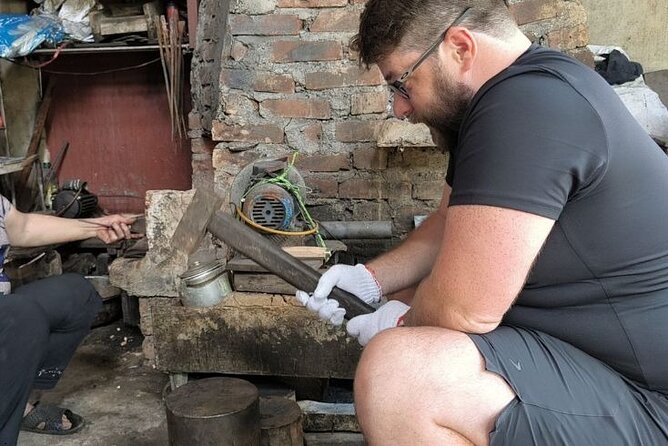
After you settle on a design, you sketch the blade shape onto a piece of metal selected for durability. The blade and tang are then cut from the steel. The tang is the narrow section that extends into the handle, so it is essential to the knife’s balance and strength.
The steel goes into the hot coals. This is the moment when the workshop becomes an active, physical experience. You feel the heat, hear the forge, and watch the metal change before it reaches the anvil.
The master demonstrates how to hold the tools and where to strike. You may use the hammer and work alongside the maker, alternating blows as the heated steel takes shape. The point is not brute force. It is timing and accuracy, and the experienced craftsperson will guide you when your strikes need adjusting.
This is also where the class’s limits become clear. The makers want you involved, but they will not let an inexperienced hand operate every machine or make an unsafe move. One account described the choice plainly: you can do much of the work yourself, or let the master handle more of it. That flexibility is useful for families and mixed groups, since not everyone has the same confidence around a forge.
A few more Hanoi departures worth weighing up
- Hanoi Cooking Class: Culture, Local Market & Meaning CSR Impact
★ 5.0 · 5,147 reviews - 5 Traditional Dishes Hanoi Cooking Class with Market Trip
★ 5.0 · 4,890 reviews - Hanoi Coffee Workshop: Taste Salt, Coconut and Egg Coffee
★ 5.0 · 1,286 reviews - Hanoi: Salt Coffee Workshop Awake Your Senses With 6 Brews
★ 5.0 · 792 reviews
Shaping a blade with a master’s help
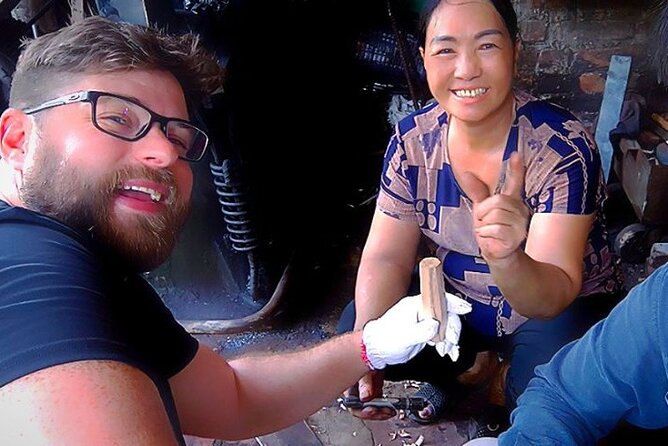
Hammering the heated steel is the most memorable part for many people, but shaping does not end at the anvil. The blade needs a workable outline, a proper tang, and a form that will sharpen well.
You may make several blows yourself, then watch the artisan correct the shape. A hydraulic cutting machine removes imperfections and excess metal. This is one of the stages where safety takes priority over participation. The machinery is powerful, and the craftsperson handles it rather than turning the class into a risky test of courage.
If you have some do-it-yourself or metalworking experience, you should know that the workshop is aimed at true beginners. You will take part, but the family’s priority is producing a safe, attractive knife. A person hoping to learn every technical decision in detail may want a longer blacksmith course instead.
For most people, the balance works well. You get to swing the hammer, feel the resistance of the steel, and see your design change under expert control. You also finish with a blade that works, rather than taking home an uneven experiment.
Sharpening, tempering, and the family recipe
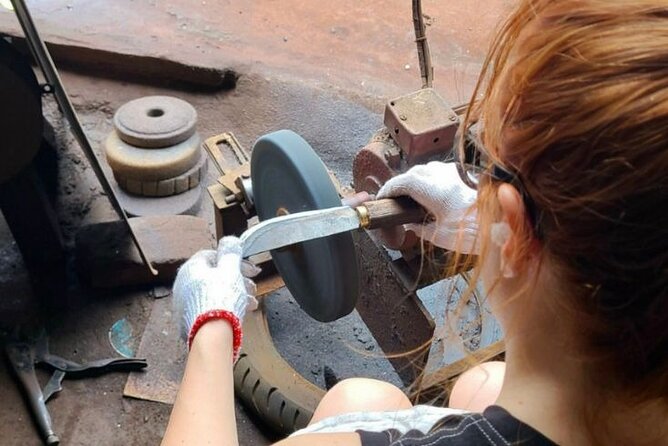
Once the general shape is ready, the blade is sharpened on a grindstone. The process has several stages, and the artisan controls the angle and pressure needed to create a clean edge.
The blade is also soaked in a special tar-based chemical wash. This is described as a secret family recipe, and it is one of the small details that makes the class more than a basic craft demonstration. You are seeing a method passed through the workshop rather than a generic souvenir-making process.
Heat treatment and sharpening demand care. The knife becomes increasingly dangerous as it nears completion, so follow the guide’s instructions and wear gloves when asked. One participant’s practical advice was simple: use the safety gear and protect your fingers.
The final result can be surprisingly polished. Participants have left with very sharp knives that look professional, including kitchen knives made to their chosen design. The artisan checks and finishes the blade so your souvenir is usable, not merely decorative.
Making a handle that fits your hand
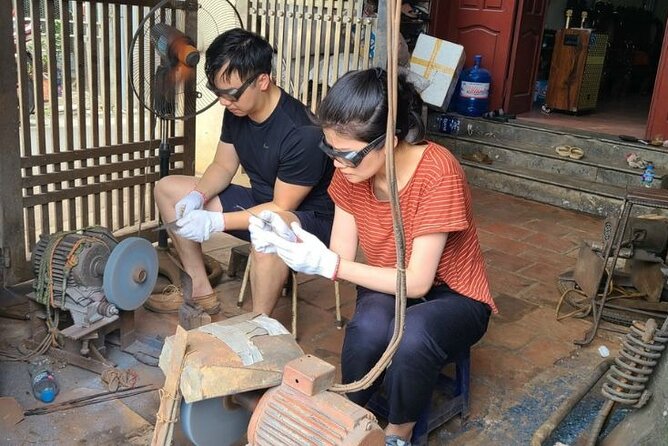
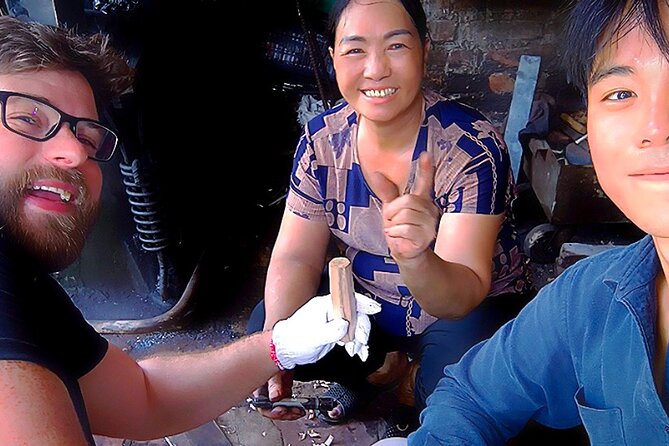
The handle adds another personal touch. You may help carve or shape the wooden handle, then work with the maker to fit it to the tang.
This step is slower and more tactile than the forge work. You are no longer dealing with glowing steel, but you still need patience to create a comfortable shape. Some sessions allow you to make a handle that suits your grip, which gives the knife a more personal feel than a factory-made product.
Your guide can help explain how the handle is attached and how the final balance is checked. Depending on your chosen design and skill level, the master may do the final adjustments. That is not a drawback unless you expected to complete every cut unaided.
For a group, the handle stage also gives people time to compare designs. Groups of six have made different knives, with each person choosing a style and taking part in the finishing work. Teens can join in too, though all participants must take the heat and sharp tools seriously.
What the guides add to the visit
The guide is not just your driver. The guide is the link between you and the craft family, and that makes a real difference because the artisan may not speak English.
Tee has helped explain the history of the village, translate instructions, and take photos and videos. Nathan has been praised for his warmth, clear explanations, and small cultural touches such as showing local fruit, tea, and candy. Khoi has accompanied visitors from hotel pickup through the return journey, keeping an eye on comfort and translation. Minh has guided larger groups and handled demonstrations and safety explanations in clear English.
The exact guide depends on the date and group, so you should not book expecting one particular person. What matters is that English-speaking instruction is included and that the guide remains present during the practical work.
A private or very small group can make the class feel more personal. Small groups are available, and some sessions have been one-on-one or shared by only two people. Larger groups can still work well, but your time at the anvil may be divided among participants.
Price, time, and what you receive
The cost is $50 per person for about three hours. That includes hotel pickup and return, an English-speaking guide, instruction from the master, workshop equipment, water, and the knife you make.
I consider that good value if you want an activity rather than a short village photo stop. Transportation alone saves you the trouble of arranging a trip to Da Sy, while the finished knife gives you something practical to use at home. You are also paying for access to a family workshop and for close supervision around equipment that would not be suitable for unsupervised use.
The value is less clear if you mainly want to watch traditional forging. In that case, the class may ask you to pay for hands-on work you do not intend to use. It also is not the right choice for someone who wants a formal, technical blacksmith qualification.
There is a $10 surcharge during New Year, Tet, Liberation Day or Reunification Day on April 30, International Workers’ Day on May 1, and National Day on September 2. Keep that in mind when comparing dates.
Free cancellation is available up to 24 hours before the activity for a full refund. You can also reserve now and pay later, which helps if your Hanoi schedule is still changing.
Safety, comfort, and practical advice
Wear comfortable shoes. You will be standing and moving around a working forge, so sandals or delicate footwear are a poor match.
Use the gloves and other safety equipment provided by the workshop. Keep your hands clear of hot steel, grinders, and the hydraulic cutter, and let the master decide when a task is safe for you to handle.
The activity is not suitable for people over 95 years old. Alcohol and drugs are not allowed, which is especially important around fire, machinery, and sharp tools.
You receive one 500 ml bottle of water. If you need more than that during a hot session, bring extra water if permitted, though the workshop may also offer tea or small refreshments.
The knife should be packed carefully for your onward journey. The supplied information does not specify airline or checked-baggage rules, so you should confirm how to carry a blade before flying.
Who will enjoy this Hanoi craft class?
I would choose this for you if you like making things with your hands, want a souvenir with a story, or have already seen Hanoi’s main sights and want to visit the outskirts.
It also suits couples, small groups, families with older children, and anyone interested in tools, cooking, metalwork, or village trades. The work is beginner-friendly, and you do not need prior skills.
You may want to skip it if you dislike heat, noise, physical work, or close supervision. It is also not ideal if you want to operate every machine yourself or spend a full day studying advanced forging methods.
Should you book the Da Sy knife-making workshop?
I would book it if you want one of Hanoi’s more unusual souvenirs and prefer a working experience to another museum visit. The strongest reasons are the direct contact with the craft family, the chance to choose a blade design, and the fact that you leave with a knife made during your own session.
Go in with the right expectation. You are not becoming a master blacksmith in three hours. You are learning the broad process, taking part where it is safe, and relying on an experienced maker to finish the difficult work.
At $50, including transport, instruction, equipment, water, and the finished knife, it offers a lot for a half-day outing. Book with comfortable shoes, a little patience, and respect for the tools. You should return to Hanoi with a sharper understanding of Vietnamese craft, and a knife you can actually use.
FAQ
Where does the knife-making class take place?
The class takes place in Da Sy village in Dong Bac, on the outskirts of Hanoi. The village is known for its traditional forging profession.
How long does the activity last?
The listed duration is three hours. Starting times depend on availability, so check the schedule when booking.
Is hotel pickup included?
Yes. Pickup from your hotel is included, and you should wait five minutes in the hotel lobby. Return transportation is also described as part of the experience.
Is the class taught in English?
Yes. English-speaking instruction and a live English tour guide are included. The guide translates between you and the workshop family when needed.
What does the $50 price include?
The price includes English-speaking instruction, the master’s guidance, equipment, one 500 ml bottle of water, and the knife you make.
What should I bring?
Bring comfortable shoes. You should also use the gloves and safety equipment provided during the work.
Can I cancel or pay later?
You can cancel up to 24 hours in advance for a full refund. A reserve-now, pay-later option is also available. A $10 surcharge applies on New Year, Tet, April 30, May 1, and September 2 holidays.
Just added around Hanoi
- Cat Ba National Park, Lan Ha Bay 2 Days 1 Night Adventure★ 4.8 · 9 reviews
- Full day Boat Tour Lan Ha Bay – Ha Long Bay: Kayak, Beach Hopping★ 5.0 · 9 reviews
- Ha Giang Loop 2 Days High quality Small Group +Private Room★ 5.0 · 9 reviews
- Half Day Sapa Cat Cat Explore Waterfall, Workshop, H’mong Local★ 5.0 · 9 reviews
- Sapa 1 Day Trekking★ 5.0 · 9 reviews
- Sapa Open Air Jeep Half Days Off the Beaten Track, Backroad★ 4.9 · 9 reviews
- Halong 2 days 1 night with Cozy Classic Cruise from Hanoi★ 4.5 · 9 reviews
- Fansipan Mount Trekking 1 Day★ 5.0 · 9 reviews
Incense Village and Craft Tours, compared.
Incense Village, Hat Making & Lacquer Artisan Small Group Hanoi
Read our review →
Incense Village, Hat, and Lacquer Artisanal Tour
Read our review →
Incense Village Small Group of 9 Tour From Hanoi to Ninh Binh
Read our review →
Incense Village, Hat, Lacquer Tour & City Highlights
Read our review →
Incense Village, Hat, Lacquer, & City Highlights Tour
Read our review →
Instagram Incense Quang Phu Cau Village Tour with Train Street
Read our review →
INCENSE Villages & Ha Noi City Full Day guided Tour with Lunch
Read our review →
Bat trang Pottery Class in Hanoi Old Quarter/Handmade experience
Read our review →Browse the lists this tour appears in