
Reviewed · VIETNAMESE COOKING CLASSES
Vietnamese Spring Rolls Cooking Class
Crispy fried spring rolls are one of Vietnam’s great comfort foods, and this small cooking class puts the useful part first: you learn to prepare the filling, roll the rice paper, fry the parcels, and sit down to eat them. It is a simple dish, but the balance of crunch, herbs, vegetables, noodles, and dipping sauce tells you plenty about everyday Vietnamese cooking.
I like the hands-on format, since you do not just watch a chef work. I also like the family-style meal at the end, with coffee or tea included and a recipe to take home. The main consideration is that the class lasts about two hours, so it is a focused introduction rather than a long market-to-table food program. Some past sessions have included dishes such as pho and bun cha, so the exact menu may be worth confirming when you book.
In This Review
- Key points at a glance
- What the Sapa spring roll class is really about
- Preparing the filling with local ingredients
- Rolling rice paper without the usual fuss
- Frying the rolls until golden and crisp
- The dipping sauce and the balance of a Vietnamese meal
- Sitting down for dinner at Saigonese Trekking House
- What past sessions suggest about the host
- Location, group size, and timing
- Who will enjoy this class most
- Is $25 a fair price in Sapa?
- My booking advice
- FAQ
- Where does the Vietnamese spring rolls cooking class begin?
- Where does the activity end?
- How long does the cooking class last?
- How much does the class cost?
- What food will I learn to make?
- Is dinner included?
- Is a drink included?
- Are tips included?
- How many people can join the class?
Key points at a glance
- Crispy spring rolls from start to finish: Prepare the filling, roll rice paper, and fry the rolls until golden.
- Fresh local ingredients: Work with herbs, vegetables, noodles, mushrooms, and local spices.
- A local chef leads the class: Instructions cover both cooking technique and the role of flavor and texture in Vietnamese meals.
- Dinner is included: Eat the food you make in a warm, family-style setting.
- Small group size: The class accepts a maximum of 10 people, which should allow room for questions and practical help.
- Good value at $25: The price includes the cooking lesson, welcome tea or coffee, dinner, and a recipe for future meals.
What the Sapa spring roll class is really about
This is not a formal culinary school session. It is a friendly food lesson built around one dish, with culture folded into the cooking.
You start by learning about the ingredients used in the rolls. The stated filling includes noodles, mushrooms, and vegetables, with fresh herbs, spices, and rice paper playing important supporting roles. That list may sound basic, but spring rolls depend on small choices. The filling must have enough flavor to hold up after frying, and the wrapper needs to be rolled firmly without tearing.
I like this kind of class because the lesson gives you something practical to take home. A recipe for spring rolls is far more useful than a short demonstration of an elaborate dish that requires hard-to-find equipment.
The class also explains how Vietnamese meals balance flavors and textures. The rolls are crisp and warm, while the dipping sauce adds moisture and seasoning. Herbs and vegetables keep the dish from feeling heavy. You are not just learning a snack. You are seeing how a few contrasting elements can make a meal feel complete.
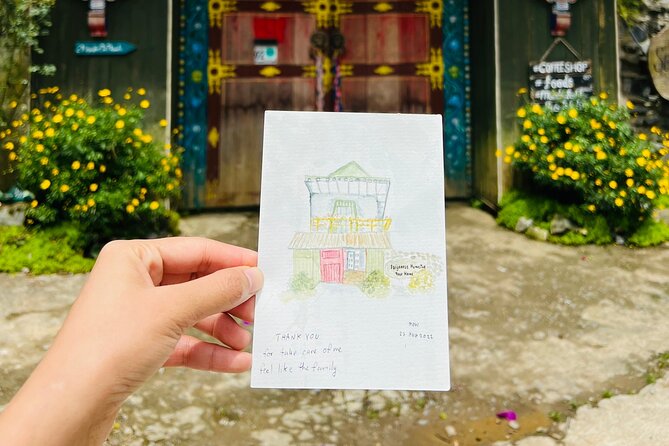
The setting at Saigonese Trekking House is described as welcoming and family-style. That matters in Sapa, where a cooking session can provide a quieter way to connect with local life after time spent outdoors. You have a chance to sit, talk, and cook rather than simply move from one sight to the next.
More cooking classes in Sapa:
- Sapa Trekking & Cooking with H’Mong Locals –Local Culture
★ 5.0 · 36 reviews - Hanoi Cooking Class: Culture, Local Market & Meaning CSR Impact
★ 5.0 · 5,147 reviews - 5 Traditional Dishes Hanoi Cooking Class with Market Trip
★ 5.0 · 4,890 reviews
Preparing the filling with local ingredients
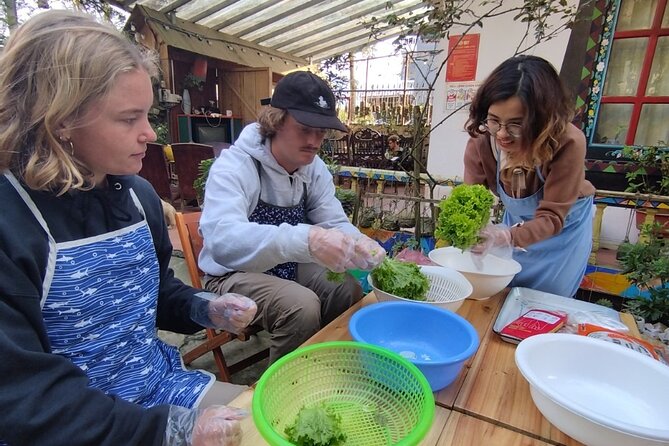
The first working stage introduces the ingredients. Expect fresh herbs and vegetables, local spices, noodles, mushrooms, and rice paper. The chef explains how these pieces come together before you begin assembling the rolls.
This is the part where you learn the difference between a list of ingredients and a usable recipe. Noodles and vegetables give the filling body. Mushrooms add a savory note. Herbs bring freshness, while the spices help the mixture taste like more than a pile of cooked vegetables.
The class is especially suitable if you are vegetarian or simply prefer plant-based dishes. The provided description presents the spring rolls with noodles, mushrooms, and vegetables, and specifically says the experience welcomes vegetarian participants. Still, if you have allergies or strict dietary needs, ask before booking because no detailed allergy or substitution policy is provided.
You should also pay attention to texture. A filling that is too wet can make rice paper difficult to handle and may affect frying. The class description does not give exact preparation details, so the chef’s guidance is important here. This is one reason a small group of no more than 10 people is useful. You can watch the technique closely and ask for help before moving on.
Rolling rice paper without the usual fuss
Rolling is the most recognizable part of the lesson, but it is also where many first attempts go wrong. Rice paper needs careful handling. Too much filling can split the wrapper, while too little leaves a loose roll that may not cook evenly.
The chef guides you through the process rather than leaving you to guess. You practice placing the filling, folding the sides, and creating a neat package. That practical repetition is the point. By the time you make several rolls, the movement should feel more natural.
I like that the class treats rolling as a real cooking skill, not a quick photo opportunity. The finished rolls need to hold together in hot oil, so the technique has a clear purpose.
This stage is also a good match for families, couples, and small groups of friends. Everyone can take part, and the work is easy to understand even if you have little cooking experience. Group discounts are available, making the activity more appealing if you are booking with several people.
Frying the rolls until golden and crisp
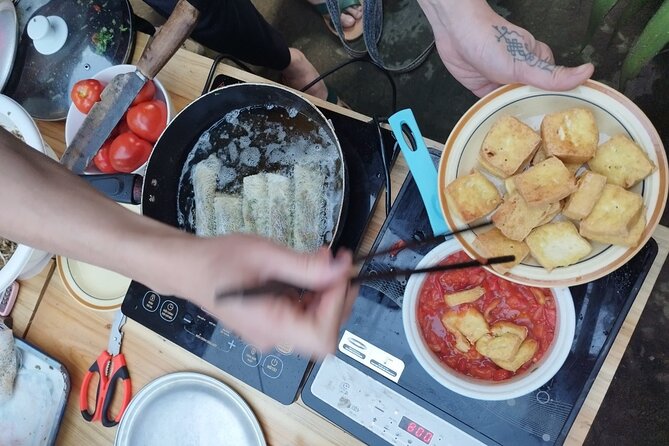
Once the rolls are assembled, they are fried until golden and crunchy. This is where the dish changes from soft rice paper and vegetables into the familiar spring roll you expect at the table.
The class gives you a chance to connect cooking time with the final texture. The goal is a crisp exterior without losing the character of the filling inside. You also learn why spring rolls are served hot and why the dipping sauce matters.
Because the experience includes dinner, the frying is not just a technical exercise. You eat what you make at the end. That makes the lesson more satisfying and gives you a clear sense of how the finished dish should taste.
No detailed information is provided about the kitchen equipment, oil type, or exact frying method. If those details matter to you, ask the host when booking. The important point is that the process is hands-on and ends with a proper meal rather than a single sample.
More Sapa escapes from Sapa:
- Sapa 2 Days 1 Night From Hanoi – Overnight in Ta Van Village
★ 5.0 · 2,669 reviews - Hanoi – Sapa 2 Days 1 Night Overnight At Homestay
★ 5.0 · 899 reviews - Sa Pa: Muong Hoa Valley Trek and Local Ethnic Villages
★ 4.6 · 864 reviews - Sapa: Fansipan Cable, Cat Cat Village & Moana Instagram Tour
★ 5.0 · 777 reviews
The dipping sauce and the balance of a Vietnamese meal
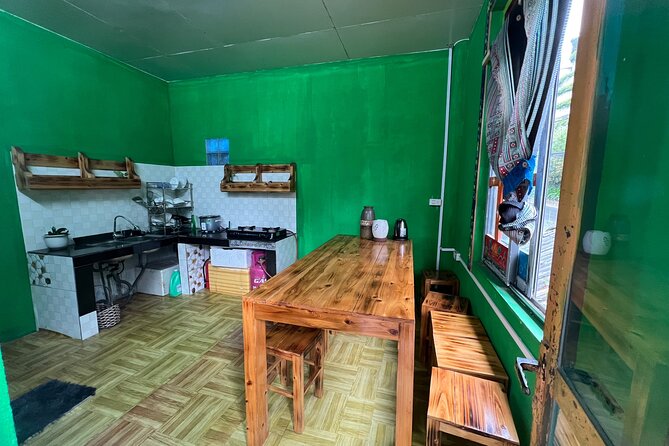
A traditional dipping sauce is served with the spring rolls. It provides the sharp, salty, sweet, or savory contrast that helps the fried exterior taste lighter.
The exact recipe is not specified, so you should not expect a full list of measurements in advance. The class does promise a recipe for the dish, giving you a useful starting point for cooking at home. The chef can also explain how the sauce works with the rolls and how Vietnamese food often brings several tastes together at once.
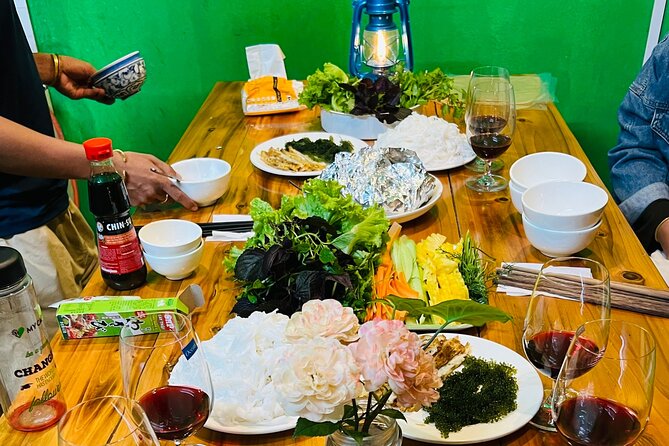
This is one of the most valuable cultural parts of the class. You learn that a fried dish does not have to be served on its own. Herbs, vegetables, noodles, and sauce help create contrast. The meal becomes more balanced because each part has a job.
If you are interested in food beyond simple sightseeing, this lesson gives you a better way to understand what you eat in Vietnam. You leave with a recipe, but also with a sense of why the dish works.
Sitting down for dinner at Saigonese Trekking House
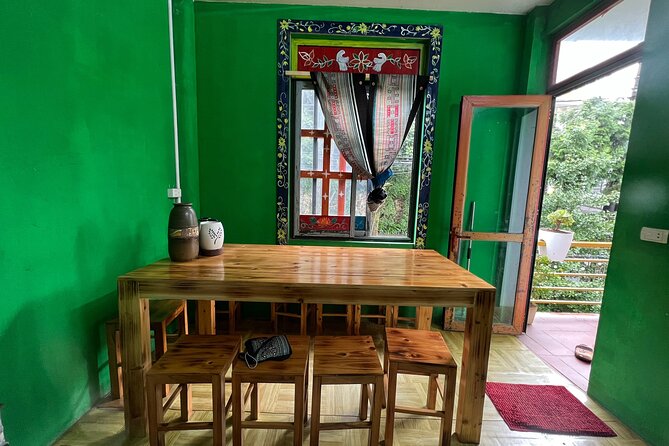
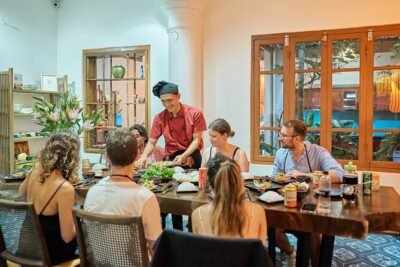
The class ends with a family-style meal featuring your creations. Dinner is included in the $25 price, as is a welcome drink of coffee or tea.
That inclusion makes the cost easier to judge. You are paying for instruction, ingredients, kitchen time, a meal, a drink, and a recipe. In Sapa, where a standard dinner can be inexpensive, the value here is not simply the food. You are also paying for the chance to prepare it with a local chef and understand the process.
I would plan the class at a time when you can eat afterward without rushing away. The activity lasts about two hours, though some sessions have lasted longer when conversation and cooking continued. The supplied details describe the scheduled duration as approximately two hours, so allow a little flexibility if you have a tight evening plan.
The family-style setting may suit you if you enjoy conversation and a relaxed meal. It may be less appealing if you want a private, highly structured lesson with exact professional training. The class is designed for cultural exchange, not formal certification.
What past sessions suggest about the host
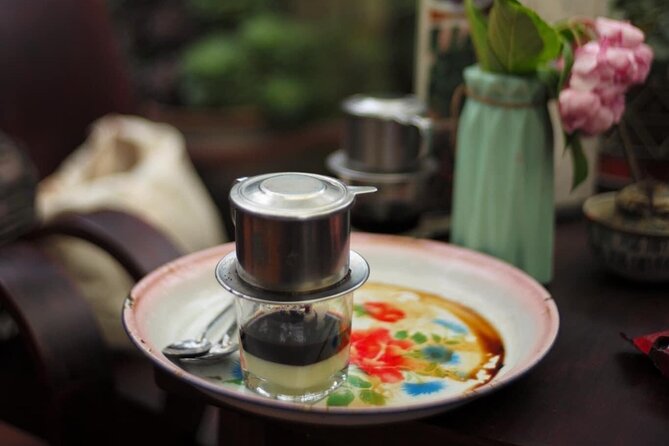
The activity is presented as a spring roll class, but previous sessions at Saigonese Trekking House have also covered pho and bun cha. One session included a market visit to choose ingredients before returning to cook and eat, while another involved several hours of conversation and cooking with the hosts.
That suggests the food program may have some flexibility. It does not guarantee a market visit or a different dish during your booking, so confirm the planned menu if spring rolls are your main reason for reserving. The strongest pattern is the friendly teaching style. The local cook is described as approachable, and the sessions include explanations of Vietnamese eating habits and food culture.
No individual chef names are provided, so I would not expect to book a named instructor. You can expect a local chef or cook to lead the activity at the trekking house.
Location, group size, and timing
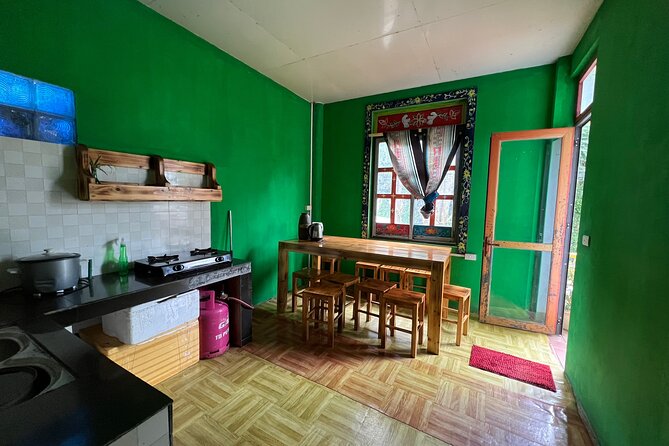
The meeting point is Saigonese Trekking House, at 02 Nguyễn Chí Thanh, TT. Sa Pa, Sa Pa, Lào Cai, Vietnam. The activity begins and ends there, with no separate return transfer listed.
The meeting point is near public transportation, which is helpful if you are staying elsewhere in Sapa. Since transport from your accommodation is not listed as included, allow time to reach the address on your own.
The maximum group size is 10 people. That is small enough for a personal lesson without making the experience private. A smaller group should also make it easier to see the rolling and frying techniques, especially if you are new to Vietnamese cooking.
The class is listed at about two hours. It requires good weather, and poor conditions can lead to a new date or a full refund. The weather rule may seem unusual for a cooking activity, but it is part of the booking conditions, so keep it in mind if your Sapa schedule is short.
Confirmation is provided when you book. Free cancellation is available if you cancel at least 24 hours before the start time. Cancellations or changes made inside that window are not refunded or accepted.
Who will enjoy this class most
I would choose this activity for several kinds of visitors:
- Food-focused visitors: You get to cook a well-known Vietnamese dish rather than just order it.
- Vegetarians: The described filling uses noodles, mushrooms, and vegetables, and the class welcomes vegetarian participants.
- Couples and small groups: Rolling spring rolls gives everyone something to do, and group discounts may reduce the cost.
- First-time cooks: The process is broken into clear steps, from ingredients to rolling to frying.
- Visitors seeking local contact: The family-style setting encourages conversation with the hosts.
- People with limited time: The approximately two-hour format fits more easily into a Sapa itinerary than a long cooking day.
I would think twice if you need a guaranteed market trip, a private class, a named chef, or detailed instruction on professional kitchen methods. Those features are not promised.
Is $25 a fair price in Sapa?
At $25 per person, the class sits above the cost of simply eating spring rolls at a local restaurant. The comparison is not quite fair, though. A restaurant gives you a finished dish. This activity gives you dinner plus instruction and a recipe you can use again.
The value is strongest if you take part fully. If you only want to eat Vietnamese food, spend the money on a meal. If you like learning by doing, the included dinner and drink make the price reasonable.
Group discounts may improve the deal for families or friends. Tips are not included, so plan for that extra cost if you feel the chef has provided good instruction and hospitality.
My booking advice
I would book this class if you want a friendly, low-pressure introduction to Vietnamese food in Sapa. The best features are the practical rolling and frying work, the small group limit, the included dinner, and the chance to learn how Vietnamese cooks balance crisp textures with fresh herbs and dipping sauce.
Before paying, confirm that spring rolls are the dish scheduled for your date. Past classes have included pho and bun cha, which may be welcome variety, but the advertised experience centers on crispy fried spring rolls.
Book at least 24 hours ahead if your plans might change. Bring an appetite, leave room for conversation, and allow a little extra time around the two-hour estimate. For a modest group activity with a meal at the end, this is a sensible way to spend an evening in Sapa.
FAQ
Where does the Vietnamese spring rolls cooking class begin?
The class begins at Saigonese Trekking House, 02 Nguyễn Chí Thanh, TT. Sa Pa, Sa Pa, Lào Cai, Vietnam.
Where does the activity end?
The activity ends back at the meeting point at Saigonese Trekking House.
How long does the cooking class last?
The scheduled duration is approximately two hours.
How much does the class cost?
The listed price is $25 per person.
What food will I learn to make?
The class focuses on crispy fried Vietnamese spring rolls made with rice paper and a filling of noodles, mushrooms, and vegetables, served with a traditional dipping sauce.
Is dinner included?
Yes. Dinner is included in the activity price.
Is a drink included?
Yes. A welcome drink of coffee and/or tea is included.
Are tips included?
No. Tips are not included.
How many people can join the class?
The activity has a maximum group size of 10 travelers.
More Workshops in Sapa
- Half Day Sapa Cat Cat Explore Waterfall, Workshop, H’mong Local
★ 5.0 · 9 reviews - Hanoi Coffee Workshop: Taste Salt, Coconut and Egg Coffee
★ 5.0 · 1,286 reviews - Hanoi: Salt Coffee Workshop Awake Your Senses With 6 Brews
★ 5.0 · 792 reviews - Vietnamese Food Cooking Class in Hanoi with Market Experience
★ 5.0 · 778 reviews
Just added around Sapa
- Half Day Sapa Cat Cat Explore Waterfall, Workshop, H’mong Local★ 5.0 · 9 reviews
- Sapa 1 Day Trekking★ 5.0 · 9 reviews
- Sapa Open Air Jeep Half Days Off the Beaten Track, Backroad★ 4.9 · 9 reviews
- Fansipan Mount Trekking 1 Day★ 5.0 · 9 reviews
- Sapa: Motorbike Tour to Hidden Villages & Terraced Fields★ 5.0 · 9 reviews
- Sapa 3 Day Trekking with 2 Nights Homestay★ 5.0 · 9 reviews
- SaPa: 2-Day Villages,Rice Fields, Love Waterfall Hiking Tour★ 5.0 · 9 reviews
- 8-Day Discover Northern Vietnam Highlight: Hanoi – Ninh Binh – Sapa – Halong Bay★ 5.0 · 9 reviews
Vietnamese Cooking Classes, compared.
Hanoi Cooking Class: Culture, Local Market & Meaning CSR Impact
Read our review →
5 Traditional Dishes Hanoi Cooking Class with Market Trip
Read our review →
Vietnamese Food Cooking Class in Hanoi with Market Experience
Read our review →
5 Local Dishes Cooking Class with Meal & Market Visit
Read our review →
Hanoi Cooking Class and Market Tour in Ancient House
Read our review →
Rose Kitchen Hanoi: Market, Cooking & Culture Tour + Free PickUp
Read our review →
Hanoi Maya Kitchen: Traditional Cooking Class & Market Tour
Read our review →
Hanoi Cooking Class: Pho/Bun Cha/Banh Xeo…+Free Egg/Salt Coffee
Read our review →Browse the lists this tour appears in