
Reviewed · TREKKING TOURS IN SAPA
Sa Pa: Muong Hoa Valley Trek and Local Ethnic Villages
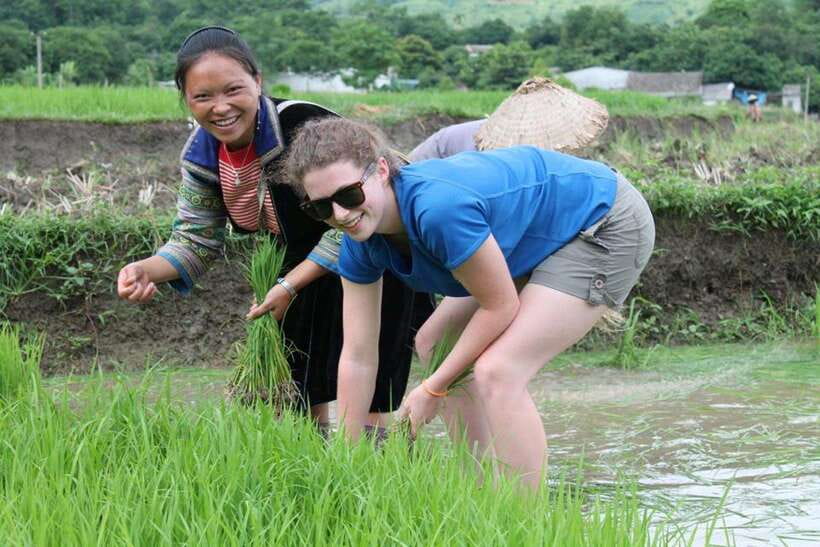
Muong Hoa Valley is at its best on foot, where a narrow trail links rice terraces, river crossings, bamboo forest, and villages rather than tourist sights behind glass. I like the Black Hmong and Red Dao communities you meet along the way, and I like that lunch takes place in a local home instead of a standard restaurant. The catch is simple: this is a real trek, and wet paths can turn steep sections into a muddy balancing act.
I also like the small-group limit of 11 people, which gives guides such as Su, Khu, Sunny, Chai, and Nhu room to explain local life and help with tricky footing. Good grip shoes are essential, and you should bring cash because local women who help on muddy sections may later invite you to buy their handmade goods.
In This Review
- Key points at a glance
- Why this trek shows Sa Pa better than a viewpoint
- Morning mist and the first Muong Hoa trails
- Lao Chai and Black Hmong village life
- Ta Van Giay, the river route, and old stone carvings
- Lunch in a local home
- Bamboo forest, Giang Ta Chai, and the waterfall rest
- How hard is the 10-kilometer walk?
- Weather, visibility, and the best frame of mind
- Is $23 good value?
- Who should book this Sa Pa trek?
- Should you book the Muong Hoa Valley trek?
- FAQ
- How long is the Muong Hoa Valley trek?
- How difficult is the trek?
- What footwear should I bring?
- Which villages does the tour visit?
- Is lunch included?
- Can vegan food be provided?
- Is hotel pickup available?
- Is the tour suitable for children?
- What happens if it rains?
- What is included in the $23 price?
Key points at a glance
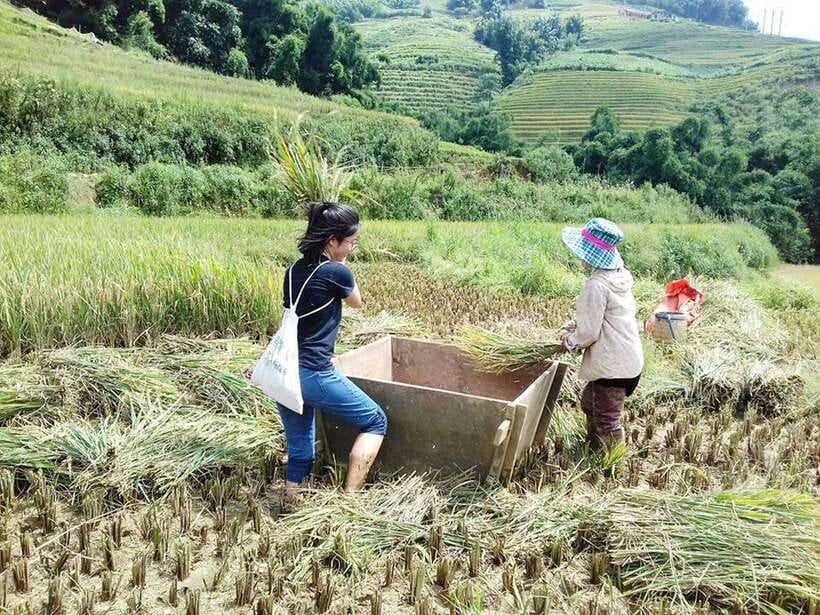
- A 10-kilometer valley walk: Expect roughly six hours on foot, with some participants recording closer to 12.5 kilometers depending on the route taken.
- Three distinct village areas: The route passes through Lao Chai, Ta Van Giay, and Giang Ta Chai, home to Black Hmong and Red Dao communities.
- Ancient rock carvings: Near a small suspension bridge, you can see carvings of people, stilt houses, and decorative shapes.
- Lunch in a local home: A village meal breaks up the long walk and may include rice, vegetables, tofu, eggs, and spring rolls.
- Mud is part of the deal: Rain can make the rice terraces, bamboo forest, rocks, and descents very slippery.
- A useful Sa Pa day trip: Hotel pickup in central Sa Pa, entry fees, lunch, water, and return transport are included for $23 per person.
Why this trek shows Sa Pa better than a viewpoint
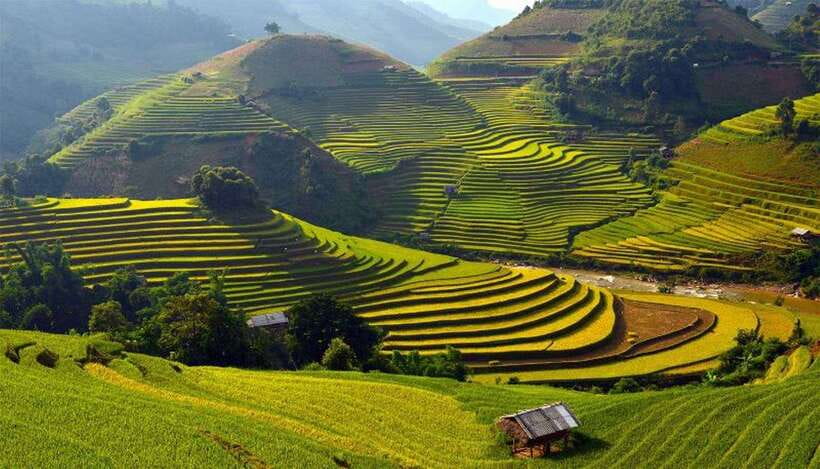
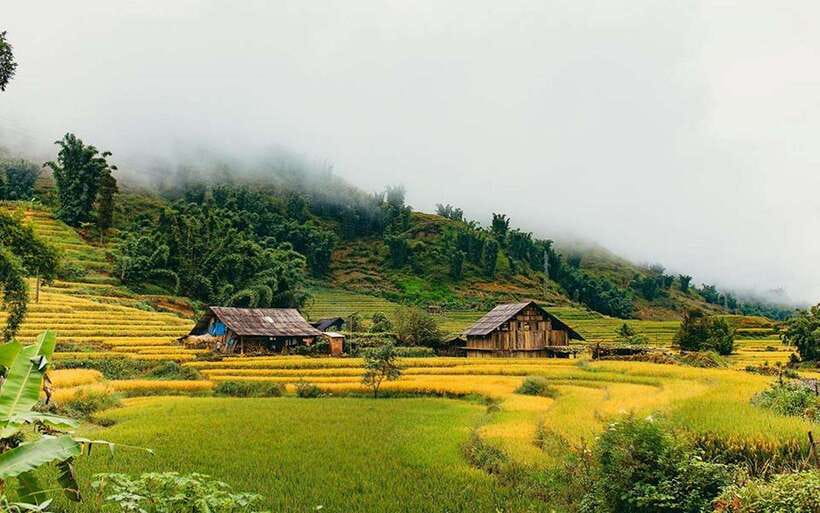
Sa Pa is famous for its rice terraces, but a lookout gives you only the broad picture. This walk lets you follow the contours of Muong Hoa Valley and see how paths, fields, rivers, homes, and village life fit together.
You start with pickup from a hotel in central Sa Pa or from the Vietnam Nomadtrails office. Hotels outside the Sa Pa area are not included for pickup, so check your location before booking. The tour ends around 3:30 PM, giving you a full morning and early afternoon without taking up your entire day.
The group size is capped at 11. That matters here. On a broad road, a large group is merely annoying. On a narrow muddy trail, it can become slow and crowded. A small group also makes it easier to hear your guide and ask questions about customs, houses, farming, and the ethnic communities you pass.
The English-speaking guides are a major part of the experience. Su is praised for her care on unstable ground, while Khu, Sunny, Chai, Nhu, and others are known for explaining village life in clear, friendly ways. The exact guide depends on the departure, but you can expect someone who knows the route and can adjust the pace when conditions turn difficult.
More Trekking Tours in Sapa
- Sapa: Eco Adventure Terrace Fields and Local Villages Trek
★ 4.9 · 636 reviews - From Sapa: 1-Day Guided Trek to Lao Chai & Ta Van with Lunch
★ 4.9 · 416 reviews - Sapa 1 Day Long Trek: Trek to Hau Thao and Sa Seng Villages
★ 4.6 · 344 reviews
Morning mist and the first Muong Hoa trails
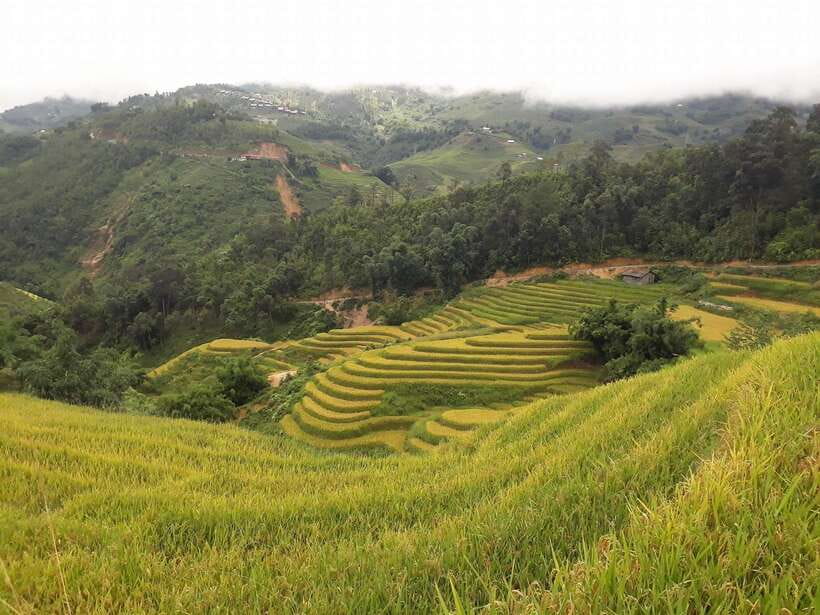
The opening section takes you into the valley, often with rice terraces partly covered by morning mist. Sa Pa weather changes quickly, and cloud or fog can hide some distant views. Do not treat that as a ruined day. Mist gives the valley a softer, moodier feel, though clear weather will show more of the mountains and terraces.
The route follows a smaller trail toward the Muong Hoa River. You cross the river and continue beside carefully tended rice fields. These terraces are not just scenic backdrops. They show the work required to grow rice on steep hillsides, with each level holding water and soil in place.
This part can be easy or awkward depending on the weather. Dry ground may make the trail manageable for an average walker. After rain, the same path can become slick, especially where the trail drops or runs over uneven stones.
Your guide will point out unstable rocks and safer places to step. Local women may also walk with the group and offer a steady hand on muddy stretches. Their help can be very useful, but you should understand the social side of this arrangement: it is common to feel expected to buy a small item from them afterward.
That does not need to become an unpleasant surprise. Bring some cash, decide in advance what you are comfortable spending, and see any purchase as part of the local interaction rather than an unplanned bill. If you prefer a walk with no commercial contact, this may feel intrusive.
Lao Chai and Black Hmong village life
The first major village area is Lao Chai, where Black Hmong families live. The name refers to the dark indigo clothing traditionally associated with the group. Your guide can give more context about local traditions, daily work, and the way homes and farms are arranged.
What I value here is the chance to see village life at ground level. You are not simply driven to a photo stop, handed ten minutes, and sent back to a bus. The path carries you through the valley, past fields and homes, so the setting remains part of the story.
You might see people working in the rice terraces or water buffalo near the fields. The experience changes with the season, and the supplied information does not promise a particular farming activity on every departure. Still, the route is designed to show the connection between the villages and the land around them.
Keep your camera ready, but do not let it turn the village into a stage. Ask before photographing people or homes, and listen when your guide explains local customs. The strongest part of this tour is the human context, not just collecting terrace pictures.
Ta Van Giay, the river route, and old stone carvings
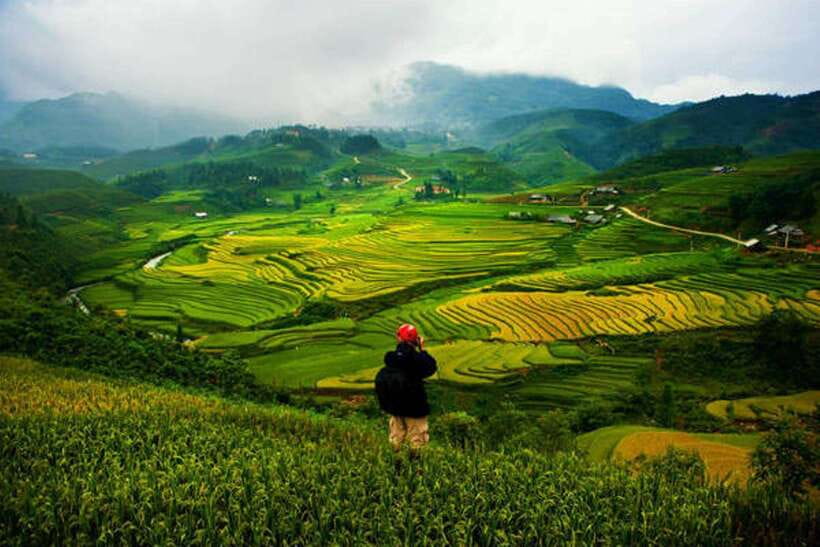
From Lao Chai, you continue toward Ta Van Giay. The trail follows the Muong Hoa River and eventually reaches a small suspension bridge about two kilometers from the settlement.
Suspension bridges are not usually a major sight, but here the crossing adds variety to the walk and shows how the valley’s routes connect. If you dislike uneven or exposed footing, take your time and follow your guide’s instructions.
Near the bridge, you find ancient rock carvings showing human figures, stilt houses, and decorative patterns. They give the valley a layer of age that the rice terraces alone cannot provide. The carvings are also easy to miss if you are focused only on walking, so this is a good place to stop and let the guide explain what you are seeing.
The route is not presented as an archaeology tour, and the information does not give a precise date or explain every symbol. Think of the carvings as a fascinating stop within a larger village trek, not as a formal museum visit.
Ta Van Giay also adds a different feel from Lao Chai. You are moving through several communities in one day, which helps you notice variation across the valley rather than treating all local culture as one thing.
More Sapa escapes from Sa Pa:
- Sapa: Fansipan Cable, Cat Cat Village, Moana Instagram Tour
★ 4.8 · 294 reviews - From Sapa: 3-Day Ha Giang Loop with Safe Rider (max 8 pax)
★ 4.9 · 285 reviews - Explore Sapa by TrekkingAdventures, Mountain,Rice fields
★ 4.9 · 229 reviews - EXPLORE SAPA: 2D1N TREKKING & HMONG CULTURE WITH DINH
★ 4.9 · 191 reviews
Lunch in a local home

Lunch comes at a local house in the village. It is a practical break after several hours of walking, but it is also one of the most personal parts of the day.
Meals can include rice, vegetables, tofu, eggs, and vegetarian spring rolls. If you eat vegan, tell the operator ahead of time. Vegan food has been accommodated, but you should not leave dietary needs to chance on a village-based tour.
The meal may be served in a family home or homestay-style setting. That gives you a look at how people live, though you should keep expectations realistic. This is not a cooking class, luxury meal, or polished restaurant service.
The lunch is especially welcome because the trek is long. Some people describe the walk as about seven miles, while the advertised distance is 10 kilometers and one participant recorded 12.5 kilometers. The exact distance can vary with the route and conditions, so plan for a substantial walk rather than a casual village stroll.
There may be drinks available to buy, but beverages are not included. One 500-milliliter bottle of mineral water per person is included, and you should bring extra water if you normally drink a lot while hiking.
Bamboo forest, Giang Ta Chai, and the waterfall rest
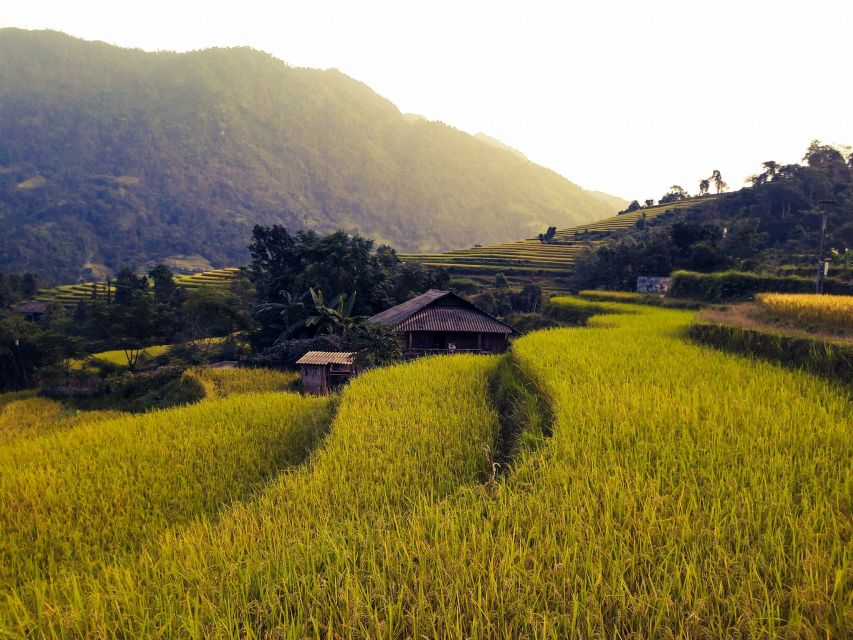
After lunch, the trail enters bamboo forest. This is often one of the most memorable sections, but it is also one of the slipperiest after rain.
The forest gives the trek a sharper change of scenery. You move away from open rice terraces and into a narrower, greener path with wet ground, roots, rocks, and uneven slopes. Local helpers may be particularly useful here, and your guide will help you choose safer steps.
Several people have found this section challenging in trainers or ordinary running shoes. Wet soles do not grip well on steep mud. Hiking shoes with a strong tread are the safer choice, and waterproof boots or wellies may make sense in very wet winter conditions.
The route then reaches the Red Dao village of Giang Ta Chai. Your guide can explain differences in local traditions and daily life between the communities along the valley. The value is in seeing several village settings in one walk, rather than stopping at only one ethnic village and assuming it represents the whole region.
A short rest at a nearby waterfall gives you time to catch your breath. The information does not promise swimming, so treat it as a scenic pause rather than a bathing stop. Afterward, you climb uphill toward the main road, where your driver waits for the ride back to Sa Pa.
That final climb may feel harder than it sounds. Six hours of walking, mud, river paths, and uneven ground add up. Save some energy for the last uphill stretch.
How hard is the 10-kilometer walk?
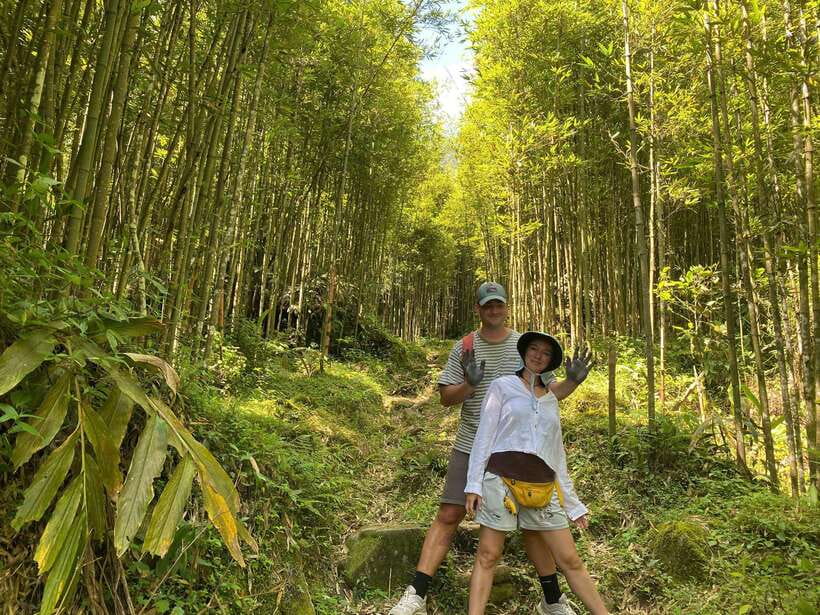
The tour is suitable for people with a reasonable level of fitness who are comfortable walking on rough ground. It is not suitable for people with mobility impairments or children under six.
The challenge comes less from one huge climb than from changing surfaces. You may encounter paved paths, narrow tracks, muddy rice terraces, slippery descents, wet rocks, creeks, bamboo forest, and uphill road access. In dry conditions, many average walkers should manage it. In heavy rain, the same route can become exhausting.
The safest preparation is simple:
- Wear hiking shoes with deep, reliable grip.
- Do not wear new, white, or valuable shoes.
- Pack sunglasses, sunscreen, and insect repellent.
- Bring warm clothes from October through March.
- Carry cash for personal purchases.
- Leave oversize luggage behind.
- Expect your shoes and trousers to get dirty.
A phone may record more than the stated 10 kilometers, depending on the route. If you want a gentle half-day outing, choose something else. If you enjoy a proper trek and accept mud as part of the experience, the physical effort is worthwhile.
Weather, visibility, and the best frame of mind
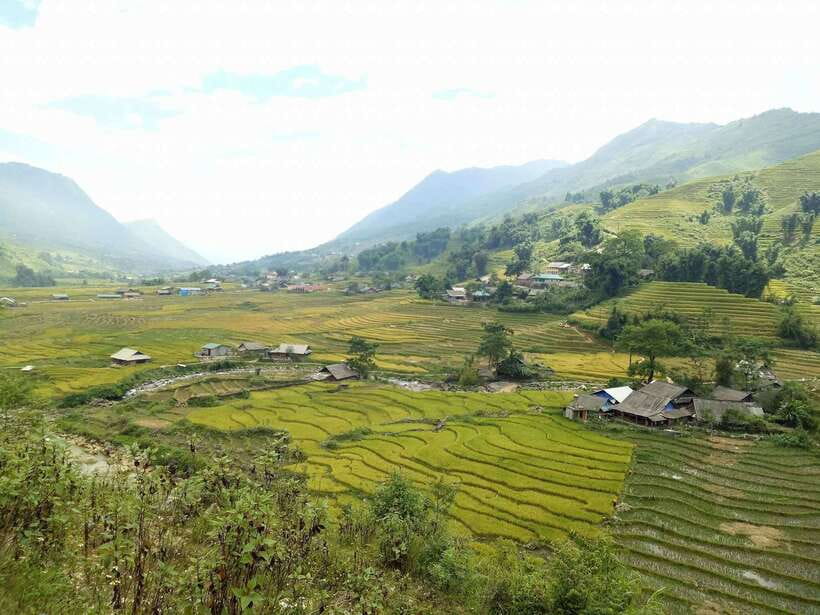
Sa Pa’s mist can hide the far views, especially in cooler or wetter months. Foggy days still offer atmospheric terraces and village paths, but you will not always get the wide mountain panorama shown in sunny photographs.
Rain has a bigger effect on comfort than on the cultural value of the tour. The villages, carvings, lunch, and guide commentary remain worthwhile, but the trail may become genuinely slippery. People have fallen into bushes or toward the river on very wet days, which is a useful warning to slow down and use the available support.
You should not book this expecting a controlled walk on neat paths. The roughness is part of why the route feels closer to local terrain, but it also means the operator cannot make every section smooth or easy.
Is $23 good value?
At $23 per person, the tour offers strong value if you want transport, a guide, entry tickets, lunch, and a full six-hour outing in one package. The small group limit is another benefit, especially for a route where safety and conversation matter.
The price does not cover beverages or personal purchases. The French-speaking guide option costs an additional $19 per person, payable upon confirmation. A Lunar New Year surcharge of $30 per person applies from February 14 through February 21, 2026, payable at departure.
The main value is not the number of stops. It is the combination of a long valley walk, local explanation, village access, a home meal, and return transport. Organizing those pieces yourself may give you more control, and some people may prefer hiring a local village guide directly. This organized option is easier if you want a confirmed English-speaking guide and transport back to Sa Pa.
Free cancellation is available up to 24 hours before departure, and you can reserve now and pay later. Pickup is limited to central Sa Pa hotels or the operator’s office.
Who should book this Sa Pa trek?
You should book it if you want to walk through rice terraces rather than view them from a car, meet people from Black Hmong and Red Dao communities, and learn about the valley from a local English-speaking guide.
It suits active couples, friends, solo walkers comfortable in a small group, and anyone with only one day for a serious Sa Pa outing. The home lunch and waterfall rest help break up the distance.
You should think twice if you have mobility limits, dislike mud, need level paths, or want guaranteed clear views. Families with children under six cannot join, and older children still need to manage a long, uneven route.
Should you book the Muong Hoa Valley trek?
For most reasonably fit visitors, yes. At $23, this is an inexpensive way to connect Sa Pa’s scenery with its living villages, and the guides add the cultural context that a self-guided walk may miss.
Book it with proper footwear and realistic expectations. Choose a dry day if you can, but do not assume poor weather makes the tour pointless. Fog may soften the views, while rain will make the walk harder, but both conditions can bring you closer to the valley’s real character.
If you want the easiest possible route, skip it. If you want a memorable walk through terraces, villages, bamboo, river paths, old carvings, and a local meal, this is one of Sa Pa’s better-value day trips.
FAQ
How long is the Muong Hoa Valley trek?
The advertised trek is 10 kilometers and lasts about six hours. The route may measure longer depending on the path, with one recorded distance of about 12.5 kilometers.
How difficult is the trek?
The trek can be challenging, especially after rain. You will walk on muddy slopes, uneven tracks, wet rocks, rice terraces, bamboo forest paths, and an uphill section to the main road.
What footwear should I bring?
Bring hiking shoes with good grip. Trainers can become slippery and soaked in wet conditions, and wellies or waterproof boots may be useful during heavy rain or winter mud.
Which villages does the tour visit?
The route passes through Lao Chai, Ta Van Giay, and Giang Ta Chai. Lao Chai is associated with the Black Hmong community, while Giang Ta Chai is a Red Dao village.
Is lunch included?
Yes. Lunch at a local house is included. Meals may include rice, vegetables, tofu, eggs, and vegetarian spring rolls.
Can vegan food be provided?
Vegan food has been accommodated on the tour. Contact the operator about your dietary needs before departure.
Is hotel pickup available?
Pickup is available from hotels in central Sa Pa or from the Vietnam Nomadtrails office. Pickup is not available from outside the Sa Pa area.
Is the tour suitable for children?
Children under six cannot join. The tour is also not suitable for people with mobility impairments.
What happens if it rains?
Rain can make the trail very muddy and slippery. Guides and local helpers may assist you on difficult sections, but you still need a suitable fitness level and proper footwear.
What is included in the $23 price?
The price includes central Sa Pa hotel pickup, an English-speaking guide, entry tickets, lunch, 500 milliliters of mineral water per person, and the stated return transport. Beverages and personal purchases cost extra.
More Treks Within Reach
- Sa Pa: 6-Hours Muong Hoa Valley Trek with Local Ethnic guide
★ 4.5 · 178 reviews - Sa Pa: 2-Day Trekking Trip with Ethnic Minority Homestay
★ 4.7 · 145 reviews - Half Day Sapa Trekking to Visit Lao Chai – Ta Van
★ 4.7 · 126 reviews - Sapa Trekking Bargains With Local Guide
★ 4.9 · 91 reviews
Just added around Sa Pa
- Sapa Open Air Jeep Half Days Off the Beaten Track, Backroad★ 4.9 · 9 reviews
- Sapa: Motorbike Tour to Hidden Villages & Terraced Fields★ 5.0 · 9 reviews
- SaPa: 2-Day Villages,Rice Fields, Love Waterfall Hiking Tour★ 5.0 · 9 reviews
- Sapa: Explore Sa Pa in one Day with local motorcycle Guide★ 4.9 · 9 reviews
- From Sa Pa: One Day Fansipan Mountain Trek★ 4.3 · 10 reviews
- Sa Pa: Half-Day Motorbike Tour with Sunset on O Quy Ho Pass★ 4.8 · 10 reviews
- From Sapa: Glass Bridge and Silver Waterfall Group Tour★ 4.8 · 11 reviews
- From Hanoi: Sapa Discovery Package Tour 2 Days 1 Night★ 4.8 · 11 reviews
Trekking Tours in Sapa, compared.


Sapa 3 Days 2 Nights Trekking Tour (1 Night In Ta Van Village, 1 Night In Hotel)
Read our review →
Eco Adventure Terrace Fields and Local Villages Trek
Read our review →
3-Day Trekking Adventure of Sapa from Hanoi – Stay Ta Van Village
Read our review →
Number one top rated ethical cultural trekking and homestay by ETHOS
Read our review →
2-Day Sa Pa Ethnic Homestay Tour & Trek with Limousine Bus
Read our review →
1-Day Guided Trek to Lao Chai & Ta Van with Lunch
Read our review →
Browse the lists this tour appears in