
Reviewed · SAPA TOURS
Journey Through Sapa Terraces & Traditions
Sapa’s best scenery is not found from a bus window. This seven-hour mountain trek takes you down from town, across the Muong Hoa River, through bamboo forest, and along enormous rice terraces toward Ta Van. I like the genuine village-to-village route and the lunch at a small local family restaurant in Y Linh Ho. I also like the small group size, capped at 10 people, which gives the guide room to help on tricky sections.
The main catch is the trail itself. This is a proper mountain walk, not a gentle sightseeing stroll, and rain can make it slick. Pickup can also be imperfect: one guest waited an hour before contacting the company, while other hikers received rubber boots that were not offered to everyone.
In This Review
- Key points at a glance
- Why this Sapa trek is worth your day
- Starting from 61 Muong Hoa Street
- The descent along Cat Cat Road
- Crossing the Muong Hoa River
- Rice terraces beneath Hoang Lien Son Mountain
- Lunch in Y Linh Ho with a local family
- Lao Chai and the Black Hmong community
- Ta Van and the Giay people
- How hard is the seven-hour hike?
- Rain, delays, and practical comfort
- Who will enjoy this route most?
- Is $20 good value?
- Should you book Journey Through Sapa Terraces and Traditions?
- FAQ
- How long does the Sapa trekking tour last?
- Where does the tour start?
- Which villages are included?
- Is lunch included?
- How many people are in the group?
- What should I wear and bring?
- Can I cancel the booking?
Key points at a glance
- A one-way route through four Sapa communities: Walk from Sapa toward Cat Cat, Y Linh Ho, Lao Chai, and Ta Van rather than repeating the same path.
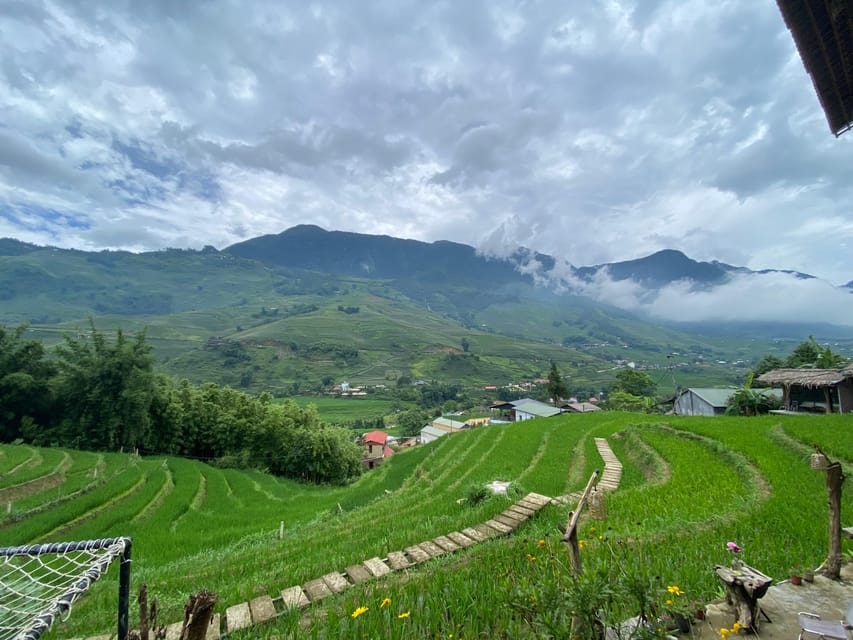
- The Muong Hoa River and bamboo forest: Cross a hanging bridge, then climb through a quieter wooded section.
- Some of Vietnam’s biggest rice terraces: The route opens to broad views backed by Hoang Lien Son Mountain.
- Lunch with a local family: Eat at a traditional restaurant in Y Linh Ho, with food included in the $20 price.
- A demanding wet-weather hike: Bring proper hiking shoes and clothes that can get dirty. Sandals and flip-flops are not allowed.
- A small, flexible group: Up to 10 participants, with English- and Vietnamese-speaking guides and free cancellation up to 24 hours ahead.
Why this Sapa trek is worth your day
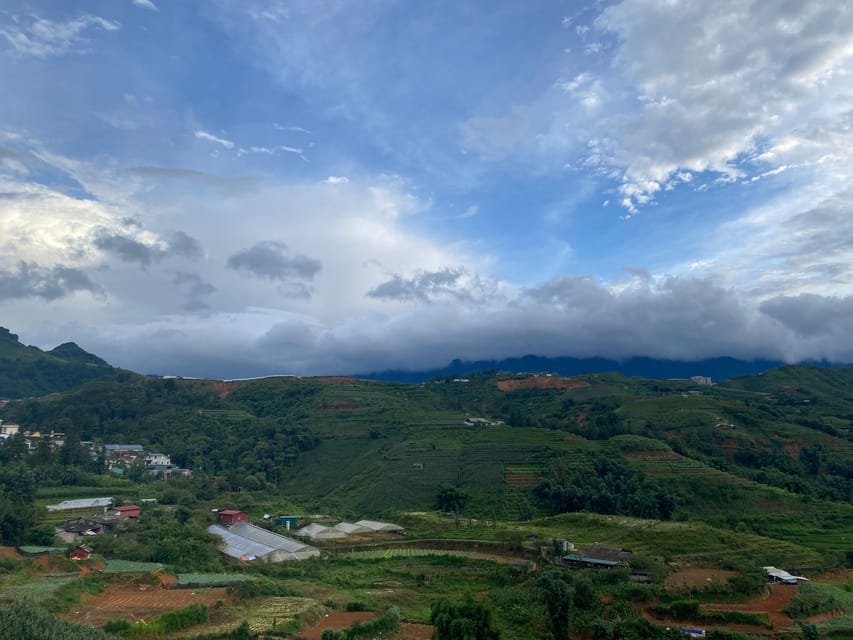
I like this outing because it connects scenery with daily life. You are not simply driven to a viewpoint, handed a few minutes for photographs, and returned to town. You walk between villages where Hmong and Giay communities live, and the route gives you time to notice how the rice terraces shape the entire valley.
The $20 price is particularly strong for a seven-hour outing. Pickup from central Sapa or your accommodation, a local guide, and lunch are included. Personal spending is not, so carry some money if you want to buy anything along the way, but the main costs are covered.
The experience has earned a 4.7 rating from 13 reviews, with the strongest praise aimed at the scenery, the guides, and the sense of challenge. That last point matters. The walk is often described as sporty, and one guest specifically recommended it for people looking for a demanding trek. If you want a short, easy country walk, this is the wrong choice.
More Sapa escapes from Sa Pa:
- Sa Pa: Muong Hoa Valley Trek and Local Ethnic Villages
★ 4.6 · 864 reviews - Sapa: Eco Adventure Terrace Fields and Local Villages Trek
★ 4.9 · 636 reviews - From Sapa: 1-Day Guided Trek to Lao Chai & Ta Van with Lunch
★ 4.9 · 416 reviews
Starting from 61 Muong Hoa Street
The day begins around 8:00 AM with pickup from your accommodation or a meeting point at 61 Muong Hoa. The tour finishes in Sapa at about 3:30 PM, leaving you time to rest, explore town, or arrange onward travel to Hanoi or another destination.
The pickup arrangement deserves a little caution. The schedule can shift in bad weather, and one guest was left waiting in a hotel lobby for about an hour because the delayed start was not communicated. I would keep your phone available and contact the company if the vehicle has not arrived when expected.
The tour is operated by BAE Travel Company. Its local guide has more than 10 years of experience, and the small group limit should make the walk easier to manage than a large coach excursion. Guide Zo received especially warm praise for helping people across difficult terrain and checking that everyone was safe during a rainy walk.
The descent along Cat Cat Road
The first major section is a roughly 2-kilometer descent along Cat Cat Road toward a Hmong village. Starting downhill gives you an immediate change in scenery as Sapa town falls behind and the valley opens ahead.
A downhill start sounds easy, but mountain descents can be hard on your knees, especially on wet ground. You will want shoes with a firm grip rather than casual trainers with smooth soles. The guide can help with pacing, but you should still be honest about how you are feeling.
Cat Cat is associated with the Hmong community, one of the main ethnic groups you encounter on this route. The value here is not a long formal museum visit. It is the chance to walk into a village setting as part of a broader route, then continue through the countryside rather than turning straight back to town.
Crossing the Muong Hoa River
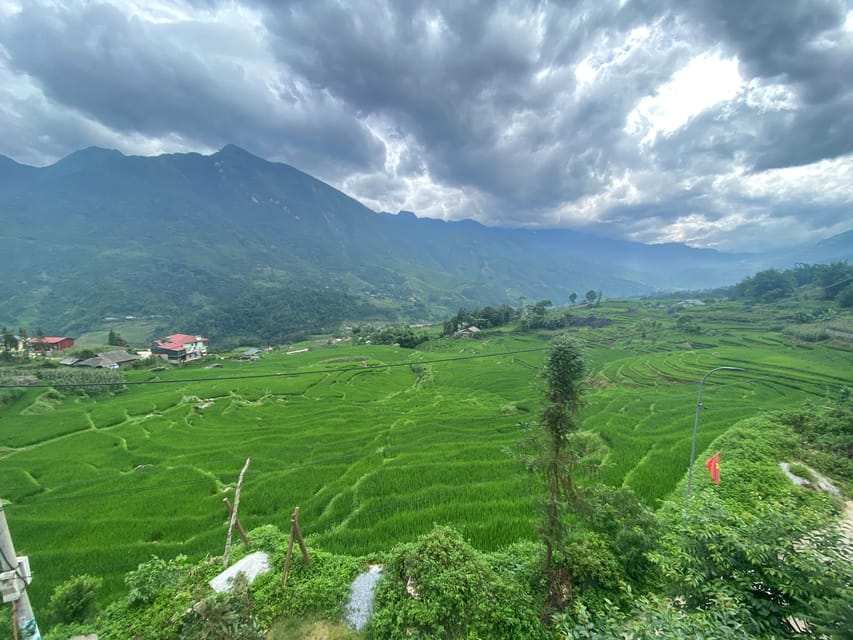
The route continues to the Muong Hoa River and its hanging bridge. This is one of the most memorable physical moments of the day. The bridge creates a clear break between the road-based part of the trip and the footpath through the valley.
After the crossing, you ascend through bamboo forest. The change is welcome: open rice fields give way to a quieter, shaded section before the views expand again. Bamboo also makes this part feel less like a standard road excursion and more like a real walk through the hills.
Rain changes the character of this section quickly. Mud, slick stones, and uneven surfaces can slow the group. Bring a sun hat for dry weather, but prepare for wet conditions as well. Clothes that can get dirty are specifically recommended, and that advice is worth taking seriously.
Same part of the north, a completely different day out:
- Sapa 1 Day Long Trek: Trek to Hau Thao and Sa Seng Villages
★ 4.6 · 344 reviews - Sapa: Fansipan Cable, Cat Cat Village, Moana Instagram Tour
★ 4.8 · 294 reviews - From Sapa: 3-Day Ha Giang Loop with Safe Rider (max 8 pax)
★ 4.9 · 285 reviews - Explore Sapa by TrekkingAdventures, Mountain,Rice fields
★ 4.9 · 229 reviews
Rice terraces beneath Hoang Lien Son Mountain

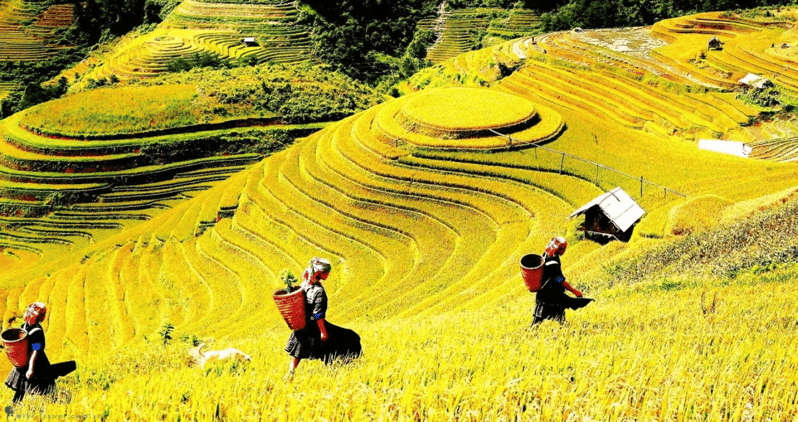
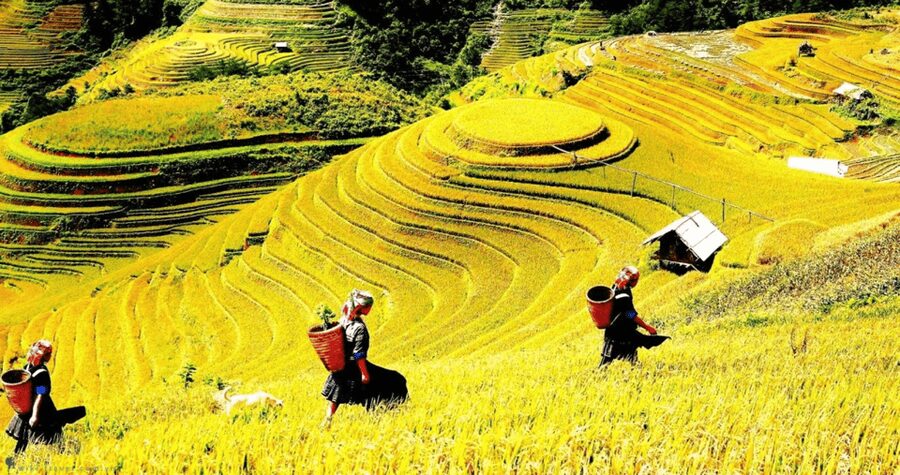
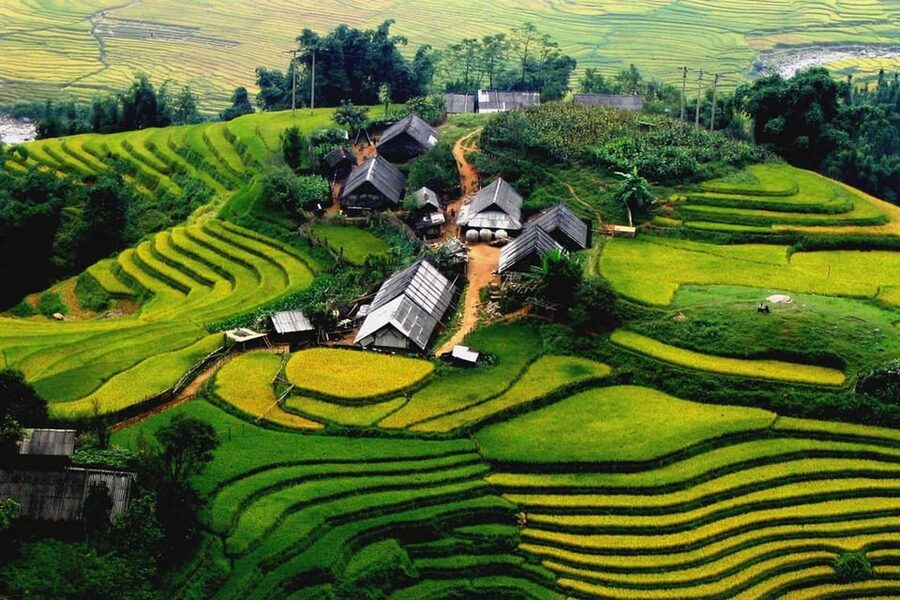
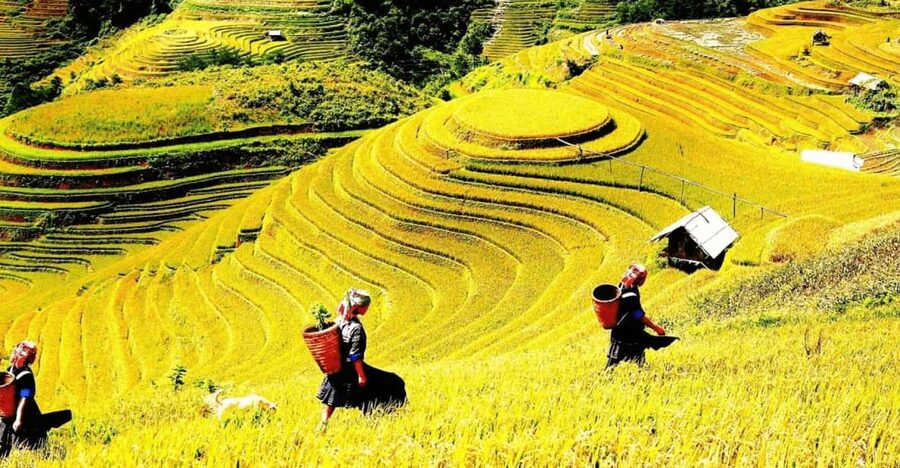
The rice terraces are the visual high point. Sapa is known for its carved hillsides, and this route takes you close to some of the largest and most attractive terraces in the region. Their layered shape is easy to appreciate on foot because the trail repeatedly changes height and angle.
The terraces are agricultural land, not a decorative park. Their careful contours show how communities make use of steep mountain slopes. Depending on the season, you might find different colors and levels of growth, but the tour information does not specify a planting or harvest period, so you should book for the scenery rather than a guaranteed color display.
Hoang Lien Son Mountain forms the grand backdrop. The views are broadest from the open parts of the route, while bamboo and village sections offer a closer, more sheltered feel. I would bring a phone or camera, but do not let photography turn the hike into a stop-start procession. The trail is long enough that steady pacing matters.
Lunch in Y Linh Ho with a local family
Y Linh Ho is the planned lunch stop. You eat at a small traditional restaurant run by a local Hmong family, with lunch included in the tour price.
This is one of the most appealing parts of the day because it breaks up the physical effort with a local meal in a family setting. The food is described as abundant and authentic, but no fixed menu is provided. If you have dietary restrictions, ask before booking or at pickup, since the available information does not promise special meals.
The restaurant also gives you a useful pause in the middle of the route. By this point, you have already descended, crossed the river, climbed through forest, and walked beside terraces. A seated meal is not just a pleasant extra. It helps you recover before the next village section.
Do not expect a polished city restaurant. The appeal is the small traditional setting and connection with the local community. That suits the spirit of the trip, but travelers seeking a carefully timed gourmet lunch should set their expectations differently.
Lao Chai and the Black Hmong community
After lunch, the trek continues to Lao Chai, home to the Black Hmong people. This section adds cultural variety to a route that could otherwise be judged only by its views.
The Black Hmong are one of the ethnic communities associated with the Sapa region, and the guide helps explain local traditions and ways of life as you walk. The experience is strongest when you treat the village as a living community rather than a photo backdrop. Listen, ask respectful questions, and follow the guide’s lead around homes and local spaces.
The route also gives you a better sense of how close villages can be while still having distinct identities. Cat Cat, Y Linh Ho, Lao Chai, and Ta Van are not interchangeable stops. Each adds another layer to the day, even though the scenery remains connected by the same valley and mountains.
Ta Van and the Giay people
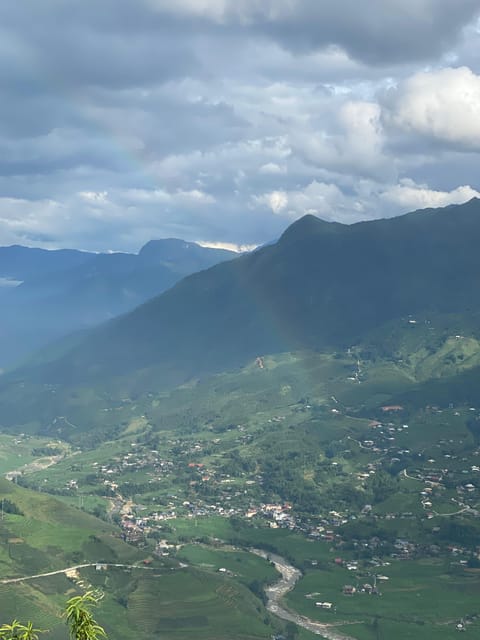
Ta Van is the final village area, where you meet members of the Giay minority. The cultural contrast is an important reason to choose this trek over a simple viewpoint visit.
The guide explains the different traditions and lifestyles of the groups along the route. You should not expect a long classroom-style talk. The information is woven into the walk and village visits, making it easier to connect what you see with the people who live there.
By the time you reach Ta Van, the day has a satisfying sense of direction. You have moved from Sapa down into the valley, crossed natural features, passed through rice-growing areas, stopped for lunch, and continued through communities with different identities. That progression makes the trek feel like a journey rather than a collection of stops.
How hard is the seven-hour hike?
You should be reasonably fit and comfortable walking on uneven mountain paths. One guest called the route very sporty, while another described challenging terrain and praised the guide for keeping the group safe in the rain.
The supplied information does not give a total distance or exact elevation gain, so I would not book this based on a precise mileage estimate. The route includes a 2-kilometer descent, an ascent through bamboo forest, and continued hiking between villages. Those details alone tell you that the day involves real climbs and descents.
Wear hiking shoes or sturdy sports shoes. Sandals and flip-flops are not allowed, and for good reason. A sun hat is useful, but rain protection is just as important in Sapa. Pack clothing that can get dirty, particularly if the forecast is wet.
Children under four, pregnant women, wheelchair users, people prone to seasickness, and people over 95 are listed as unsuitable for the activity. Seasickness may seem like an odd restriction for a mountain trek, but it is part of the operator’s stated guidance.
Rain, delays, and practical comfort
Sapa weather can turn a scenic path into a slippery one. During one rainy outing, the guide checked that everyone was managing safely, and rubber boots were available to some participants. The lesson is simple: do not assume equipment will be supplied to you. Ask ahead about rain footwear and bring your own backup plan.
Water is another small point to clarify. One guest received a half-full bottle and understood it to be the included water, but the information provided for the activity only clearly lists pickup, lunch, and the guide as included. Bring your own water unless the company confirms otherwise.
The tour has free cancellation up to 24 hours before departure, and you can reserve now and pay later. Those terms are useful in Sapa, where weather may affect your plans. Starting times should be confirmed when you check availability.
Who will enjoy this route most?
I would choose this outing if you want mountain scenery and local culture in one day, and if you are happy to work for the views. It suits active adults, hikers who enjoy a challenge, and visitors who want to walk between Hmong and Giay communities rather than see the area only from a vehicle.
It is also a good fit for solo visitors who like meeting a small group. With no more than 10 participants, the setting should feel more personal than a large tour, and the English- or Vietnamese-speaking guide can offer context along the way.
I would think twice if you have limited mobility, dislike mud, or need a highly exact schedule. The route is physically demanding, and the pickup delay reported during rainy weather shows that the day may not run like clockwork.
Is $20 good value?
Yes, provided you are ready for a strenuous walk. For $20, you receive transport from Sapa center or your accommodation, a seven-hour experience, a local guide with more than 10 years of experience, and lunch with a local family. That is a strong package for a full day in one of northern Vietnam’s best-known mountain regions.
The value is not just in the number of inclusions. A private visit to each village or a separate guide and meal would likely cost more, while a basic scenic transfer would not give you the same contact with the valley. The small group limit adds value because the guide can keep an eye on people over difficult ground.
You should still budget for personal expenses and confirm what refreshments are supplied. The low price does not remove the need for proper shoes, water, and weather-ready clothing.
Should you book Journey Through Sapa Terraces and Traditions?
Book it if you want the rice terraces, Muong Hoa River, bamboo forest, and Hoang Lien Son views in one active day, with village visits and a local lunch included. The scenery is the strongest reason to go, while the route through Hmong and Giay communities gives the day more substance than a viewpoint trip.
Skip it if you need an easy walk, guaranteed dry conditions, or exact pickup timing. For an active visitor who can handle steep and slippery paths, this is a very good-value introduction to Sapa’s valleys and communities. Pack serious shoes, keep your phone ready for pickup updates, and allow the trail to set the pace.
FAQ
How long does the Sapa trekking tour last?
The activity lasts seven hours. It begins around 8:00 AM and finishes in Sapa at approximately 3:30 PM.
Where does the tour start?
Pickup is available from Sapa center town or your accommodation. The stated starting location is 61 Muong Hoa Street.
Which villages are included?
The route includes Cat Cat, Y Linh Ho, Lao Chai, and Ta Van. You encounter Hmong, Black Hmong, and Giay communities along the way.
Is lunch included?
Yes. Lunch is served at a small traditional restaurant run by a local Hmong family in Y Linh Ho village.
How many people are in the group?
This is a small-group tour limited to 10 participants.
What should I wear and bring?
Bring a sun hat, hiking shoes or sports shoes, and clothes that can get dirty. Sandals and flip-flops are not allowed.
Can I cancel the booking?
You can cancel up to 24 hours in advance for a full refund. The tour also offers a reserve-now-and-pay-later option.
Just added around Sa Pa
- Sapa Open Air Jeep Half Days Off the Beaten Track, Backroad★ 4.9 · 9 reviews
- Sapa: Motorbike Tour to Hidden Villages & Terraced Fields★ 5.0 · 9 reviews
- SaPa: 2-Day Villages,Rice Fields, Love Waterfall Hiking Tour★ 5.0 · 9 reviews
- Sapa: Explore Sa Pa in one Day with local motorcycle Guide★ 4.9 · 9 reviews
- From Sa Pa: One Day Fansipan Mountain Trek★ 4.3 · 10 reviews
- Sa Pa: Half-Day Motorbike Tour with Sunset on O Quy Ho Pass★ 4.8 · 10 reviews
- From Sapa: Glass Bridge and Silver Waterfall Group Tour★ 4.8 · 11 reviews
- From Hanoi: Sapa Discovery Package Tour 2 Days 1 Night★ 4.8 · 11 reviews
Sapa Tours, compared.
Sapa 2 Days 1 Night From Hanoi – Overnight in Ta Van Village
Read our review →

Muong Hoa Valley Trek and Local Ethnic Villages
Read our review →
Fansipan Cable, Cat Cat Village & Moana Instagram Tour
Read our review →

Sapa 3 Days 2 Nights Trekking Tour (1 Night In Ta Van Village, 1 Night In Hotel)
Read our review →
Eco Adventure Terrace Fields and Local Villages Trek
Read our review →
3-Day Trekking Adventure of Sapa from Hanoi – Stay Ta Van Village
Read our review →Browse the lists this tour appears in