
Reviewed · TREKKING TOURS IN SAPA
Sapa: Eco Adventure Terrace Fields and Local Villages Trek
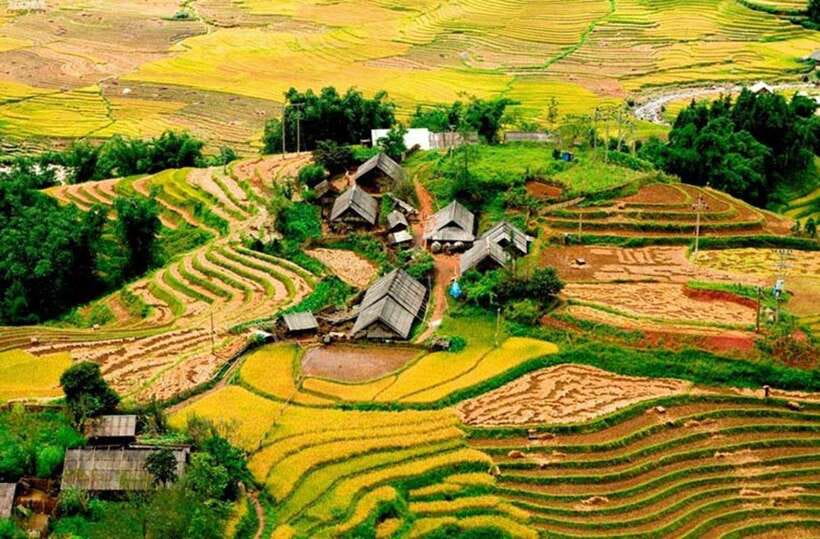
Sapa’s best scenery is not found from a roadside lookout. It comes into view step by step, as you walk from high ground into Muong Hoa Valley and follow narrow paths between rice terraces, streams, wooden homes, and mountain slopes. This 10 to 12 kilometer trek gives you both the big views and a close look at everyday village life.
I like two things especially: the chance to spend time with a local Hmong guide such as Chai or Vu, and the home-cooked lunch in Lao Chai Sang. The guides are repeatedly praised for clear English, humor, care on slippery sections, and personal stories about Hmong life. The main drawback is simple: this is a proper hike, not a gentle countryside stroll. Mud, steep sections, and wet stone can make the first part tough.
In This Review
- Key things to know before you go
- Starting at Sapa Church and looking toward Fansipan
- The muddy descent into Y Linh Ho
- Lao Chai Sang and lunch at about 12:30 PM
- Lao Chai Village and Hmong daily life
- The final walk to Ta Van and the Dzay community
- What the guides add to the day
- How hard is the 10 to 12 kilometer route?
- Is $27 good value?
- Who should book this Sapa trek?
- Should you book it?
- FAQ
- Where does the Sapa trek meet?
- How long does the activity last?
- How far do you walk?
- Which villages does the route visit?
- Is lunch included?
- Is transportation included?
- What should you bring?
Key things to know before you go
- The route connects four rural areas: Muong Hoa Valley, Y Linh Ho, Lao Chai Sang, Lao Chai, and Ta Van.
- Chai and Vu are especially popular guides: Both explain local customs and daily life in a warm, personal way.
- The walk can be muddy: After rain, the opening sections may be slippery enough to justify renting boots in Sapa.
- Lunch is part of the experience: You eat local food around 12:30 PM, with vegetarian and vegan choices reported.
- The group is limited to 10 people: That makes it easier to ask questions and keep a steady pace.
- You return to Sapa in the afternoon: The walk ends around 3:30 PM, with transport back to town at the end rather than throughout the route.
Starting at Sapa Church and looking toward Fansipan
Meet your English-speaking guide in front of Sapa Church at 9:00 AM. You need to arrange your own way to this central meeting point, since hotel transfers are not included. A WhatsApp number is requested so the operator can contact you easily.
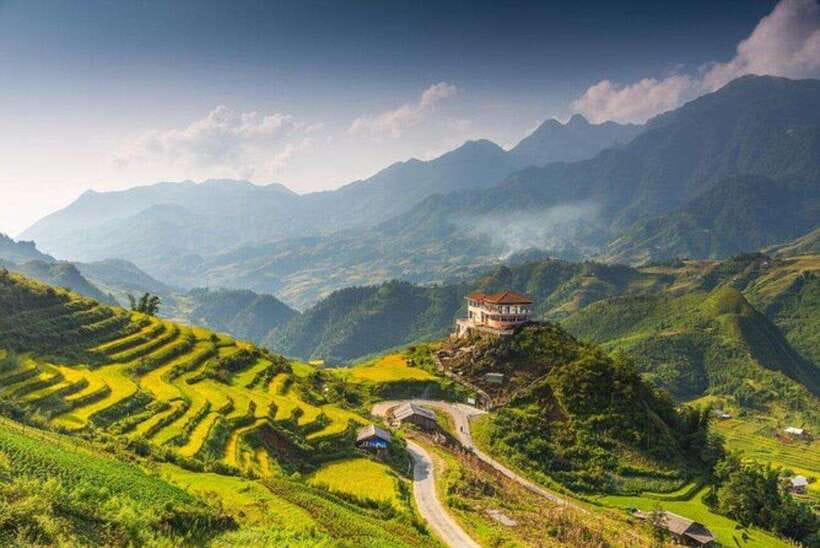
The first stop is a small hill viewpoint with broad views toward Fansipan Peak. On a clear morning, this gives you an immediate sense of the scale of northern Vietnam’s mountains. On a misty morning, you may see little more than shifting outlines, but the fog can lift later. One walk began in poor visibility and opened up by afternoon, so do not assume a cloudy start has ruined the day.
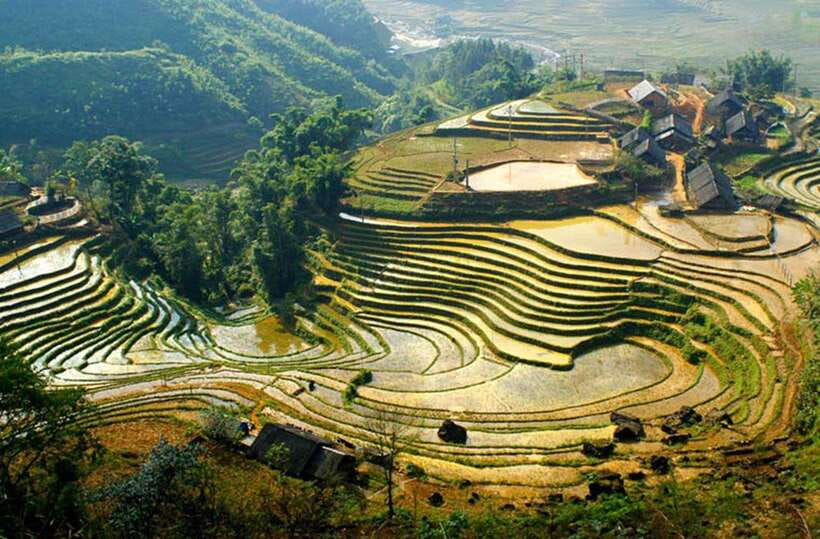
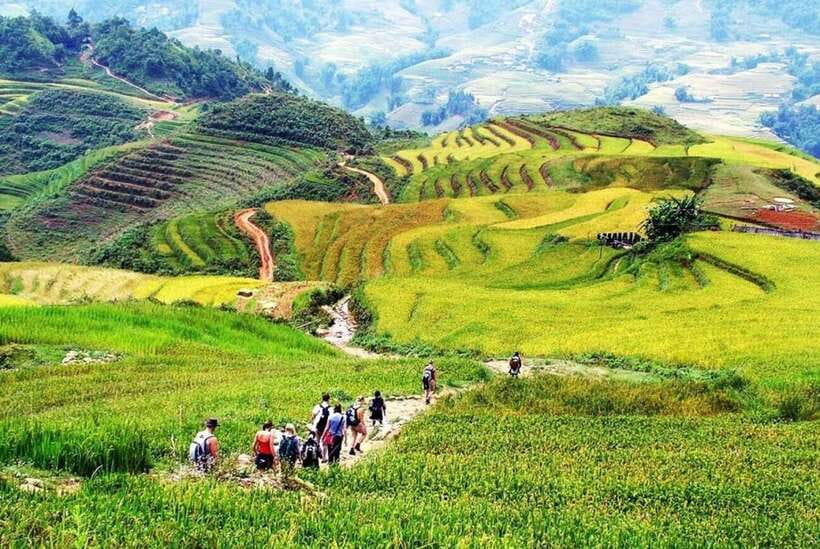
From the viewpoint, the route heads toward Muong Hoa Valley. This is where the trek earns its name. Terraces fold across the slopes in long, curved bands, and the path brings you close to streams, farm plots, traditional wooden houses, and people tending their fields.
The scene changes with the farming season. You might see planting, harvesting, or quiet fields waiting for the next stage of work. That seasonal quality matters. You are not touring a preserved set built for visitors. You are walking through a working countryside where rice farming still shapes the year.
More Trekking Tours in Sapa
- Sa Pa: Muong Hoa Valley Trek and Local Ethnic Villages
★ 4.6 · 864 reviews - From Sapa: 1-Day Guided Trek to Lao Chai & Ta Van with Lunch
★ 4.9 · 416 reviews - Sapa 1 Day Long Trek: Trek to Hau Thao and Sa Seng Villages
★ 4.6 · 344 reviews
The muddy descent into Y Linh Ho
Around 11:00 AM, you reach Y Linh Ho Village, associated with the Hmong community. A small bridge crosses a scenic river, offering a natural pause before the route continues toward Lao Chai Sang.
This early section is often the hardest part. Several people found the trail muddy and slippery even when the weather was dry, while rain in the previous days made the ground especially difficult. The route may include steep descents and uneven paths through the terraces. If you have weak knees or want a very easy walk, this is the point to think carefully about booking.
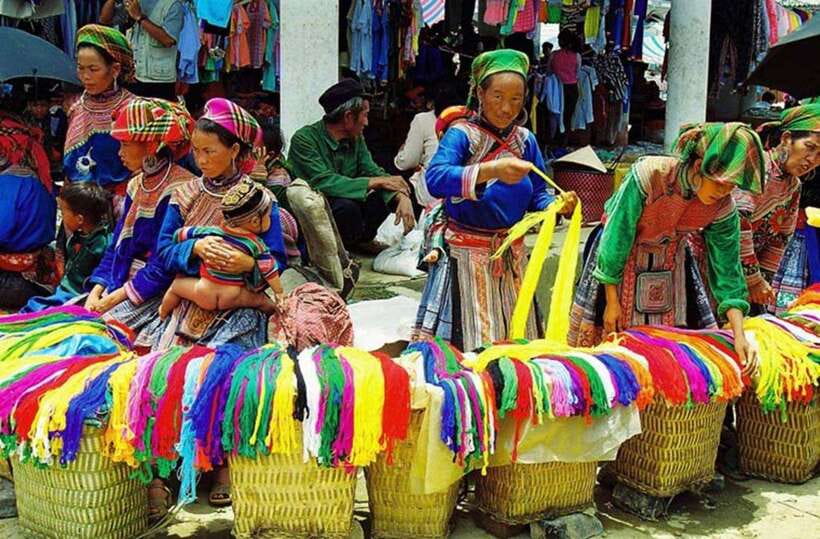
Local women sometimes help walkers across tricky muddy sections. They may also offer handmade clothing or bags for sale before leaving the group. You are not required to buy anything, but carrying some cash gives you the option to support them directly if something catches your eye. Keep the exchange friendly and respectful, and remember that their help is part of the local economy rather than a free formal service provided by the tour.
Some people choose a simpler road route when the mud is bad. It still offers views, but the terrace path is the more rewarding choice if you are comfortable with dirt and a little wobbling. Guides such as Chai, Vu, and Wu have been praised for helping with footing, adjusting the pace, and offering route choices when conditions become awkward.
Lao Chai Sang and lunch at about 12:30 PM
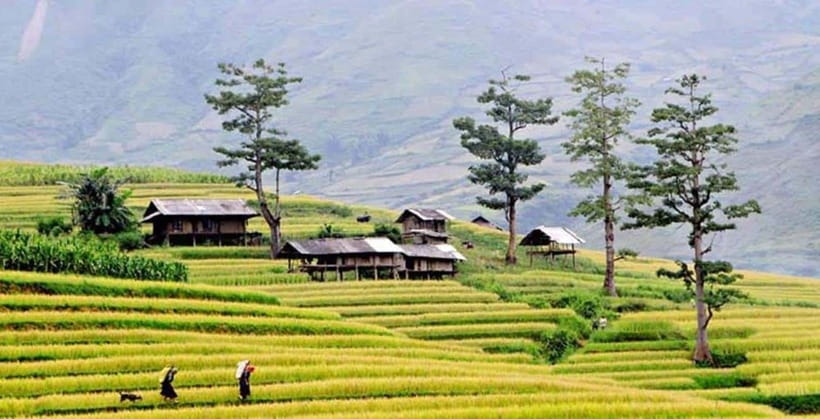
After crossing the river and following the trails past rice fields and high mountain walls, you arrive at Lao Chai Sang. Lunch comes at approximately 12:30 PM, usually with a local Hmong family or in a small village restaurant with a view.
This meal is more than a break in the schedule. It gives you time to sit down, ask questions, and see how local hospitality fits into village life. The food is described as traditional and satisfying, with vegetarian and vegan options available. Specific dishes are not listed, so you should not book expecting a particular menu, but the meal is intended to showcase flavors from the Sapa area.
I value this kind of stop because it slows the day down. A scenic walk can blur into a string of photographs, but a shared meal gives the cultural side of the outing more weight. You have a chance to talk with your guide about food, farming, family life, and local customs while resting your legs.
The lunch stop is also useful physically. By midday, you have already handled the most uncertain ground, and a proper meal helps before the easier village sections. Bring water, since drinks are not included.
Lao Chai Village and Hmong daily life
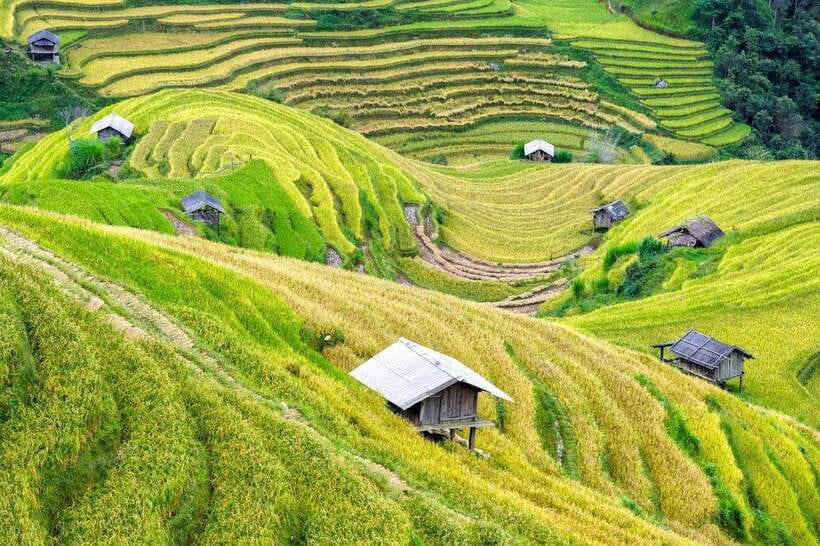
After lunch, the route continues to Lao Chai Village. Depending on the season, you might see villagers planting or harvesting rice. You may also pass animals and ordinary signs of rural life, including water buffalo, pigs, ducks, chickens, and dogs.
The experience works best when you pay attention to small details. Watch how homes sit beside the fields, notice the paths people use to move between terraces, and ask your guide how farming changes through the year. The guide is the bridge between what you see and what it means.
A later cultural session focuses on Hmong daily life and traditional clothing-making. Guides often explain customs, clothing, village history, and the particular pressures faced by local women. Chai is especially praised for sharing personal stories in a funny, open, and thoughtful way, while Vu is noted for explaining her own local background and answering questions clearly.
That personal connection is one of the strongest reasons to choose this trek. You are not only looking at traditional clothing as a display. You are learning how it fits into identity, work, family, and village life. Ask before entering a home or taking close-up photographs, and let your guide explain what is appropriate.
More Sapa escapes from Sa Pa:
- Sapa: Fansipan Cable, Cat Cat Village, Moana Instagram Tour
★ 4.8 · 294 reviews - From Sapa: 3-Day Ha Giang Loop with Safe Rider (max 8 pax)
★ 4.9 · 285 reviews - Explore Sapa by TrekkingAdventures, Mountain,Rice fields
★ 4.9 · 229 reviews - EXPLORE SAPA: 2D1N TREKKING & HMONG CULTURE WITH DINH
★ 4.9 · 191 reviews
The final walk to Ta Van and the Dzay community
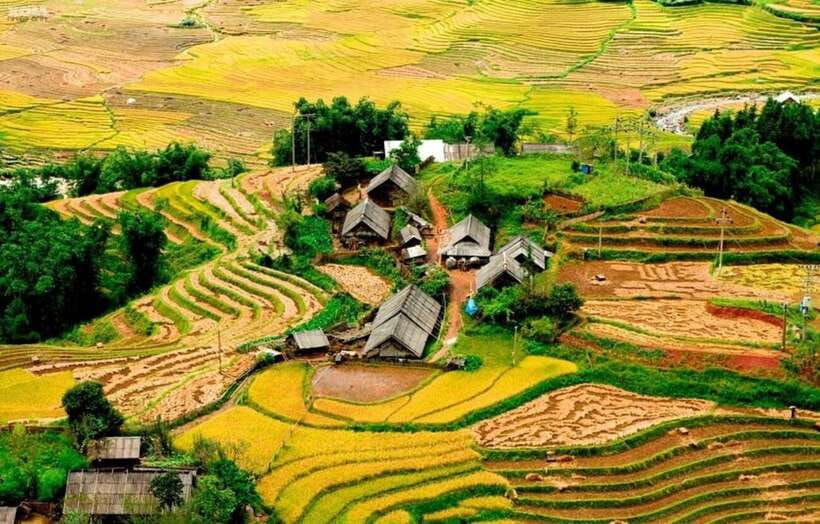
The trail then reaches Ta Van Village, home to the Dzay, also spelled Zay, minority. The village adds another cultural layer to a day already centered on Hmong communities.
The route is not a museum circuit. You move through rural settlements, fields, and paths used by local people. That makes the experience feel direct, but it also means you should walk with care. Keep voices low around homes, do not block paths, and treat people and clothing as part of living communities rather than photo props.
By the afternoon, much of the walking may feel easier than the opening descent. Some sections are paved or follow village roads, though the full route can still reach about 12 kilometers. The trip generally finishes around 3:30 PM, followed by transport back to Sapa. There is no vehicle support during the walk itself, so you need to be ready to cover the distance on foot.
The return timing works well for a full day in Sapa. It leaves the evening open, but road traffic can slow the ride into town. Do not schedule a tight onward connection immediately after the stated finish.
What the guides add to the day
The strongest feature of this experience is the local guide. Chai receives the most repeated praise, with people describing her as warm, funny, fluent in English, careful on difficult paths, and able to explain Hmong customs without turning the day into a lecture.
Vu is another frequently praised guide. She shares local stories, keeps the mood light, and takes care of people when the mud makes walking harder. Guides named Wu, Rou, Si, Le, Lien, Pai, Rose, Chan, and Shou also receive strong praise for friendliness, clear explanations, and steady support.
Names can be spelled in different ways, and guide assignments may change. The important point is the guide’s role: you get a local perspective, not just directions from one village to the next. A small group of no more than 10 people helps here. You can ask about clothing, farming, family life, language, or the differences between Hmong and Dzay communities without shouting across a crowd.
The quality of your day will still depend partly on the weather and your own attitude. A misty morning limits views, but it can make the valley feel quieter and more atmospheric. Rain creates mud, yet it also makes the route more adventurous. If you come prepared, these conditions become part of the outing instead of a surprise.
How hard is the 10 to 12 kilometer route?
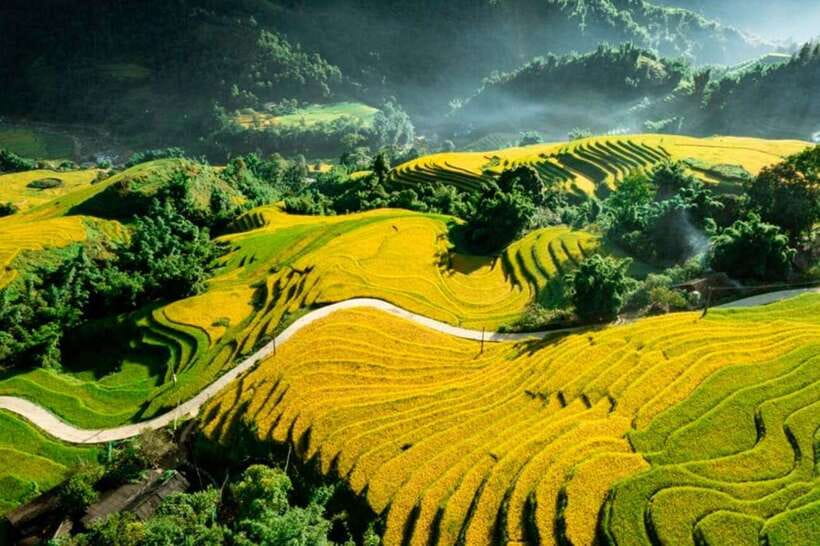
The activity is described as medium difficulty, but that label needs context. The distance is the main challenge, while mud, steep parts, slippery downhill stretches, and uneven ground can make the walk feel harder than the number suggests.
You do not need to be an expert hiker, but you should be comfortable walking for several hours. People with reasonable fitness, including families with teenagers, have found it manageable. Children under five, pregnant women, people with mobility impairments, wheelchair users, and people over 75 are specifically advised not to join.
Wear hiking shoes in dry conditions, but take the rain forecast seriously. After wet weather, the trail can become thick with mud. Several people rented rubber boots before starting, and that proved useful. Bring warm clothing because Sapa can be cool, especially in mist, along with insect repellent and clothes that can get dirty.
A small daypack is practical for water, a rain layer, and spare socks. Drinks are not included. You may want cash for handmade items sold along the route, though buying is optional.
Is $27 good value?
At $27 per person, this is strong value if you want a full day outdoors with cultural interpretation. The price includes an English-speaking local guide, entrance tickets, and lunch. It does not include hotel pickup, drinks, personal purchases, or other expenses not listed.
The value comes from the combination. A viewpoint, a long walk through Muong Hoa Valley, several villages, a meal, and time with a local guide would be hard to arrange as smoothly on your own. The small group also matters. You are paying for a more personal day rather than simply following a large crowd.
There are limits. You are not getting private transport through the valley, luxury dining, or a short scenic walk. The return ride is only at the end, and your legs do the work for most of the day. If you dislike mud or want guaranteed mountain views, the price will not solve those problems.
Free cancellation up to 24 hours ahead and reserve-now, pay-later booking make it easier to watch the forecast. A clear day offers better views, but do not dismiss the trek solely because Sapa is cloudy. Conditions can change quickly.
Who should book this Sapa trek?
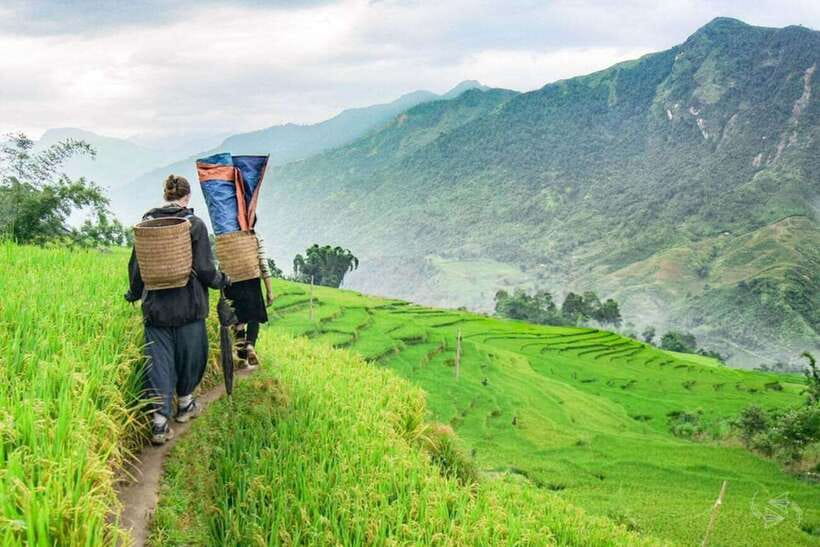
I would choose this excursion if you want your Sapa day to combine scenery with real contact with local communities. It suits active adults, older children and teenagers, couples, solo visitors who like small groups, and anyone curious about Hmong and Dzay customs.
It is also a good choice if you have only one day in Sapa. The route offers more rural contact than a quick stop at a single nearby attraction, and the guide gives context that you would miss by walking alone.
I would look elsewhere if you need a flat route, reliable dry footing, wheelchair access, or a short outing. People with knee problems should be cautious, especially after rain. The trek is rewarding because it asks something of you, not because it is effortless.
Should you book it?
Book this trek if you want to walk through working rice country, eat a local lunch, and learn directly from a Hmong guide such as Chai or Vu. The scenery is impressive, but the best part is the connection between the terraces and the people who farm them.
Skip it if a muddy 10 to 12 kilometer route sounds stressful. For everyone else, bring proper footwear, warm layers, water, insect repellent, and a little patience for changing weather. At $27, it offers a generous day of walking and cultural insight, provided you understand that the adventure includes slippery ground.
FAQ
Where does the Sapa trek meet?
The guide meets you in front of Sapa Church in central Sapa at 9:00 AM.
How long does the activity last?
The listed duration is 390 minutes. The trek begins at 9:00 AM and usually returns to Sapa around 3:30 PM.
How far do you walk?
You should expect approximately 10 to 12 kilometers of walking and hiking.
Which villages does the route visit?
The route passes through Y Linh Ho, Lao Chai Sang, Lao Chai, and Ta Van, with scenery in Muong Hoa Valley.
Is lunch included?
Yes. A local lunch is included, usually around 12:30 PM in Lao Chai Sang. Vegetarian and vegan choices are available.
Is transportation included?
Hotel transfer service is not included. Transport returns you to Sapa at the end of the trek, while the main route is completed on foot.
What should you bring?
Bring warm clothing, hiking shoes, and insect repellent. Water and clothes that can get muddy are also practical choices.
More Treks Within Reach
- Sa Pa: 6-Hours Muong Hoa Valley Trek with Local Ethnic guide
★ 4.5 · 178 reviews - Sa Pa: 2-Day Trekking Trip with Ethnic Minority Homestay
★ 4.7 · 145 reviews - Half Day Sapa Trekking to Visit Lao Chai – Ta Van
★ 4.7 · 126 reviews - From Sapa: Waterfalls, Trekking and Tribal Villages Tour
★ 4.6 · 91 reviews
Just added around Sa Pa
- Sapa Open Air Jeep Half Days Off the Beaten Track, Backroad★ 4.9 · 9 reviews
- Sapa: Motorbike Tour to Hidden Villages & Terraced Fields★ 5.0 · 9 reviews
- SaPa: 2-Day Villages,Rice Fields, Love Waterfall Hiking Tour★ 5.0 · 9 reviews
- Sapa: Explore Sa Pa in one Day with local motorcycle Guide★ 4.9 · 9 reviews
- From Sa Pa: One Day Fansipan Mountain Trek★ 4.3 · 10 reviews
- Sa Pa: Half-Day Motorbike Tour with Sunset on O Quy Ho Pass★ 4.8 · 10 reviews
- From Sapa: Glass Bridge and Silver Waterfall Group Tour★ 4.8 · 11 reviews
- From Hanoi: Sapa Discovery Package Tour 2 Days 1 Night★ 4.8 · 11 reviews
Trekking Tours in Sapa, compared.

Muong Hoa Valley Trek and Local Ethnic Villages
Read our review →

Sapa 3 Days 2 Nights Trekking Tour (1 Night In Ta Van Village, 1 Night In Hotel)
Read our review →
3-Day Trekking Adventure of Sapa from Hanoi – Stay Ta Van Village
Read our review →
Number one top rated ethical cultural trekking and homestay by ETHOS
Read our review →
2-Day Sa Pa Ethnic Homestay Tour & Trek with Limousine Bus
Read our review →
1-Day Guided Trek to Lao Chai & Ta Van with Lunch
Read our review →
Browse the lists this tour appears in