
Reviewed · TREKKING TOURS IN SAPA
Sapa 1 Day Long Trek: Trek to Hau Thao and Sa Seng Villages
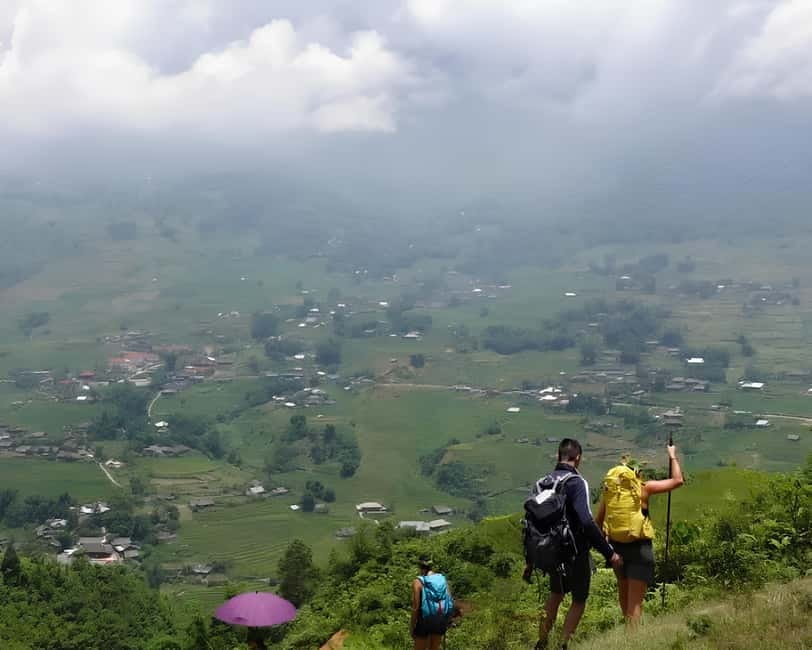
Sapa’s best reward is not found in town. It is up on the mountain trails, where the path climbs above the Muong Hoa Valley and passes through Black Hmong villages. This full-day walk reaches Sa Seng for distant views of Fansipan, then drops through Hang Da and Hau Thao before ending near Giang Ta Chai.
I like two things in particular: the chance to learn about farming and house-building directly from a local Hmong guide, and the generous family-style lunch served halfway through the route. Guides such as Mama Mao, Su, Zozo, and Vang have also made a strong impression with their humor, patience, and care for walkers.
The catch is simple: this is not a gentle stroll. The first climb is steep, the total route can reach about 15 kilometers, and rain can turn dirt paths into slippery tracks. On foggy days, you may see little of Fansipan, though the village life and guide still give the day plenty of purpose.
In This Review
- Key points to know before you book
- What the $24 price really covers
- Starting from Sapa at 9:00 AM
- Climbing Sa Seng for the big view
- Dropping into Hang Da Village
- A family lunch with plenty on the table
- Hau Thao and the farming life of the valley
- Bamboo forest, rice fields, and the final descent
- How hard is this Sapa trek?
- Weather, clothing, and what to carry
- Who will enjoy this experience most?
- Should you book the Sa Seng and Hau Thao trek?
- FAQ
- How long does the Sapa trek last?
- Which villages does the route visit?
- Where does the trek start?
- Is hotel pickup included?
- Is lunch included?
- Is bottled water provided?
- What languages does the guide speak?
- Can I cancel the booking?
- Can I pay later?
- Is the trek suitable for wheelchair users or people with mobility problems?
Key points to know before you book
- A real mountain hike: The route includes a steep uphill start, uneven ground, bamboo forest, rice fields, rocky paths, and long downhill sections.
- Sa Seng viewpoint: From the mountain top, you can look toward Mount Fansipan and across the Muong Hoa Valley.
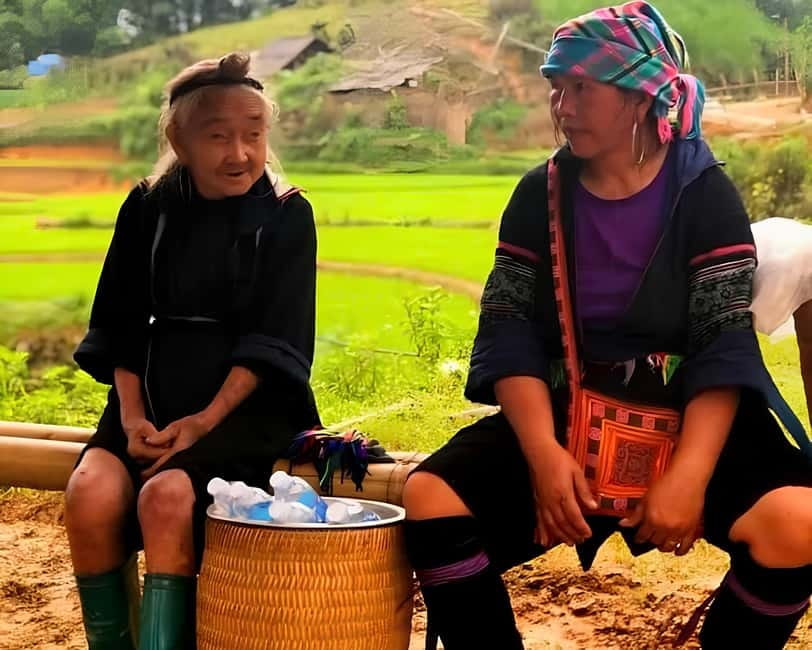
- Three Black Hmong communities: The trek passes through Sa Seng, Hang Da, and Hau Thao, with the walk finishing near Giang Ta Chai.
- Local lunch included: A family-run restaurant serves a freshly prepared, home-style meal. Drinks may cost extra.
- Excellent local guides: Guides including Mama Mao, Su, Zozo, and Vang are known for warmth, humor, cultural explanations, and practical help on difficult sections.
- Weather shapes the day: Fog and rain can hide the big views and make the route much harder, while clear weather opens up the valley and mountain scenery.
What the $24 price really covers
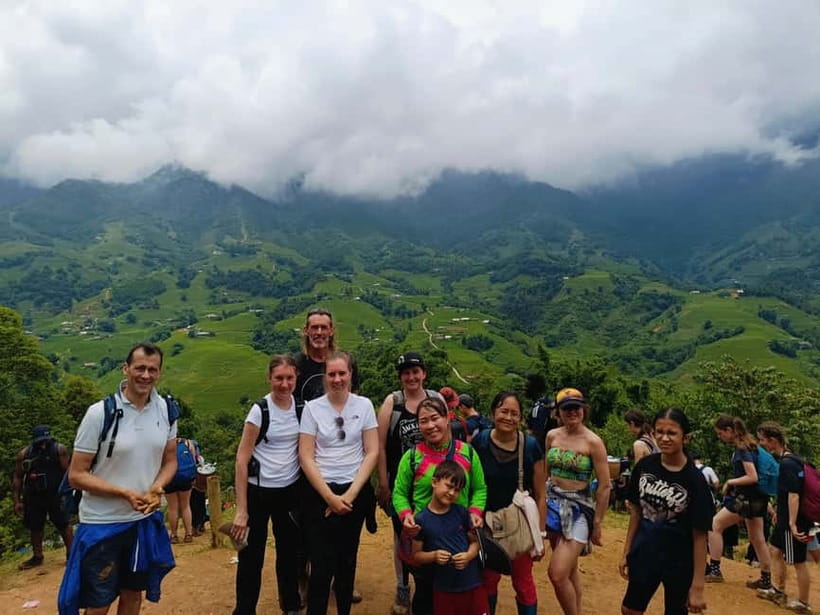
At about $24 per person, this is strong value for a full day in the Sapa mountains. The fee includes pickup in Sapa town, a local English-speaking guide, village and route entrance fees, bottled water, lunch, and transport back to town. You are paying for much more than a marked walking route.
The transport matters because the trek is one way. You do not have to retrace your steps after several hours on muddy trails. At the finish near Giang Ta Chai, a vehicle takes you back to Sapa, saving your tired legs and a long road walk.
The price is especially fair if you have only one day for hiking. A short walk from Sapa to a nearby village can show you rice terraces, but this route gives you several types of terrain, high viewpoints, rural communities, and a full cultural explanation in one outing.
Keep some cash with you. Drinks at the lunch stop may not be included, and you may want to buy a scarf or another handmade item. Some local women may walk alongside trekking groups and encourage purchases, which can feel uncomfortable if you are not prepared. A friendly but firm no thank you is useful.
More Trekking Tours in Sapa
- Sa Pa: Muong Hoa Valley Trek and Local Ethnic Villages
★ 4.6 · 864 reviews - Sapa: Eco Adventure Terrace Fields and Local Villages Trek
★ 4.9 · 636 reviews - From Sapa: 1-Day Guided Trek to Lao Chai & Ta Van with Lunch
★ 4.9 · 416 reviews
Starting from Sapa at 9:00 AM
Pickup is offered from accommodation within Sapa town at about 9:00 AM. You can also meet at Sapa TT Homestay on 812 Dien Bien Phu Street or July Hotel Central Sapa at 2 To Vinh Diem Street. If you stay outside town, a paid transfer to the meeting point may be possible.
Leave your WhatsApp number when booking so the operator can confirm the meeting details and send updates. Pickup instructions have occasionally felt unclear, so I would confirm your exact pickup point before the morning of the trek rather than simply assuming someone will find you.
After a short briefing, the walk begins with roughly a 1-kilometer uphill section. That distance sounds modest, but the climb is a serious opening test. The trail is uneven, and some sections require steady footing rather than speed. Your guide should set the pace and check how everyone is managing.
The early start gives you much of the day outside town. It also means you should eat breakfast first. The included lunch comes around midday, not at the start of the walk.
Climbing Sa Seng for the big view
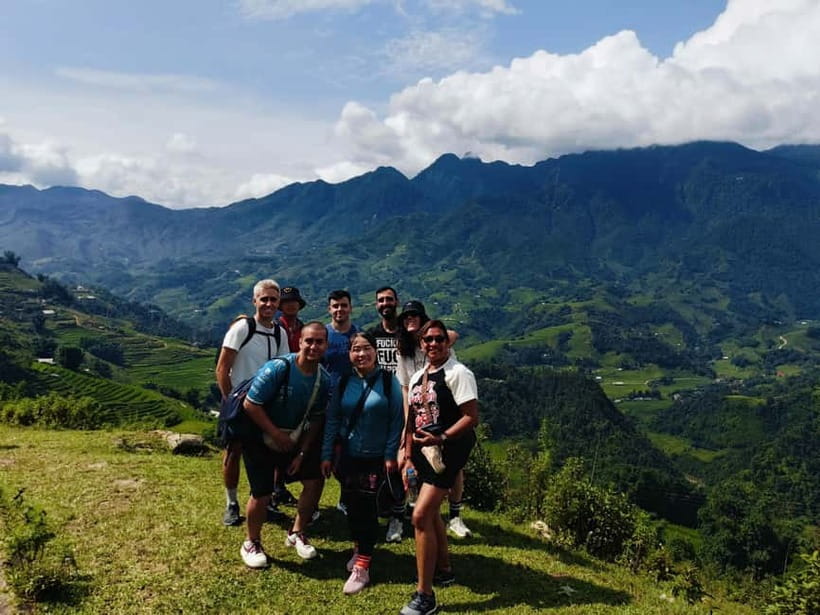
After about an hour of moderate trekking, you reach the top of Sa Seng Mountain. This is the high point of the morning and one of the main reasons to choose this route.
From here, you may see Mount Fansipan, at 3,143 meters the highest peak in Indochina, along with the broad sweep of Sapa Valley. Below, the Muong Hoa Valley carries the famous stepped rice terraces and the region’s largest river through the mountains.
The view depends heavily on weather. In February and November, fog has sometimes hidden almost everything. In summer, rain and cloud can also close in quickly. On a clear day, the reward is far better, but the route still has value when the clouds stay low because the villages, plants, farm animals, and guide commentary remain part of the experience.
A useful feature of this outing is that the high point does not require a full summit expedition. You get a serious climb and a wide mountain view, then continue down into lived-in rural areas.
Dropping into Hang Da Village
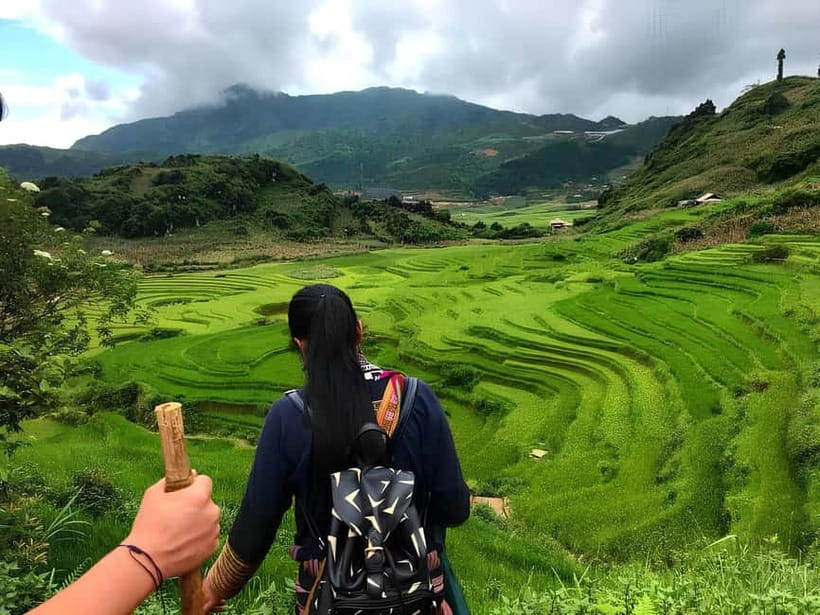
The route descends from Sa Seng toward Hang Da Village. This change from open mountain views to village paths gives the walk its character. You may pass buffaloes, pigs, and horses roaming near the trail. These are not staged attractions. They are working animals tied to farming and daily household life.
That is one reason a local guide adds real value. A good guide can explain how rice cultivation shapes the year, why homes are built in particular ways, and how animals fit into village life. Guides such as Su and Zozo have been praised for clear English and an easy sense of humor, while Mama Mao is known for keeping spirits high when the trail gets wet or visibility disappears.
The Black Hmong communities here are rural, working places rather than museum displays. You may see fields being planted or harvested, depending on the season. The experience is strongest when you treat the village as a home first and a sightseeing stop second.
Be polite with photography. Ask before taking close pictures of people, homes, or children. Your guide can help you understand when a photo is welcome and when it is better to simply keep walking.
More Sapa escapes from Sa Pa:
- Sapa: Fansipan Cable, Cat Cat Village, Moana Instagram Tour
★ 4.8 · 294 reviews - From Sapa: 3-Day Ha Giang Loop with Safe Rider (max 8 pax)
★ 4.9 · 285 reviews - Explore Sapa by TrekkingAdventures, Mountain,Rice fields
★ 4.9 · 229 reviews - EXPLORE SAPA: 2D1N TREKKING & HMONG CULTURE WITH DINH
★ 4.9 · 191 reviews
A family lunch with plenty on the table
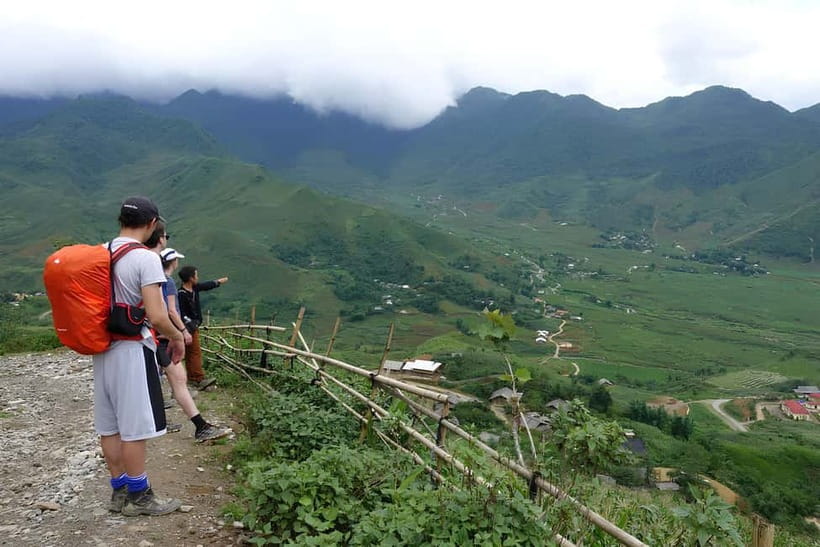
Around noon, lunch is served at a family-run local restaurant. This is a practical break as well as a cultural one. By this point you have climbed, walked over uneven ground, and started the downhill section, so a proper meal matters.
The food is described as freshly cooked and home-style, with generous portions. Several meals have been called delicious, and one useful detail is that the lunch can be a lot of food. Bottled water is provided, but drinks ordered with lunch may be charged separately.
Do not expect a polished city restaurant. The appeal is the simple setting and the chance to eat in a family-run place connected to the communities along the route. If you have dietary needs, raise them when booking or before the meal, since the supplied details do not specify vegetarian, vegan, or allergy arrangements.
Lunch also breaks up the day nicely. You are not rushing from one photo stop to another. You get time to rest, speak with people in the group, and prepare for the afternoon walk.
Hau Thao and the farming life of the valley
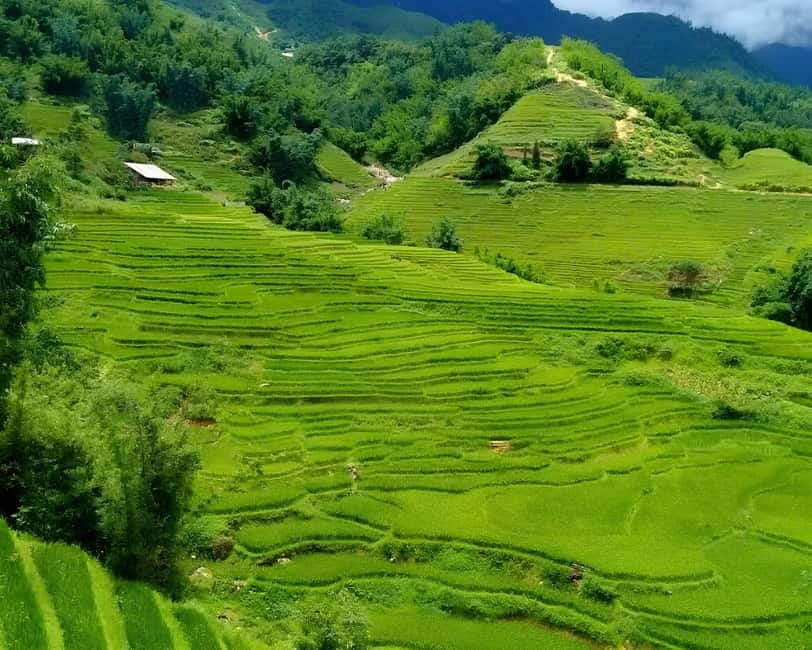
After lunch, the trek continues toward Hau Thao Village, another Black Hmong community in the mountains. This is where the outing moves beyond scenery and gives you a better sense of how the region works.
Depending on the time of year, you might see farmers planting or harvesting rice. Rice terraces are beautiful, but they are also demanding farms carved into steep hillsides. Your guide can connect what you see in the fields with Hmong customs, marriage traditions, house-building methods, and everyday work.
That cultural explanation is one of the tour’s strongest features. The best guides do not recite a long lecture. They answer questions while pointing out a house, a field, a path, or a tool. Su has been praised for his English and for explaining local life clearly. Other guides, including Chau, Pang, Chili, La, and Gao, have also been described as attentive and proud to share their communities.
The amount of detail can vary with the guide. If you want an intensive discussion of village history and customs, ask questions as you go. This trip is more about meeting rural life while walking through it than receiving a formal anthropology lesson.
Bamboo forest, rice fields, and the final descent
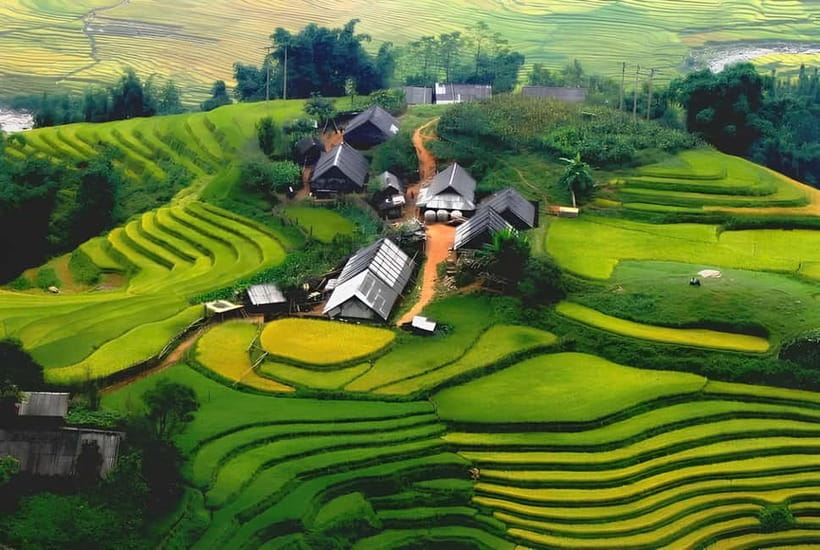
The afternoon route can include bamboo forest, clear fields, corn fields, rice terraces, rocky sections, and village roads. The bamboo forest is a highlight for many people because it feels cooler and more enclosed after the exposed mountain trails.
Terrain is the main issue here. In dry conditions, the walk is a manageable challenge for a reasonably fit person. In wet conditions, mud and slick stones can make even a moderate section demanding. Several parts of the route involve steep downhill walking, and one account describes a long descent on concrete roads near the end.
Wear proper hiking shoes with good grip. Sandals and smooth-soled trainers are poor choices. In heavy rain, the operator may provide rubber boots, but boots alone do not remove the risk of slipping. Keep your hands free, shorten your stride, and let the guide help when needed.
The trek finishes around 3:30 PM at Giang Ta Chai Village, where the vehicle waits for the return to Sapa. The advertised duration is 7 to 10 hours, so allow the full range rather than planning a tight evening connection.
How hard is this Sapa trek?
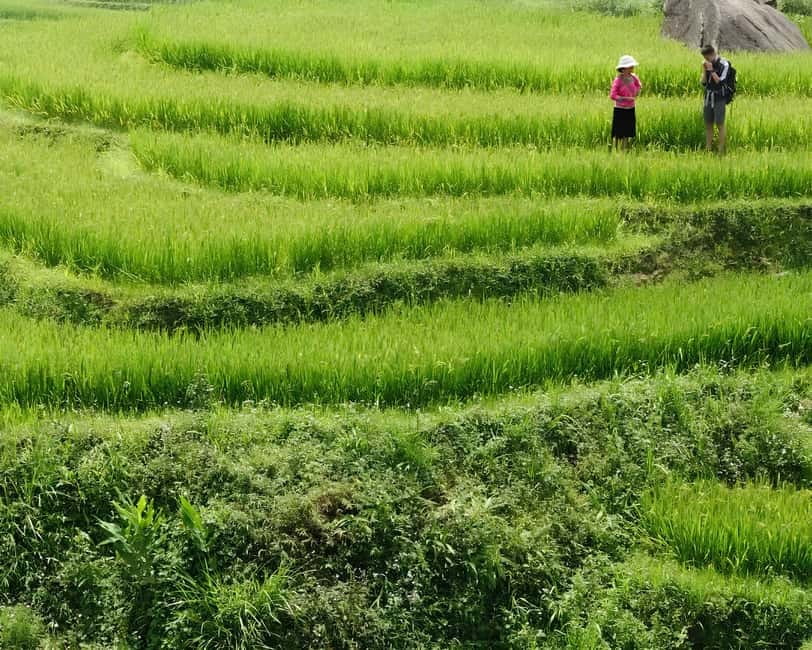
The route is best described as moderate to challenging, depending on weather and your fitness. It is not suitable for people with mobility impairments, heart problems, kidney problems, altitude sickness, or for wheelchair users. The activity also excludes very young children and people over the stated age and weight limits.
The total distance may reach roughly 15 to 15.6 kilometers. One recorded outing involved about 630 meters of ascent and 1,100 meters of descent, though your exact route and timing may differ.
You should be comfortable walking for most of a day on uneven ground. The hardest moments are usually the opening climb, muddy or rocky sections, and the long downhill finish. If you often get tired on hikes, or this is your first serious trek, this may feel like too much.
A small group helps. It allows the guide to watch individual walkers and makes conversation easier. Small groups are available, though the exact size depends on the booking date.
Weather, clothing, and what to carry
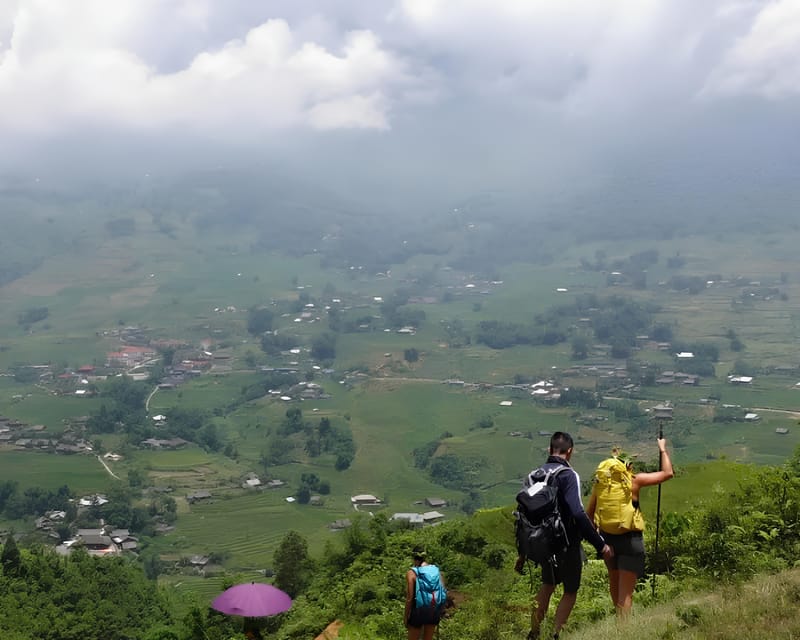
Sapa weather can change quickly, and cloud is a major part of the experience. Fog may erase the valley view, while rain makes the trail slippery. A dry day is the safest bet for enjoying the scenery, but clear views are never guaranteed.
Bring sunglasses, a sun hat, a hat for cooler conditions, cash, and water if you prefer more than the provided bottle. Wear layers and sturdy hiking shoes. A waterproof jacket is sensible during the wet season, though the supplied information does not state that one is provided.
The guide may offer route choices in poor weather. On one foggy day, the group could choose between climbing higher for a possible view or staying lower on easier paths. That kind of flexibility is useful, but it also means your final route may not look exactly like the planned version.
Avoid alcohol and drugs before the walk. Weapons, sharp objects, fireworks, explosives, baby strollers, and barefoot walking are not allowed.
Who will enjoy this experience most?
I would choose this trek if you want a full day outside Sapa with a strong mix of scenery and local contact. It suits people who enjoy walking, do not mind getting muddy, and want a guide who can talk about Hmong culture while leading the way.
It is also a smart pick if your time in Sapa is limited to one hiking day. You get a high viewpoint, valley terraces, several villages, lunch, and a return vehicle without arranging separate transport.
I would think twice if your main goal is a guaranteed Fansipan view. Fog is common, and even a well-timed trip cannot control the clouds. I would also choose a shorter route if you have knee trouble, poor balance, or little experience on mountain paths.
The optional homestay arrangement is worth asking about if you want to extend the experience. You can request an overnight stay near Hau Thao or Giang Ta Chai, plus help with luggage transfer and onward transport. Those arrangements need to be made in advance.
Should you book the Sa Seng and Hau Thao trek?
Book it if you want an active, good-value day that combines mountain scenery with real village life. The strongest parts are the local guides, the long route through different terrain, the family lunch, and the cultural detail that comes naturally while walking.
Choose a dry-weather date if you can. If rain is forecast, ask about changing the date or cancelling within the permitted time. A wet trek can still be enjoyable, but it is harder, slower, and less scenic.
At $24, the package covers enough transport, food, guiding, and route access to make it a sensible choice. Just come prepared for a genuine hike, not a casual stroll. If you can handle the climb and accept that clouds may hide Fansipan, this is one of the more useful ways to spend a single day around Sapa.
FAQ
How long does the Sapa trek last?
The trek lasts between 7 and 10 hours, depending on the starting time, route conditions, weather, and walking pace.
Which villages does the route visit?
The route goes through Sa Seng, Hang Da, and Hau Thao villages, with the trek finishing near Giang Ta Chai Village.
Where does the trek start?
Pickup is available from accommodation in Sapa town. You can also meet at Sapa TT Homestay, 812 Dien Bien Phu Street, or July Hotel Central Sapa, 2 To Vinh Diem Street.
Is hotel pickup included?
Pickup and drop-off are included when your accommodation is located in Sapa town. A paid transfer may be available if you are staying outside town.
Is lunch included?
Yes. A traditional lunch at a family-run local restaurant is included. Drinks may need to be paid for separately.
Is bottled water provided?
Yes. Bottled water is provided during the trek.
What languages does the guide speak?
The tour offers live guides in English and Vietnamese.
Can I cancel the booking?
You can cancel up to 24 hours in advance for a full refund.
Can I pay later?
Yes. The reserve-now, pay-later option allows you to book without paying on the day of reservation.
Is the trek suitable for wheelchair users or people with mobility problems?
No. The route is not suitable for wheelchair users or people with mobility impairments. It is also unsuitable for people with heart problems, kidney problems, altitude sickness, or other conditions that make steep and uneven walking unsafe.
More 1-Day Tours in Sa Pa
- Sapa: Motorbike Tour 1 Day Visit Waterfalls & Local Villages
★ 5.0 · 112 reviews - 1-Day Sapa Long Trek – Rice Field Terrace, Ethnic Culture
★ 4.9 · 62 reviews - In Sapa: 1 Day Mountain Trek, Visit beautiful villages
★ 5.0 · 50 reviews - From Sapa : 1 Day Amazing Sapa Trek To Terrace rice field
★ 4.6 · 17 reviews
More Treks Within Reach
- Sa Pa: 6-Hours Muong Hoa Valley Trek with Local Ethnic guide
★ 4.5 · 178 reviews - Sa Pa: 2-Day Trekking Trip with Ethnic Minority Homestay
★ 4.7 · 145 reviews - Half Day Sapa Trekking to Visit Lao Chai – Ta Van
★ 4.7 · 126 reviews - From Sapa: Waterfalls, Trekking and Tribal Villages Tour
★ 4.6 · 91 reviews
Just added around Sa Pa
- Sapa Open Air Jeep Half Days Off the Beaten Track, Backroad★ 4.9 · 9 reviews
- Sapa: Motorbike Tour to Hidden Villages & Terraced Fields★ 5.0 · 9 reviews
- SaPa: 2-Day Villages,Rice Fields, Love Waterfall Hiking Tour★ 5.0 · 9 reviews
- Sapa: Explore Sa Pa in one Day with local motorcycle Guide★ 4.9 · 9 reviews
- From Sa Pa: One Day Fansipan Mountain Trek★ 4.3 · 10 reviews
- Sa Pa: Half-Day Motorbike Tour with Sunset on O Quy Ho Pass★ 4.8 · 10 reviews
- From Sapa: Glass Bridge and Silver Waterfall Group Tour★ 4.8 · 11 reviews
- From Hanoi: Sapa Discovery Package Tour 2 Days 1 Night★ 4.8 · 11 reviews
Trekking Tours in Sapa, compared.

Muong Hoa Valley Trek and Local Ethnic Villages
Read our review →

Sapa 3 Days 2 Nights Trekking Tour (1 Night In Ta Van Village, 1 Night In Hotel)
Read our review →
Eco Adventure Terrace Fields and Local Villages Trek
Read our review →
3-Day Trekking Adventure of Sapa from Hanoi – Stay Ta Van Village
Read our review →
Number one top rated ethical cultural trekking and homestay by ETHOS
Read our review →
2-Day Sa Pa Ethnic Homestay Tour & Trek with Limousine Bus
Read our review →
1-Day Guided Trek to Lao Chai & Ta Van with Lunch
Read our review →Browse the lists this tour appears in