
Reviewed · TREKKING TOURS IN SAPA
Sapa Easy Trekking Tour 1 Day – Rice Paddies and Cultures
Sapa’s best scenery begins where the pavement gives way to narrow trails. This 5.5-hour trek leads from town through rice terraces, mountain valleys, cardamom plants, and the villages of the Black Hmong and Red Dao communities, ending with a visit to well-known Ta Phin Cave.
I like the small maximum of two people, which gives you a better chance to set the pace and ask questions. I also like the local focus: guides such as Pang and Zhu have shared personal insight into Hmong life, not just facts about the route. The catch is that easy is a generous label. One account describes the walk as roughly 11 kilometers and says it is not a gentle stroll, so slippery ground and hills deserve respect.
In This Review
- Key points to know before booking
- Why this Sapa trek feels different from a town excursion
- From Sapa church to Suoi Ho’s Black Hmong village
- Cardamom valleys, animals, and the first mountain views
- Ma Tra and the long walk toward Ta Phin
- Ta Phin village and the Red Dao connection
- Inside Ta Phin Cave
- Lunch, transport, and what the $40 covers
- Is this really an easy trek?
- Practical details that can save you trouble
- Who should book this Sapa experience?
- Should you book the Sapa Easy Trekking Tour?
- FAQ
- Where does the Sapa trekking tour start?
- What time does the tour begin?
- How long does the trek last?
- Which villages and communities does the tour visit?
- Is Ta Phin Cave included?
- Is lunch included?
- How many people can join the tour?
- What fitness level is needed?
- What happens if bad weather cancels the tour?
- Can I cancel for a full refund?
Key points to know before booking
- Two villages, two cultures: The route reaches Black Hmong and Red Dao communities around Suoi Ho, Ma Tra, and Ta Phin.
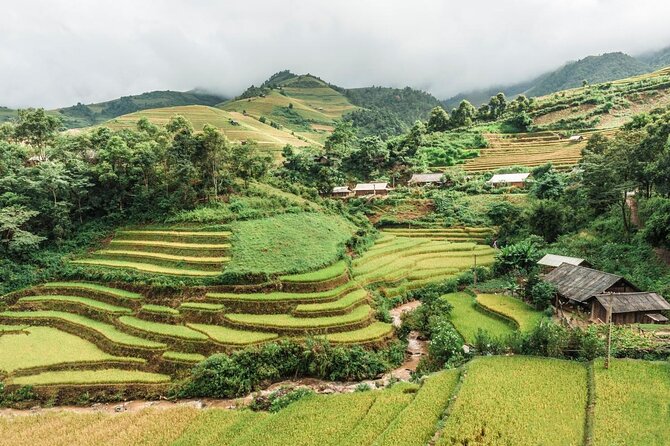
- Rice terraces and mountain views: Much of the appeal comes from walking through working agricultural country rather than simply looking at it from a road.
- Ta Phin Cave included: The cave is one of the route’s named highlights, along with the village itself.
- A genuinely small group: The maximum is two people, useful if you want a quieter walk and more direct contact with your guide.
- Lunch and transport are included: You receive lunch, village entry fees, a small bottle of water, and transport back to Sapa.
- Moderate fitness is needed: The route includes mountain trekking, narrow paths, and potentially slippery slopes, despite the easy-trekking title.
Why this Sapa trek feels different from a town excursion
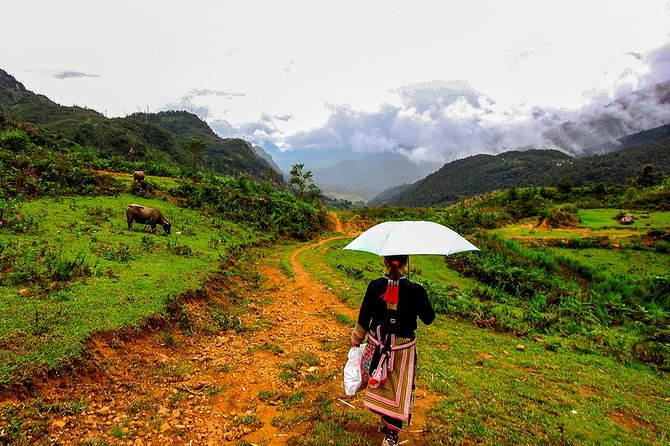
Sapa is easy to admire from a hotel balcony. The rice terraces spread across the hills, mist shifts over the mountains, and local villages appear close enough to reach. But the real change comes when you leave the center and walk into the valleys.
This experience gives you that change without committing to a multi-day trek. You start at 9 am at Sapa’s main church or receive pickup from your hotel in Sapa town. After a short introduction, the route heads toward a small trail and then into the countryside.
The emphasis is not on racing from one photo stop to another. You are taken through places where plants, animals, homes, and farming still form part of daily life. You may see cardamom growing in a small valley, along with water buffalo, chickens, dogs, and pigs used or kept by local families.
That setting gives the walk more meaning. Rice terraces are not simply scenic steps cut into a mountain. They are farmland shaped by years of work, weather, and careful use of water. A local guide can help connect what you see with the people who live there.
More Trekking Tours in Sapa
- Sa Pa: Muong Hoa Valley Trek and Local Ethnic Villages
★ 4.6 · 864 reviews - From Hanoi: 2-Day Sapa Trekking Trip with Homestay & Meals
★ 4.8 · 704 reviews - Sapa 3 Days 2 Nights Trekking Tour (1 Night In Ta Van Village, 1 Night In Hotel)
★ 5.0 · 699 reviews
From Sapa church to Suoi Ho’s Black Hmong village
The meeting point is Sapa Church, on Ham Rong Street, or your hotel in town if pickup is arranged. The tour begins at 9 am, giving you a full morning for the first section before lunch and the return journey.
The opening walk takes about five minutes to reach a smaller trail. From there, the route moves toward Suoi Ho, a small Black Hmong village. The houses are described as old and small, which may be one of the most useful parts of the visit for anyone hoping to see something less polished than Sapa’s main streets.
You should expect a rural setting rather than a formal cultural center. That is the point, but it also means the experience can feel less structured. You are walking through a lived-in community, so respectful behavior matters. Ask before photographing people, homes, or goods, and listen when your guide explains local customs.
This part of the route also introduces the scenery that makes Sapa famous. Rice terraces spread across the slopes, with mountain views opening between valleys. The exact appearance will change with the season and weather, but the route is designed around seeing the fields from ground level.
Cardamom valleys, animals, and the first mountain views
Cardamom is one of Sapa’s valuable crops, and the route passes small valleys where the plants grow. This is a useful detail that many quick sightseeing trips miss. You are not only looking at mountains; you are seeing some of the plants and animals that support local life.
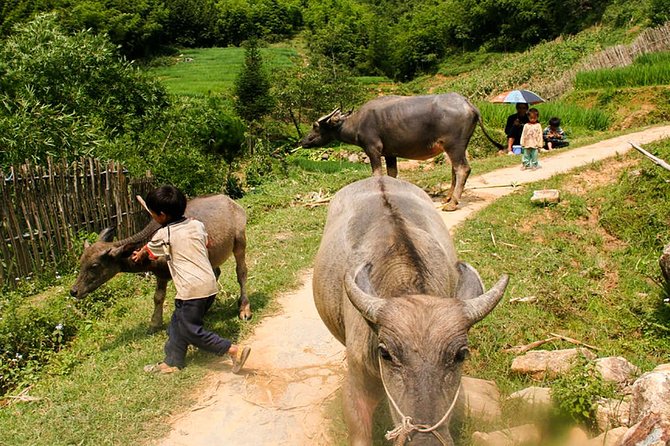
Water buffalo are especially important in northern Vietnam’s farming areas. Along this trek, you may meet them beside the path, together with chickens, dogs, and pigs. These encounters are ordinary parts of village life, but they help explain why the route feels more connected to the countryside than a standard road tour.
The views are likely to be strongest when the weather is clear. The tour requires good weather, and poor conditions can lead to a different date or a full refund. That policy is sensible for a walking route, since rain can make unpaved sections harder and reduce the mountain views.
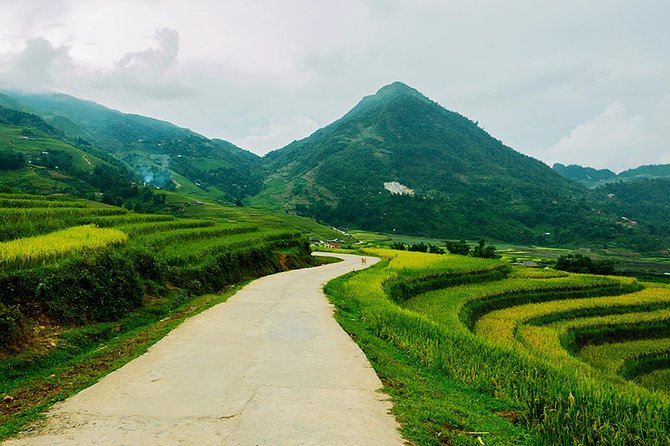
I would bring shoes with good grip, even though the tour is marketed as easy. The available information does not promise a fully paved route. One detailed account describes an approximately 11-kilometer walk and slippery slopes, so you should plan for a proper outing rather than sandals and a short wander.
Ma Tra and the long walk toward Ta Phin
The route continues through Ma Tra before reaching Ta Phin. The sequence is Sapa, Suoi Thau, Ma Tra, Ta Phin, and back to Sapa, although the exact balance of walking and road sections may depend on conditions.
Ma Tra adds another rural stop to the day. The value here is the gradual change in scenery. Instead of seeing one village and immediately returning, you move through a series of valleys and cultivated slopes. That gives you time to notice how homes, fields, paths, and mountain contours fit together.
This is also where the tour’s physical demands become clearer. A moderate fitness level is recommended, and the walk may include inclines, uneven ground, and narrow sections. If you have knee problems, poor balance, or little experience walking on mountain paths, ask the operator about the current route before booking.
The small group size helps, but it does not remove the need to communicate. One negative account describes difficulty getting the guide to slow down on slippery sections, though the operator disputed whether that person had taken this specific tour. Because the account is contested, I would not treat it as a confirmed problem with this experience. Still, it is a good reminder to state your pace needs clearly at the start and speak up before a slope becomes uncomfortable.
More Sapa escapes from Sapa:
- Sapa 2 Days 1 Night From Hanoi – Overnight in Ta Van Village
★ 5.0 · 2,669 reviews - Hanoi – Sapa 2 Days 1 Night Overnight At Homestay
★ 5.0 · 899 reviews - Sapa: Fansipan Cable, Cat Cat Village & Moana Instagram Tour
★ 5.0 · 777 reviews - Sapa: Eco Adventure Terrace Fields and Local Villages Trek
★ 4.9 · 636 reviews
Ta Phin village and the Red Dao connection
Ta Phin is the main cultural anchor of the route. The area is associated with the Red Dao, and the experience also includes Black Hmong and Red Dao communities. Seeing both groups on the same day gives you a wider view of the cultural mix around Sapa.
The tour does not present the villages as a stage show. Instead, you walk through the area with a local guide and see the scenery and daily surroundings firsthand. That can be more subtle than a planned performance, but it is also more grounded. The guide’s role matters greatly here.
Pang, identified in one especially warm account, is a Hmong guide who shared stories about her own life and background. Zhu is also singled out for explaining the region’s nature and traditions. Guide assignments can change, so you should not assume either person will lead your tour, but these names show the kind of local perspective the operator aims to provide.
A strong guide can turn a walk past a house, field, or forest plant into a useful lesson. You can ask about village life, the rice terraces, local crops, and the differences between the communities you visit. With only two people in the group, you should have a better chance to make those questions part of the day.
Inside Ta Phin Cave
Ta Phin Cave is a named highlight and one of the area’s best-known natural attractions. The visit breaks up the long walk with a different kind of setting, shifting your attention from open rice fields to rock and shadow.
The supplied details do not give the cave’s length, lighting, stairway conditions, or the amount of time spent inside. I would therefore avoid expecting a highly developed cave tour. Treat it as an included stop within a countryside trek, not as a standalone cave expedition.
Your guide should be able to explain how the cave fits into the local area and help you judge the footing. As with the village paths, sensible shoes are more important than looking stylish. If you dislike confined spaces or uneven ground, you may prefer to focus on the village and scenery while keeping the cave visit brief.
Lunch, transport, and what the $40 covers
At $40 per person, this tour offers reasonable value if you want a private-feeling day without paying for a fully private vehicle and guide. The maximum group is two people, and the price includes a local guide, lunch, village entry fees, a small bottle of water, and transport back to Sapa.
Vegetarian food is available. Drinks at the restaurant or homestay are not included, and extra bottled water or beer will cost you more. One small bottle is supplied, which may not be enough for a long walk in warm weather, so bring additional water or budget for a purchase.
The price also saves you from arranging separate transport back to town. That matters after several hours on foot, especially if the route finishes away from the center. The activity ends back at the meeting point.
The main question is not simply if $40 is cheap. It is what sort of day you want. If you only want a short view of terraces from a road, this is more walking than necessary. If you want a local guide, two distinct cultural areas, lunch, cave access, and a small group, the price is fair.
Tips are not included. They are optional, but a guide who gives careful explanations and adjusts the pace deserves consideration.
Is this really an easy trek?
The title may create the wrong expectation. The route is shorter than a multi-day mountain trek, but it is still a serious half-day walk. The duration is listed as about five hours and 30 minutes, while one account describes the distance as around 11 kilometers and calls it a full-day outing.
Those details do not perfectly match, perhaps because walking time and total tour time are counted differently. Either way, I would prepare for a sustained route rather than a flat village stroll.
You should be comfortable with:
- Moderate walking fitness
- Uneven paths and possible slippery slopes
- Hills and mountain terrain
- Several hours outside
- Changing weather conditions
The tour may suit you if you regularly walk and want to see Sapa beyond the center. It may not suit you if you need a level route, dislike mud or rough ground, or want a relaxed sightseeing schedule with frequent vehicle transfers.
The operator lists a maximum of two people, which is a real advantage for pacing. Tell the guide at the beginning if you need breaks or extra care on descents. A good walking day depends on clear communication.
Practical details that can save you trouble
Pickup is offered from hotels in Sapa town, while the stated meeting point is in front of Sapa’s main church. Confirm the exact pickup arrangement when you book so you are not waiting at the wrong place.
You receive confirmation at booking, and the activity is near public transportation. The starting time is 9 am. The end point is the original meeting point, with transport back to Sapa included.
The cancellation terms are straightforward: cancel at least 24 hours before the start for a full refund. Late cancellations and changes are not accepted, and the local cutoff time applies. Since the activity needs good weather and a minimum number of people, a cancellation by the operator can lead to another date, another experience, or a full refund.
Personal travel insurance is not included. That is worth remembering for any mountain walk.
Who should book this Sapa experience?
I would choose this tour if you want a close look at Sapa’s countryside but do not want to spend several days trekking. It is particularly suitable for couples or two friends because the group limit keeps the experience quiet and flexible.
It is also a good fit if cultural contact matters as much to you as scenery. The chance to visit areas connected with both Black Hmong and Red Dao communities gives the day more range than a single-village walk.
Families with older children may consider it, but the moderate fitness requirement and possible slippery sections should guide that decision. The information provided does not set a minimum age, so ask the operator if children are part of your plan.
I would be cautious if you are searching for an easy, paved walk. The name suggests gentle hiking, but the route description and distance account point to something more demanding. Pack sturdy footwear, water, sun or rain protection, and an open schedule.
Should you book the Sapa Easy Trekking Tour?
Book it if you want rice terraces, village paths, local stories, Ta Phin Cave, and a very small group at a fair price. The most praised features are the scenery and the guides’ personal cultural insight, especially the kind of conversation associated with guides such as Pang and Zhu.
Skip it if you want a short stroll, a fully controlled pace, or a tour built around comfort rather than walking. The best reason to book is not the word easy in the title. It is the chance to spend several hours in Sapa’s rural valleys with a local guide, seeing how the scenery and village life fit together.
FAQ
Where does the Sapa trekking tour start?
The stated meeting point is Sapa Church on Ham Rong Street. Pickup is also offered from hotels in Sapa town.
What time does the tour begin?
The tour starts at 9 am.
How long does the trek last?
The listed duration is approximately five hours and 30 minutes. One detailed account describes the route as roughly 11 kilometers, so you should expect a substantial half-day walk.
Which villages and communities does the tour visit?
The route passes through Suoi Ho, Ma Tra, and Ta Phin, with visits connected to both Black Hmong and Red Dao communities.
Is Ta Phin Cave included?
Yes. A visit to Ta Phin Cave is included in the route.
Is lunch included?
Yes. Lunch is included, and vegetarian food is available. Drinks at the restaurant or homestay are not included.
How many people can join the tour?
The activity has a maximum of two people.
What fitness level is needed?
A moderate physical fitness level is recommended. The route involves mountain trekking and may include slippery or uneven sections.
What happens if bad weather cancels the tour?
If poor weather causes cancellation, you will be offered a different date or a full refund.
Can I cancel for a full refund?
Yes. You must cancel at least 24 hours before the experience start time for a full refund.
More 1-Day Tours in Sapa
- Sapa 1 Day Long Trek: Trek to Hau Thao and Sa Seng Villages
★ 4.6 · 344 reviews - Sapa Motorbike Tour With Local Guide 1 Day – Waterfalls, Villages
★ 5.0 · 254 reviews - Motorbike 1 Day Off The Beaten Track, Hidden Villages, rice field
★ 5.0 · 203 reviews - 1-day Authentik trek & Panorama valley views
★ 5.0 · 189 reviews
More Treks Within Reach
- 3-Day Trekking Adventure of Sapa from Hanoi – Stay Ta Van Village
★ 5.0 · 611 reviews - Number one top rated ethical cultural trekking and homestay by ETHOS
★ 5.0 · 456 reviews - 2-Day Sa Pa Ethnic Homestay Tour & Trek with Limousine Bus
★ 4.8 · 440 reviews - From Sapa: 1-Day Guided Trek to Lao Chai & Ta Van with Lunch
★ 4.9 · 416 reviews
Just added around Sapa
- Sapa 1 Day Trekking★ 5.0 · 9 reviews
- Half Day Sapa Cat Cat Explore Waterfall, Workshop, H’mong Local★ 5.0 · 9 reviews
- Sapa Open Air Jeep Half Days Off the Beaten Track, Backroad★ 4.9 · 9 reviews
- Fansipan Mount Trekking 1 Day★ 5.0 · 9 reviews
- Sapa: Motorbike Tour to Hidden Villages & Terraced Fields★ 5.0 · 9 reviews
- Sapa 3 Day Trekking with 2 Nights Homestay★ 5.0 · 9 reviews
- 8-Day Discover Northern Vietnam Highlight: Hanoi – Ninh Binh – Sapa – Halong Bay★ 5.0 · 9 reviews
- SaPa: 2-Day Villages,Rice Fields, Love Waterfall Hiking Tour★ 5.0 · 9 reviews
Trekking Tours in Sapa, compared.

Muong Hoa Valley Trek and Local Ethnic Villages
Read our review →

Sapa 3 Days 2 Nights Trekking Tour (1 Night In Ta Van Village, 1 Night In Hotel)
Read our review →
Eco Adventure Terrace Fields and Local Villages Trek
Read our review →
3-Day Trekking Adventure of Sapa from Hanoi – Stay Ta Van Village
Read our review →
Number one top rated ethical cultural trekking and homestay by ETHOS
Read our review →
2-Day Sa Pa Ethnic Homestay Tour & Trek with Limousine Bus
Read our review →
1-Day Guided Trek to Lao Chai & Ta Van with Lunch
Read our review →Browse the lists this tour appears in