
Reviewed · SAPA TOURS
Sapa3D2N TrekkingAdventures,Valleys,Bambooforest,Waterfall
Sapa’s best moments come on foot, and this three-day route takes you well beyond town. You climb Dragon Mountain for wide views of Fansipan and Muong Hoa Valley, then walk through Black Hmong and Red Dao villages, rice terraces, bamboo forest, and waterfall country. Dinh, a local Hmong guide, and her sisters lead the way.
I like the personal shape of this trip. You sleep with Dinh’s family, eat home-cooked meals, and get a close look at daily work in the fields rather than simply taking photographs from a roadside stop. I also like the strong value: $80 covers three days of guiding, village fees, six meals, two breakfasts, two nights of homestay, daily water, and transport back to Sapa.
The trade-off is physical effort and simple lodging. You will walk about 28 to 39 kilometers over three days, often on mountain paths, and the homestay is a family home rather than a private hotel. Wet weather can make trails harder, so good shoes and a willingness to share local family life matter.
In This Review
- Key points at a glance
- Why this Sapa trek feels different
- Day 1: Dragon Mountain, Hang Da, and Hau Thao
- Day 2: Su Pan, bamboo forest, and Giang Ta Chai Waterfall
- Day 3: Lao Chai, Y Linh Ho, and the return to Sapa
- The family homestay and meals
- How much walking should you expect?
- What you receive for $80
- The guide and the human side of the route
- Practical booking advice
- Should you book Sapa3D2N Trekking Adventures?
- FAQ
- Where does the Sapa trekking tour begin?
- How long is the tour?
- How far do you walk each day?
- Is food included?
- Who leads the trekking?
- Can I cancel the tour?
Key points at a glance
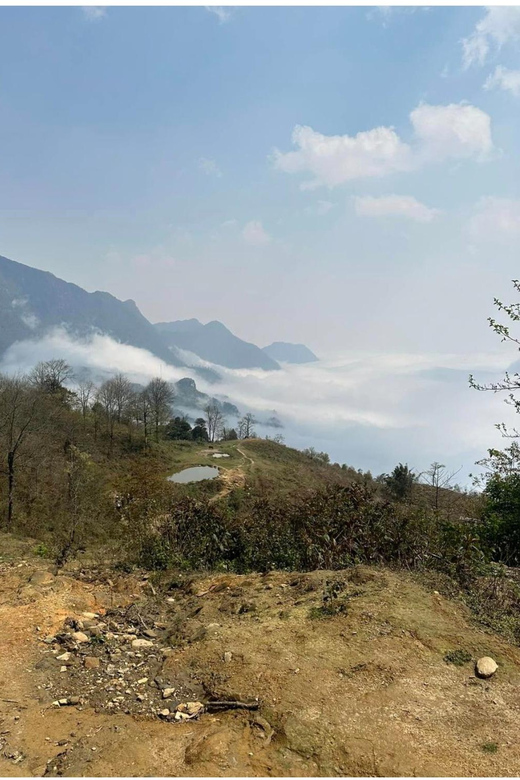
- Dragon Mountain at 1,900 meters: Begin with views toward Fansipan, Sapa, and the broad rice terraces of Muong Hoa Valley.
- Three days through village country: Walk among Black Hmong, Red Dao, and Tày communities, with time to see traditional homes and farm work.
- Two nights with a local family: The homestay gives the trip a social side, with shared meals and time with Dinh’s family.
- Waterfalls and bamboo forest: Giang Ta Chai brings forest paths, hanging bridges, and a waterfall stop.
- Small-group local feel: Dinh and her sisters provide a personal guide service in English or Vietnamese.
- Good coverage for $80: Guiding, meals, entry fees, lodging, water, and the return ride are included.
Why this Sapa trek feels different
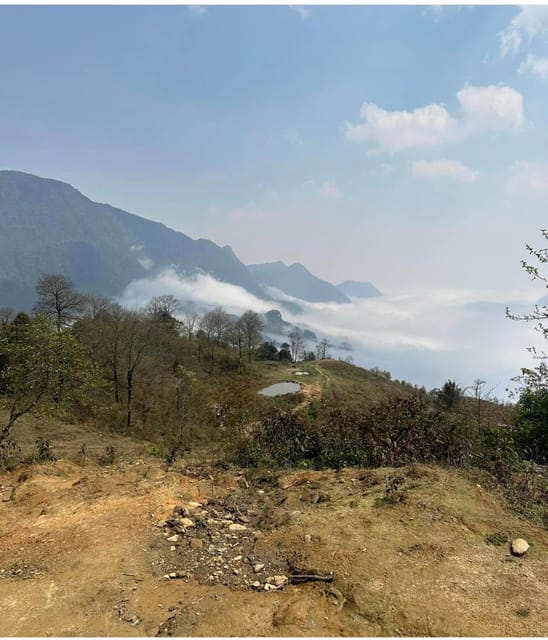
Many Sapa outings focus on one short walk from town. This trip gives you three full days to move through the Muong Hoa area at a slower pace, with village stays instead of a quick return to a hotel.
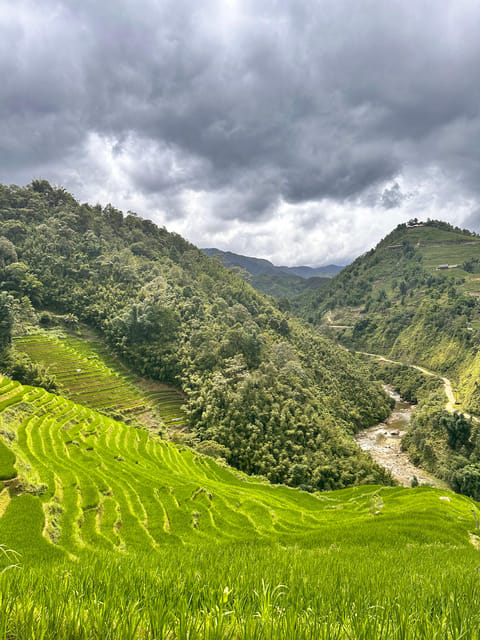
The route links several kinds of scenery. You start high above the valley, pass through rice fields and working villages, cross a hanging bridge, follow forest paths, and finish with more terrace views before returning to Sapa. That variety keeps the days from feeling like the same walk repeated three times.
The cultural side is just as important. You meet Black Hmong communities in Sa Seng, Hang Da, Hau Thao, Su Pan, Lao Chai, and Y Linh Ho, then visit a Red Dao area near Giang Ta Chai. The schedule also includes Ban Ho and the traditional stilt houses of the Tày people among the listed highlights, although the detailed day-by-day route does not clearly place Ban Ho in the three walking days. If Ban Ho is a must for you, confirm the exact route before booking.
Dinh describes herself as a local Hmong woman, and that matters here. You are not only following a marked attraction route. You are walking with someone connected to the area and staying with her family. One of the most praised parts of the experience is the warm household atmosphere, including singing, dancing, and happy water, the local rice wine shared in a social setting.
More Sapa escapes from Sa Pa:
- Sa Pa: Muong Hoa Valley Trek and Local Ethnic Villages
★ 4.6 · 864 reviews - Sapa: Eco Adventure Terrace Fields and Local Villages Trek
★ 4.9 · 636 reviews - From Sapa: 1-Day Guided Trek to Lao Chai & Ta Van with Lunch
★ 4.9 · 416 reviews
Day 1: Dragon Mountain, Hang Da, and Hau Thao
Your guide meets you at 9 a.m. at your Sapa hotel or in front of Sapa’s main church. After a short introduction, the walk begins with about a kilometer uphill on a small trail toward Dragon Mountain.
At about 1,900 meters, Dragon Mountain provides one of the day’s best viewpoints. You can look toward Fansipan, which rises to 3,143 meters and is the highest mountain in Indochina, as well as over Sapa town and the Muong Hoa Valley. The view is a strong opening because it helps you understand the shape of the area before you spend the next two days walking through it.
This is also your first look at the large rice terraces for which the valley is known. Their appearance changes with the season and farm work. The route may offer views of planting or harvest activity, and you can see buffalo, cattle, and pigs near the villages.
From the high point, the trail heads down toward Hang Da, a Black Hmong village. You stop for lunch at a small restaurant run by a local family. That is a practical arrangement after a long uphill start, and it gives you a meal in the village rather than sending you back to Sapa for a break.
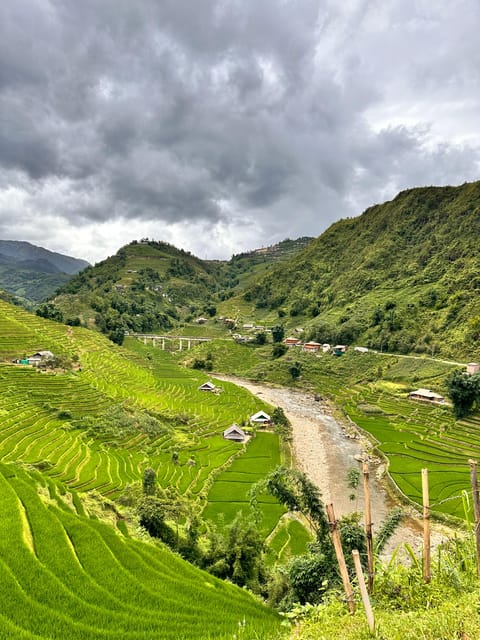
The afternoon continues along a smaller road toward Hau Thao. Here, the focus shifts from grand views to ordinary village life. If the timing is right, you may see people working in the fields. This is one of the more useful parts of the trek because it shows how the terraces function as farmland, not just as a scenic backdrop.
The first day covers roughly 10 to 15 kilometers and takes about six hours. That range is wide enough to remind you that pace and trail conditions matter. You should arrive with energy left for the evening, but do not expect a light stroll.
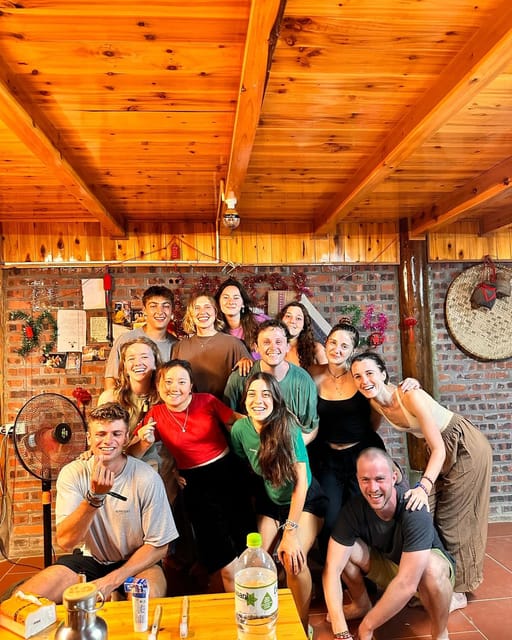
Your evening is spent at the family homestay. You have time to rest, take a hot shower, and eat dinner with the household. The social setting is a major part of the experience. Accounts of the stay describe Dinh as lively and welcoming, with shared singing, dancing, and rice wine. You may also meet other international visitors staying at the home.
Day 2: Su Pan, bamboo forest, and Giang Ta Chai Waterfall
After breakfast, you set out for the second day, which covers about 9 to 11 kilometers in roughly five and a half hours. The route moves from the homestay area toward Hau Thao and Su Pan, a small Black Hmong village near the mountains.
Su Pan offers another broad view over the rice fields. The village is described as having small traditional homes, and the setting gives you a closer look at how houses and farmland fit together. This section is especially good for photographs, though you should keep your camera away when the route becomes steep or muddy.
The trail then climbs toward Giang Ta Chai Waterfall. Bamboo forest appears along the walking route, giving the day a cooler, more enclosed feel after the open terrace views. The forest and waterfall section adds welcome variety, but it also means uneven ground and possible slippery footing. Wear shoes with real grip rather than smooth city sneakers.
Giang Ta Chai is associated with the Red Dao people. With your guide, you learn about local customs and daily life, then make a short visit to a Red Dao family. The value here is the chance to connect the scenery with the people who live among it. A guide from the area can also help you approach family homes in a respectful way.
The return route follows an alternative trail and crosses a second hanging bridge. Bridge crossings can be a highlight for some people and a nervous moment for others. If you dislike heights or unstable surfaces, ask Dinh about the crossing before you start. The information provided does not give bridge length or safety details, so it is sensible to raise the question directly.
Lunch takes place in Giang Ta Chai village at a small restaurant operated by a Hmong family. After the break, you walk back toward Ta Van and stay again with Dinh’s family.
The wording about the homestay villages is a little unclear in the supplied route description. Day 1 says Hau Thao, while Day 2 says Ta Van, and both refer to staying with the family. Treat the lodging as a family homestay connected with the route, but confirm the exact sleeping location if that detail matters to you.
Day 3: Lao Chai, Y Linh Ho, and the return to Sapa
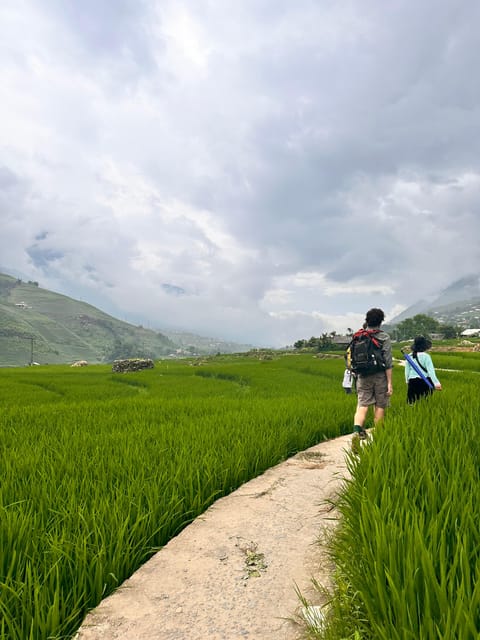
The final day covers about 9 to 13 kilometers and takes around five and a half hours. After breakfast, you walk toward Lao Chai and Y Linh Ho, two of the better-known village areas around Muong Hoa.
The route reaches the hanging bridge over the Muong Hoa River before climbing into the mountains. From higher ground, you get another look at the valley’s large rice terraces and the Hoang Lien Son mountain range. The final day is not simply a walk back to town. It gives you one more strong section of scenery before the trip ends.
You then continue toward Sapa. Your larger bags are transported to the house where you stay, so you do not need to carry your main luggage throughout the trek. Still, ask ahead about the size of the bag that can be moved and keep your daily essentials in a small pack.
The final walking distance varies considerably, from 9 to 13 kilometers. That may depend on the exact route and conditions. Bring water, sun protection, and a change of clothes because a long mountain walk can leave you sweaty even when the air feels cool.
Same part of the north, a completely different day out:
- Sapa 1 Day Long Trek: Trek to Hau Thao and Sa Seng Villages
★ 4.6 · 344 reviews - Sapa: Fansipan Cable, Cat Cat Village, Moana Instagram Tour
★ 4.8 · 294 reviews - From Sapa: 3-Day Ha Giang Loop with Safe Rider (max 8 pax)
★ 4.9 · 285 reviews - Explore Sapa by TrekkingAdventures, Mountain,Rice fields
★ 4.9 · 229 reviews
The family homestay and meals
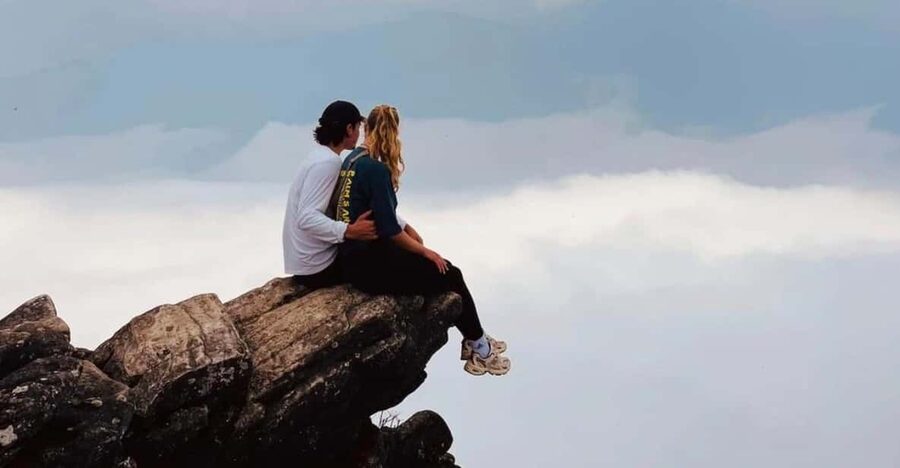
The two-night homestay is the heart of this tour for anyone who wants more than views. You stay with Dinh’s family, eat dinner and breakfast in the home, and have time to talk after walking. The atmosphere is described as friendly, social, and informal.
Do not book this expecting hotel-style privacy. You are choosing a family home, shared meals, and a simple local setting. That can mean less control over your evening and fewer comforts than you would have in Sapa, but it also gives you a better sense of how the area is lived in.
Food is included in a useful way. The price covers three lunches, two dinners, and two breakfasts. Meals are described as traditional Vietnamese cooking, and the family setting makes them part of the cultural experience rather than a quick restaurant stop.
One bottle of water per person per day is included. That is helpful, but it may not be enough for everyone on a six-hour walk. Extra drinks are not included, so carry additional water or budget for purchases along the way. Sunscreen, a sun hat, and sunglasses also belong in your day pack.
How much walking should you expect?
This is an active trip, not a sightseeing tour with occasional village walks. Across the three days, the published distances add up to roughly 28 to 39 kilometers. The route includes uphill and downhill sections, mountain trails, roads, forest paths, and bridge crossings.
The itinerary gives walking times of about six hours on Day 1 and five and a half hours on each of Days 2 and 3. Those figures do not mean nonstop walking. Lunch, family visits, photographs, and stops at viewpoints are part of the day, but your legs will still do serious work.
I would choose this tour if you regularly walk for several hours and feel comfortable on uneven ground. You do not need to be a mountaineer, but you should be ready for a sustained mountain route. The activity is not suitable for people over 95, according to the stated conditions, and anyone with mobility concerns should ask for a detailed trail description before paying.
Your packing list should stay simple:
- Comfortable clothes for changing weather
- Sunglasses and a sun hat
- Sunscreen
- A change of clothes
- Swimwear, useful if you want it for the waterfall portion
- Sturdy walking shoes
- A small day pack for water and personal items
The supplied information does not specify a season, temperature range, private room arrangement, or group size. Those are all worth confirming, especially if you prefer a quiet homestay or need a particular sleeping setup.
What you receive for $80
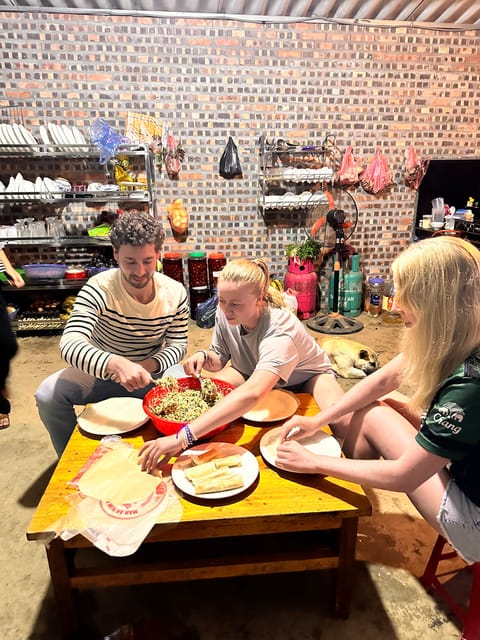
At $80 per person, the tour offers strong coverage for a three-day trip. You receive a local English-speaking guide for all three days, village entry fees for eight villages, two nights of homestay, three lunches, two dinners, two breakfasts, one bottle of water each day, and transport back to Sapa at the end.
The guide is the most important part of that price. Dinh and her sisters are from the Hmong community, and the tour is built around personal contact rather than a large commercial operation. You are paying for route knowledge, language help, family access, and someone to manage the practical details while you walk.
The included entry fees also help. Eight village admissions can add up on a multi-day route, and having them bundled makes the cost easier to judge. The return transport is another useful inclusion because you finish in a village area rather than simply stepping back into central Sapa.
You still need to pay for extra drinks and personal travel insurance. The price also does not promise private rooms, premium meals, or hotel-level facilities. If you value local contact and a full schedule, it is good value. If you mainly want comfort, privacy, or short walks, a more conventional Sapa stay may suit you better.
The guide and the human side of the route
Dinh is the named local guide and comes from the Hmong ethnic group. She says she and her sisters will collect you and guide you, while the tour information also lists English and Vietnamese as the available languages.
The personal connection is not a minor detail. Dinh’s family operates the homestay, and the evening can include food, conversation, singing, dancing, and rice wine. One account also describes a cousin serving as a guide during the three days, so your walking guide may not always be Dinh herself. Confirm who will lead your particular departure if that is important to you.
This family-based approach can make the trip feel warm and relaxed. It also means you should arrive with patience and respect. Local customs, meal times, sleeping arrangements, and household routines may not match what you are used to at home.
The tour has a rating of 4.8 from 24 reviews, with repeated praise for organization, meals, the homestay, and the people involved. The strongest pattern is clear: the human contact is the main reason to choose this trip, while the mountains and terraces provide the setting.
Practical booking advice
You can cancel up to 24 hours before the activity for a full refund, and the reserve-now, pay-later option allows you to hold plans without paying immediately. Starting times are checked by availability, though the described first-day meeting time is 9 a.m.
Arrange your Sapa hotel pickup details before the morning begins. The guide can meet you at your hotel or in front of Sapa’s main church, which is useful if your accommodation is outside the central area.
Ask these questions before booking:
- Who will guide your departure, Dinh, one of her sisters, or another family member?
- Where exactly are the two homestay nights located?
- Will the route include Ban Ho?
- What kind of sleeping arrangement is available?
- How much extra water should you carry?
- What happens to your larger bag on the final day?
These are not signs of a poor tour. They are normal details to settle when a local family runs a flexible mountain route.
Should you book Sapa3D2N Trekking Adventures?
I would book this tour if you want three active days, local guides, and a family homestay rather than a polished hotel-based package. The best parts are the Dragon Mountain viewpoint, the changing village communities, the Giang Ta Chai waterfall and bamboo forest, and the chance to share meals with Dinh’s family.
I would think twice if you want private lodging, fixed hotel comforts, or a light walking schedule. The route is long, the trail details can vary, and the published homestay location needs clarification.
For an $80 experience, the package covers a great deal, and the local connection gives it real character. Pack light, bring proper shoes, confirm the exact route, and go ready to participate in family life. If that sounds like your kind of Sapa, this is a strong choice.
FAQ
Where does the Sapa trekking tour begin?
The guide meets you at 9 a.m. at your hotel in Sapa or in front of Sapa’s main church.
How long is the tour?
The experience lasts three days and includes two nights at a homestay.
How far do you walk each day?
Day 1 covers about 10 to 15 kilometers in roughly six hours. Day 2 covers about 9 to 11 kilometers in about five and a half hours. Day 3 covers about 9 to 13 kilometers in about five and a half hours.
Is food included?
Yes. The price includes three lunches, two dinners, and two breakfasts. Extra drinks, such as bottled water or beer, are not included.
Who leads the trekking?
Dinh is a local Hmong guide, and she says she and her sisters will pick you up and guide you. English and Vietnamese are available. The exact guide for your departure should be confirmed when booking.
Can I cancel the tour?
Yes. You can cancel up to 24 hours in advance for a full refund. You can also reserve now and pay later, according to the stated booking terms.
Just added around Sa Pa
- Sapa Open Air Jeep Half Days Off the Beaten Track, Backroad★ 4.9 · 9 reviews
- Sapa: Motorbike Tour to Hidden Villages & Terraced Fields★ 5.0 · 9 reviews
- SaPa: 2-Day Villages,Rice Fields, Love Waterfall Hiking Tour★ 5.0 · 9 reviews
- Sapa: Explore Sa Pa in one Day with local motorcycle Guide★ 4.9 · 9 reviews
- From Sa Pa: One Day Fansipan Mountain Trek★ 4.3 · 10 reviews
- Sa Pa: Half-Day Motorbike Tour with Sunset on O Quy Ho Pass★ 4.8 · 10 reviews
- From Sapa: Glass Bridge and Silver Waterfall Group Tour★ 4.8 · 11 reviews
- From Hanoi: Sapa Discovery Package Tour 2 Days 1 Night★ 4.8 · 11 reviews
Sapa Tours, compared.
Sapa 2 Days 1 Night From Hanoi – Overnight in Ta Van Village
Read our review →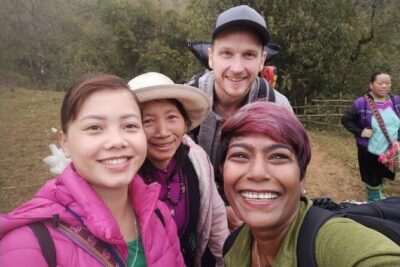

Muong Hoa Valley Trek and Local Ethnic Villages
Read our review →
Fansipan Cable, Cat Cat Village & Moana Instagram Tour
Read our review →

Sapa 3 Days 2 Nights Trekking Tour (1 Night In Ta Van Village, 1 Night In Hotel)
Read our review →
Eco Adventure Terrace Fields and Local Villages Trek
Read our review →
3-Day Trekking Adventure of Sapa from Hanoi – Stay Ta Van Village
Read our review →Browse the lists this tour appears in