
Reviewed · TREKKING TOURS IN SAPA
1-Day Sapa Long Trek – Rice Field Terrace, Ethnic Culture
Sapa’s best day hikes are not about ticking off a viewpoint. They are about walking through the Muong Hoa Valley, where Hmong farmers shape steep hillsides into rice terraces and small paths connect villages, streams, and mountain homes. This seven-hour trek gives you that close-up view, ending in Ta Van with a ride back to town.
I like two things here. First, the local Hmong guides make the walk personal, with guides such as Mao, Sung, Thao, Chai, and Giang explaining village life in clear English. Second, lunch with a local family gives the day a warm, down-to-earth pause. The main drawback is the trail itself: expect mud, uneven ground, steep sections, and roughly 12 to 15 kilometers of walking on some routes.
In This Review
- Key points to know before booking
- Why this Sapa trek is worth your day
- 9:00 AM: From Sapa town to the first mountain ridge
- Muong Hoa Valley: Rice terraces shaped by Hmong farming
- 11:00 AM: Y Linh Ho and the wooden bridge
- 12:30 PM: A generous family lunch in Lao Chai Sang
- 2:00 PM: Textiles, indigo dye, and village craft
- 3:00 PM: Ta Van and the ride back to Sapa
- What the guides add to the experience
- How hard is the 7-hour walk?
- Weather, route changes, and group size
- Who should book this Sapa trek?
- Should you book it?
- FAQ
- How long does the Sapa trek last?
- Where does the trek start and finish?
- Is pickup from my hotel included?
- Is lunch included?
- What languages does the guide speak?
- Is the trek suitable for people with mobility or health problems?
Key points to know before booking
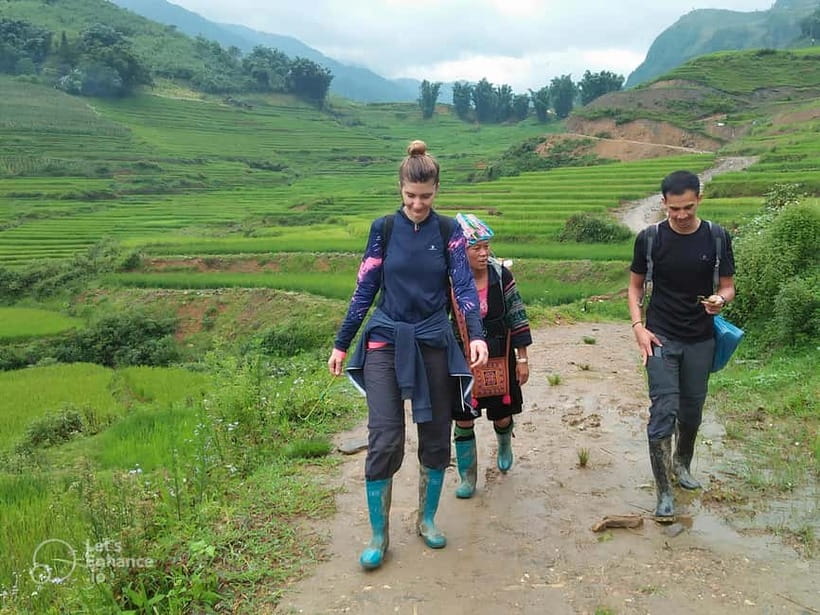
- A real mountain walk: The route includes uphill and downhill sections, slippery paths, rice fields, and rough village trails.
- Local guides lead the way: Guides come from nearby Hmong villages and explain customs, farming, clothing, and daily life.
- Lunch is part of the experience: You eat home-cooked food with a local family, with dietary needs catered for if arranged in advance.
- The views depend on the weather: Clear days reveal Fansipan and the Hoang Lien Son range, while mist and rain create a moodier but less far-reaching view.
- Small groups help: The maximum is 10 people, and some departures have only four participants, making it easier to keep a shared pace.
- Bring serious footwear: Sneakers with good grip may work in dry weather, but hiking shoes or rented rubber boots are much safer after rain.
Why this Sapa trek is worth your day
At $24 per person, this is a strong-value way to see the rural side of Sapa. The price includes hotel pickup in Sapa town, a local English-speaking guide, village entrance fees, lunch, a small bottle of water, rain protection, and transport back from Ta Van.
That matters because independent trekking around Sapa can be confusing. Trails split through fields and villages, weather changes quickly, and a local guide can explain what you are seeing instead of leaving you with a scenic walk and no context. You are also supporting a guide from the nearby community rather than joining a large coach excursion.
The experience is not luxurious. Lunch is served in a simple mountain home, and the trail can be muddy. But that is part of the appeal. You get a day built around walking, conversation, food, and village life, not a string of polished tourist facilities.
The operator limits groups to 10 people. That is small enough for a guide to adjust the pace and answer questions. Several departures have had only four people, which makes narrow paths and photo stops easier. If you want a private walk or a different route, custom options can be requested.
More Trekking Tours in Sapa
- Sa Pa: Muong Hoa Valley Trek and Local Ethnic Villages
★ 4.6 · 864 reviews - Sapa: Eco Adventure Terrace Fields and Local Villages Trek
★ 4.9 · 636 reviews - From Sapa: 1-Day Guided Trek to Lao Chai & Ta Van with Lunch
★ 4.9 · 416 reviews
9:00 AM: From Sapa town to the first mountain ridge
The day begins at 9:00 AM in Sapa. Pickup is included if your hotel is in town. If you are staying outside the town area, you can pay for a transfer to a meeting point such as Sapa TT Homestay on Dien Bien Phu Street or Sapa View Spring Garden Hotel on Muong Hoa Street.
The opening section climbs toward a quiet ridge above town. On a clear day, you may see Fansipan, known as the Roof of Indochina, rising from the Hoang Lien Son range. Do not count on that view every day. Mist is common in Sapa, and several routes have been adjusted lower when clouds block the high peaks.
I like this flexible approach. A guide such as Mao has been willing to ask the group if it prefers a higher climb with less chance of a view or a lower path with better visibility. That simple choice can make the day feel tailored rather than fixed.
The air is often cool at the start, but the walk soon warms you up. Wear layers you can remove and pack sun protection even on a cloudy morning. Sapa’s weather can shift from cool mist to strong sun, and the trail offers limited shelter.
Muong Hoa Valley: Rice terraces shaped by Hmong farming
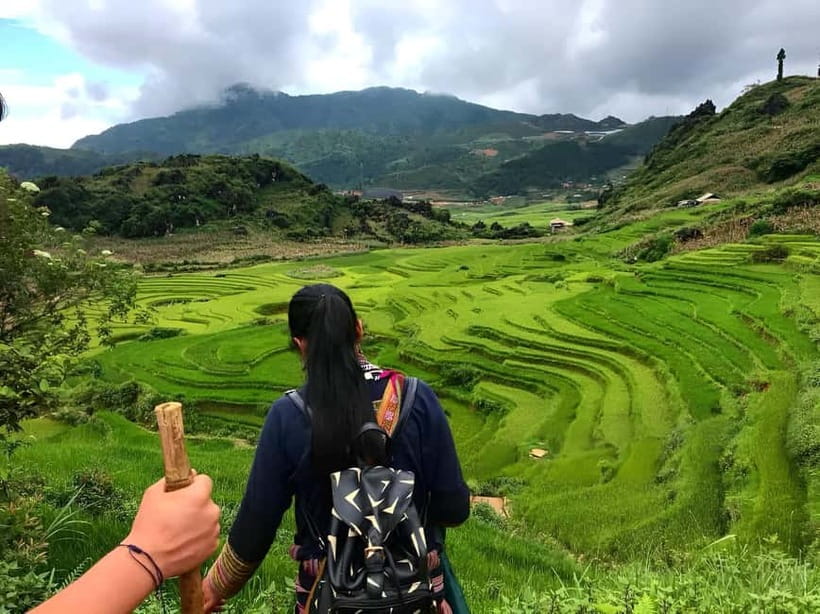
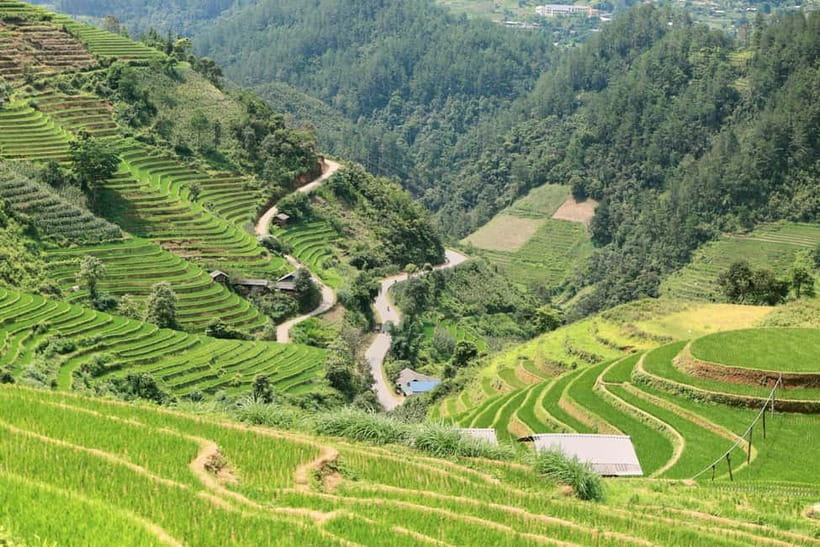
The route then drops toward Muong Hoa Valley. This is the visual heart of the trek. Rice fields step down the hillsides in broad curves, with mountain ridges behind them and streams cutting through the valley floor.
The terraces are not just pretty scenery. They show how Hmong communities farm steep ground in a region where flat land is scarce. Their appearance changes with the growing season. You might see water reflecting the sky in newly planted fields, bright green rice during the growing months, or more muted colors around harvest time.
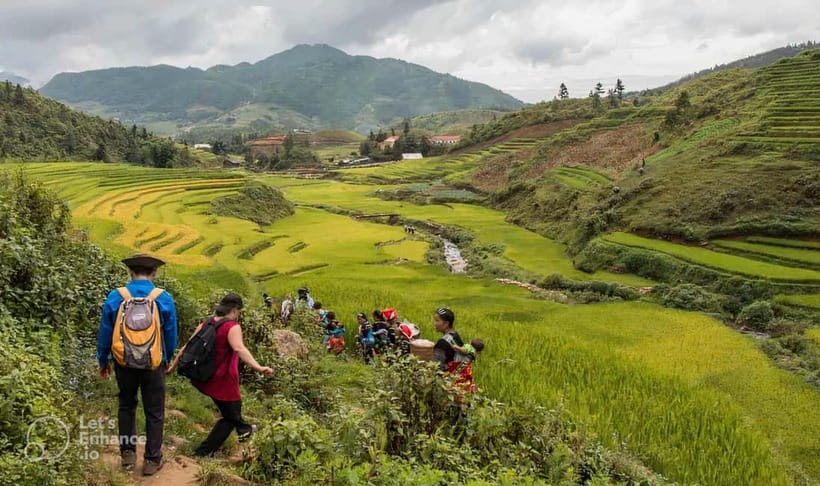
The walk through the valley is also a chance to watch ordinary work. You may see Hmong women working in the fields, carrying out tasks that demand balance and strength on sloping ground. The guide can explain local farming and village life as you walk, giving meaning to the views around you.
Expect plenty of stops for photos. Guides such as Pao have been especially attentive about taking pictures for couples and small groups. Still, keep your phone or camera protected from rain. The weather is part of the experience, and the trail is used in rain or shine.
11:00 AM: Y Linh Ho and the wooden bridge
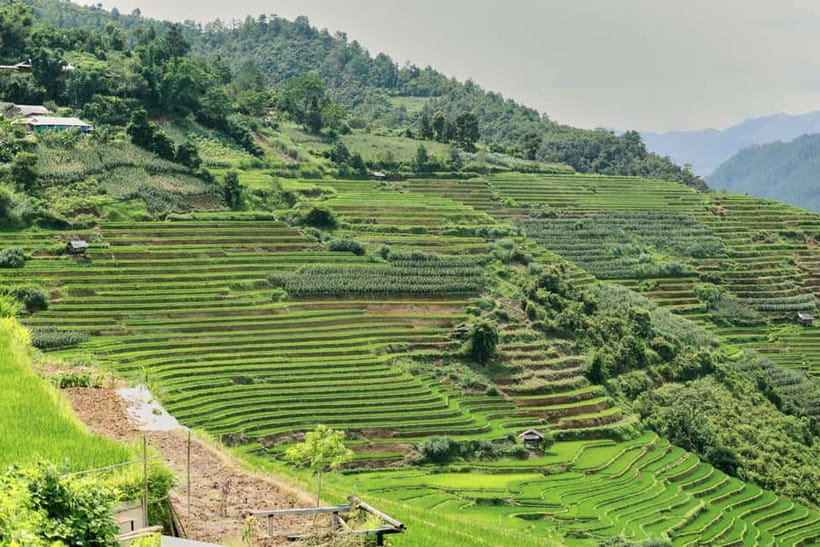
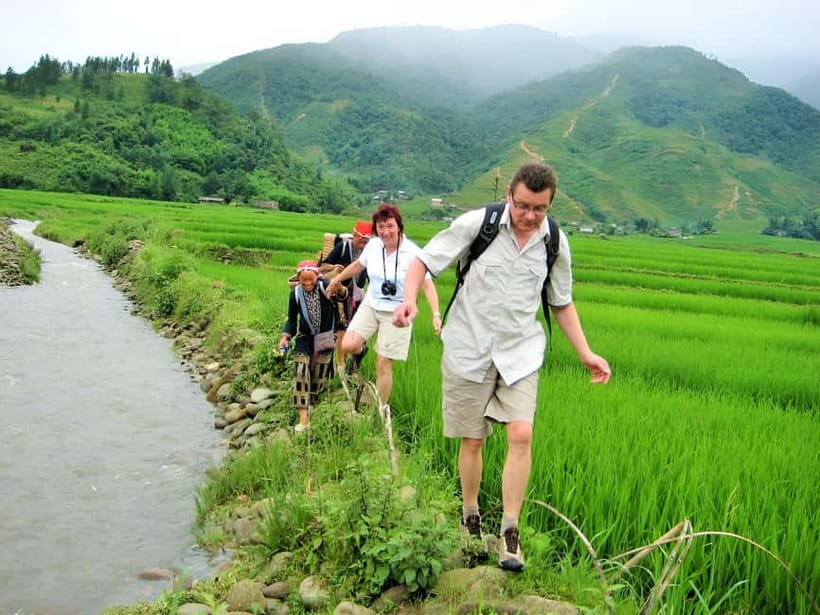
Around 11:00 AM, the trek reaches Y Linh Ho, a quiet Hmong village near a calm river. The trail crosses a small wooden bridge before continuing through open fields and along the valley.
This section feels more rural than the busy center of Sapa. You are walking among homes, fields, streams, and mountain slopes rather than moving from one formal attraction to another. The quiet can be striking, especially on a misty day when the peaks fade into the clouds.
The bridge and river also mark a change in the walking surface. Parts of the route are firm, but other sections are uneven, steep, or slick. After rain, mud can turn an easy descent into the hardest part of the morning. Several people have found rented rubber boots useful, while others recommend waterproof hiking shoes with a strong sole.
The route is manageable for a reasonably active person, but it is not a gentle stroll. One account describes more than 13 kilometers and a high point above 1,100 meters. Other accounts put the distance near 12 or 15 kilometers, so expect variation based on the chosen path, weather, and walking pace.
More Sapa escapes from Sa Pa:
- Sapa 1 Day Long Trek: Trek to Hau Thao and Sa Seng Villages
★ 4.6 · 344 reviews - Sapa: Fansipan Cable, Cat Cat Village, Moana Instagram Tour
★ 4.8 · 294 reviews - From Sapa: 3-Day Ha Giang Loop with Safe Rider (max 8 pax)
★ 4.9 · 285 reviews - Explore Sapa by TrekkingAdventures, Mountain,Rice fields
★ 4.9 · 229 reviews
12:30 PM: A generous family lunch in Lao Chai Sang
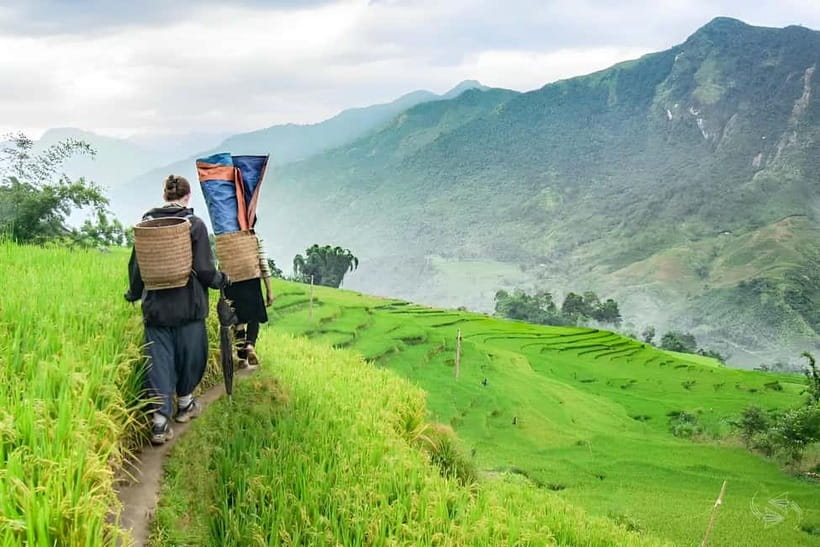
By about 12:30 PM, you reach Lao Chai Sang for lunch with a local Hmong family. The meal is served family-style, with several home-cooked dishes placed for everyone to share. Portions are described as generous, and you can ask for more if needed.
This is one of the strongest parts of the day because it slows the experience down. You are not eating quickly beside a bus parking area. You are taking a break in a simple mountain home and learning about local hospitality through food and conversation.
The meal is traditional rather than fancy. That means the exact dishes can vary, and the setting is basic. Dietary restrictions and allergies can be accommodated if you tell the operator ahead of time. Do not wait until lunchtime to mention them.
Lunch also gives you a chance to recover before the afternoon walk. Bring extra water, since the included bottle is small. Cash is useful for personal purchases, though buying crafts is not required.
2:00 PM: Textiles, indigo dye, and village craft
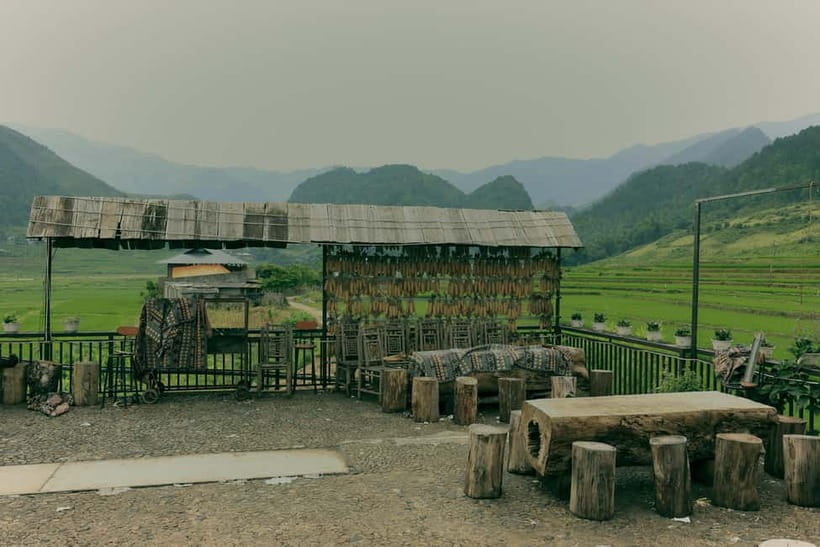
Around 2:00 PM, the trek includes a stop focused on Hmong clothing and fabric work. You may learn how handwoven textiles are made and how natural dyes are used to create traditional colors.
Indigo dyeing is a particularly interesting part of the visit. It connects clothing to local plants, time-consuming handwork, and community identity. The process is easy to overlook when you see finished scarves or clothing at a market, so watching the work gives you a better sense of what goes into these items.
The advertised highlights also refer to learning traditional incense making in Ta Van. The detailed route description focuses more on woven fabric, clothing, and natural dyeing, so the exact craft activity may depend on the day and the local stop. Ask your guide at the start if incense making is important to you.
This is also where the cultural side of the tour needs a little honesty. Local women may walk alongside the group and offer scarves or other handmade goods. Their help can be useful on slippery paths, but the sales attention may feel tiring when you simply want to walk. A polite no is enough, and you should never feel obliged to buy.
If you do want to purchase something, ask about the item and its materials. Buying directly from village makers can support local income, but take a moment to decide instead of buying out of pressure.
3:00 PM: Ta Van and the ride back to Sapa
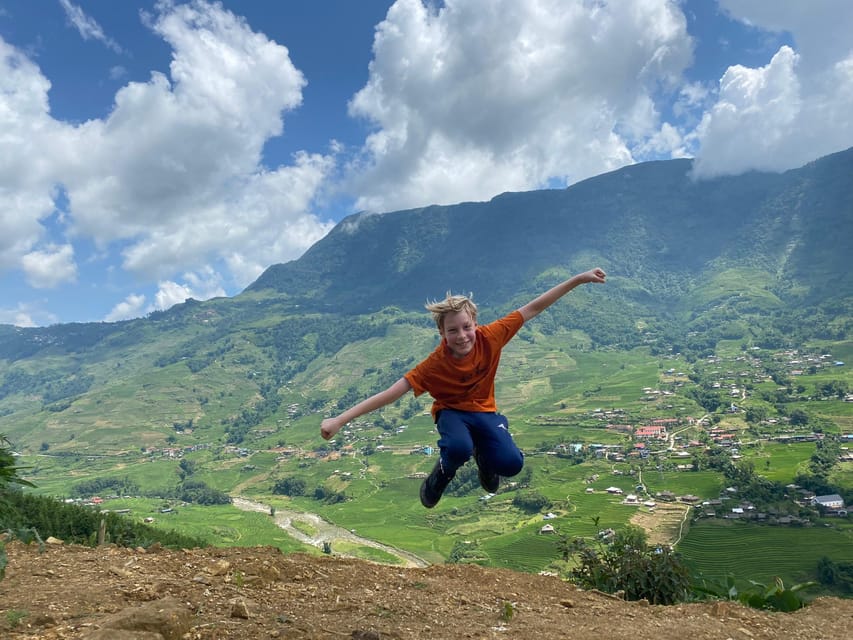
The trek reaches Ta Van, a quieter Giay village, at around 3:00 PM. The village sits among the valley’s mountains and fields, and it provides a natural endpoint after several hours on foot.
The cultural mix is one reason this route feels more rewarding than a simple rice-field viewpoint. During the day, you learn about both Hmong and Giay communities, their homes, clothing, farming, and village routines. The guide’s personal connection makes a difference. Several guides have grown up in the district or learned English by speaking with visitors, and their stories often bring more life to the walk than a memorized script.
A driver waits in Ta Van to return you to Sapa. The ride is included after the trek, though the exact drop-off can depend on your location. Tell the operator where you want to go after booking. Drop-off within town may be free, while locations outside town can cost extra.
You should be back in Sapa after the return drive, but allow some flexibility if the group takes longer with lunch, photos, or difficult trail conditions. This is a mountain trek, not a timed city tour.
What the guides add to the experience
The guides are the main reason this inexpensive trip can feel personal. Names assigned to recent departures include Pao, Sue, Mao, Soso, Sung, Thao, Giang, Chai, Ly, Vu, Dinh, Chili, and Ma Ma Je.
Their roles go well beyond pointing toward the next village. They explain Hmong and Giay customs, local geography, farming, clothing, and daily life. Thao has also spoken openly about women’s lives in the villages and changes affecting local communities, while Ma Ma Je has shown visitors the indigo dyeing process.
English ability can vary from guide to guide, but many speak clearly and comfortably. A guide such as Soso has used less crowded paths, while Mao has adjusted the route according to cloud cover and the group’s wishes. You should still ask questions, especially if you want more cultural detail rather than a quiet walk.
A guide can also help with the physical side of the trip. Several have adjusted the pace, offered easier or steeper route choices, and helped people through slick sections. That support is useful, but it does not remove the need for decent fitness and proper shoes.
How hard is the 7-hour walk?
The tour is best described as a moderate mountain trek with some demanding sections. The total distance varies, but you should prepare for roughly 12 to 15 kilometers, with climbs, descents, uneven paths, and possible mud.
Good weather makes the walk much easier. On dry days, the route can feel steady and scenic. After rain, the same path may become slippery enough that you need to slow down and use help from the guide or nearby villagers.
Bring:
- Hiking shoes with good grip, or rubber boots in wet weather
- Water beyond the small bottle provided
- A sun hat, sunglasses, and sunscreen
- Insect repellent
- A raincoat or use the supplied rain poncho
- Comfortable clothes that can handle mud
This is not suitable for wheelchair users or people with mobility, heart, back, or serious pre-existing medical problems. It is also a poor choice if you are afraid of heights or have visual impairment. If your knees are not strong, ask about a gentler or private route before booking.
Weather, route changes, and group size
Sapa can be misty, rainy, and cool, even when the forecast looks promising. Rain may hide Fansipan and soften the mountain views, but the valley can still be beautiful under cloud. The bigger issue is footing, not scenery.
The trek operates in wet weather, so pack for it. Guides may keep the group lower when high paths are clouded in or choose a less slippery route after rain. Custom routes are available on request, and this is worth discussing if you have limited hiking experience.
A maximum of 10 people is reasonable for this terrain. A smaller group is better if you walk slowly, want more questions answered, or need frequent photo stops. A private departure may also help if your fitness levels differ from the rest of your party.
The tour is offered in English and Vietnamese. Free cancellation is available up to 24 hours before departure, and you can reserve now and pay later, which helps if your Sapa plans depend on trains or changing weather.
Who should book this Sapa trek?
I would choose this trek if you have one day in Sapa and want more than a cable car ride or a quick village photo stop. It gives you mountains, rice terraces, village paths, local food, and time with a guide from the area.
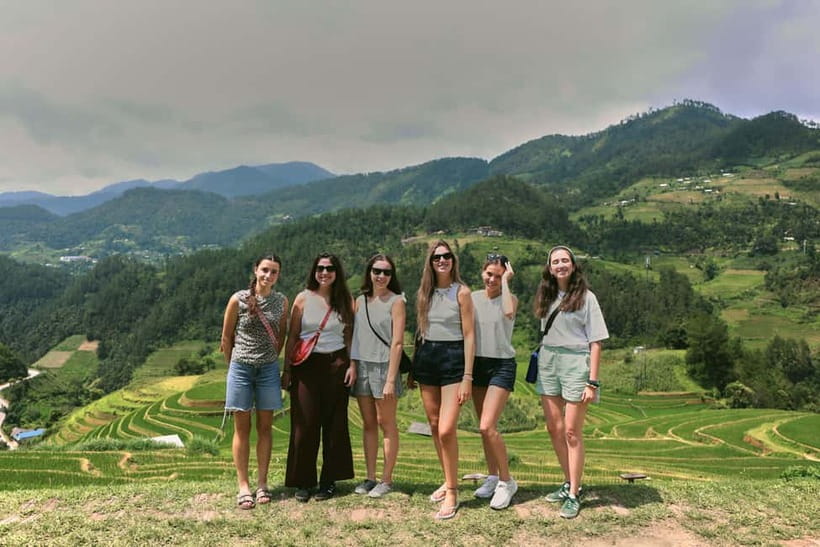
It suits hikers who are comfortable walking for several hours and do not mind getting muddy. It is also a good match for couples and small groups, since guides take plenty of photos and the small-group format makes conversation easy.
I would hesitate if you want a polished, easygoing excursion. The route is not fully paved, the weather can be poor, and local craft sellers may join parts of the walk. Anyone with major health or mobility concerns should choose another way to see Sapa.
Should you book it?
Book this trek if your priority is local contact and strong scenery at a low price. The combination of a Hmong guide, family lunch, rice terraces, and Ta Van transport offers excellent value for $24.
Just prepare honestly. This is a long walk, not a casual village ramble. Wear footwear with grip, carry water, accept that cloud may hide Fansipan, and ask about the day’s route before setting off. If you do that, this is one of the more rewarding ways to spend a day around Sapa.
FAQ
How long does the Sapa trek last?
The activity lasts about seven hours, beginning at 9:00 AM and reaching Ta Van at around 3:00 PM before the return drive to Sapa.
Where does the trek start and finish?
It starts in Sa Pa town and finishes in Ta Van village. A driver then takes you back to Sapa.
Is pickup from my hotel included?
Pickup and drop-off are included for hotels or locations inside Sapa town. If you stay outside town, a paid transfer to a meeting point may be arranged.
Is lunch included?
Yes. A home-cooked lunch with a local family is included. Dietary restrictions and allergies can be catered for if you provide the information in advance.
What languages does the guide speak?
The tour is available with live guides who speak English or Vietnamese. Guides are local Hmong people from nearby villages.
Is the trek suitable for people with mobility or health problems?
No. The route is not suitable for wheelchair users or people with mobility impairments, back problems, heart problems, visual impairment, fear of heights, or pre-existing medical conditions.
More 1-Day Tours in Sa Pa
- Sapa: Motorbike Tour 1 Day Visit Waterfalls & Local Villages
★ 5.0 · 112 reviews - In Sapa: 1 Day Mountain Trek, Visit beautiful villages
★ 5.0 · 50 reviews - From Sapa : 1 Day Amazing Sapa Trek To Terrace rice field
★ 4.6 · 17 reviews - Sapa One Day Motorbike Tour
★ 4.8 · 13 reviews
More Treks Within Reach
- EXPLORE SAPA: 2D1N TREKKING & HMONG CULTURE WITH DINH
★ 4.9 · 191 reviews - Sa Pa: 6-Hours Muong Hoa Valley Trek with Local Ethnic guide
★ 4.5 · 178 reviews - Sa Pa: 2-Day Trekking Trip with Ethnic Minority Homestay
★ 4.7 · 145 reviews - Half Day Sapa Trekking to Visit Lao Chai – Ta Van
★ 4.7 · 126 reviews
Just added around Sa Pa
- Sapa Open Air Jeep Half Days Off the Beaten Track, Backroad★ 4.9 · 9 reviews
- Sapa: Motorbike Tour to Hidden Villages & Terraced Fields★ 5.0 · 9 reviews
- SaPa: 2-Day Villages,Rice Fields, Love Waterfall Hiking Tour★ 5.0 · 9 reviews
- Sapa: Explore Sa Pa in one Day with local motorcycle Guide★ 4.9 · 9 reviews
- From Sa Pa: One Day Fansipan Mountain Trek★ 4.3 · 10 reviews
- Sa Pa: Half-Day Motorbike Tour with Sunset on O Quy Ho Pass★ 4.8 · 10 reviews
- From Sapa: Glass Bridge and Silver Waterfall Group Tour★ 4.8 · 11 reviews
- From Hanoi: Sapa Discovery Package Tour 2 Days 1 Night★ 4.8 · 11 reviews
Trekking Tours in Sapa, compared.

Muong Hoa Valley Trek and Local Ethnic Villages
Read our review →

Sapa 3 Days 2 Nights Trekking Tour (1 Night In Ta Van Village, 1 Night In Hotel)
Read our review →
Eco Adventure Terrace Fields and Local Villages Trek
Read our review →
3-Day Trekking Adventure of Sapa from Hanoi – Stay Ta Van Village
Read our review →
Number one top rated ethical cultural trekking and homestay by ETHOS
Read our review →
2-Day Sa Pa Ethnic Homestay Tour & Trek with Limousine Bus
Read our review →
1-Day Guided Trek to Lao Chai & Ta Van with Lunch
Read our review →Browse the lists this tour appears in